




Multipurpose Scissors: A Practical Guide for Kitchen and Home Use
Multipurpose scissors are designed to reduce the number of small tools needed for everyday cutting and opening tasks. In the kitchen, they can trim herbs, cut vegetables, open food packaging, and help with quick meal preparation. Around the home, they can handle light packaging, strings, labels, and other routine jobs where a knife may be less controlled or less convenient.
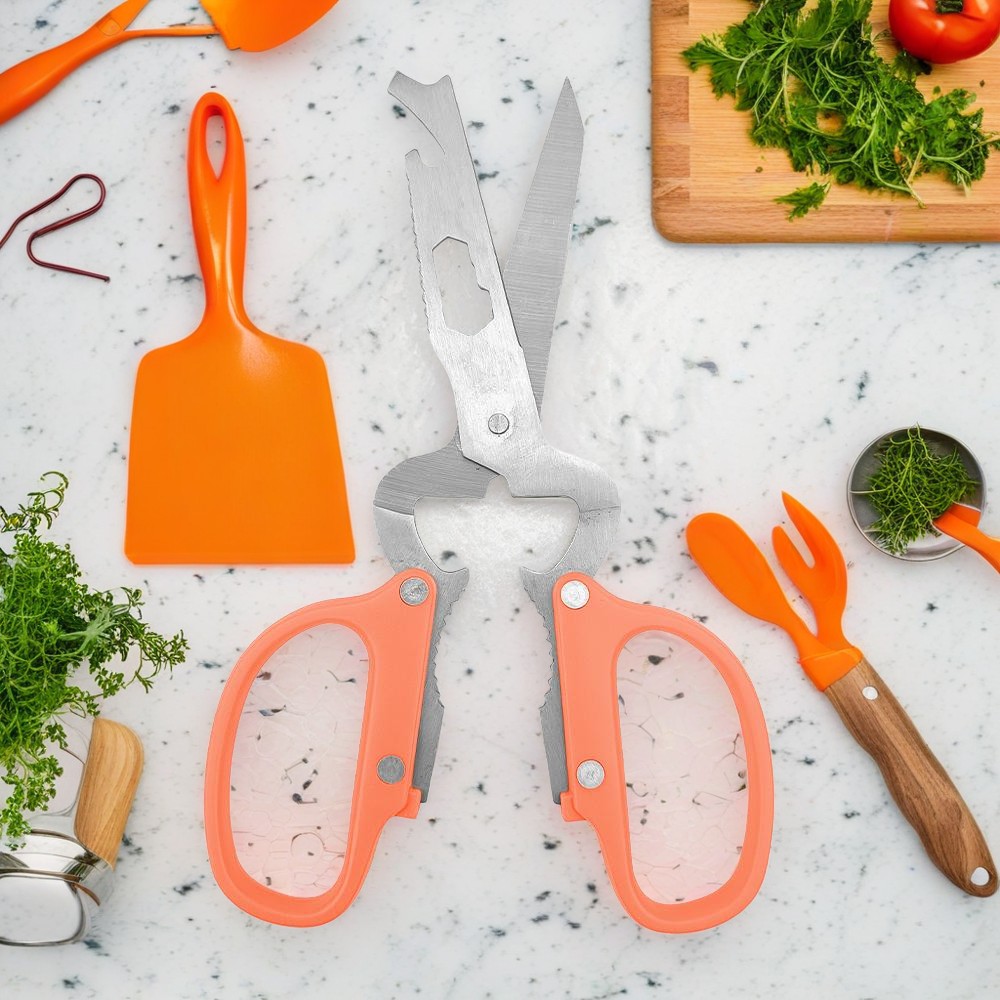
The original product description highlights stainless steel blades, an ergonomic mint green handle, serrated edges, grooves for gripping caps or twist tops, a built-in saw edge for rigid materials, and an integrated bottle opener. Those features make this type of tool more than a standard pair of scissors, but buyers should still choose carefully. Blade sharpness, grip comfort, cleaning needs, and safe storage all affect whether multipurpose scissors are useful in daily life.
Key Takeaways
- Multipurpose scissors are best for light to medium kitchen and household tasks, not heavy-duty cutting.
- Stainless steel blades, if properly maintained, can offer useful durability for food preparation and packaging.
- Extra features such as serrated edges, cap-gripping grooves, and bottle openers are helpful only when they are easy to clean and safe to use.
- Comfort matters: an ergonomic handle can reduce hand strain during repeated cutting.
- Ask suppliers clear questions about materials, care instructions, packaging, and intended use before buying in bulk.
What Multipurpose Scissors Are Designed to Do
A good pair of multipurpose scissors should make common tasks quicker without replacing specialized tools entirely. In food preparation, they can cut leafy herbs, trim small vegetables, open sealed ingredient bags, and portion thin food items. For household use, they can cut paper, tags, twine, tape, and some packaging materials.
The built-in functions described in the source article broaden their usefulness. A serrated edge may help grip slippery or tougher surfaces. Grooves can assist with twisting caps or holding small round objects. A bottle opener adds convenience when preparing drinks or working outdoors. However, each added function should be evaluated for control, comfort, and hygiene. More features do not automatically make a better tool if they are awkward to use or difficult to clean.
Feature Checklist for Buyers
When comparing multipurpose scissors, focus on practical performance rather than only appearance. The table below can help consumers, retailers, or sourcing teams evaluate key details before purchasing.
| Feature | Why It Matters | Questions to Ask |
|---|---|---|
| Stainless steel blades | Supports clean cutting and general durability when maintained properly. | What stainless steel type is used, and what care instructions apply? |
| Ergonomic handle | Improves control and comfort during repeated kitchen or home tasks. | Is the handle comfortable for different hand sizes? |
| Serrated edge | Can help grip certain materials or assist with tougher cutting jobs. | Is the serrated section easy to clean after food contact? |
| Cap or twist-top grooves | Adds utility for opening bottles, jars, or caps in some situations. | What cap sizes or shapes does the design support? |
| Built-in bottle opener | Reduces the need for a separate opener in the kitchen or outdoors. | Is the opener positioned safely away from the cutting edge? |
| Cleaning and storage | Affects hygiene, safety, and long-term usability. | Are there cleaning limits, removable parts, or storage recommendations? |
Kitchen Uses: Where They Work Best
In the kitchen, multipurpose scissors are most useful for tasks that benefit from direct hand control. Cutting herbs over a bowl can be faster than using a knife and board. Opening ingredient packets can reduce mess. Trimming green onions, leafy greens, or soft vegetable tops may be easier with scissors than with a blade on a cutting board.
They can also help with quick preparation when cooking in small spaces, such as apartments, office kitchens, camping setups, or outdoor meal stations. The compact design described in the original article is useful for storage, especially when drawer space is limited. Still, users should avoid forcing scissors through bones, frozen foods, thick plastics, or metal packaging unless the manufacturer clearly states they are suitable for those tasks.
Household and Outdoor Tasks
Outside food preparation, multipurpose scissors can handle many light household jobs. They are practical for opening delivery packaging, cutting string, trimming labels, or preparing craft materials. The source article also mentions DIY projects and outdoor use. For these settings, control is important: scissors should open and close smoothly, and the handle should not slip when hands are slightly wet or dusty.
If the same scissors are used for both food and non-food tasks, cleaning becomes more important. Many households prefer to keep one pair for food preparation and another for utility work. This reduces cross-contamination risk and helps preserve blade performance.
How to Choose Multipurpose Scissors
Start by matching the tool to the main use case. A home cook may prioritize clean cutting, comfort, and easy washing. A retailer or wholesale buyer may also need to consider packaging, consistent finish, private-label options, and carton protection during shipping. The original description mentions a mint green ergonomic handle, which can be attractive for a kitchenware line, but color should be secondary to grip, balance, and safe handling.
- Check the intended use: kitchen prep, household packaging, outdoor use, or mixed utility.
- Review material details and ask what type of stainless steel is used for the blades.
- Test the handle shape for comfort, especially during repeated cutting.
- Inspect added functions such as the bottle opener, grooves, and serrated edge for safe positioning.
- Confirm cleaning instructions, drying requirements, and whether dishwashing is recommended.
- For wholesale or OEM buying, ask about packaging choices, branding options, lead times, and quality-control checks.
Care, Cleaning, and Safe Storage
Because multipurpose scissors may contact food, packaging, and outdoor materials, routine cleaning is essential. Wash the blades soon after food use, especially after cutting moist herbs, vegetables, or oily packaging. Dry them thoroughly to reduce spotting and maintain smooth movement. If the scissors include grooves, serrations, or an opener, pay attention to corners where residue can collect.
Safe storage also matters. Keep the cutting edges closed when not in use, and store them away from children. If a protective cover is available, use it. Avoid leaving scissors loose in a crowded drawer where the blades can be damaged or create a hand-injury risk.
FAQ
Are multipurpose scissors the same as kitchen shears?
They overlap, but they are not always identical. Kitchen shears are mainly made for food preparation, while multipurpose scissors may include additional features such as a bottle opener, cap-gripping grooves, or serrated sections for household tasks.
Can they cut hard materials?
The original article mentions a built-in saw edge for rigid materials, but users should still follow the supplier's instructions. Do not cut metal, bones, frozen food, or very thick plastic unless the product is clearly specified for that use.
Are stainless steel blades rust-proof?
Stainless steel is generally more corrosion resistant than ordinary steel, but it still needs proper washing and drying. Ask the supplier for the exact material details and care guidance.
What should wholesale buyers ask before ordering?
Ask about blade material, handle material, packaging, branding options, cleaning instructions, quality-control process, sample availability, lead time, and any compliance documents relevant to your market. Do not assume certifications or test results unless the supplier provides them.
How can I keep the scissors sharp longer?
Use them for suitable tasks, clean and dry them after use, avoid cutting abrasive or overly hard materials, and store them safely so the blades do not rub against other tools.
Multipurpose scissors are most valuable when they solve real daily problems without becoming difficult to clean or unsafe to handle. By focusing on blade quality, grip comfort, practical functions, and clear supplier information, buyers can choose a tool that fits both kitchen routines and general household needs.
