




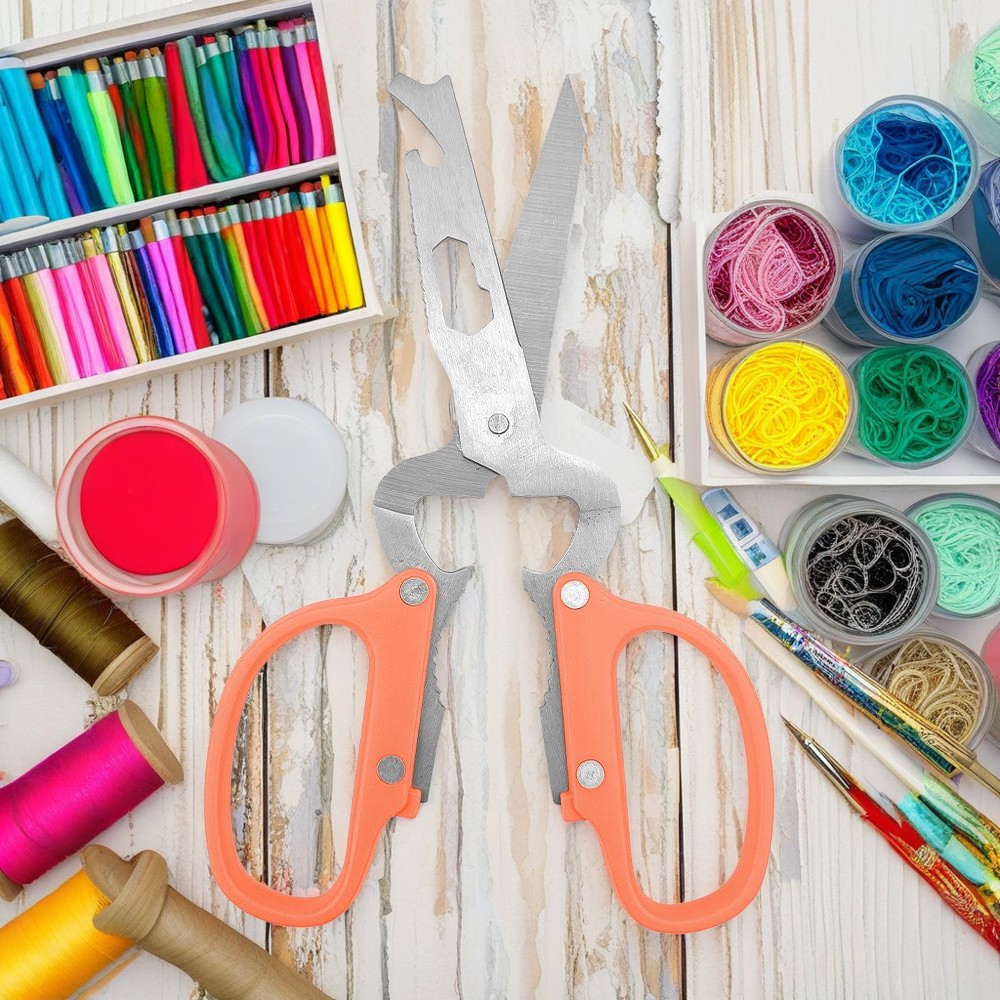
Multifunction Kitchen Shears: A Practical Guide for Everyday Home Use
Multifunction kitchen shears are one of the simplest tools to keep within reach, yet they can handle many small jobs that would otherwise require a knife, opener, or specialty gadget. The original product description highlights stainless steel blades, an ergonomic mint green handle, a built-in bottle opener, a center notch for cracking nuts, integrated grooves for opening stubborn jars or containers, and a serrated edge for gripping slippery foods such as vegetable skins and fish. Those features make this type of shear useful for home kitchens, picnics, camping, and routine household tasks.
This guide explains how to use kitchen shears well, what to check before buying, how to clean them safely, and when a knife or another tool may still be the better choice. The goal is not to replace every kitchen tool, but to help you choose and use shears with realistic expectations.
Key Takeaways
- Multifunction kitchen shears are best for quick cutting tasks such as herbs, packaging, meat trimming, fish preparation, and small household jobs.
- Useful added functions may include a bottle opener, nut-cracking notch, jar-opening grooves, and serrated gripping edges.
- Comfort matters: check handle shape, grip stability, and whether the shears fit your hand before relying on them for frequent prep.
- Clean and dry the blades promptly, especially after cutting raw meat, fish, or wet produce.
- Use shears for appropriate tasks only; hard bones, frozen food, and very tough materials can damage blades or create safety risks.
What Multifunction Kitchen Shears Are Designed to Do
Kitchen shears are heavier and more food-oriented than ordinary household scissors. Their blades are shaped to cut through herbs, poultry skin, small pieces of meat, vegetable stems, seafood shells, twine, and food packaging. A serrated edge can help hold slippery ingredients in place so the blades do not slide across the surface.
Multifunction versions add small convenience features. A built-in bottle opener can remove capped drinks during meals or outdoor use. A center notch can help crack nuts when used with care. Grooves near the handle may assist with twisting open stubborn lids or containers, depending on the size and shape of the cap. These features are most helpful for occasional tasks, not heavy-duty industrial use.
Common Kitchen Uses That Save Time
For everyday cooking, shears are often faster than taking out a cutting board and chef's knife. They are especially useful when precision chopping is less important than quick preparation.
- Cutting herbs: Snip parsley, cilantro, chives, or scallions directly over a bowl or pan.
- Trimming meat: Remove small pieces of fat, skin, or connective tissue from poultry or meat before cooking.
- Preparing fish: Use the serrated gripping edge for slippery fins, skin, or small trimming jobs.
- Opening food packaging: Cut vacuum bags, snack packs, sauce pouches, and butcher twine cleanly.
- Dividing cooked food: Cut pizza slices, noodles, pancakes, or cooked vegetables into smaller portions for children.
- Outdoor meals: Use them for picnic packaging, bottle caps, herbs, and quick food prep when space is limited.
Because shears touch food directly, it is wise to keep a dedicated kitchen pair instead of using the same scissors for paper, tape, garden work, or craft materials.
Feature Checklist Before You Buy
Not all multifunction shears feel the same in hand. Before choosing one, compare the features that affect daily use, cleaning, and safety.
| Feature to Check | Why It Matters | What to Look For |
|---|---|---|
| Blade material | Affects cutting performance and corrosion resistance | The source states stainless steel blades; ask the seller for care guidance and material details if needed |
| Serrated edge | Helps grip slippery foods | Teeth should feel even and not overly rough for normal food prep |
| Handle comfort | Reduces hand strain during repeated cuts | Ergonomic shape, stable grip, enough space for fingers |
| Bottle opener | Adds convenience for drinks | Check that it is positioned away from the blade edge for safe handling |
| Nut-cracking notch | Useful for small nuts or shells | Use with control; avoid forcing very hard shells |
| Jar or container grooves | May help loosen stubborn caps | Confirm the groove size works with containers you commonly use |
| Cleaning design | Food residue can collect around the pivot | Look for easy access around joints and dry thoroughly after washing |
How to Use Kitchen Shears Safely
Kitchen shears look familiar, but they are sharp food-prep tools and should be handled with the same respect as a knife. Always cut away from your body, keep fingers clear of the blade path, and place the shears flat on the counter when not in use.
Do not use kitchen shears for tasks beyond their design. Hard bones, frozen meat, metal wire, thick plastic, and dense non-food materials can bend the blades or cause the tool to slip. If a cut requires excessive force, stop and switch to a more suitable tool.
When using the nut notch or bottle opener, keep the blade tips pointed away from your palm and other people. For jar-opening grooves, apply steady pressure rather than sudden twisting. If the lid does not move, try warm water, a rubber grip, or a dedicated jar opener instead of forcing the shears.
Cleaning and Care After Food Prep
Good cleaning habits protect both the tool and the food you prepare next. Wash kitchen shears promptly after contact with raw poultry, meat, fish, or sticky ingredients. Use warm water, dish soap, and a brush or sponge to clean the blade surfaces, serrations, notch, handle area, and pivot.
Dry the shears completely after washing. Even stainless steel benefits from prompt drying, especially around joints where water can remain. Store them in a knife block, drawer organizer, sheath, or hanging rack where the blade edges do not rub against other utensils.
If the shears begin to crush rather than cut, the blades may be dull, misaligned, or dirty near the pivot. Clean first, then check whether sharpening or replacement is needed. Avoid using harsh abrasives on coated or colored handle areas unless the seller's care instructions allow it.
When Shears Are Better Than a Knife
Shears are excellent for quick, controlled cuts in midair or directly over a pot. They can reduce the need for a cutting board when snipping herbs, opening a pouch, trimming poultry skin, or cutting cooked noodles into shorter lengths. They are also helpful for users who feel less confident with a large knife for small repetitive tasks.
A knife is still better for uniform chopping, mincing garlic, slicing large vegetables, carving roasts, and cutting dense foods. In a well-equipped kitchen, shears and knives complement each other. The value of multifunction shears comes from convenience: one compact tool can solve many small problems quickly.
Practical FAQ
Can multifunction kitchen shears replace a chef's knife?
No. They are useful for trimming, snipping, opening packages, and quick cuts, but a chef's knife is still better for slicing, dicing, and precise cutting on a board.
Are they suitable for raw chicken or fish?
Yes, kitchen shears are commonly used for trimming poultry and fish, but they must be washed thoroughly with hot soapy water and dried after use to reduce cross-contamination risk.
What should I avoid cutting with kitchen shears?
Avoid frozen food, thick bones, metal, heavy plastic, and other materials that require excessive force. These can damage the blades or cause slipping.
Do serrated edges need special care?
Clean residue from the teeth carefully with a brush or sponge, then dry well. If the serrations become dull, ask the seller or a sharpening professional whether they can be serviced.
How should I store them safely?
Store them closed in a drawer organizer, sheath, knife block, or hanging position away from children's reach. Keep the blade edge from hitting other utensils.
Final Buying Advice
Choose multifunction kitchen shears based on the jobs you actually do. If you often prepare herbs, poultry, fish, packaged foods, or picnic meals, features such as stainless steel blades, a serrated edge, ergonomic handle, bottle opener, nut notch, and jar-opening grooves can be genuinely useful. If you mainly need fine knife work, prioritize a good knife instead.
Before purchasing, ask practical questions: How should the shears be cleaned? Are they suitable for the foods you commonly prepare? Is the handle comfortable for your hand size? Can the blades be sharpened or maintained? Clear answers help you select a tool that stays useful beyond the first few weeks in the kitchen.
