




Multifunctional Kitchen Series: Practical Tools for Compact, Efficient Cooking
Modern kitchens often have to do more with less: less drawer space, less counter space, and less time for meal preparation. A multifunctional kitchen series responds to that reality by combining useful tasks into fewer, better-organized tools. Instead of filling a drawer with separate gadgets for every small job, home cooks can choose items that perform several everyday functions while remaining easy to store, clean, and control.
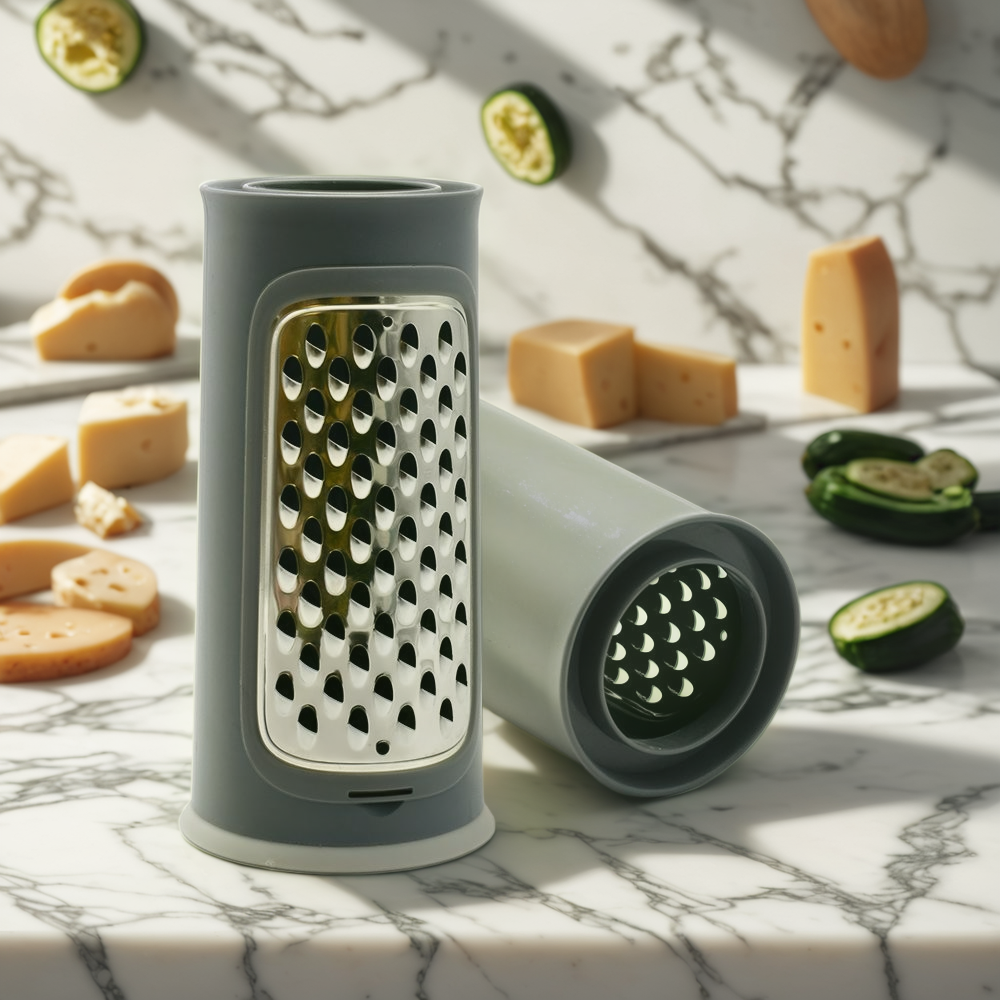
One useful example is the dual-sided cylinder grater described in the original product introduction. It uses a tubular form, dual grating surfaces, a matte gray exterior, black silicone body elements, and a stable rubberized base. Its purpose is straightforward: help users grate ingredients such as cheese, vegetables, and spices with less mess and a more compact storage footprint. The goal is not to replace every kitchen tool, but to make routine prep more efficient.
Key Takeaways
- Multifunctional kitchen tools are most valuable when they solve common prep problems without adding clutter.
- A dual-sided grater gives users fine and coarse texture options in one compact item.
- A cylinder-style design can help collect grated ingredients and reduce spills during use.
- Comfort, grip, stability, and cleaning should matter as much as appearance.
- Before buying, confirm care instructions, material details, and whether the tool fits your cooking habits.
What Makes a Kitchen Tool Truly Multifunctional?
A multifunctional tool should do more than carry a broad label. It should combine related tasks in a way that feels natural. For example, a grater with both fine and coarse surfaces gives different textures without requiring two separate graters. Fine grating may suit hard cheese, citrus zest, or small amounts of spice, while coarse grating may work better for vegetables or softer cheese.
The best multifunctional tools also reduce friction in the cooking process. That includes being easy to pick up, intuitive to use, stable on the counter, and simple to rinse or wash afterward. If a tool takes too long to assemble, is awkward to hold, or creates more cleanup than it saves, its multiple functions may not translate into daily value.
Close Look: The Dual-Sided Cylinder Grater
The dual-sided cylinder grater is presented as a compact preparation tool with two stainless steel grating surfaces. The combination of fine and coarse textures allows the user to adjust the result depending on the ingredient and recipe. This can be helpful when preparing toppings, garnishes, salads, sauces, or small-batch ingredients for home cooking.
Its tubular design is a practical feature because it can collect grated ingredients inside the body rather than scattering them across a board or counter. For small kitchens, this matters. A tool that controls mess can save time during both preparation and cleanup. The vertical form also supports compact storage, which is useful for apartments, shared kitchens, and homes with limited cabinet space.
The original description notes a matte gray exterior, black silicone body, polished stainless steel panels, and a stable rubberized base. These details point to a tool designed for grip, control, and daily handling. Users should still inspect the product in person or review supplier information carefully to confirm exact care instructions and material details before purchase.
Selection Checklist for Everyday Users
When choosing any multifunctional kitchen tool, focus on the tasks you actually perform. A product that looks clever may still be unnecessary if it does not fit your cooking routine. Use the checklist below to compare options before buying.
| Selection Point | What to Check | Why It Matters |
|---|---|---|
| Functions | Fine and coarse grating surfaces, or other clearly useful combinations | Prevents buying multiple tools for similar prep jobs |
| Grip and control | Comfortable body shape, secure hand position, non-slip base | Improves safety and consistency during repeated use |
| Mess management | Container-style or tubular design that collects ingredients | Reduces cleanup and ingredient waste |
| Storage | Vertical or compact form that fits drawers or shelves | Supports small-kitchen organization |
| Cleaning | Dishwasher-safe claim or clear hand-wash instructions | Helps maintain hygiene and convenience |
| Ingredient fit | Suitable for cheese, vegetables, spices, or your most common foods | Keeps the tool relevant to daily cooking habits |
How to Use a Cylinder Grater More Effectively
A grater performs best when the user controls both the ingredient and the pressure. For firm foods, use steady movement rather than force. Too much pressure may make the food slip or create uneven shreds. For smaller ingredients, stop before your fingers get too close to the grating surface and use a safe grip method.
- Place the grater on a stable, dry surface so the rubberized base can help prevent slipping.
- Choose the fine or coarse side based on the texture needed for the dish.
- Cut large ingredients into pieces that are comfortable to hold.
- Grate with controlled strokes and avoid rushing near the end of the ingredient.
- Empty collected ingredients before the interior becomes too full.
- Clean the grater promptly, especially after cheese or moist vegetables.
For cheese, chilling softer varieties briefly may improve handling. For vegetables, patting excess moisture away can reduce clumping. For spices or hard ingredients, use small quantities and check whether the grater surface is appropriate for the hardness of the food.
Cleaning, Care, and Storage Guidance
The original article states that the grater is dishwasher-safe. Even so, users should check the product packaging or supplier instructions because dishwasher conditions vary. High heat, strong detergents, or crowded racks can affect many kitchen tools over time. If unsure, hand washing with warm water, mild detergent, and a brush can be a safer routine.
Clean the grating surfaces soon after use so food does not dry into the openings. Always brush away from the sharp edges rather than toward your hand. Let the tool dry completely before storage, especially around seams, bases, and any areas where moisture may collect. Store it upright or in a place where the grating surfaces will not rub against other utensils.
When a Multifunctional Tool Is the Right Choice
A multifunctional kitchen series is especially helpful for people who cook regularly but want fewer loose accessories. It can suit compact apartments, office pantries, student housing, RV kitchens, and family kitchens where storage space is already full. A dual-sided cylinder grater is a good fit if you often prepare grated cheese, shredded vegetables, toppings, or small quantities of textured ingredients.
However, multifunctional does not always mean universal. If you regularly process large volumes of ingredients, a larger box grater or electric food processor may be more efficient. If you only grate food occasionally, a simple flat grater may be enough. The right choice depends on frequency, quantity, storage space, and cleanup preferences.
Practical FAQ
What is the main advantage of a dual-sided cylinder grater?
It combines fine and coarse grating options in one compact tool, allowing users to prepare different textures without switching between separate graters.
Does the cylinder design reduce mess?
Yes, the tubular form is intended to collect grated ingredients inside the tool, which can help limit spills compared with open grating directly onto a counter or board.
Can it be used for cheese and vegetables?
The original description mentions use with cheese, vegetables, and spices. For best results, match the ingredient to the appropriate grating surface and use steady pressure.
Is it dishwasher-safe?
The source article states that the grater is dishwasher-safe. Users should still confirm the care instructions provided with the specific product and avoid dishwasher conditions that may damage kitchen tools.
What should I check before buying?
Check the size, grip comfort, base stability, grating textures, cleaning instructions, and whether the tool suits the ingredients you prepare most often.
