




Multifunctional Kitchen Series: How to Choose and Use a Compact Grater
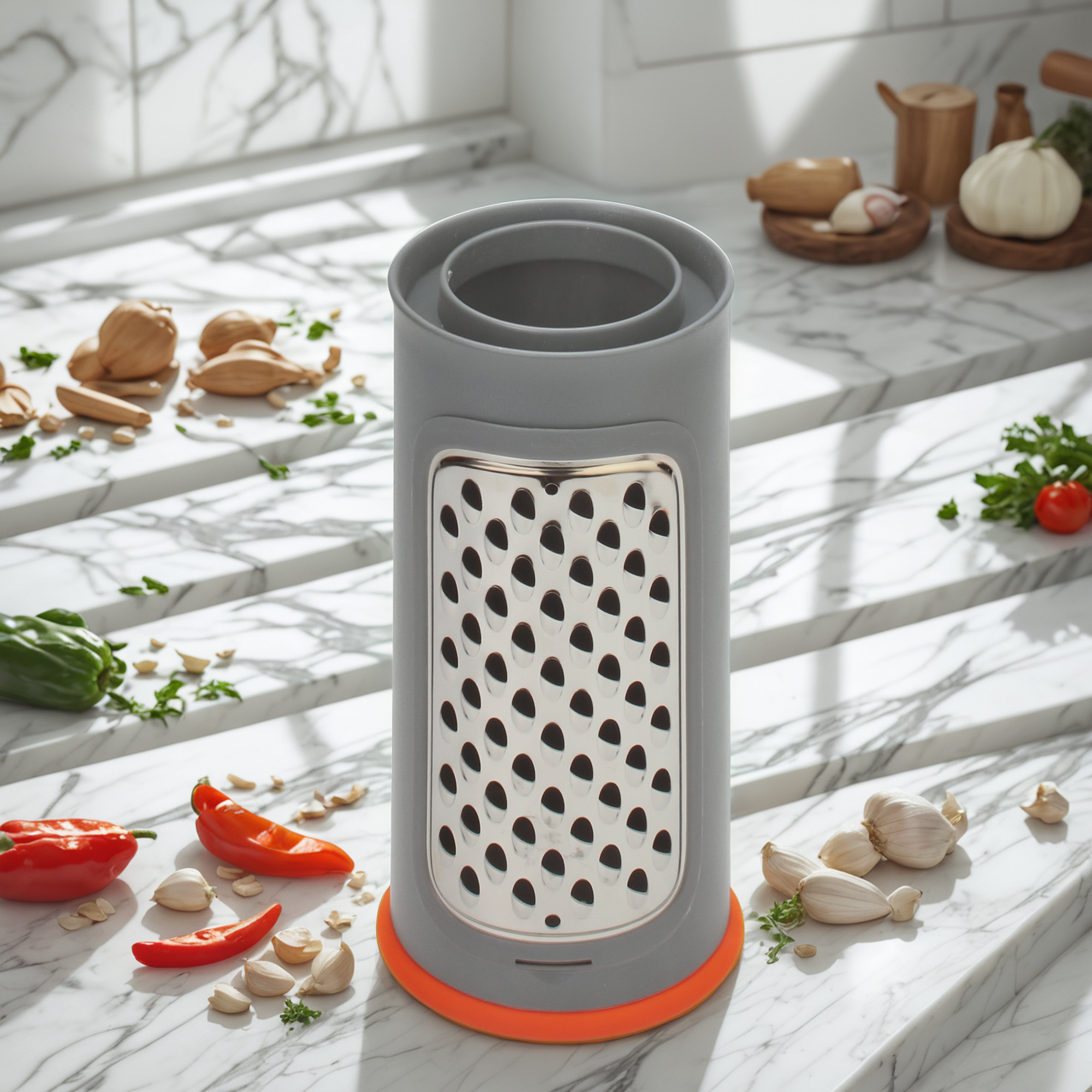
A good kitchen tool should solve everyday prep problems without adding clutter. In the multifunctional kitchen category, a compact grater is a useful example because it can support several common tasks: grating cheese, preparing vegetables, and shaving small amounts of spices or aromatics. The KitchenMate Pro Grater described in the original article is positioned as a compact vertical grater with a stainless steel grating surface, teardrop-shaped openings, a matte gray housing, a red silicone base, and an inner chamber that catches ingredients as they are grated.
This guide explains how to evaluate a grater of this type, how to use it safely, and what to check before buying. It avoids treating a grater as a decorative object and focuses instead on handling, mess control, storage, and routine care.
Key Takeaways
- A multifunctional grater is most useful when it combines stable handling, easy cleaning, and compact storage.
- An inner catching chamber can reduce countertop mess, but buyers should check whether it is easy to empty and wash.
- Stainless steel grating surfaces are common for durability, but the exact grade should be confirmed with the supplier if it matters for your use.
- Non-slip bases help control movement, especially when grating harder ingredients.
What Makes a Grater Multifunctional?
A multifunctional grater is not simply a tool with many claims on the package. It should perform several useful jobs with consistent results and minimal extra setup. For a compact grater, the core functions usually include grating semi-hard cheese, processing vegetables such as carrots or zucchini, and creating fine shavings from small ingredients. The source article describes teardrop-shaped openings on the grating surface, which are intended to support a smooth cutting motion and a consistent texture.
When comparing options, think about the foods you prepare most often. If you mainly grate cheese for pasta or salads, texture and clog resistance matter. If you shred vegetables for quick meals, capacity and stability become more important. If you use small amounts of ginger, nutmeg, or citrus zest, you may prefer a surface that offers control over speed.
Design Features to Look For
The KitchenMate Pro Grater is described with a cylindrical body, matte soft-touch gray housing, and compact vertical shape. Those design choices can be practical if they improve grip and allow the tool to stand or store neatly. However, buyers should judge design by use, not by appearance alone.
Look for these features when selecting a similar kitchen grater:
- Comfortable grip: The housing should feel secure when your hands are dry or slightly damp.
- Stable base: A silicone or non-slip base helps reduce sliding while pressure is applied.
- Effective grating surface: Openings should cut cleanly rather than mash ingredients.
- Easy-empty container: If the grater includes an inner chamber, check how simply grated food can be removed.
- Compact storage: A vertical design can save drawer space, but only if it fits your cabinet or shelf height.
Comparison Checklist for Buyers
Before choosing a multifunctional grater, compare practical details side by side. The table below can be used for a consumer purchase or for evaluating samples from a supplier.
| Check Point | Why It Matters | Question to Ask |
|---|---|---|
| Grating surface | Affects cutting smoothness and ingredient texture | Is the surface stainless steel, and what grade is used? |
| Opening shape | Influences whether food is grated, shaved, or torn | Does the pattern suit cheese, vegetables, and spices? |
| Base stability | Reduces slipping during downward pressure | Does the base stay secure on dry and slightly damp counters? |
| Catching chamber | Helps contain shredded ingredients and reduce mess | How much does it hold, and is it easy to empty? |
| Cleaning access | Food can lodge around holes and corners | Can all parts be rinsed thoroughly after use? |
| Storage size | Compact tools are only useful if they store easily | Will it fit in a drawer, cabinet, or utensil organizer? |
How to Use a Compact Grater Safely
Graters are simple tools, but sharp surfaces and repetitive motion require care. Place the grater on a flat, dry work surface before starting. If the model has a non-slip base, press it gently into position so it sits firmly. Hold the housing with one hand and move the ingredient with controlled pressure using the other hand. Short, steady strokes usually create better results than fast, forceful movement.
For small ingredients, stop before your fingers get close to the grating surface. Use a larger piece of food where possible, or finish the last portion with a knife instead of risking contact with the cutting area. Empty the inner chamber regularly if it begins to fill, because overfilling can make grating less efficient and may compress the food.
Cleaning and Care Tips
Cleaning should happen soon after use, especially after grating cheese, moist vegetables, or fibrous spices. Rinse the grating surface from the back side first if possible, which helps push food particles out rather than deeper into the openings. Use a soft brush for stuck pieces; avoid scraping the cutting surface with hard objects that could damage the edges.
If a product listing does not clearly state dishwasher suitability, do not assume it is dishwasher safe. Ask the seller or manufacturer for care instructions. The same applies to the housing and silicone base: different materials and assembly methods can respond differently to heat, detergent, and long wash cycles. After washing, dry the grater thoroughly before storage to reduce water spots and trapped moisture.
Who Benefits Most from This Type of Tool?
A compact grater with a built-in catching chamber can be especially helpful in small kitchens, shared apartments, office pantries, or homes where quick meal preparation is common. It is also useful for cooks who want fewer loose bowls during prep. The vertical format described in the original article is suitable for users who prefer a countertop action rather than balancing a flat grater over a plate.
It may be less suitable for high-volume batch cooking. If you regularly grate large blocks of cheese or several pounds of vegetables, a larger box grater, rotary grater, or food processor attachment may be more efficient. Multifunctional does not mean universal; it means the tool performs several routine tasks well within its intended scale.
FAQ
Can one compact grater handle cheese, vegetables, and spices?
It can, if the grating surface is designed for those textures. The original product description specifically mentions cheese, vegetables, and spices, but results depend on ingredient hardness, moisture, and the cutting pattern.
Is a catching chamber worth it?
For many users, yes. It can reduce countertop mess and make it easier to measure or transfer grated ingredients. Check that the chamber is simple to remove, empty, and clean.
Does a silicone base make grating safer?
A non-slip base can improve stability, but it does not replace careful hand placement. Always use the grater on a flat surface and keep fingers away from the cutting area.
What should I confirm before buying from a supplier?
Ask about material details, care instructions, packaging, replacement policies, and whether the product has been tested for the market where it will be sold. Do not rely on assumptions that are not stated in the product information.
How should I store a compact grater?
Store it fully dry, with the cutting surface protected from accidental contact. A vertical design may fit well in a cabinet or utensil area, but measure your space before purchasing.
