




Nesting Fruit Scoop: Practical Sourcing and Selection Guide
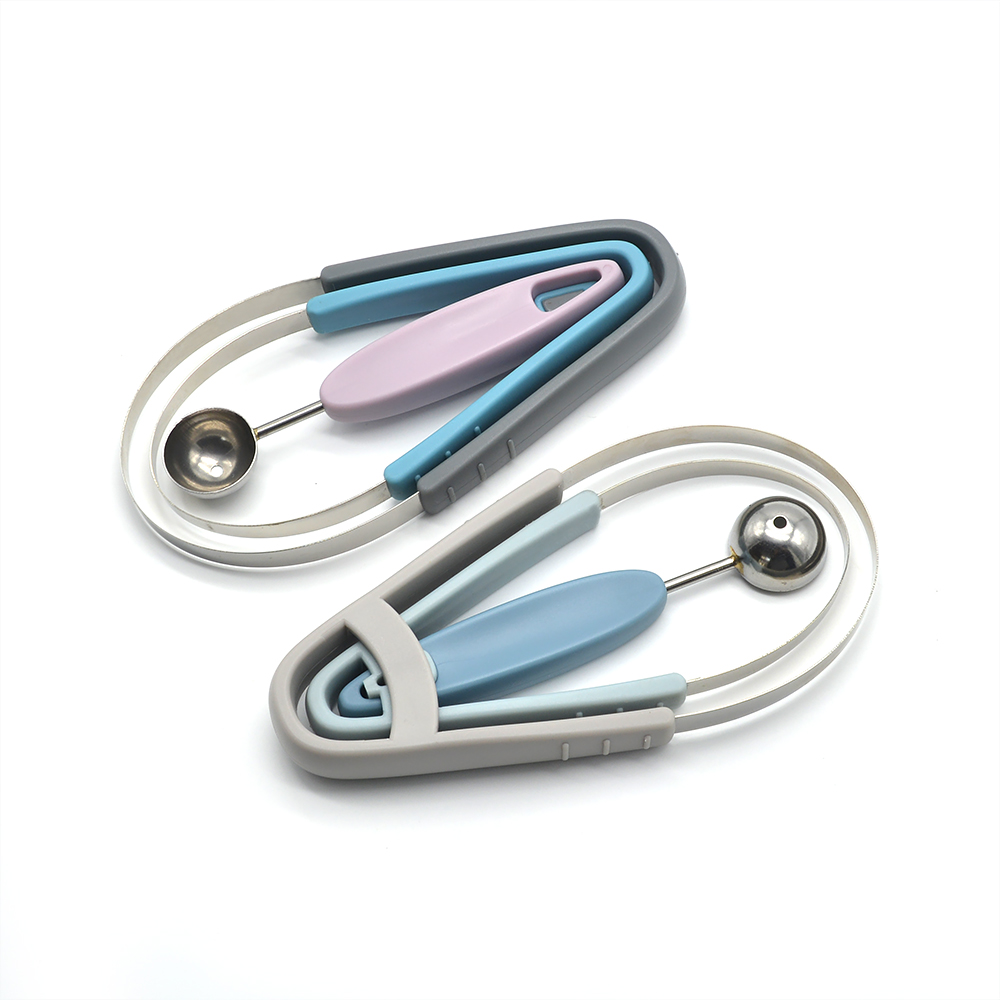
A nesting fruit scoop is designed for a simple but common kitchen task: preparing fruit cleanly while keeping tools organized. Unlike a single loose utensil, a nesting scoop belongs to a compact set that can store together in a drawer or container. The original concept highlights efficient storage, easy access, contoured handles, stainless steel rims, and pastel colors such as lavender and blue. For households, cafés, catering teams, and kitchenware buyers, the value is not only in how the scoop works, but also in whether the full set is practical, durable, easy to clean, and suitable for the intended sales channel.
What Is a Nesting Fruit Scoop?
A nesting fruit scoop is a kitchen tool shaped to help remove, portion, or serve fruit. The “nesting” aspect means it is designed to fit neatly with other tools, reducing loose clutter in a drawer. In the source description, the scoop is part of a compact set that may include measuring spoons and an egg separator. That makes it relevant for users who prefer grouped tools rather than separate utensils scattered across a workspace.
For consumers, the key benefit is convenience: the tool should be easy to find, comfortable to hold, and simple to wash after use. For B2B buyers, the bigger question is whether the design is consistent enough for retail, promotional, or wholesale programs. A product that nests well in a sample may not always nest well across a production run, so buyers should check tolerances, finish consistency, and packaging protection before ordering.
Useful Features to Evaluate
The original product description mentions contoured handles for a comfortable grip, stainless steel rims, and soft pastel colors. These are useful starting points, but buyers should evaluate them in practical terms rather than relying on appearance alone.
- Handle comfort: Check whether the handle feels stable when scooping firmer fruit or wet ingredients.
- Nesting fit: Tools should stack or fit together without jamming, rattling excessively, or scratching each other during normal storage.
- Rim finish: If stainless steel rims are used, inspect edges for smoothness and secure attachment.
- Cleaning access: Avoid deep seams or tight corners that trap pulp, seeds, or detergent residue.
- Color consistency: Pastel colors such as lavender and blue should match approved samples if the product is sold as a coordinated set.
Comparison Checklist for Buyers
Whether sourcing from a fruit scoop factory or reviewing a ready-made wholesale item, a structured checklist helps prevent misunderstandings. The table below focuses on questions buyers can verify without assuming unconfirmed specifications.
| Evaluation Point | What to Check | Supplier Question |
|---|---|---|
| Nesting design | Tools fit compactly and separate easily | Can you provide production samples from the same tooling? |
| Material and rim | Visible finish, edge smoothness, and secure assembly | What materials are used for each component, and are reports available? |
| Handle shape | Comfort during wet or repeated use | Can the handle color or shape be customized for OEM orders? |
| Set contents | Fruit scoop, measuring spoons, egg separator, or other tools as agreed | What is included in the standard set and what is optional? |
| Packaging | Protection from scratches, color transfer, and deformation | What packaging options are available for retail or bulk shipment? |
| Quality control | Consistent nesting, appearance, and safe edges | What inspection steps are used before shipment? |
Manufacturing and OEM Sourcing Considerations
Fruit scoop manufacturing is often described as precision-focused because nesting products depend on shape accuracy. If one part is slightly oversized, the set may not stack correctly. If a rim is poorly finished, it can reduce perceived quality and create cleaning concerns. Buyers should therefore request physical samples before approving bulk production.
Do not assume commercial terms from a product listing. Ask the supplier about minimum order quantity, lead time, customization options, available colors, packaging formats, and sample charges. If the product will be sold in a regulated market, ask what documentation the supplier can provide for the specific materials and intended food-contact use. Avoid accepting general statements; documentation should match the item being purchased.
For OEM projects, provide a clear specification sheet. Include dimensions, target colors, set components, logo placement if needed, packaging style, carton requirements, and acceptable visual defects. A clear brief reduces revision cycles and helps the factory confirm what is feasible before production begins.
How to Select for Different Sales Channels
A nesting fruit scoop set may serve different audiences depending on positioning. A household-focused version should prioritize easy cleaning, comfortable grip, and drawer-friendly storage. A professional kitchen or catering buyer may care more about frequent-use durability and fast access. A retail buyer will also consider shelf presentation, color appeal, barcode placement, and whether the set is easy for shoppers to understand at a glance.
For wholesale and private-label sourcing, compare at least two or three supplier samples under the same use conditions. Try scooping soft fruit, firm melon, and mixed fruit salad. Wash the tools several times and check whether the nesting fit changes, whether water remains trapped, and whether the finish still looks acceptable. This type of simple in-house testing is not a substitute for formal compliance testing, but it can quickly reveal usability problems.
Care, Cleaning, and Storage Guidance
For end users, the main advantage of a nesting set is organization. To keep that benefit, the tools should be cleaned and dried before being stacked. Fruit pulp and juice can collect around rims or joints, so users should rinse soon after use and pay attention to small seams. If a supplier provides dishwasher guidance, follow that instruction; otherwise, hand washing is a cautious default for mixed-material kitchen tools.
- Rinse away fruit residue immediately after use.
- Wash with mild detergent and a non-abrasive sponge.
- Dry fully before nesting the scoop with other tools.
- Store the set where it will not be compressed by heavy cookware.
- Inspect rims and handles periodically for looseness or rough edges.
Key Takeaways
- A nesting fruit scoop is most useful when the full set stores compactly and separates easily.
- Important checks include handle comfort, rim finish, cleaning access, color consistency, and packaging protection.
- B2B buyers should ask suppliers for samples, material details, quality-control steps, and customization limits.
- Do not assume MOQ, lead time, certifications, or compliance documentation; request confirmation for the exact product.
FAQ
What makes a nesting fruit scoop different from a standard scoop?
Its main difference is storage design. It is intended to fit with related tools, helping reduce drawer clutter and keeping a small kitchen set together.
Is a stainless steel rim always better?
A stainless steel rim can provide a clean, durable-looking edge, but buyers should still check smoothness, attachment quality, and cleaning access. The exact material details should be confirmed with the supplier.
What should wholesale buyers ask before ordering?
Ask about standard set contents, available colors, material information, packaging options, sample availability, MOQ, lead time, and inspection procedures. For food-contact sales, request documentation relevant to the target market.
Can a nesting fruit scoop set be customized?
Customization may be possible, but it depends on the supplier. Buyers should ask about color matching, logo methods, packaging design, tooling changes, and any effect on cost or production time.
How should users store the scoop after washing?
Dry each piece fully, then nest the tools together without forcing them. Proper drying helps prevent residue buildup and keeps the set easy to access for the next use.
