




Nesting Fruit Scoop Factory: B2B Sourcing Guide
A nesting fruit scoop set is a small kitchen tool category, but it raises many practical sourcing questions for wholesalers, importers, promotional buyers, and kitchenware brands. The product must cut cleanly through fruit, feel comfortable in the hand, store compactly, and hold up to repeated use. For a buyer, the goal is not simply to find a low unit price. It is to select a nesting fruit scoop factory or supplier that can explain materials, tooling, finish, packaging, inspection, and customization options clearly.
The original idea behind nesting scoops is straightforward: multiple scoop sizes fit within one another to reduce drawer clutter. That compact format is useful for home kitchens, catering kits, bar preparation stations, dessert counters, and giftable kitchen tool sets. This guide explains how to evaluate the product and what to ask before placing an order.
Key Takeaways
- Nesting design helps save storage space and can make multi-size scoop sets easier to merchandise.
- Material, edge formation, handle comfort, and nesting fit are more important than appearance alone.
- Buyers should ask suppliers to confirm material grade, finish, dimensions, packaging, and inspection standards rather than assuming specifications.
- Samples should be tested on several fruits, washed repeatedly, and checked for sharp edges, looseness, and poor alignment.
What a Nesting Fruit Scoop Set Is Used For
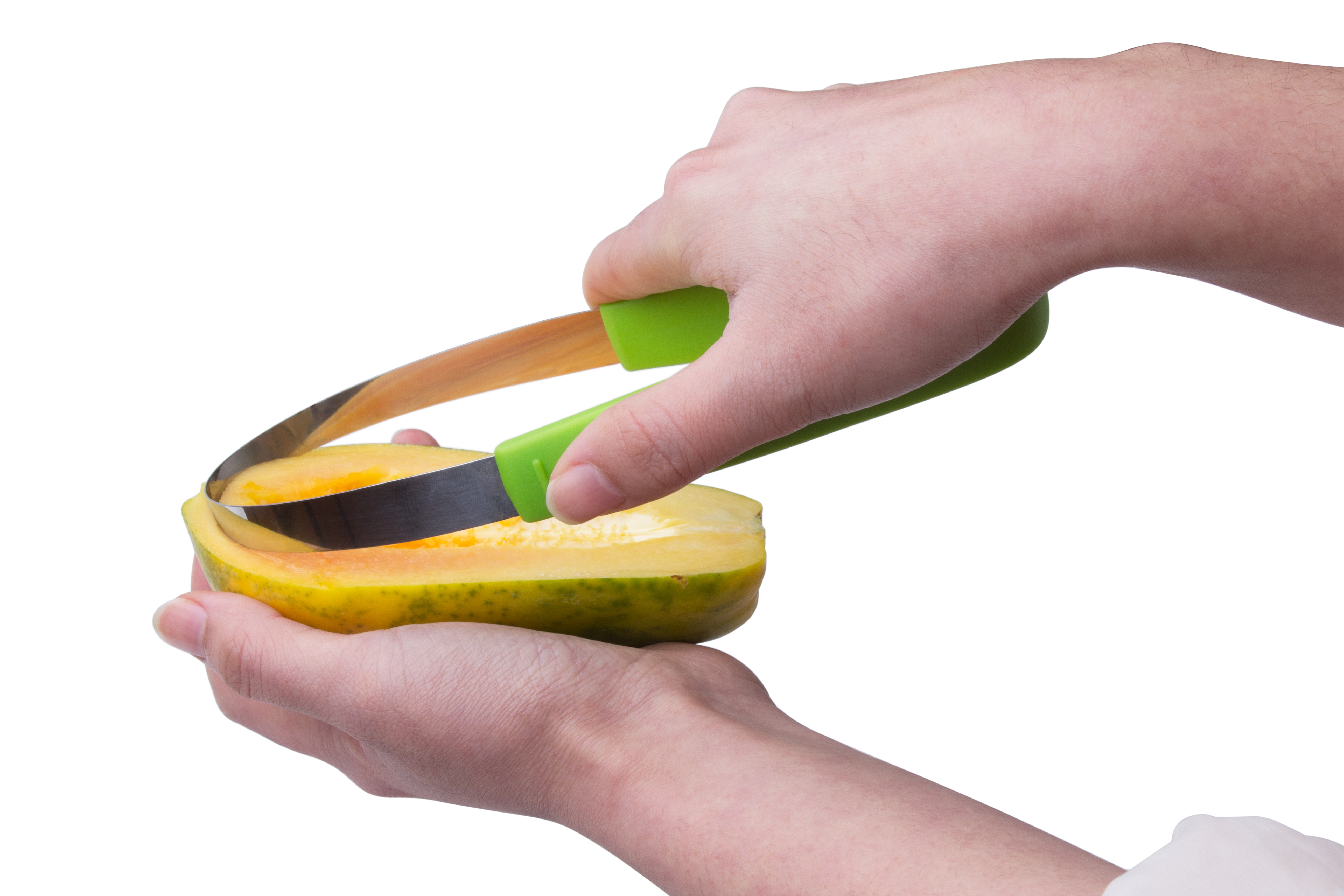
Fruit scoops are commonly used to form round or semi-round pieces from melon, watermelon, papaya, dragon fruit, and similar soft fruits. They can also support food presentation for fruit salads, dessert garnishes, cocktail decorations, buffet displays, and meal preparation. A multi-piece set gives users different scoop diameters for different serving styles.
For B2B buyers, the nesting format has two commercial advantages. First, it reduces perceived clutter, which is important for consumers with limited kitchen storage. Second, it can improve packaging efficiency because several tools may occupy less space than separate full-length utensils. Before assuming carton savings, however, request actual product dimensions, inner box size, master carton size, and gross weight from the supplier.
Design Factors Buyers Should Evaluate
A useful nesting scoop should combine cutting performance with safe, comfortable handling. The bowl edge needs to be shaped well enough to enter fruit without excessive force, while the handle should support control during rotation. If the set uses color-coding, the colors should help users identify different sizes quickly, but color should not hide weak construction.
Ask the factory or supplier to provide drawings or measured samples that show scoop diameter, overall length, handle width, bowl depth, and nesting arrangement. Also check whether the tools separate smoothly after storage. If they jam together or rattle excessively, the nesting concept may create customer complaints.
Material and Finish Questions
The original article notes that stainless steel is often preferred for fruit scoops because it can resist rust and provide a clean cutting edge. Even so, buyers should not rely on a general material description. Ask the supplier to identify the exact material grade used for the scoop bowl and handle, and confirm whether the handle includes plastic, silicone, coating, or other components.
Finish quality deserves close attention. Poor polishing may leave rough edges near the bowl or handle connection. A mirror-like surface can look attractive, but the more important issue is whether the surface is smooth, easy to clean, and free from burrs. If the product is intended for dishwasher use, ask the supplier whether that claim is supported and what washing conditions were considered.
Comparison Checklist for Factory Evaluation
| Evaluation Area | What to Check | Questions to Ask the Supplier |
|---|---|---|
| Material | Metal type, handle material, coating or plating | What material grade is used for each component? |
| Nesting fit | How pieces stack, separate, and remain aligned | Can you provide photos or samples showing the nested set? |
| Cutting edge | Bowl rim sharpness, consistency, and safety | How is the scoop edge formed and inspected? |
| Ergonomics | Grip comfort, hand clearance, control during scooping | Are there alternative handle shapes or sizes? |
| Packaging | Retail box, card, sleeve, or bulk packing | What packaging options and artwork requirements are available? |
| Quality control | Appearance, dimensions, function, and cleanliness | What inspection steps are used before shipment? |
Sampling and Functional Testing
Do not evaluate a nesting fruit scoop set only from product photos. Request production-like samples and test them with actual fruit. A sample should be used on soft melon, firmer fruit, and chilled fruit if that matches the intended market. Check whether the scoop forms a clean shape, whether the bowl bends, and whether the handle feels stable under pressure.
- Inspect each tool for burrs, stains, scratches, loose parts, or uneven edges.
- Measure the scoop sizes and compare them with the supplier’s stated specifications.
- Nest and separate the set repeatedly to test fit and convenience.
- Wash the samples several times and check for discoloration, trapped water, or handle issues.
- Ask several users to test comfort, especially if the handle is narrow or short.
If the product is for a retail brand, test the packaging as well. Confirm whether the nested tools stay in place during shipping simulation, shelf handling, and consumer opening.
OEM, Wholesale, and Branding Considerations
Many buyers source fruit scoop sets for private label, retail programs, hospitality supply, or promotional kits. If customization is required, clarify which parts can be customized. Options may include packaging artwork, handle color, logo placement, set configuration, or instruction inserts, but availability depends on the supplier’s actual process.
Before discussing design changes, ask practical commercial questions: What is the minimum order quantity for standard items and customized items? What are the lead times for samples and bulk production? Are tooling charges required for a new handle or new scoop size? What file formats are needed for packaging artwork? What inspection reports or product photos can be provided before shipment?
A reliable sourcing conversation should be specific. Instead of accepting broad statements such as “high quality” or “food safe,” request written specifications and supporting documentation relevant to your market. Requirements can vary by country and sales channel, so importers should confirm applicable compliance obligations with their own regulatory or testing advisors.
Common Quality Risks to Avoid
Small kitchen tools can still create returns if details are overlooked. Common issues include rough rims, weak handle joints, inconsistent scoop sizes, poor polishing, excessive packaging movement, and colors that differ from approved samples. Nesting products can also have fit problems if tolerances are not controlled.
For wholesale orders, set a clear approved sample before production. Define acceptable appearance standards, dimensional tolerances where necessary, labeling requirements, and packing methods. If third-party inspection is needed, arrange it before the shipping date rather than after goods are packed and ready to leave.
Practical FAQ
How many pieces should a nesting fruit scoop set include?
That depends on the target buyer. A smaller set may suit basic home use, while a larger set can appeal to baking, buffet, bar, or catering users. Ask the supplier which size combinations are available.
Is stainless steel always the best material?
Stainless steel is commonly preferred for durability and rust resistance, but buyers should confirm the actual grade, thickness, finish, and handle materials before ordering.
Can a factory make custom colors or packaging?
Possibly, but customization depends on the supplier’s process, order quantity, artwork requirements, and production schedule. Request written details before quoting to customers.
What should be included in a pre-shipment inspection?
Inspection can include quantity, dimensions, appearance, nesting fit, packaging, labeling, and simple functional checks. Define your inspection checklist before production begins.
What is the most important sourcing step?
Sample testing is essential. A nesting fruit scoop set should be checked in real use, not judged only by photos, catalog descriptions, or general supplier claims.
