




OEM Children Scissors: Safe and Fun Crafting Tools for Kids
OEM children scissors are a common sourcing category for school supply brands, craft retailers, stationery wholesalers, and educational product distributors. The goal is not only to find a bright-looking product, but to choose scissors that match the age group, cutting task, packaging plan, and safety expectations of the target market. For children, scissors should support learning and creativity while reducing avoidable frustration and risk.
This guide explains how to evaluate colorful kids scissors, children craft scissors, and spring scissors for kids from a practical B2B sourcing perspective. It also highlights the questions buyers should ask before confirming an OEM order, especially when details such as materials, testing, packaging, and labeling must be verified directly with the supplier.
Key Takeaways
- Choose children scissors according to user age, hand size, and cutting material, not handle color alone.
- Blunt-ended blades, comfortable grips, and lightweight handling are important points to review.
- Spring scissors for kids can help beginners who struggle to reopen the blades after each cut.
- For OEM projects, ask suppliers clear questions about materials, sample approval, packaging, labeling, and applicable market requirements.
What Makes Children Scissors Different from Standard Scissors?
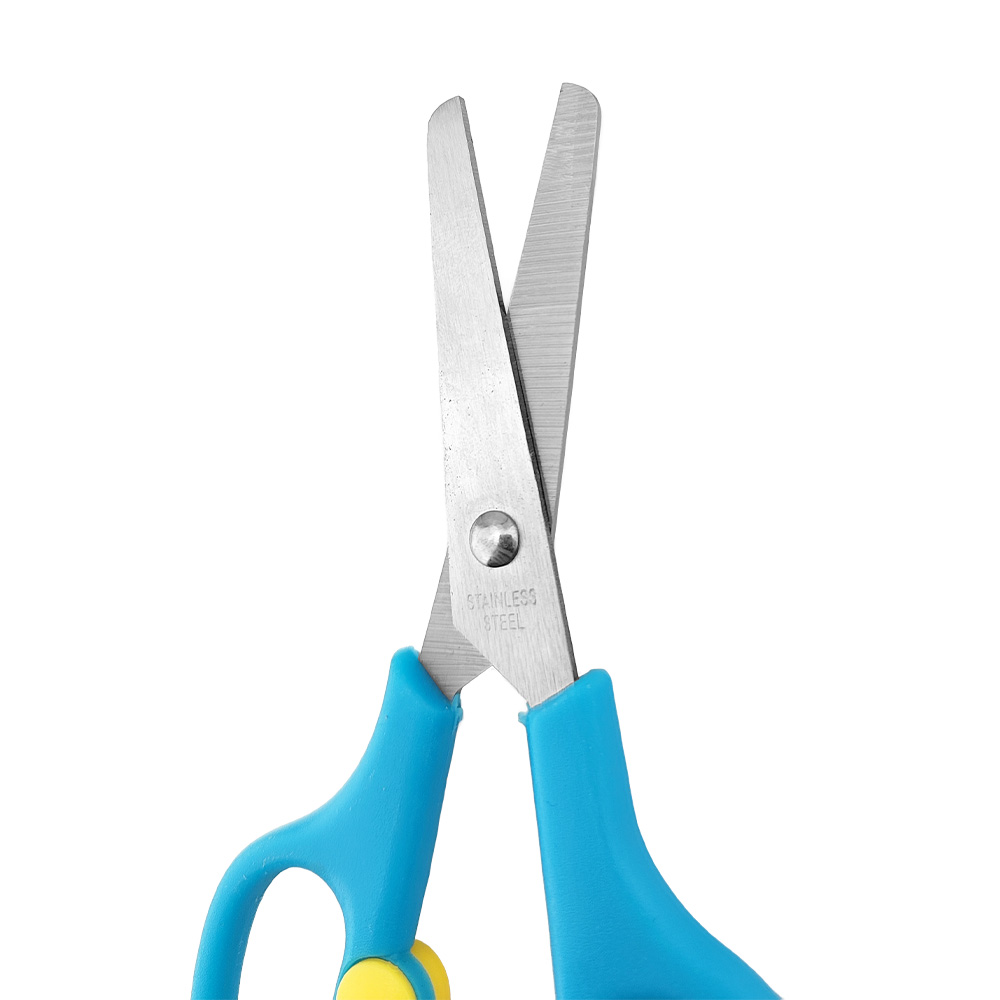
Children scissors are designed for smaller hands and early cutting practice. Unlike standard office scissors, they usually emphasize control, short cutting strokes, and safer blade geometry. The original product description highlights several child-focused ideas, including colorful handles, blunt-ended blades, lightweight handling, and ergonomic grips. These features are relevant because young users are still developing grip strength, coordination, and safe tool habits.
However, buyers should avoid assuming that every children scissors product is suitable for every child. A pair intended for paper crafts may not work well on thicker cardboard or fabric scraps. A spring-assisted design may be helpful for preschool craft activities, while older students may prefer a more conventional action. A good sourcing brief should define the intended use before discussing colors, branding, or packaging.
Safety-Focused Features to Review Before Ordering
Safety is one of the main search intents behind OEM children scissors. The source article mentions blunt-ended blades, which are commonly preferred for classroom and home craft use. Buyers should also review blade exposure, handle shape, screw tightness, opening angle, and how easily the scissors can be controlled by small hands. If a product uses rust-resistant stainless steel blades, as described in the original article, confirm the exact material and finish with the supplier rather than relying only on marketing wording.
For B2B purchases, safety review should be documented. Ask for current product photos, samples from the intended production setup, and information about the destination market’s requirements. Do not treat a sample as approved until the buyer has checked the actual feel, cutting performance, handle edges, blade tips, and packaging warnings.
Color, Handle Design, and Classroom Appeal
Colorful kids scissors can help children identify their own tools and make group craft sessions more organized. The original article describes bright azure blue handles with yellow accents. That kind of contrast can be attractive in retail display packs or school supply sets, but color should also serve a practical function. For example, a buyer may request different handle colors for age ranges, classroom groups, multipacks, or private label collections.
Handle design matters as much as color. Small users need a grip that fits comfortably without forcing an awkward wrist angle. If left-hand and right-hand versions are required, clarify this early. Some handles look symmetrical but still cut better for one dominant hand. For OEM buyers, it is also useful to ask whether handle colors can be matched to a brand palette and what color tolerance applies during production.
Spring Scissors for Kids: When They Are Useful
Spring scissors for kids include a spring mechanism that helps open the blades after each cut. This can reduce effort for children who are still learning the open-and-close motion. In craft settings that involve repetitive cutting, spring assistance may also help keep the activity moving without tiring younger users too quickly.
That said, spring scissors are not automatically the best choice for every order. Buyers should test whether the spring action feels smooth, whether the scissors can be stored safely, and whether the mechanism is suitable for the intended age group. Ask the supplier how the spring is assembled, whether replacement or locking features exist, and how the product should be packaged to prevent damage in transit. If these details are not stated, treat them as supplier questions rather than confirmed features.
Comparison Checklist for OEM Children Scissors
| Selection point | What to check | Questions to ask the supplier |
|---|---|---|
| Blade tip | Blunt-ended design and controlled blade exposure | Can you provide close-up photos and a pre-production sample? |
| Blade material | Whether the stated material matches the quotation | What is the exact blade material and surface finish? |
| Handle comfort | Grip size, edges, and fit for small hands | Which age range is this handle designed for? |
| Spring function | Smooth reopening action and secure assembly | Is the spring mechanism optional, fixed, or lockable? |
| Cutting use | Paper, craft sheets, light cardboard, or other materials | What materials were used for internal cutting checks? |
| OEM packaging | Branding area, warning text, barcode, and retail display needs | Can packaging artwork be reviewed before mass production? |
How to Build a Clear OEM Sourcing Brief
A clear sourcing brief prevents delays and misunderstandings. Instead of asking only for “children scissors,” describe the target buyer, intended selling channel, and expected use. A school procurement order may prioritize durability and classroom storage, while a craft retail pack may focus on color variety and giftable presentation.
- Define the age range and user environment, such as home craft, kindergarten, primary school, or art class.
- Specify the cutting materials, including paper, thin card, foam sheets, or fabric scraps if relevant.
- State whether blunt-ended blades, spring assistance, or a specific handle color is required.
- Request samples before confirming tooling, packaging, or bulk production.
- Ask which packaging formats are available, such as carded packs, bulk classroom packs, or customized retail packaging.
- Confirm labeling, language, warnings, and documentation needed for the destination market.
Commercial details such as MOQ, lead time, unit price, certification status, and private-label artwork requirements should be requested directly from the supplier. They should not be assumed unless they appear in an official quotation or contract document.
Quality Review Before Shipment
Before shipment, buyers should agree on practical inspection points. For children craft scissors, useful checks include blade alignment, handle finish, screw or pivot stability, spring action where applicable, color consistency, packaging accuracy, and carton labeling. Cutting tests should match real use: if the scissors are sold for paper crafts, test paper cutting; if the product is promoted for thicker craft materials, verify that separately.
It is also wise to compare production samples against the approved sample. A small change in handle mold, blade sharpness, spring tension, or packaging material can affect user experience. For repeat OEM orders, keep reference samples and approved artwork files so future batches can be checked more efficiently.
Practical FAQ
Are OEM children scissors suitable for unsupervised use?
Children scissors with blunt-ended blades may reduce certain risks, but supervision guidance depends on the child’s age, skill level, and the product’s intended use. Buyers should include clear usage and warning information on packaging where appropriate.
What should buyers confirm about stainless steel blades?
If a supplier states that the blades are stainless steel or rust-resistant, ask for the exact material description, finish, and sample verification. Do not assume a grade or performance level unless it is documented.
When should I choose spring scissors for kids?
Spring scissors are useful for beginners who need help reopening the blades or for craft activities with many repeated cuts. Test the spring feel and storage safety before placing an OEM order.
Can handle colors and packaging be customized?
Many OEM programs may allow color or packaging discussions, but availability, MOQ, cost, and lead time must be confirmed with the supplier. Provide artwork and color references early to avoid revisions.
What is the most important first step in sourcing children craft scissors?
Start with the user scenario: age range, cutting material, selling channel, and safety expectations. Once those are clear, supplier comparisons become much easier and more accurate.
