




OEM Children Scissors: Safe and Practical Sourcing Guide
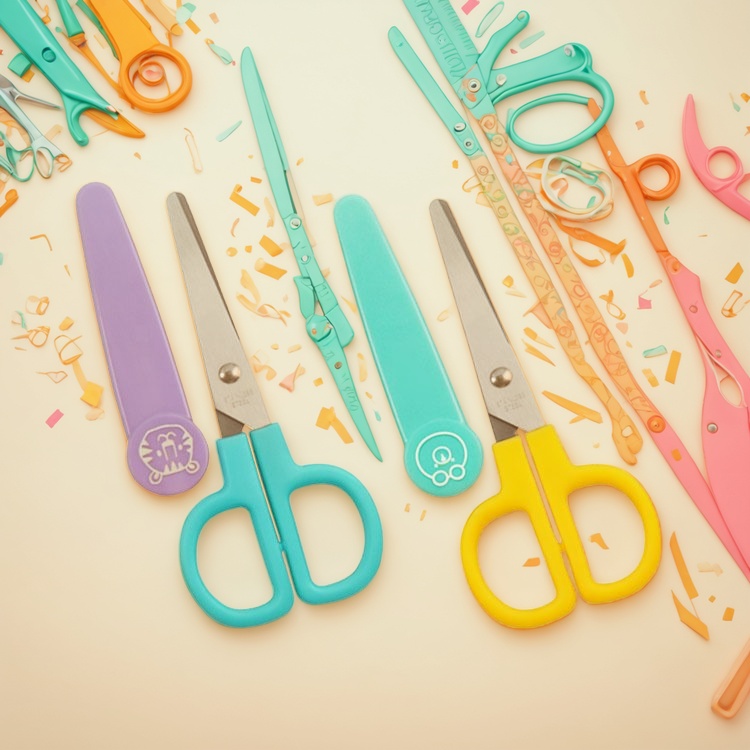
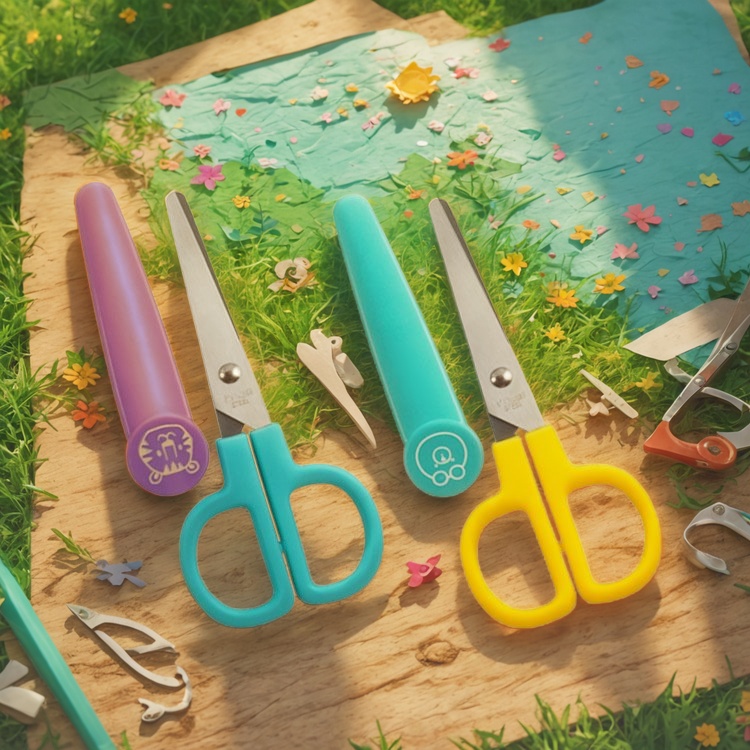
OEM children scissors sit in a careful category: they need to help young users cut paper and craft materials, but they also need to reduce obvious risks in homes, classrooms, activity centers, and retail craft kits. The original product information highlights blunt-tip blades, bright turquoise and yellow handles, soft large loop handles, and protective covers in purple and turquoise with playful squid and octopus icons. These are useful details for buyers comparing student scissors with cover for child-focused programs or private-label lines.
For sourcing teams, the goal is not simply to choose the most colorful pair of scissors. A reliable decision should consider age suitability, grip comfort, blade protection, packaging, quality consistency, and the questions a buyer should ask before placing an OEM or wholesale order. The following guide explains how to evaluate children safety scissors without assuming unconfirmed factory capacity, pricing, certifications, or technical specifications.
Key Takeaways
- Blunt tips, comfortable handles, and a protective cover are central features to review when sourcing children scissors.
- Bright colors and playful covers can support classroom organization and encourage craft participation.
- Buyers should ask the supplier to confirm material details, age guidance, packaging options, and applicable safety documentation.
- Samples should be checked with real paper-cutting tasks before wholesale, OEM, or educational procurement.
What Makes OEM Children Scissors Different?
OEM children scissors are usually selected for a planned sales channel or use case, such as school supplies, craft kits, stationery retail, promotional education packs, or branded household goods. Compared with general scissors, child-focused scissors place more attention on tip shape, grip size, handle comfort, storage safety, and visual appeal.
The original article describes blunt-tip blades intended to reduce the chance of accidental pokes, as well as ergonomic handles that help make cutting activities more secure and comfortable. It also mentions stainless steel blades that cut through paper and craft materials smoothly. These points are especially relevant for buyers serving preschool, early primary, and home craft markets, where adult supervision may vary and product clarity matters.
Safety Features Buyers Should Review
Safety language should be handled carefully in procurement documents and marketing copy. A supplier may describe a product as children safety scissors, but buyers should still request evidence and written confirmation for any market-specific requirements. Do not rely on appearance alone.
Key safety-related points to review include the shape of the blade tips, the smoothness of the handle edges, the firmness of the cover fit, and whether the scissors are appropriate for the intended user age. The source article states that these scissors are ideal for ages 3 and up, but buyers should still ask the supplier how that recommendation was determined and whether it fits the destination market.
For classroom use, the protective cover is particularly practical. Student scissors with cover can be stored in desks, craft boxes, or supply cabinets with less direct blade exposure. A cover also helps teachers count and organize scissors after activities, especially when multiple colors or cover icons are used.
Design Details That Support Classroom Use
The turquoise and yellow handle colors described in the original article are useful for more than decoration. Bright handles are easier to spot on a crowded craft table, inside a stationery box, or on the floor after a lesson. Large loop handles can also make the scissors easier for small hands to control, especially during longer cutting tasks.
The purple and turquoise sheaths with squid and octopus icons add a playful element, but buyers should evaluate them practically. Do the covers slide on and off without being too loose? Are the icons printed, molded, or attached? Could the design create small detachable parts? These are the kinds of details that should be checked through samples rather than judged from a catalog image alone.
Comparison Checklist for Sourcing
| Evaluation Point | What to Check | Why It Matters |
|---|---|---|
| Blade tip | Confirm blunt-tip design and sample smoothness | Helps reduce poke hazards in child use settings |
| Blade material | Ask the supplier to confirm the steel type and finish | Affects cutting performance, durability, and care instructions |
| Handle design | Review loop size, edge smoothness, and grip comfort | Supports control during paper cutting and crafts |
| Safety cover | Test fit, removal force, and storage convenience | Improves classroom storage and transport safety |
| Age guidance | Ask how the recommended age range is determined | Helps align product labeling with end-user expectations |
| Packaging | Request options for retail, classroom packs, or OEM branding | Impacts shelf display, logistics, and buyer communication |
Questions to Ask a Scissors Factory or Supplier
When sourcing from a scissors factory or trading supplier, clear questions reduce risk and prevent vague assumptions. Buyers should prepare a written checklist before discussing OEM children scissors, especially if the product will be sold under a private label.
- What exact blade material and handle material are used?
- Can the supplier provide product samples with the same cover, color, and packaging proposed for bulk order?
- What age recommendation will appear on the packaging, and what is it based on?
- Are custom colors, cover icons, logos, or retail cards available, and what are the requirements?
- What quality checks are performed before shipment, and can inspection criteria be shared?
- Which safety or compliance documents are available for the target market, if required?
These questions do not assume a supplier has a specific certification, testing result, or production capacity. Instead, they help the buyer collect the facts needed for a responsible purchasing decision.
Best Use Cases for Student Scissors with Cover
Children scissors with covers are well suited to preschool craft areas, primary school art lessons, home stationery sets, paper-cutting activities, and educational gift packs. They are especially useful where scissors are stored with other supplies, because the cover helps keep the blades separated from crayons, paper, glue sticks, and small craft items.
The scissors described in the source content are intended for paper and craft materials. Buyers should avoid overstating performance for thick cardboard, fabric, plastic sheets, or other materials unless confirmed by testing. For children, predictable cutting performance on ordinary craft paper is more valuable than aggressive cutting strength.
How to Evaluate Samples Before Ordering
Before placing a wholesale or OEM order, samples should be tested in realistic conditions. Ask adults to inspect edges and covers, then observe supervised use with age-appropriate craft tasks if your organization allows it. Look for comfort, ease of opening and closing, cutting consistency, and whether the cover remains useful after repeated removal.
Also check packaging language. Claims such as safety, stainless steel, age suitability, or ergonomic design should be clear and supportable. If the product will be sold in multiple countries, consult qualified compliance support for labeling and documentation requirements rather than relying only on supplier descriptions.
FAQ
Are blunt-tip scissors completely safe for children?
No scissors are completely risk-free. Blunt tips can help reduce poke hazards, but children should still use scissors with age-appropriate supervision and clear classroom or home rules.
Why choose student scissors with cover?
A cover helps protect the blades during storage and transport. It is useful for classrooms, craft boxes, and retail sets where scissors may be stored with other items.
Can OEM children scissors be customized?
Many OEM projects may involve color, logo, packaging, or cover design discussions, but availability depends on the supplier. Buyers should ask what customization is possible and what conditions apply.
What should buyers confirm before bulk ordering?
Confirm materials, sample quality, cover fit, age guidance, packaging details, inspection standards, and any documents needed for the destination market.
Are these scissors suitable for all craft materials?
The source information mentions paper and craft materials. Buyers should test samples on the exact materials intended for the product program before making performance claims.
With the right checks, OEM children scissors can be a practical product for education, craft, and stationery channels. Focus on verified features, clear supplier communication, and sample-based evaluation before committing to a larger order.
