




OEM Children Scissors: Safe, Durable & Fun Designs
OEM children scissors are a small product category with serious expectations. Parents, schools, craft brands, stationery distributors, and retailers all want scissors that help children cut paper confidently while reducing avoidable risks. For buyers, the challenge is not only choosing a colorful design. It is also understanding blade shape, handle comfort, age suitability, packaging, labeling, and supplier communication before placing an order.
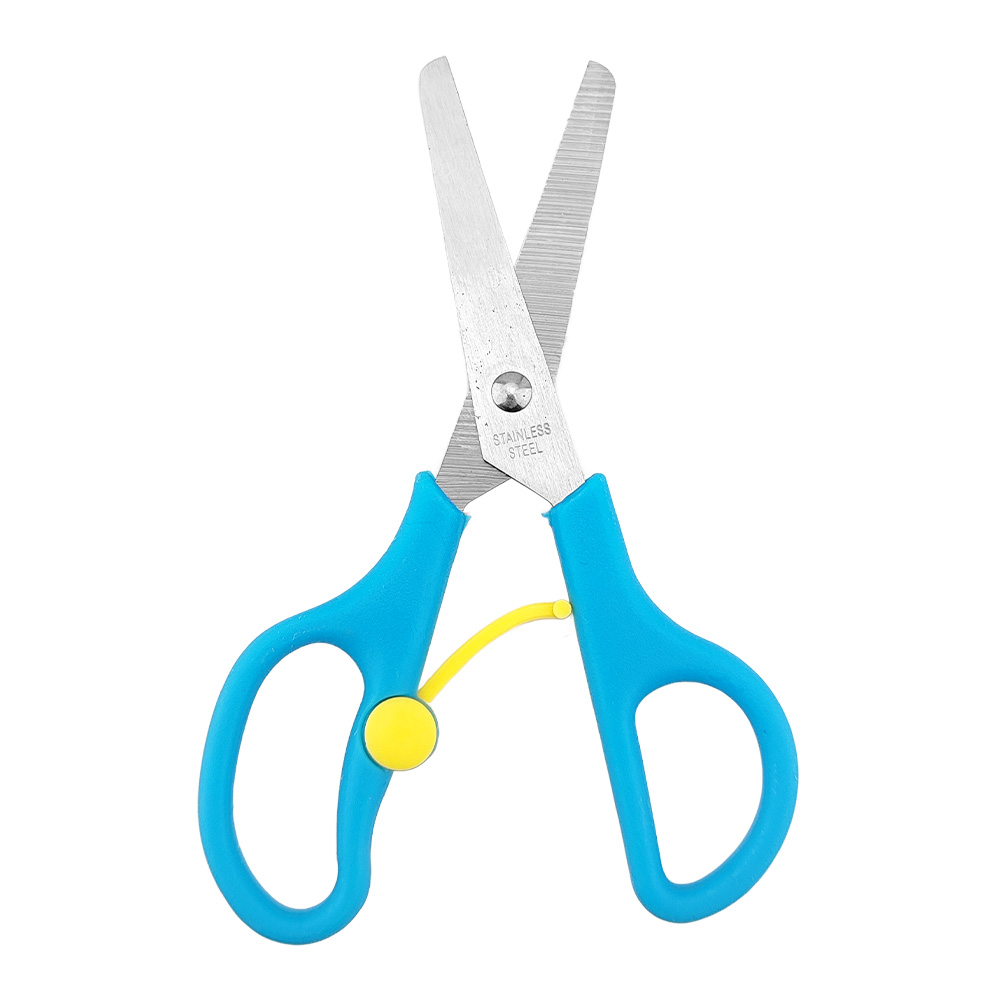
The original product information highlights several useful features: child-friendly sizing, ergonomic handles, colorful blue handles, a yellow accent near the pivot, rounded blades for added safety, stainless steel blades, and optional spring-assisted designs for beginners. This guide turns those points into a practical sourcing checklist for buyers evaluating OEM children scissors for school, craft, or retail programs.
Key Takeaways
- Choose children scissors by age range, intended use, blade shape, and handle comfort, not color alone.
- Rounded blades and ergonomic handles are important design points for young users, but buyers should still verify performance and safety expectations with the supplier.
- For OEM projects, ask clear questions about materials, samples, packaging, labeling, artwork files, lead time, and quality checks.
- Spring scissors can help some beginners open and close the blades more easily, but they should be tested with the target user group.
What Makes Children Scissors Different from Standard Scissors?
Children scissors are designed around smaller hands and developing motor skills. Compared with general household scissors, they usually need shorter blades, easier grip control, and a shape that helps children learn safe cutting habits. The goal is not to make a toy; it is to provide a functional cutting tool that suits supervised school and craft activities.
For OEM buyers, the first decision is the use case. Scissors for preschool paper cutting, primary school stationery kits, craft sets, and promotional bundles may all require different handle sizes, blade lengths, colors, and packaging. A buyer should define the target age range and cutting material before discussing samples. Paper, thin card, yarn, and fabric scraps do not place the same demands on a scissor blade.
Safety-Focused Design Points to Review
The original article emphasizes safety-rounded blades. Rounded blade tips can reduce the chance of accidental poking compared with sharp pointed tips, which is why they are common in school scissors. However, buyers should not treat any one feature as a complete safety guarantee. Children scissors should still be used with supervision and age-appropriate instruction.
When evaluating a design, check whether the blade tips are rounded evenly, whether the edge is suitable for the intended cutting task, and whether the pivot opens and closes smoothly without feeling loose. The handle should allow a child to control the scissors without pinching fingers. If the product includes a spring mechanism, test whether the spring action is consistent and whether it can be managed safely by children in the intended age group.
Materials, Handles, and Cutting Performance
The source article refers to stainless steel blades and ergonomic handles. Stainless steel is commonly used in scissors because it can offer practical corrosion resistance and a clean cutting edge, but buyers should ask the supplier to specify the exact material, finish, and maintenance recommendations rather than assuming a grade or performance level.
Handle design is equally important. A colorful blue handle may make the scissors more appealing to children, while a yellow accent near the pivot can create a visual cue for orientation or grip. Still, appearance should be reviewed together with comfort. Request physical samples and check whether the handle openings fit the intended age range, whether the edges feel smooth, and whether left-handed users need a separate option.
Comparison Checklist for OEM Children Scissors
| Selection Point | What to Check | Questions to Ask the Supplier |
|---|---|---|
| Blade tip | Rounded tips, smooth finishing, suitable cutting edge | Can you provide samples showing the final blade shape and edge finish? |
| Blade material | Stainless steel or specified alternative | What blade material is used, and what maintenance guidance should be printed? |
| Handle comfort | Ergonomic shape, smooth edges, child-sized grip | Which age range is this handle size designed for? |
| Spring assist | Easy opening action for beginners, consistent resistance | Is the spring optional, removable, or fixed in the design? |
| OEM customization | Color, logo, packaging, instructions | What artwork format, approval process, and sample timeline are required? |
When Spring Scissors for Kids Make Sense
Spring scissors for kids can be helpful when children are still building hand strength and coordination. The spring helps reopen the blades after each cut, reducing the effort needed to repeat the cutting motion. This can be useful in classrooms, therapy-related craft activities, and beginner craft sets.
However, spring-assisted scissors are not automatically the best choice for every buyer. Some teachers prefer conventional scissors because they teach the full open-and-close motion. Retail buyers should consider offering both standard and spring-assisted versions if their customer base includes different age groups and skill levels. Before committing to an OEM order, compare user feedback from sample testing rather than relying only on catalog photos.
OEM Sourcing Questions Buyers Should Ask
For wholesale or private-label projects, clear communication reduces risk. Avoid vague requests such as “children scissors with good quality.” Instead, prepare a product brief covering target age, intended material, preferred colors, logo position, packaging format, warning text, and sample requirements.
- What blade material and handle material are used in the quoted model?
- Can the supplier provide pre-production samples with the final colors and logo?
- What packaging options are available for school kits, retail hanging cards, or bulk classroom packs?
- What quality checks are performed for blade alignment, pivot strength, handle finish, and cutting performance?
- What information should be included on the label for age guidance, supervision, and safe use?
- What are the supplier’s requirements for artwork files, color references, and approval before production?
If regulatory compliance is important for your market, ask the supplier what documentation can be provided and confirm requirements with your own compliance adviser or importer. Do not assume that a children product is suitable for a destination market without checking applicable rules.
Packaging and Instructions Matter
Children scissors are often purchased by adults for school lists, craft kits, and home projects. Good packaging should communicate the use case clearly: school scissors, kids craft scissors, or beginner spring scissors. It should also protect the blades during shipping and retail handling.
Instructions do not need to be long, but they should be practical. Basic safe-use reminders, age guidance, cleaning advice, and storage suggestions can help customers use the product correctly. For OEM programs, confirm whether instruction text, barcode placement, country-of-origin marking, and retail-ready packaging are the buyer’s responsibility or the supplier’s responsibility.
FAQ
Are rounded blades enough to make children scissors safe?
Rounded blades can reduce certain risks, but children scissors still require age-appropriate use and adult supervision. Buyers should also review handle fit, pivot smoothness, blade edge, and packaging warnings.
What materials should I request for OEM kids scissors?
The source product mentions stainless steel blades. Ask the supplier to confirm the exact blade and handle materials, finishing process, and care instructions before approving production.
Should I choose spring scissors or standard scissors?
Spring scissors may help beginners who struggle to reopen the blades. Standard scissors may be better for teaching conventional cutting motion. Test both with the intended users if possible.
Can colors and packaging be customized for wholesale orders?
OEM programs often discuss color, logo, and packaging customization, but availability depends on the supplier and project details. Ask about artwork files, sample approval, lead time, and any commercial requirements.
What should buyers check before confirming a children scissors order?
Review samples for blade alignment, rounded tips, handle comfort, cutting performance, spring action if included, packaging durability, and labeling details. Confirm all specifications in writing before production.
