




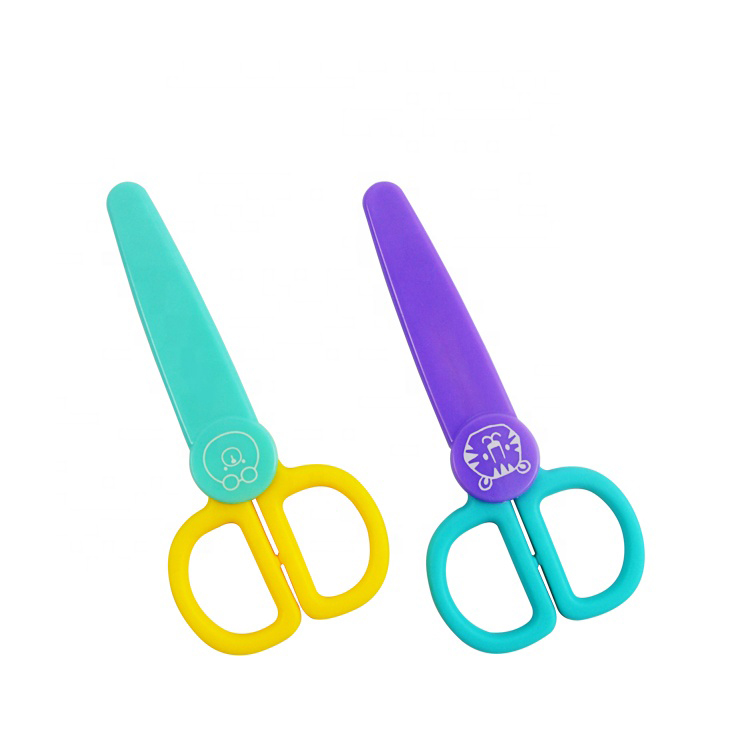
OEM Children Scissors: Safe & Fun for Creative Kids
OEM children scissors are designed for young learners who are practicing cutting, crafting, and basic classroom skills. For buyers, distributors, stationery brands, school suppliers, and craft-kit companies, the goal is not only to find a colorful product. The more important task is to source scissors that are easy for children to hold, suitable for supervised use, practical to store, and consistent enough for repeat orders.
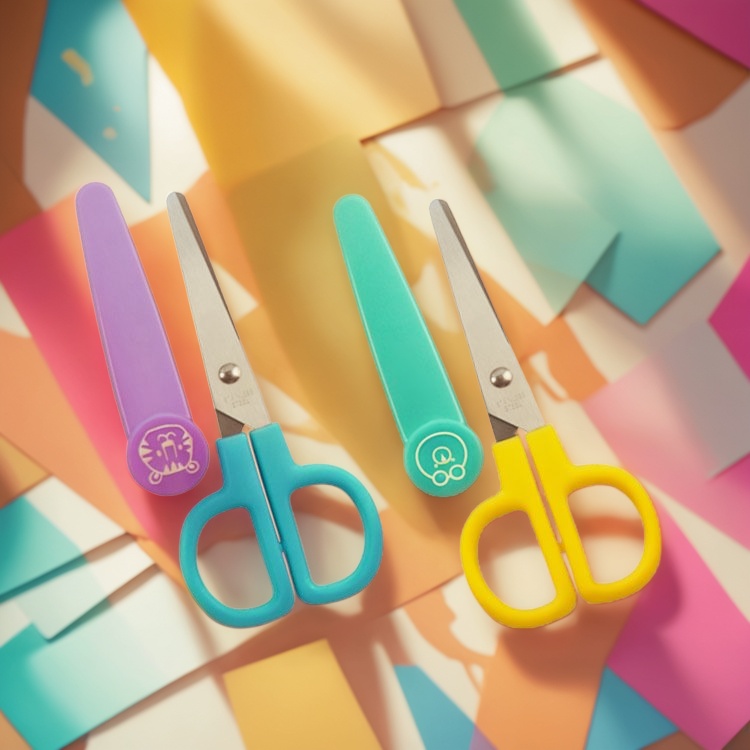
The original product description highlights several useful features: blunted stainless steel blades, rounded tips, ergonomic handles, protective covers, vibrant colors such as turquoise and yellow, and animal-themed cover designs. These details point to a product intended for school projects, home crafts, and fine motor skill development. This guide explains how to evaluate those features from a sourcing perspective without treating any single detail as a substitute for proper supplier verification.
Key Takeaways
- Children safety scissors should be evaluated for blade shape, tip design, handle comfort, and supervised-use suitability.
- Student scissors with cover can reduce storage risks and make the product easier to include in school bags or craft kits.
- OEM buyers should confirm materials, dimensions, packaging, labeling, and quality-control steps directly with the supplier.
- Fun colors and animal motifs may improve child appeal, but safety, consistency, and usability should come first.
- Commercial details such as MOQ, lead time, customization options, and test documentation should be requested before ordering.
What Makes Children Scissors Different?
Children scissors are not simply smaller versions of adult scissors. They are typically designed around supervised learning, short cutting tasks, and developing hand coordination. The original article notes child-friendly details such as blunted stainless steel blades, rounded tips, and ergonomic handles. These features matter because children are still learning how much pressure to apply, how to align paper, and how to keep fingers away from the cutting path.
For B2B buyers, this means product selection should start with intended use. A pair of scissors for preschool paper crafts may need a different cutting feel from scissors for older students working on classroom projects. Ask whether the product is intended for paper only, light card, felt, craft foam, or other materials. Do not assume cutting performance from appearance alone; request samples and test them with the materials your customers actually use.
Student Scissors with Cover: Why the Cover Matters
A protective cover is a simple feature, but it can have a meaningful impact on storage and handling. Student scissors with cover are easier to place in pencil cases, classroom bins, craft kits, or retail packages. A secure cover may also help reduce accidental contact with the blade edges when the scissors are not in use.
The source article mentions animal-themed covers and bright colors including turquoise and yellow. These visual details can help make the product more approachable for children and easier to organize by classroom group, set, or retail collection. However, buyers should check that decorative parts do not loosen easily and that the cover fits consistently across production batches.
Safety Features Buyers Should Verify
Safety claims should always be verified. The original content refers to blunted blades, rounded tips, and secure covers. These are useful design directions, but buyers should still ask suppliers for precise product information. For example, what blade material is used? What are the overall length and blade length? Is the handle shaped for left-hand, right-hand, or general use? Is the cover friction-fit, clip-on, or another design?
It is also important to consider the age group and market where the scissors will be sold. Different countries and sales channels may have their own requirements for labeling, warnings, packaging, and testing. Bonet-specific certifications or test results are not stated in the source, so buyers should not assume them. Instead, request current documentation from the supplier and confirm whether it matches the destination market.
Comparison Checklist for OEM Children Scissors
| Selection Point | What to Check | Why It Matters |
|---|---|---|
| Blade design | Blunted edges, rounded tips, cutting performance on target materials | Balances usability with supervised child safety |
| Handle comfort | Grip size, shape, smooth edges, left/right-hand suitability | Supports control and reduces hand fatigue |
| Protective cover | Fit, retention, ease of removal, decorative durability | Improves storage and transport safety |
| Appearance | Colors, animal motifs, surface finish, print quality | Supports retail appeal and classroom organization |
| OEM options | Logo placement, packaging style, color choices, labeling needs | Helps align the product with brand and channel requirements |
| Supplier verification | Samples, quality checks, documentation, lead time, MOQ questions | Reduces sourcing risk before bulk orders |
OEM and Wholesale Sourcing Guidance
When sourcing from a scissors factory or supplier, treat the first conversation as a specification-building exercise. Provide the intended market, user age range, preferred packaging, order channel, and target application. A supplier can only quote accurately when the product requirements are clear.
- Request physical samples before confirming a bulk order.
- Test cutting performance on paper, card, and any craft materials you plan to include in kits.
- Check handle comfort with the intended age group under adult supervision.
- Ask what customization is possible for colors, covers, logos, and packaging.
- Confirm commercial details such as MOQ, production lead time, carton packing, and sample policy.
- Ask what inspection process is used for blade alignment, cover fit, handle finish, and packaging accuracy.
For private-label or OEM programs, packaging is especially important. Retail buyers may need barcode placement, warning labels, multilingual text, or hang-card formats. School and institutional buyers may prefer bulk packs or simple storage-friendly packaging. These details should be confirmed in writing before production.
Use Cases in Schools, Homes, and Craft Kits
Children safety scissors are commonly used for classroom art, home craft time, scrapbooking activities, and educational kits. In schools, teachers often need scissors that are easy to distribute, easy to collect, and durable enough for repeated use. In retail, parents may look for a child-friendly shape, cheerful color, and a cover for storage. In craft kits, the scissors must fit the box or pouch and match the difficulty level of the included projects.
Fine motor skill development is another practical reason these products are used. Cutting paper helps children practice hand strength, bilateral coordination, and visual tracking. Still, scissors should not be treated as unsupervised toys. Product instructions and packaging should communicate appropriate supervision and use conditions clearly.
Questions to Ask a Scissors Factory
Before placing an OEM order, prepare a short but specific supplier questionnaire. Useful questions include: What materials are used for the blades, handles, and covers? Are the tips rounded on every size? Can the supplier provide product drawings or dimensions? What color options are available? Can animal-themed covers be customized? What packaging formats can be produced? What testing or compliance documents are available for the destination market?
Also ask how the supplier handles quality variation. For example, how are loose covers, rough handle edges, weak rivets, or misaligned blades identified before shipment? If the order involves multiple colors, ask how color consistency is managed. If the product is packed as a set, ask whether each set is checked for the correct color, cover, and label combination.
Practical FAQ
Are OEM children scissors suitable for all ages?
Not automatically. The suitable age range depends on size, blade design, local regulations, labeling, and the intended use. Buyers should request supplier guidance and verify requirements for their market.
Why choose student scissors with a cover?
A cover helps protect the blades during storage and transport. It is useful for pencil cases, classroom bins, retail packs, and craft kits, especially when products are handled frequently.
Can colors and covers be customized?
Many OEM programs allow some level of customization, but buyers should ask the supplier which colors, logo positions, packaging styles, and cover designs are available for the planned order quantity.
What should be checked in samples?
Check cutting performance, rounded tips, handle comfort, cover fit, surface finish, packaging quality, and consistency between sample units. Use the same materials your customers will cut.
What commercial details should buyers confirm?
Ask about MOQ, sample cost, lead time, packing method, customization charges, inspection process, shipping terms, and available documentation. These details are not stated in the source and should be confirmed directly with the supplier.
Final Sourcing Notes
OEM children scissors can be a practical product for schools, retail stationery lines, craft kits, and educational supply channels. The most useful designs combine child-friendly handling, blunted and rounded cutting features, protective covers, and appealing colors or motifs. For buyers, the best sourcing approach is to define the application first, test samples carefully, and ask the supplier precise questions before committing to production.
