




OEM Grater Manufacturer and ODM Factory Guide
For kitchenware brands, importers and wholesale buyers, a grater may look like a simple product. In practice, it involves decisions about blade style, handle comfort, packaging, safety, durability and brand positioning. Choosing the right OEM grater manufacturer or ODM grater factory can help you turn a product idea into a commercially practical kitchen tool, but the sourcing process should be handled with clear specifications and careful supplier evaluation.
This guide explains how to approach custom grater sourcing, what to compare between OEM and ODM services, and which questions to ask before placing a production order. It is written for B2B buyers who need useful procurement guidance rather than promotional claims.
Key Takeaways
- Use OEM manufacturing when you already have a defined grater design, drawings or product requirements.
- Use ODM support when you want to adapt an existing factory design for your private label or market.
- Confirm blade type, handle design, packaging, sample process and quality checks before ordering.
- Ask suppliers direct questions about materials, compliance documents, lead times, customization limits and inspection options.
OEM vs. ODM Grater Sourcing
OEM and ODM are often used together, but they serve different sourcing needs. An OEM grater manufacturer typically produces according to the buyer’s design, drawings, tooling requirements or technical brief. This route is suitable for brands that already know the desired size, blade pattern, handle shape, packaging format and positioning.
An ODM grater factory usually offers existing or semi-developed product concepts that buyers can customize. This may include changes to handle color, surface finish, blade configuration, logo placement or retail packaging. ODM can be useful for brands that want a faster path to market, provided the design suits the target customer and can be differentiated enough for the sales channel.
| Sourcing option | Best for | Buyer should confirm |
|---|---|---|
| OEM grater manufacturing | Brands with a specific product concept or technical design | Drawing requirements, tooling ownership, sample approval process and quality criteria |
| ODM grater factory service | Private label buyers adapting an existing design | Available customization, exclusivity limits, packaging options and branding placement |
| Wholesale standard product | Distributors needing simpler, faster assortment building | Stock availability, carton details, labeling rules and after-sales handling |
Define the Product Before Contacting Suppliers
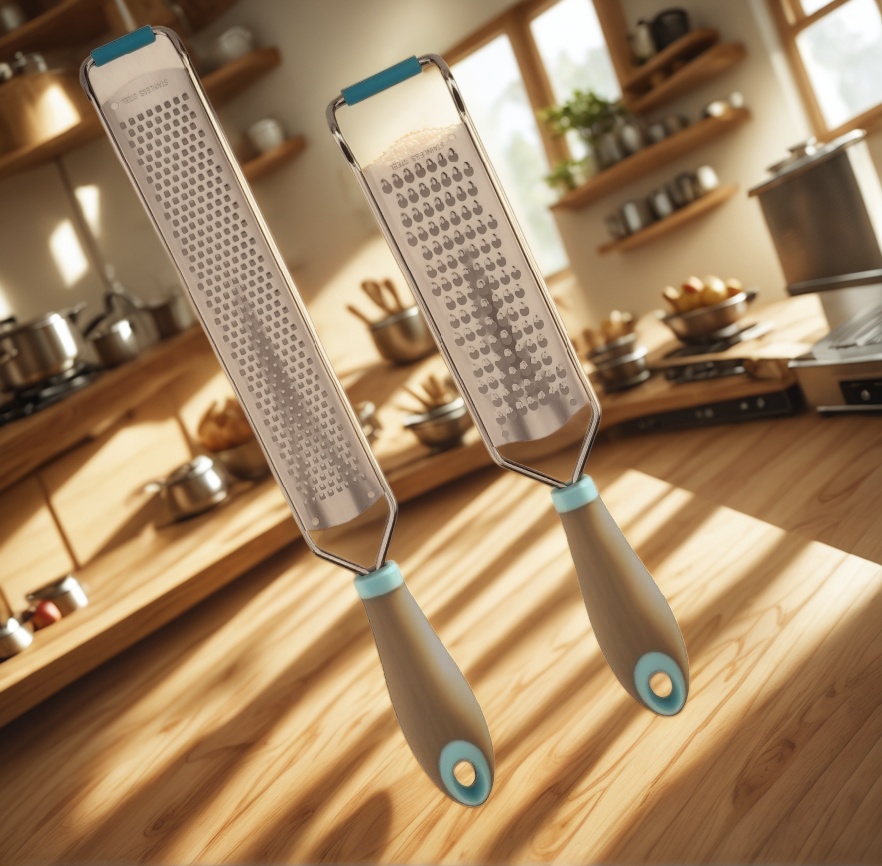
A clear request for quotation helps suppliers respond accurately. Instead of asking only for a price, prepare a product brief that explains how the grater will be used and sold. For example, the original concept described a grater with two blade types: a fine etched surface for citrus zesting or hard cheese, and a larger blade pattern for shredding vegetables or chocolate. If this kind of dual-function design is important, state it clearly and ask the supplier what options are available.
Your brief may include:
- Intended use, such as zesting, shredding, grating cheese or preparing vegetables.
- Preferred blade pattern, number of grating surfaces and approximate working area.
- Handle expectations, including grip comfort, color, hanging loop or storage needs.
- Target sales channel, such as supermarket, e-commerce, promotional set or professional kitchen supplier.
- Packaging style, logo requirements and instruction language needs.
Do not assume that every factory can meet every detail. Ask what is standard, what requires tooling, and what changes may affect cost or lead time.
Material and Blade Questions to Ask
The source article mentioned durable food-grade stainless steel, but buyers should still verify material details directly with the supplier. A responsible sourcing process should ask for the exact material description, available documentation and the factory’s normal quality control steps. If your market has specific food-contact requirements, request relevant documents and confirm whether testing is current and applicable to your product and destination market.
Blade performance should be reviewed through samples, not only product photos. A fine etched blade may be suitable for citrus zest or hard cheese, while a larger pattern may be better for vegetables or chocolate. During sample testing, check whether the blade cuts cleanly, whether food clogs the surface, and whether the tool feels stable in hand. Also check the edges, corners and handle connection for comfort and safety during normal use.
Handle, Color and Branding Customization
Customization is one of the main reasons buyers choose an OEM or ODM grater partner. The original article described options such as ergonomic soft handles, specific color palettes and an integrated hanging loop. These can be useful features, but they should be treated as specification points to confirm rather than assumptions.
Ask the supplier which handle materials are available, whether color matching is possible, and what tolerance should be expected between samples and production. If your brand requires a particular gray, blue or other accent color, provide a Pantone reference or physical standard if possible. For logo application, ask whether the supplier supports printing, engraving, molding or packaging-only branding, and request samples showing the actual result.
Sampling and Quality Review Process
Sampling is where sourcing decisions become practical. A sample should be evaluated by the same people who understand your customer: product managers, sales teams, quality staff and, when possible, representative end users. Do not approve a grater only because it looks attractive in a photo. Test it with realistic foods and cleaning routines.
- Request a pre-production sample or available reference sample.
- Check blade sharpness, cutting efficiency and clogging behavior.
- Review grip comfort, hanging loop strength and overall balance.
- Inspect surface finishing, burrs, joints and packaging fit.
- Confirm final artwork, barcode placement and instruction wording before mass production.
If the product is intended for retail, also evaluate how it appears on a shelf or in an online listing. A compact grater, a dual-blade design or a colored handle may all affect perceived value, but the product still needs to be easy to understand and safe to use.
Supplier Evaluation Checklist
Before choosing an OEM grater manufacturer or ODM grater factory, compare suppliers on more than unit price. A low quotation is not helpful if communication is poor, samples are inconsistent or packaging requirements are misunderstood. Use structured questions to reduce risk.
- What grater designs are already available, and which parts can be customized?
- Can the supplier work from drawings, reference samples or a written product brief?
- What materials are used for the blade, frame and handle, and what documentation can be provided?
- What is the sample lead time, and how many revisions are normally included?
- What quality checks are performed during production and before shipment?
- What packaging formats are available for wholesale, retail or e-commerce distribution?
- Are logo files, color standards and packaging artwork reviewed before production?
- What commercial terms, minimum order quantity, payment terms and delivery schedule apply?
Practical FAQ
What information should I send to an OEM grater manufacturer?
Send a product brief with target use, blade type, handle requirements, dimensions if available, packaging needs, logo placement and target market. Photos or reference samples can help, but confirm that the final design will not create intellectual property issues.
Is ODM better than OEM for a new kitchenware brand?
ODM can be easier if you want to adapt an existing design and launch faster. OEM is better when you need a more specific product concept or stronger differentiation. The best choice depends on timeline, budget, design control and sales channel.
How do I check grater quality before placing an order?
Review samples with real food tests. Check cutting performance, handle comfort, surface finishing, packaging strength and cleaning behavior. For larger orders, discuss pre-shipment inspection or third-party inspection options with the supplier.
Can handle color and blade pattern be customized?
Often they can, but the extent depends on the supplier’s tooling, materials and production process. Ask what is standard, what requires additional development, and whether color or blade changes affect lead time or order quantity.
What should buyers avoid when sourcing custom graters?
Avoid vague specifications, approving samples without testing, assuming compliance documents apply to your market, and choosing only by the lowest price. Clear requirements and documented approvals are essential for reliable B2B sourcing.
