




OEM Grater Manufacturer: How to Source the Right Kitchen Tool
For kitchenware brands, importers, and wholesale buyers, a grater may look like a simple product. In practice, it combines cutting performance, hand comfort, corrosion resistance, packaging, and consistent production quality. Choosing the right OEM grater manufacturer is therefore not only about finding a factory that can make a similar item. It is about confirming whether the supplier can turn a product idea into a repeatable, market-ready kitchen tool that matches your customer expectations.
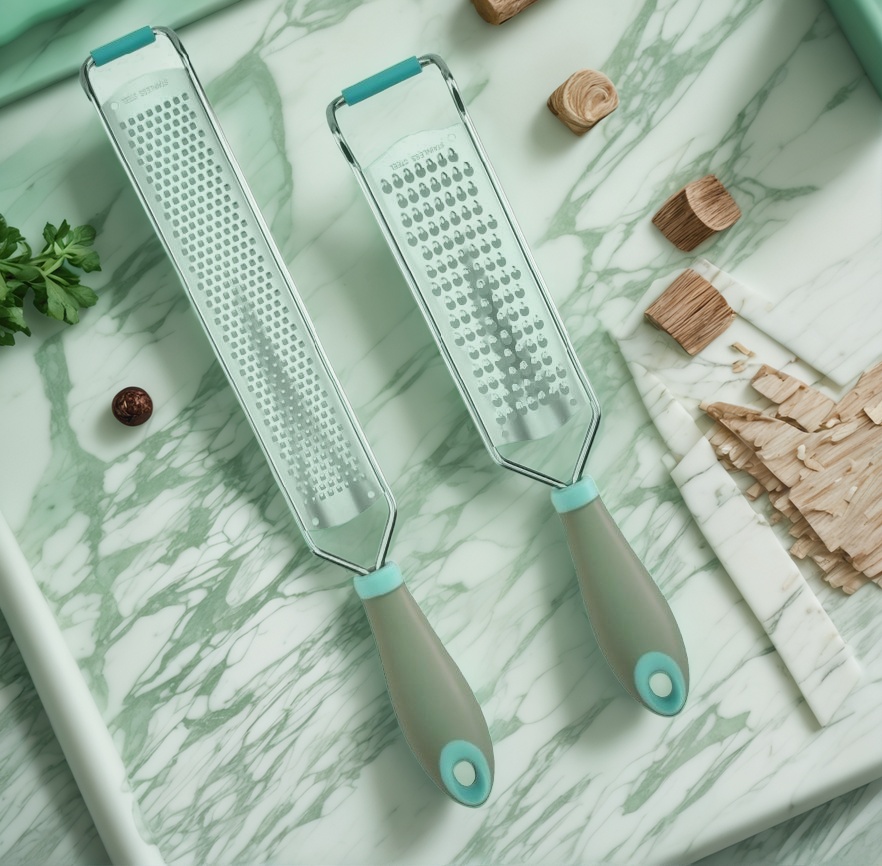
The original product concept describes a dual grater set made with rust-resistant stainless steel, offered in two sizes for tasks ranging from zesting to shredding cheese. It also highlights a turquoise ergonomic handle, a non-slip grip, and a hanging hole for storage. Those details are useful starting points, but buyers should still verify materials, construction, finishing, packaging, and compliance needs directly with the supplier before placing an order.
Key Takeaways
- An OEM grater project should be evaluated on usability, consistency, safety, and commercial fit, not appearance alone.
- ODM options can shorten development time, but customization limits should be clarified early.
- Ask suppliers for confirmed material details, sample performance, packaging options, lead times, and quality-control processes.
- Do not rely only on catalog photos; test real samples for grip comfort, cutting action, cleaning, and durability.
What an OEM Grater Manufacturer Should Help You Solve
A capable OEM partner helps bridge the gap between product concept and sellable inventory. For a grater set, this can include advice on blade sharpness, handle design, surface finishing, retail packaging, carton packing, and logo placement. The supplier should also be able to explain which elements are standard and which require tooling, artwork setup, or longer development time.
Before discussing price, define the target market. A discount retail product, a supermarket private-label tool, and a premium kitchenware range may all need different packaging, inspection standards, handle finish, and product presentation. A clear brief helps the manufacturer recommend realistic options and prevents miscommunication later in sampling or production.
OEM vs ODM Grater Factory: Which Route Fits Your Project?
OEM and ODM are often used together, but they are not the same. OEM usually means the buyer provides a design, specifications, or branding direction, and the factory manufactures accordingly. ODM means the factory already has a base design that can be adapted with selected changes, such as handle color, logo, or packaging.
For many kitchen gadget buyers, an ODM grater factory can be efficient because it may offer a tested base design. For example, if a dual grater set with two sizes and ergonomic handles is already available, the buyer can focus on branding, color matching, packaging, and market positioning. However, ODM does not mean unlimited customization. Buyers should ask which changes are possible without new tooling and which changes affect cost, timing, or product testing.
Product Features to Evaluate Before Ordering
When reviewing a grater sample, look beyond the first impression. A grater must cut cleanly without feeling unstable in the hand. If the product uses stainless steel, ask the supplier to confirm the material specification and explain how corrosion resistance is controlled. If the handle is described as non-slip or ergonomic, test that claim with dry hands, slightly wet hands, and common kitchen movements.
For the dual grater set described in the original concept, two sizes can support different uses, such as zesting citrus, grating garlic, or shredding cheese. Buyers should test both sizes separately because a small zester and a larger grater may perform differently. Also check whether the hanging hole is strong and conveniently positioned for retail customers who store tools on hooks.
Supplier Comparison Checklist
Use a structured checklist to compare suppliers instead of relying on a single quotation. The lowest price may not be the best value if samples are inconsistent, packaging is weak, or communication is slow.
| Evaluation Area | What to Check | Questions to Ask |
|---|---|---|
| Material | Stainless steel, handle material, finishing | Can you confirm the exact material and provide supporting documents if required? |
| Performance | Sharpness, cutting consistency, ease of cleaning | Can we test production-equivalent samples before confirming the order? |
| Customization | Handle color, logo, packaging, set configuration | Which changes are standard, and which require tooling or extra setup? |
| Quality control | Incoming materials, in-process checks, final inspection | What inspection steps are used before shipment? |
| Commercial terms | MOQ, lead time, payment, packing, shipping documents | What details change based on order quantity or packaging choice? |
Customization Options for a Private-Label Grater
Customization is one of the main reasons to work with a kitchen gadget OEM partner. Common options may include handle color, logo placement, barcode labels, instruction sheets, retail card design, gift box design, or a two-piece set configuration. The turquoise handle mentioned in the original article is a good example of how color can help a product line look more recognizable on a retail shelf or in online product photos.
Still, every customization should be confirmed in writing. Ask whether the color will be matched to a Pantone reference, whether logo application is printed or molded, and whether packaging artwork must follow a template. If the product will be sold in multiple countries, discuss language requirements, warning labels, and any retailer-specific packaging rules.
Quality Questions Buyers Should Ask Early
Quality control should be part of the conversation before the purchase order is issued. A grater has edges, pressure points, and contact with food, so buyers need a clear understanding of how samples and production goods will be checked. Avoid assuming that a supplier follows a particular certification or testing standard unless it is documented and relevant to your market.
- What material is used for the grating surface and handle?
- Are pre-production samples available for approval?
- How is blade sharpness or cutting performance checked during production?
- How are scratches, burrs, loose handles, or color differences handled?
- What packaging drop, carton strength, or transport checks can be arranged if needed?
- Which compliance documents can the supplier provide for the target market?
Sampling and Testing Tips
Samples should be tested in realistic kitchen conditions. Try zesting citrus, grating hard cheese, shredding softer cheese, and rinsing the grater after use. Check whether food clogs the surface, whether the handle remains comfortable, and whether the tool feels balanced. If the product is sold as a set, evaluate how the two sizes complement each other instead of duplicating the same function.
For B2B orders, keep one approved sample sealed as a reference. This makes it easier to compare mass production against the agreed standard. If packaging is part of the order, request a complete packed sample, not only the loose product. Retail presentation, label accuracy, and carton protection can affect customer satisfaction just as much as the grater itself.
Practical FAQ
What should I prepare before contacting an OEM grater manufacturer?
Prepare target market, estimated quantity, preferred materials, packaging style, logo needs, and any retailer or compliance requirements. Photos or reference samples can help, but final specifications should be confirmed with the supplier.
Is an ODM grater factory faster than developing a new design?
Often, yes. ODM can be faster when the base product already exists. However, changes such as new handle shapes, special colors, or custom packaging may still add time.
Can I customize the handle color and logo?
Many suppliers offer color and logo options, but availability depends on the product design, order quantity, and production method. Ask what is standard and what requires extra setup.
How do I avoid quality problems in a wholesale grater order?
Approve production-equivalent samples, define inspection criteria, confirm packaging, and ask how defects are handled. If needed, arrange third-party inspection before shipment.
What information should not be assumed?
Do not assume material grade, certifications, MOQ, production capacity, or test results unless the supplier provides clear confirmation. Treat missing details as questions to verify during sourcing.
