




OEM Grater Manufacturer: How to Source Kitchen Gadgets with Confidence
Choosing an OEM grater manufacturer is not only a purchasing decision. For kitchenware brands, distributors, and private-label buyers, it affects product usability, packaging consistency, quality control, and the long-term reputation of a kitchen tools line. A grater may look simple, but the details matter: blade performance, handle comfort, stability on the work surface, cleaning convenience, and how well the finished item fits the target retail channel.
The original sourcing goal is clear: find the right partner for a kitchen line, understand what an ODM grater factory can contribute, and use kitchen gadget OEM production to expand a coherent brand range. This guide turns that goal into a practical checklist for buyers who need to compare suppliers without relying on vague claims.
Key Takeaways
- Start with the user problem: grating, zesting, shredding, or multi-function preparation.
- Ask suppliers how they control sharpness, handle assembly, surface finishing, and packaging quality.
- For ODM projects, clarify which design work is included and who owns final tooling or artwork.
- Do not assume material grade, certifications, capacity, MOQ, or testing results; request written confirmation.
- A strong OEM partner should help keep design language consistent across a broader kitchen gadget range.
Define the Grater Before You Contact Factories
Before requesting quotations, prepare a simple product brief. This helps each OEM grater manufacturer respond to the same requirements, making comparisons easier. Include the intended market, retail price positioning, expected use case, packaging format, and any preferred design references.
If the product is a two-in-one precision grater, explain what “two-in-one” means for your project. Does it combine two grating surfaces, a grater and zester function, or a removable component? The supplier should not have to guess. Clear definitions reduce sample revisions and prevent misunderstandings during tooling, artwork, and production approval.
OEM vs ODM: Which Route Fits Your Brand?
OEM and ODM are often used together, but they are not identical. In an OEM project, the buyer normally brings a defined design, technical requirements, branding, or packaging concept, and the factory manufactures to that specification. In an ODM project, the factory may offer existing designs or design support that the buyer can adapt for private-label use.
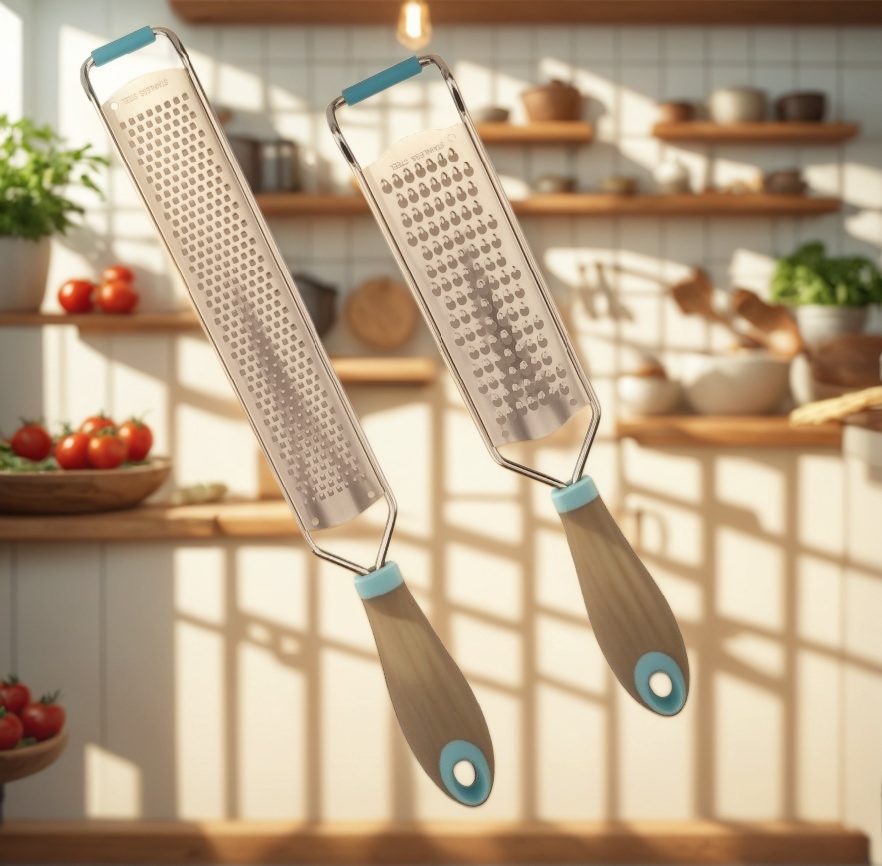
An experienced ODM grater factory can be valuable when a buyer wants to refine a concept rather than start from a blank page. For example, the original article referenced features such as an ergonomic soft silicone handle, a non-slip end bar for stability, and a hanging hole for storage. These are the kinds of details that should be discussed during design review: how the handle feels, how the end bar contacts the countertop, and whether the hanging hole suits common retail and home storage habits.
Comparison Checklist for Supplier Evaluation
Use a structured comparison table when reviewing factories. It keeps the discussion factual and prevents the lowest unit price from becoming the only decision factor.
| Evaluation Area | What to Ask | Why It Matters |
|---|---|---|
| Product design | Can the supplier support OEM drawings, ODM adaptation, or both? | Ensures the factory matches your development stage. |
| Materials | What material options are available for the grating surface, handle, and end bar? | Material choice affects durability, feel, weight, and cost. |
| Blade performance | How is sharpness or grating consistency checked during production? | Performance is a key driver of user satisfaction. |
| Handle comfort | Can samples be reviewed for grip, balance, and hand feel? | Ergonomics influence repeat use and reviews. |
| Stability | How is a non-slip end bar designed and assembled? | Stable contact improves control during food preparation. |
| Packaging | Can the supplier follow your retail, e-commerce, or wholesale packaging needs? | Packaging affects presentation, protection, and logistics. |
| Quality control | What inspection steps are used before shipment? | Reduces avoidable defects and inconsistent batches. |
Questions to Ask About Materials and Construction
Buyers should avoid assuming a specific stainless steel grade, handle composition, or compliance status unless the supplier confirms it in writing. The original article mentions stainless steel selection and a soft silicone handle concept, but a sourcing decision should go deeper than a product description.
Useful questions include:
- What material options are available for the grating surface, and what are the trade-offs?
- How is the handle attached to the metal body?
- Can the soft handle material be color matched to brand requirements?
- Is the non-slip end bar molded, assembled, or integrated into the body?
- How should the product be cleaned and dried by end users?
- Are there test reports, compliance documents, or declarations relevant to the target market?
These questions do not replace professional compliance review, but they help buyers identify whether a supplier communicates clearly and understands export expectations.
Sample Review: What to Check Before Approval
A sample should be tested like a real kitchen tool, not just inspected on a desk. Try it with common ingredients such as citrus peel, hard cheese, chocolate, ginger, or vegetables depending on the intended function. Notice whether the grater cuts cleanly, clogs easily, feels secure in the hand, or slips during use.
Check the edges, handle seams, hanging hole, and end bar. A hanging hole is useful only if it is positioned well and does not weaken the handle area. A non-slip end bar should provide stable contact without making the tool awkward to clean. If the grater is positioned as a precision tool, the cutting surface must feel consistent across the working area.
Using Kitchen Gadget OEM to Build a Product Family
Many brands begin with one item and later expand into a coordinated kitchen tool range. A kitchen gadget OEM partner may help keep visual language consistent across graters, peelers, slicers, mashers, tongs, and other handheld tools. Consistency can include handle shape, color palette, packaging layout, hanging display format, and instruction style.
This does not mean every product should look identical. Instead, the line should feel intentional. If your grater uses a soft ergonomic handle, a stable end bar, and compact hanging storage, consider whether those design principles should also guide related tools. A coherent range is easier for retailers to merchandise and easier for customers to recognize.
Commercial Details to Confirm in Writing
Before placing an order, request written answers to key commercial questions. Do not rely on assumptions from a catalog page or short message exchange. Important points include available customization, sample fees, tooling charges if any, lead time, payment terms, packaging responsibilities, inspection process, carton information, and after-sales handling for quality issues.
If you need specific certifications, food-contact documentation, restricted substance information, or destination-market compliance support, ask early. A reliable supplier should be able to explain what documents are available and what must be arranged separately. Buyers should also confirm whether artwork, molds, or custom components can be reused for repeat orders.
Practical FAQ
What should I send to an OEM grater manufacturer first?
Send a product brief with target market, intended function, preferred size range, handle concept, packaging needs, branding requirements, and any reference samples or drawings.
Can an ODM grater factory help improve my design?
Often, yes. ODM support may include adapting an existing design, adjusting handle comfort, reviewing storage details such as a hanging hole, or suggesting production-friendly construction. Confirm the scope before development begins.
How do I compare quotations fairly?
Compare the same specification, material assumptions, packaging, customization level, inspection requirements, and shipping terms. A lower price may reflect a different construction or packaging standard.
What quality issues are common with graters?
Buyers should watch for inconsistent sharpness, rough edges, weak handle assembly, unstable end contact, poor finishing, packaging damage, and unclear cleaning instructions.
Should I choose OEM or ODM for a private-label kitchen line?
Choose OEM if you already have a defined product design. Choose ODM if you want to adapt a factory-developed concept or need design input before finalizing your kitchen gadget range.
