




OEM Household Scissors: Comfort and Precision Redesigned
Household scissors are simple tools, but they are used in many different places: kitchens, home offices, school kits, craft rooms, sewing boxes, retail gift sets, and promotional product ranges. For importers, distributors, and private-label brands, the challenge is not only finding scissors that look appealing. The bigger task is sourcing a product that feels comfortable, cuts consistently, supports the intended use case, and can be specified clearly for OEM production.
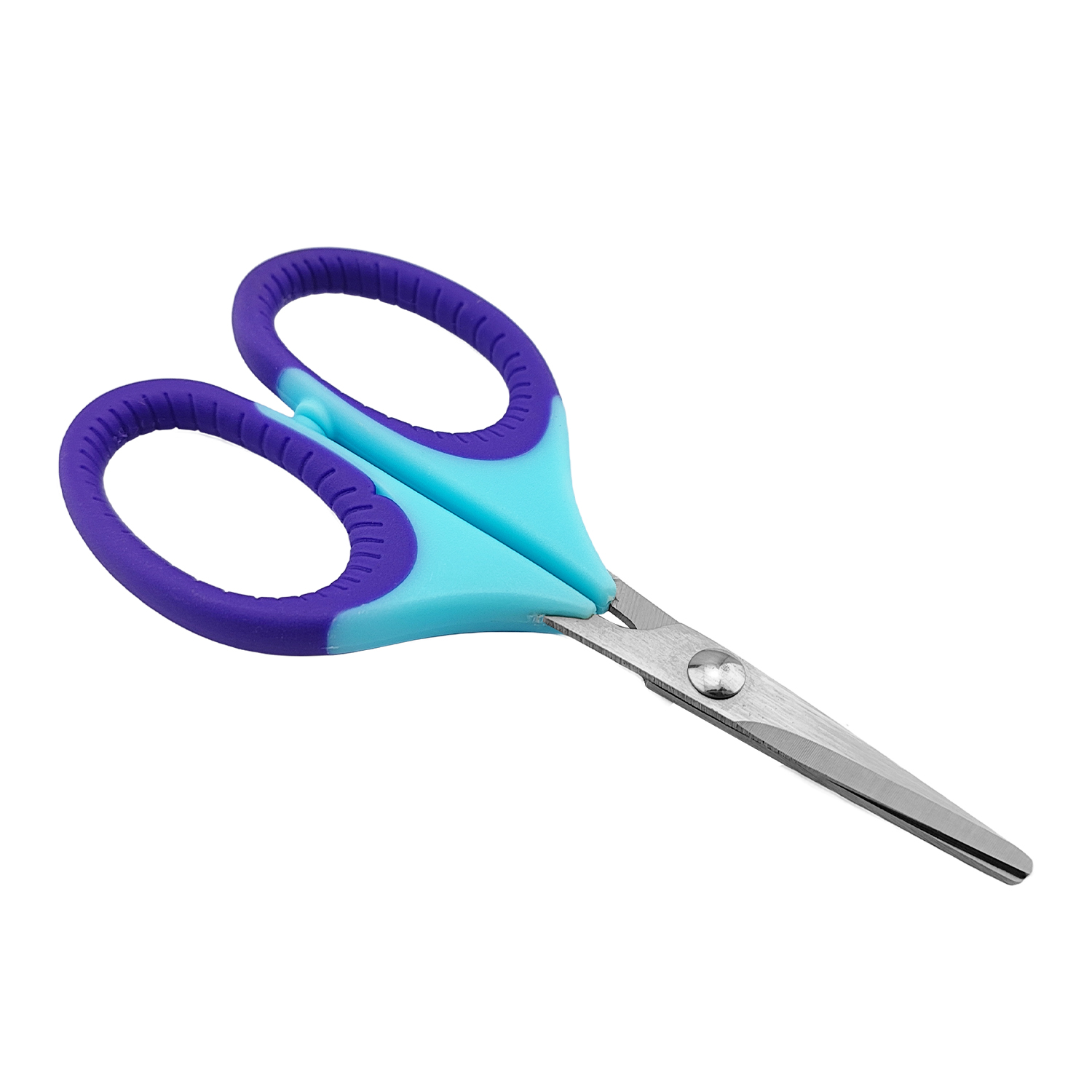
The original product concept highlights OEM household scissors with ergonomic handles, a soft grip feel, a turquoise and deep purple color combination, and stainless steel blades. Those details make the item relevant for buyers looking for a more distinctive household or craft scissor, but commercial buyers should still verify materials, dimensions, packaging, quality control, and customization options before placing an order.
Key Takeaways
- OEM household scissors should be evaluated by comfort, blade performance, intended use, and production consistency.
- Soft grip handles can improve control during repeated cutting tasks, but buyers should request samples to confirm the feel.
- Stainless steel blades are stated in the source, but the exact grade, hardness, edge treatment, and corrosion resistance should be confirmed with the supplier.
- Color, packaging, branding, and retail presentation are common OEM discussion points, but details should be agreed in writing.
- Importers should ask for inspection criteria, sample approval steps, and compliance documentation relevant to their target market.
What Makes OEM Household Scissors Different?
OEM household scissors are not just off-the-shelf tools with a logo added. In a serious sourcing project, the buyer may need input on handle color, grip texture, blade size, packaging format, barcode requirements, carton labeling, and product positioning. A supermarket buyer may prioritize retail packaging and shelf appeal, while a craft brand may focus on hand comfort and smooth cutting through paper or fabric.
The source article describes a handle design shaped to fit naturally in the hand, with a textured finish for a soft grip. This is useful because household scissors are often used for repeated small cutting jobs. A comfortable handle can reduce slipping and make the tool easier to control, especially for packaging, paper, labels, light fabric, and general home tasks. However, comfort is subjective, so buyers should compare samples with the actual users in mind.
Comfort, Grip, and User Control
For B2B buyers, ergonomic claims should be translated into measurable sourcing questions. Ask the supplier about handle dimensions, grip material, surface texture, finger opening size, and whether the handle is suitable for left-hand, right-hand, or general use. If the product is intended for long craft sessions or office use, comfort should be tested for more than a few quick cuts.
The turquoise and deep purple color combination mentioned in the original article creates a recognizable look. Color can support brand identity, but color matching should not be handled casually. If your range has brand colors, ask whether the supplier can match a Pantone reference, what color tolerance is acceptable, and whether final production may vary from the approved sample.
Blade Performance and Material Questions
The original article states that the scissors use stainless steel blades and are designed for sharpness and durability. That is a useful starting point, but buyers should avoid assuming more than the source provides. Before confirming an OEM order, ask what stainless steel grade is used, how blade hardness is controlled, whether edge sharpness is tested, and what materials the scissors are intended to cut.
A household scissor designed mainly for paper and daily packaging may not perform the same way as a sewing or heavy craft scissor. If your product listing will mention fabric, cardboard, plastic film, or other materials, test those materials during sample approval. It is also wise to define what counts as an acceptable cut: clean edge, no tearing, no blade separation, no uncomfortable force, and no visible damage after repeated use.
Comparison Checklist for Buyers
| Evaluation Point | What to Check | Questions to Ask the Supplier |
|---|---|---|
| Handle comfort | Grip texture, finger opening, balance, slipping | Can you provide samples for user testing before mass production? |
| Blade quality | Stainless steel type, edge sharpness, alignment | What blade material and hardness specifications can you confirm? |
| Cutting use | Paper, light fabric, packaging, craft materials | Which materials are these scissors designed and tested to cut? |
| Customization | Color, logo, packaging, labeling | What OEM options are available, and what artwork files are required? |
| Quality control | Appearance, cutting test, screw tension, packaging | What inspection standard is used before shipment? |
| Market requirements | Labeling, warnings, documentation | Which compliance documents can be supplied for our destination market? |
OEM Customization Without Overpromising
Custom scissors manufacturing can cover many elements, but each project should be confirmed case by case. Buyers may want a specific handle color, private-label logo, hang card, blister pack, paper box, multipack, or display carton. These details affect cost, lead time, artwork approval, and inspection requirements. Instead of assuming every option is available, prepare a clear specification sheet and ask the supplier to confirm feasibility.
A practical OEM brief should include product size, target user, target retail price level, preferred colors, logo placement, packaging style, labeling language, carton requirements, and the countries where the product will be sold. If you are comparing several suppliers, use the same brief for each one so quotations are easier to evaluate.
Sample Approval and Quality Control
Before placing a bulk order, samples should be checked carefully. Do not approve a scissor only because it looks good in a photo. Test the opening and closing action, handle comfort, blade alignment, cutting smoothness, screw or pivot stability, and surface finish. If the product will be sold online, also check whether the color and appearance match the product images you plan to use.
For production inspection, define acceptable and unacceptable defects. Examples may include loose blades, uneven grinding, scratches, handle color variation, poor logo printing, damaged packaging, or scissors that fail a basic cutting test. A written approval sample and inspection checklist help reduce misunderstandings between buyer and supplier.
How to Choose a Household Scissors Supplier
A reliable supplier should be able to discuss both product details and order execution. Ask about OEM experience, sample lead time, packaging support, quality control process, export documentation, and communication workflow. If you need legal or safety documentation for a specific market, request it early and review it with a qualified compliance professional rather than relying on assumptions.
- Share a clear product brief and target market information.
- Request samples that match your preferred handle, blade, and packaging direction.
- Test the scissors with the materials your customers are likely to cut.
- Confirm customization details, artwork, labeling, and carton marks in writing.
- Set inspection criteria before production starts, not after goods are finished.
Practical FAQ
What should I ask before ordering OEM household scissors?
Ask about blade material, handle material, available colors, logo methods, packaging options, sample approval, inspection standards, lead time, and documents needed for your target market.
Are soft grip scissors better for household use?
Soft grip scissors can feel more comfortable and provide better control during repeated cutting, but the final result depends on handle shape, grip texture, blade tension, and user preference. Sample testing is important.
Can these scissors be used for fabric?
The original article mentions use on materials including paper and fabric, but buyers should test the exact fabric types they plan to reference in marketing or packaging. Light fabric and thick fabric may require different blade performance.
Can I customize the colors and packaging?
OEM customization is commonly discussed for products like household scissors, but available options, color matching, logo placement, packaging structure, and order requirements should be confirmed directly with the supplier.
How can I reduce quality risks in bulk production?
Approve a physical sample, create a written specification, define defect limits, confirm packaging artwork, and arrange pre-shipment inspection based on cutting performance, appearance, assembly, and labeling.
