




OEM Household Scissors: Customized Excellence
OEM household scissors are everyday cutting tools that can be adapted for retail programs, promotional assortments, craft ranges, office supply shelves, and homeware collections. For B2B buyers, the main question is not only whether a pair of scissors looks appealing, but whether the supplier can produce a consistent, safe, and commercially suitable product at scale.
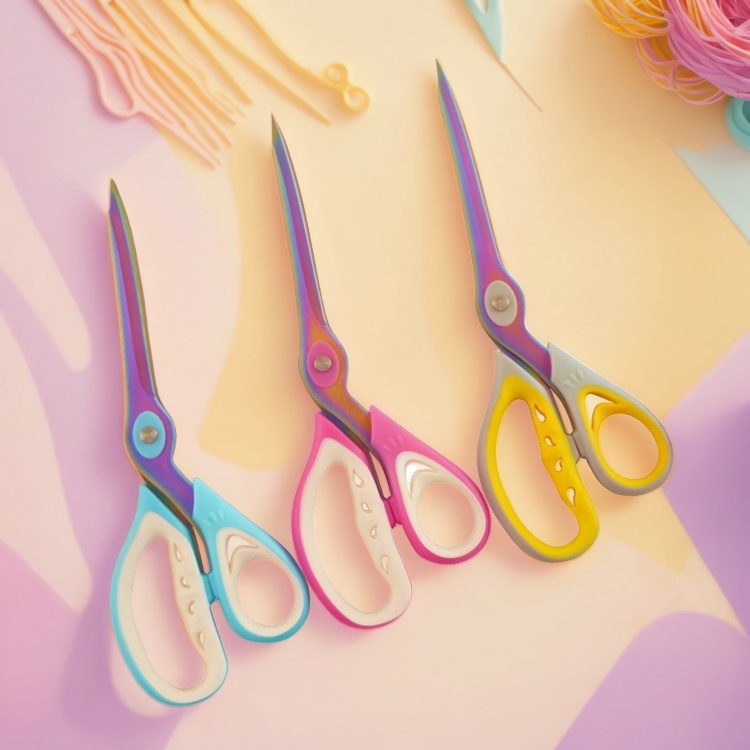
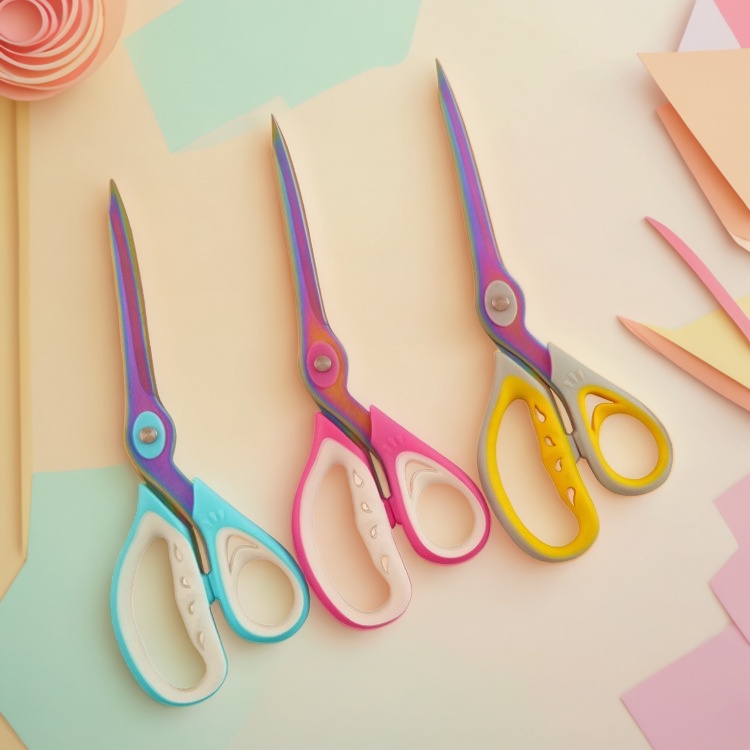
The original product description highlights several useful sourcing themes: OEM household scissors, Chinese factory scissors, custom scissors manufacturing, and wholesale household scissors. It also mentions vibrant titanium-coated versions, rainbow-titanium blades, sky blue or pastel pink handles, anti-slip grips, and a focus on precision, durability, comfort, and reliable cutting. These are valuable starting points, but buyers should still confirm exact materials, finishes, testing, packaging, and order terms directly with the supplier before purchasing.
Key Takeaways
- OEM household scissors should be evaluated by cutting performance, grip comfort, finish consistency, packaging suitability, and supplier communication.
- Customization may include handle color, blade finish, packaging, logo placement, and assortment planning, but each option should be confirmed before sampling.
- Chinese factory scissors can be suitable for wholesale programs, but buyers should verify quality systems, sample approval steps, and production consistency.
- Do not rely only on appearance; request samples and ask practical questions about materials, tolerances, inspection, and shipment protection.
What OEM Household Scissors Mean for Buyers
OEM household scissors are scissors produced to match a buyer's product concept, branding, packaging, or market positioning. In a simple program, the buyer may choose an existing scissors design and request a private label package. In a more developed OEM project, the buyer may discuss handle colors, blade finish, grip style, carton configuration, and retail presentation.
For household use, scissors are commonly expected to cut paper, light packaging, thread, craft materials, and other everyday items. However, buyers should not assume that every model is designed for the same tasks. A household pair intended for general kitchen drawers may need different grip comfort and corrosion expectations than scissors sold for stationery or craft use. Before committing to a wholesale order, define the intended use clearly and ask the supplier which model is appropriate.
How to Evaluate Chinese Factory Scissors
Chinese factory scissors are widely present in global supply chains because many buyers look to China for manufacturing flexibility, broad product ranges, and wholesale availability. The sourcing opportunity can be strong, but it requires structured evaluation. A factory's catalog, images, and sample set should be treated as the beginning of due diligence rather than the conclusion.
Start by asking whether the supplier manufactures the scissors directly or trades finished goods from several workshops. Neither model is automatically wrong, but the answer affects communication, quality control, lead time, and customization control. If the project requires custom scissors manufacturing, direct technical feedback from the production side can be especially important.
Buyers should also ask how the supplier controls blade sharpness, handle attachment, surface finish, coating appearance, and packaging defects. If the product includes a colorful or titanium-style finish, request clarification on the finish process, expected color variation, scratch resistance expectations, and care instructions. Avoid assuming that a decorative finish automatically improves cutting performance.
Customization Options to Confirm Before Sampling
The original article refers to rainbow-titanium blades, sky blue or pastel pink handles, vibrant finishes, and anti-slip grips. These options can help differentiate a retail line, but they should be documented carefully. A good OEM brief should include a target user, preferred size range, handle color references, logo position, packaging format, barcode needs, carton labeling, and any market-specific language required on the package.
Color is a common source of misunderstanding. If the buyer wants sky blue, pastel pink, or any other handle color, the supplier should confirm whether matching is based on a physical sample, Pantone reference, or available stock color. If the scissors use a rainbow-style blade finish, ask how much variation is normal from batch to batch. Product photos may not show these differences accurately.
Logo and packaging customization should also be checked early. Ask whether branding can be applied to the handle, blade, hang tag, insert card, blister card, or outer carton. For retail buyers, packaging strength matters because scissors can move during transport and damage cards or scratch nearby units. For e-commerce buyers, protective packing and clear product information may be more important than shelf display.
Comparison Checklist for Wholesale Household Scissors
| Sourcing Area | What to Check | Questions to Ask the Supplier |
|---|---|---|
| Cutting performance | Clean cutting on intended materials | Which materials is this model designed to cut during normal household use? |
| Handle comfort | Grip shape, anti-slip feel, hand fit | Are there samples available for user handling and comfort checks? |
| Blade finish | Visual consistency and scratch concerns | How is the titanium-style or rainbow finish controlled between batches? |
| Customization | Color, logo, packaging, assortment | Which custom options are available, and which require new tooling or extra setup? |
| Quality control | Inspection method and defect criteria | What checks are performed before shipment, and can the criteria be shared? |
| Commercial terms | MOQ, lead time, payment, shipping | What are the current MOQ, production lead time, sample cost, and carton details? |
Building a Strong OEM Scissors Specification
A clear specification reduces risk. Instead of asking for 'good household scissors,' describe the product in measurable and reviewable terms. Include the intended sales channel, target price level, expected packaging style, blade appearance, handle color, grip requirement, and any safety or labeling expectations for the destination market.
If legal or compliance requirements apply in your market, do not assume the supplier already meets them. Ask what documentation is available and whether it is current, relevant to the exact product, and issued by an appropriate testing body. Because requirements vary by country and product category, buyers should verify compliance independently before import or retail sale.
For OEM projects, create an approved sample process. The approved sample should represent the agreed blade finish, handle color, grip feel, logo placement, packaging, and carton marking. Keep one approved sample with the buyer and one with the supplier. Future production should be compared against that reference.
Wholesale Buying Tips for Retailers and Distributors
Wholesale household scissors are attractive because they allow retailers, distributors, and brand owners to stock consistent cutting tools in practical quantities. However, buying in bulk increases the cost of small mistakes. A handle color that is slightly wrong, a package that bends in transit, or a blade finish that varies too much can become a larger issue across many cartons.
- Request samples before confirming a bulk order.
- Test the scissors on the materials your customers are likely to cut.
- Check the grip with different hand sizes when possible.
- Review packaging for shelf display, storage, and shipping durability.
- Confirm carton quantity, carton size, gross weight, and labeling requirements.
- Ask how defects, replacements, or claims are handled after delivery.
For assortment planning, consider whether one universal household scissors model is enough or whether your market needs several colors, sizes, or packaging types. Colorful handles and distinctive blade finishes can support merchandising, but they should not replace practical testing.
FAQ
What should I ask before ordering OEM household scissors?
Ask about intended use, available customization, sample timing, MOQ, lead time, packaging options, inspection process, carton details, and any documentation needed for your market. Also ask which features are standard and which require additional setup.
Can I customize the handle color and blade finish?
Many OEM scissors projects can include color or finish choices, but availability depends on the supplier and model. Confirm whether colors are matched to a reference and whether decorative blade finishes may vary between production batches.
Are rainbow-titanium blades better than standard blades?
A rainbow or titanium-style finish can create a distinctive appearance, but buyers should not assume it improves performance unless the supplier provides evidence for that exact product. Test cutting quality and finish durability with samples.
How do I compare household scissors suppliers?
Compare samples, communication quality, customization clarity, packaging support, inspection process, and commercial terms. If possible, use the same test materials and evaluation checklist for every supplier.
What information should be included in a purchase order?
Include the approved model, quantity, color, logo artwork, packaging file, carton marking, agreed sample reference, inspection requirements, shipment terms, and any documents the supplier must provide before dispatch.
Final Sourcing Guidance
OEM household scissors can be a practical private label or wholesale product when the buyer treats sourcing as a structured process. Attractive colors, anti-slip grips, and vibrant blade finishes may help a product stand out, but consistent cutting performance, clear specifications, and reliable supplier communication are more important for long-term success.
Before placing a large order, turn the product idea into a written specification, review samples carefully, and ask direct questions about the factory's production and inspection process. That approach helps buyers source customized household scissors with fewer surprises and a better fit for their retail, distribution, or brand program.
