




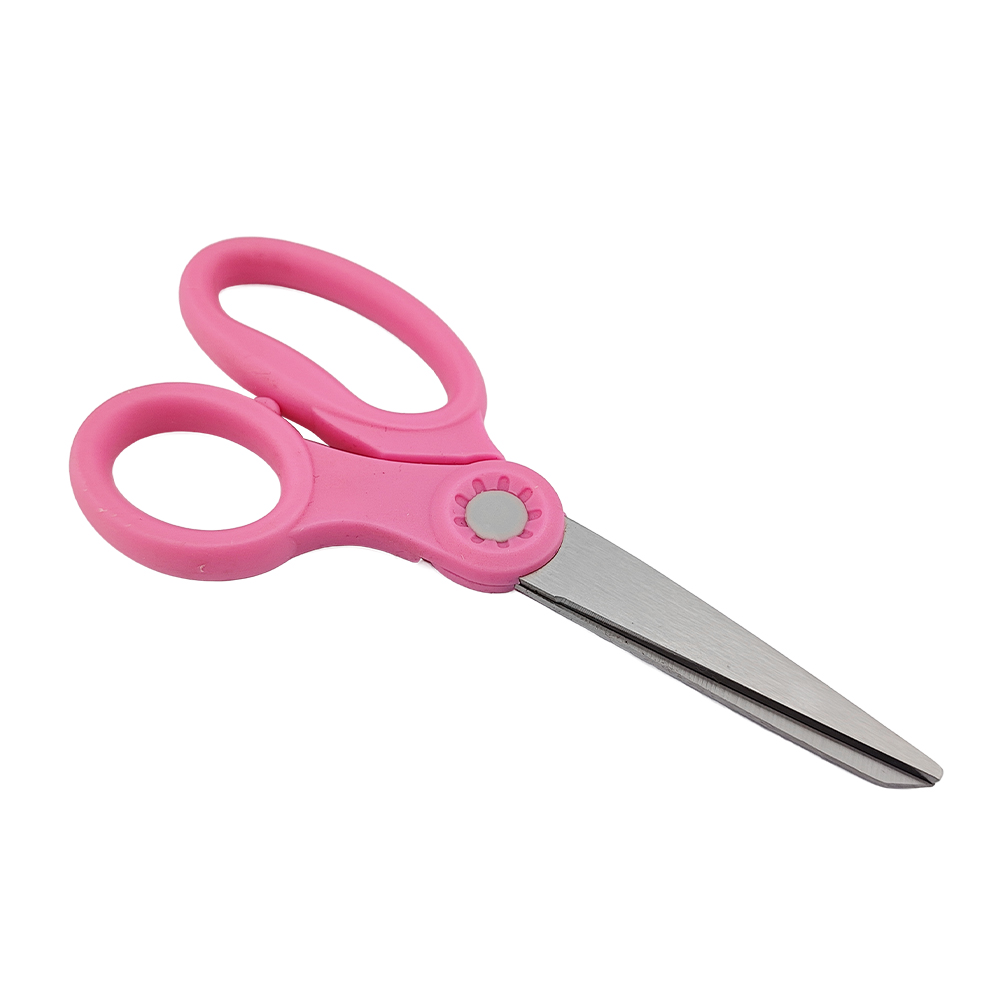
OEM Household Scissors: Ergonomic Design & Performance
OEM household scissors are everyday tools, but sourcing them well requires more than choosing a handle color or asking for a low unit price. For retailers, importers, promotional product buyers, and homeware brands, the right scissors should feel comfortable in the hand, cut common household materials cleanly, and be consistent across repeat orders. This guide rewrites the original review into a practical sourcing article for buyers evaluating home use scissors for OEM or private-label programs.

Key Takeaways
- OEM household scissors should be assessed for comfort, cutting control, and consistency, not only appearance.
- The original product description explicitly notes ergonomic handles, a pink-handled version, and stainless steel blades.
- These scissors are best positioned for daily home tasks such as paper, crafts, packaging, and lightweight fabrics, rather than heavy-duty cutting.
- B2B buyers should ask suppliers about materials, customization options, sample approval, packaging, quality inspection, and compliance documentation.
- A clear test checklist helps compare scissors factories before placing a wholesale or OEM order.
What OEM Household Scissors Are Used For
Household scissors are general-purpose cutting tools designed for routine home, office, school, and craft tasks. Typical uses include cutting paper, opening light packaging, trimming labels, preparing craft projects, and working with lightweight fabrics. The original article describes the scissors as suitable for everyday use and notes that they perform well on paper and lightweight fabrics. It also states that they may not be the best choice for heavy-duty cutting, which is an important positioning point for buyers.
For an OEM program, this positioning matters. A household scissors product should not be marketed as industrial shears, kitchen poultry scissors, professional tailor scissors, or heavy-duty utility cutters unless the supplier can provide verified specifications and test evidence. Accurate positioning reduces returns, improves customer satisfaction, and helps distributors match the product to the right retail channel.
Ergonomic Handle Design and User Comfort
The original article highlights an ergonomic design and a comfortable grip that can reduce hand fatigue during longer use. For household scissors, handle comfort is one of the main purchase drivers because users may cut repeatedly during craft work, school preparation, gift wrapping, or home organization. An ergonomic handle should allow a natural finger position, stable control, and enough space for the intended user group.
The original product image and description also reference a pink-handled version. Color can help a product stand out in a drawer or craft area, but B2B buyers should treat color as a customization decision rather than a quality signal. If pink, black, blue, or other colors are needed for a private-label range, ask the supplier whether handle colors are standard stock colors or custom production colors, and whether color matching can be confirmed with physical samples.
Blade Performance for Daily Cutting
The source article explicitly mentions stainless steel blades and smooth, accurate cutting. Stainless steel is commonly chosen for household scissors because it can support everyday cutting performance and is practical for consumer products. However, buyers should not assume a specific grade, hardness, coating, thickness, or corrosion test result unless the supplier provides it in writing.
When evaluating samples, test the scissors on materials that reflect the real selling promise. For home use scissors, a practical test set may include printer paper, wrapping paper, thin cardboard, thread, ribbon, plastic packaging film, and lightweight fabric. Look for clean starts at the blade tip, smooth cutting through the full blade length, stable alignment, and whether the handles remain comfortable after repeated cuts. If the product is intended for children, kitchens, sewing, or professional craft use, separate requirements may apply and should be discussed before production.
OEM and Wholesale Sourcing Checklist
Before selecting a scissors factory or custom scissors manufacturing partner, compare suppliers using a structured checklist. This helps avoid unclear expectations and makes quotations easier to evaluate.
| Evaluation Area | What to Check | Questions to Ask the Supplier |
|---|---|---|
| Product use | Home, craft, office, school, or promotional use | Which cutting tasks is this model designed for, and which tasks should be avoided? |
| Blade details | Material, finish, edge consistency, alignment | What blade material and specification can be documented for this model? |
| Handle design | Grip comfort, finger space, color, surface feel | Can handle color, logo, or packaging be customized for OEM orders? |
| Sample testing | Cutting feel, repeated-use comfort, packaging fit | Can pre-production samples be approved before mass production? |
| Quality control | Inspection process, defect criteria, batch consistency | What in-line and final inspection steps are used for scissors orders? |
| Commercial terms | MOQ, lead time, packing, carton details | What are the current MOQ, production lead time, and packing options? |
Customization Considerations for Private Label Buyers
OEM household scissors can be customized in several ways, but each option should be confirmed with the factory. Common customization areas include handle color, logo placement, hang cards, blister packaging, barcode labels, instruction text, and retail display packing. Do not assume every model supports every customization method. Tooling, printing areas, color matching, and packaging layout can affect cost, timeline, and minimum order quantity.
For a retail brand, packaging should clearly communicate the intended use. If the scissors are designed for household and craft tasks, avoid overpromising with words like professional, heavy-duty, or industrial unless those claims are supported. Simple, accurate packaging often performs better because it sets realistic expectations for the end user.
Quality Checks Before Confirming an Order
Buyers should create a short sample approval process before moving to bulk production. Start by checking the handle finish for sharp edges, rough seams, or uncomfortable pressure points. Open and close the scissors repeatedly to confirm smooth movement. Cut several materials from the blade base to the tip, then inspect whether the blades remain aligned and whether the screw or pivot area feels stable.
For bulk orders, ask how the supplier defines acceptable and unacceptable defects. Examples may include loose blades, poor cutting at the tip, handle color variation, printing defects, packaging damage, or inconsistent opening resistance. The buyer and supplier should agree on inspection criteria before production begins, especially for wholesale orders shipped directly to retailers or distributors.
Use and Care Guidance for End Customers
Even well-made home use scissors last longer when customers use them correctly. Household scissors should be kept clean and dry after use. Sticky residue from tape or packaging can be wiped from the blades carefully. Users should avoid cutting wire, thick plastic, hard cardboard, or other materials beyond the intended purpose, because these can dull the edge or affect blade alignment.
- Use the scissors only for suitable household, paper, craft, and lightweight fabric tasks.
- Wipe blades after cutting adhesive materials.
- Store scissors in a dry drawer, craft box, or holder.
- Keep scissors away from children unless the product is specifically designed and supervised for child use.
- Replace the scissors if the blades become loose, damaged, or unsafe to operate.
Practical FAQ
Are these OEM household scissors suitable for heavy-duty cutting?
The original article says they perform well for light to medium tasks but may not be the best option for heavy-duty cutting. Buyers should confirm the intended use range with the supplier before marketing them for tougher materials.
Can the handle color be customized?
The original article mentions a pink-handled version. For OEM orders, buyers should ask whether other colors are available, whether custom color matching is possible, and whether samples can be approved before production.
What should I ask a scissors factory before ordering?
Ask about blade material documentation, handle customization, logo options, packaging formats, MOQ, lead time, inspection process, sample policy, and any compliance documents required for your market.
How should I test household scissors samples?
Test paper, wrapping material, ribbon, plastic packaging film, and lightweight fabric. Check comfort, cutting smoothness, blade alignment, tip performance, and whether the scissors remain stable after repeated opening and closing.
What claims should I avoid in product listings?
Avoid claims about specific blade grade, safety certifications, durability test results, or professional performance unless the supplier provides evidence. Keep the listing aligned with everyday household use.
Final Buying Advice
OEM household scissors can be a practical addition to a homeware, craft, office, or promotional product range when they are sourced with clear expectations. The useful facts from the original article point to an ergonomic handle, a visible pink option, stainless steel blades, and reliable performance for routine cutting. For B2B buyers, the next step is not simply requesting a quote; it is defining the use case, approving samples, confirming customization details, and setting inspection standards. That process helps ensure the final product is comfortable, consistent, and suitable for the customers who will use it every day.
