




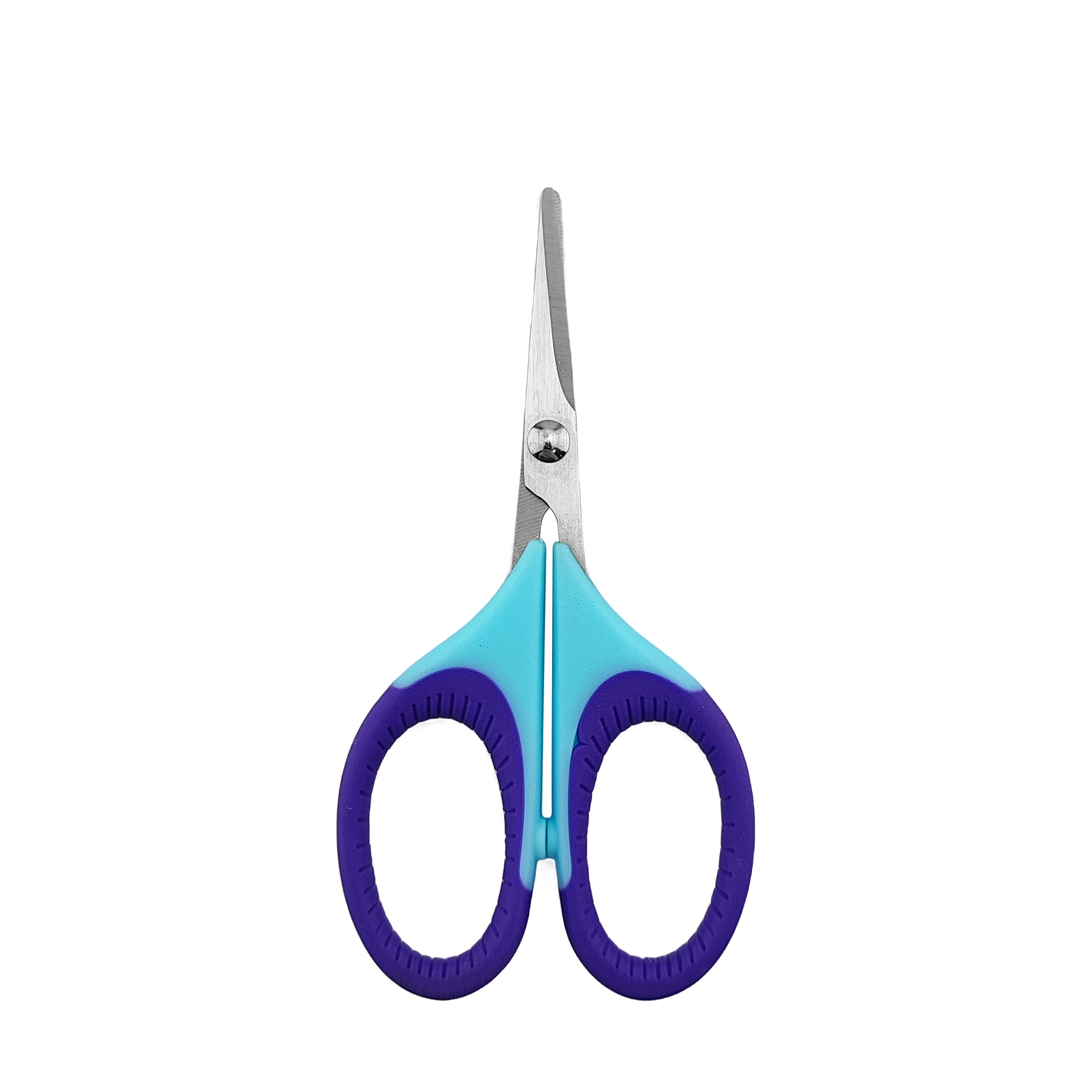
OEM Household Scissors: Precision and Personality
Household scissors are simple tools, but buyers who source them for retail, promotional programs, private label ranges, or office supply assortments know that small design choices can affect daily use. A pair that cuts cleanly, feels stable in the hand, and fits a brand’s visual direction has more value than a generic item selected only by price. For OEM household scissors, the goal is to balance practical cutting performance with comfort, appearance, packaging needs, and reliable supplier communication.

This guide explains how to evaluate OEM and ODM household scissors without relying on vague claims. It focuses on sourcing questions, product selection factors, customization limits, and quality checks that buyers can use when comparing suppliers.
Key Takeaways
- OEM household scissors should be assessed for cutting performance, grip comfort, durability, and brand fit.
- Soft grip handles can improve control and reduce discomfort during repeated household or craft tasks.
- Customization may include handle color, packaging, branding, and product positioning, but buyers should confirm what is actually available.
- Supplier discussions should cover samples, inspection standards, materials, lead times, packaging, and after-sales support.
- A clear specification sheet helps avoid misunderstandings between buyer expectations and production output.
Why Household Scissors Still Need Careful Sourcing
Scissors are used for packaging, paper, labels, thread, light craft work, kitchen drawer tasks, and office needs. Because they are used frequently, defects become obvious quickly. Loose pivots, uncomfortable handles, weak blade alignment, uneven finishing, or poor packaging can lead to customer complaints even when the product looks acceptable in a catalog photo.
For an OEM buyer, the challenge is not only finding a scissor that cuts. It is finding a repeatable product that matches the target user, selling channel, and price segment. A basic household scissor for a discount assortment has different requirements from a soft grip scissor intended for crafting, home office use, or a branded lifestyle range. The sourcing process should begin with use case, not decoration.
Ergonomic Design and Soft Grip Comfort
The original article highlights the shift from hard, uncomfortable handles toward ergonomic scissors designed for better control. This remains one of the most important product-selection points. A handle that fits naturally in the hand can reduce fatigue during longer cutting sessions and help users control the blade more accurately.
Soft grip scissors often use rubberized or cushioned handle areas to create a more secure feel. For buyers, the key questions are practical: Does the grip remain stable when hands are slightly wet or dusty? Is the handle comfortable for different hand sizes? Are the finger openings smooth enough to avoid pressure points? Does the soft component feel securely bonded to the handle body?
Ergonomics should be checked with actual samples. A product drawing cannot fully show whether the handle angle, weight, and finger hole shape are comfortable. If the scissors are intended for repeated use, ask several people to test the sample and note where discomfort appears.
Blade Performance, Alignment, and Everyday Precision
Sharpness matters, but it is not the only measure of good scissors. Precision also depends on blade alignment, pivot stability, tip shape, and the smoothness of opening and closing. The original article mentions high-grade stainless steel blades and precision tips. When discussing blade material with a supplier, buyers should ask for the exact material description, finishing process, and any available test information rather than relying on broad wording.
For household use, scissors should cut common materials cleanly without chewing, bending, or snagging. Buyers may test samples on paper, thin cardboard, plastic packaging, ribbon, fabric scraps, or other materials relevant to the intended market. The blade tips should meet consistently if detailed cutting is part of the product promise. If the scissors are marketed for general household use only, avoid implying professional sewing, medical, food, or industrial performance unless those claims are verified and appropriate.
Customization Options: Personality Without Confusion
OEM and ODM scissors can support brand differentiation through color, handle finish, packaging, and logo placement. The original article references color combinations such as pastel blue and deep purple, showing how visual design can turn a practical item into a more distinctive product. However, customization should be managed carefully.
Before approving a design, confirm which elements are customizable and which are fixed by existing tooling. Ask whether the supplier can adjust handle colors, blade finish, logo method, retail card, barcode placement, carton markings, and instruction text. Also ask whether color matching is based on a recognized color reference and what tolerance applies in mass production.
Good customization supports the product’s use case. A children’s craft-inspired color palette, a home office neutral palette, and a premium gift set look all require different packaging and positioning. Visual personality should not come at the expense of grip comfort, cutting function, or clear safety information.
Comparison Checklist for OEM Household Scissors
| Evaluation Area | What to Check | Questions to Ask the Supplier |
|---|---|---|
| Handle comfort | Finger opening size, soft grip feel, pressure points, slip resistance | Can we review physical samples in the intended handle material and color? |
| Blade function | Clean cutting, alignment, tip precision, pivot smoothness | What blade material and finishing details can be documented? |
| Customization | Colors, logo position, packaging style, retail presentation | Which options require new tooling, and which are available from existing designs? |
| Quality control | Consistency across samples, finishing defects, packaging protection | What inspection criteria are used before shipment? |
| Commercial terms | MOQ, lead time, sample cost, payment terms, carton details | What information is needed to quote accurately for our market? |
Supplier Evaluation for OEM and Wholesale Buyers
When the search intent is OEM, supplier capability matters as much as the product itself. Buyers should avoid assumptions about production capacity, certifications, minimum order quantities, or testing unless the supplier confirms them directly. A professional inquiry should include the target market, expected use, packaging format, estimated order quantity, branding needs, and any compliance requirements for the destination country.
Ask for clear sample procedures. A pre-production sample is useful for checking design and function before mass production. If the order includes custom colors or packaging, request confirmation samples for those details as well. For larger wholesale programs, buyers may also ask how the supplier handles production updates, defect reporting, replacement discussions, and shipping documentation.
It is also important to clarify claims. If packaging says “stainless steel,” “ergonomic,” “soft grip,” or “precision tip,” the buyer should understand how those claims are supported. If the product will be sold in regulated markets, legal labeling and safety requirements should be checked with qualified compliance support.
Practical Use and Care Guidance for End Customers
Even well-made household scissors perform better when used correctly. Retailers and brands can reduce complaints by including simple care instructions. Users should keep scissors dry after cleaning, avoid cutting materials harder than the product is designed for, and store them safely away from children. If adhesive from tape or labels builds up on the blades, it should be cleaned carefully according to the material and finish.
Household scissors are not all-purpose tools for wire, thick plastic, metal, bones, or heavy garden tasks unless specifically designed for those uses. Clear product positioning protects both the customer and the brand. If the scissors are intended for paper, packaging, light craft, and home office work, say so plainly.
FAQ
What makes OEM household scissors different from standard stock scissors?
OEM household scissors are usually adapted for a buyer’s brand, packaging, color direction, or market positioning. The base design may be similar to an existing model, but the finished product should match the buyer’s specification.
Are soft grip scissors better for every user?
Soft grip handles can improve comfort and control for many users, especially during repeated cutting. However, buyers should test samples because handle shape, grip texture, and finger hole size affect comfort.
What should buyers confirm before placing a custom scissors order?
Confirm the blade material description, handle material, customization scope, sample process, packaging details, inspection criteria, MOQ, lead time, and any market-specific compliance or labeling needs.
Can household scissors be promoted for craft or office use?
Yes, if the product performs well for those tasks. Buyers should avoid overstating performance and should test samples on the actual materials customers are expected to cut.
How can a buyer reduce quality risks in OEM scissors sourcing?
Use a detailed specification sheet, approve samples before production, define acceptable quality criteria, confirm packaging protection, and keep written records of all customization and inspection requirements.
