




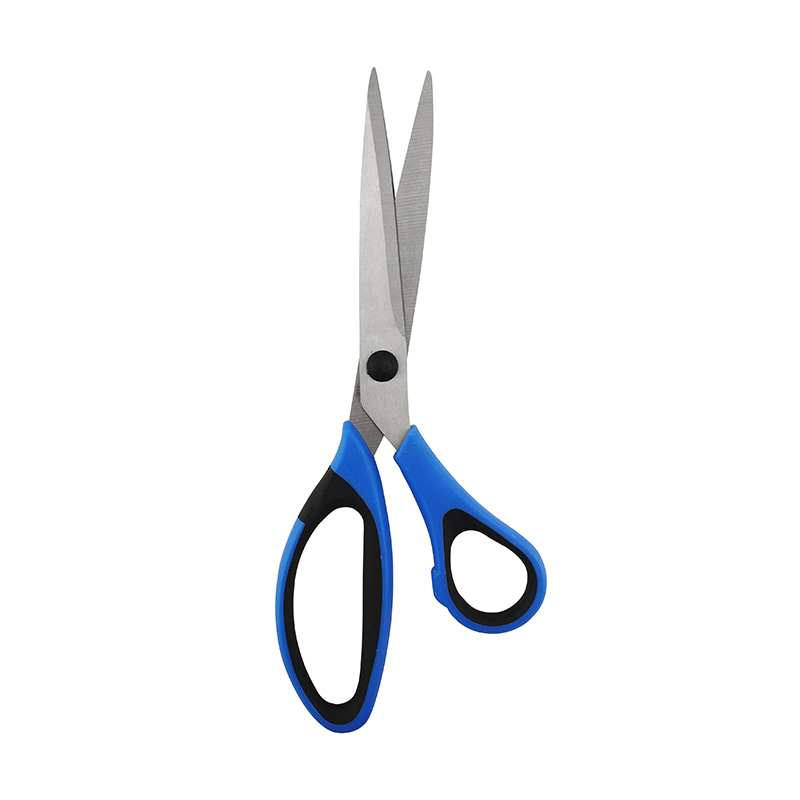
OEM Household Scissors: Precision, Comfort, and Style
OEM household scissors are a small product category with a long checklist behind it. Buyers are not only selecting a cutting tool; they are deciding how a product will feel in the hand, how consistently it will cut, and how clearly it can represent a retail, office, craft, or household brand. The original Bonet Houseware product presentation highlights household scissors with high-grade stainless steel blades, blue soft-grip handles, a non-slip hold, lightweight control, and an adjustable pivot screw. Those are useful starting points, but professional sourcing requires a wider evaluation.

This guide explains how B2B buyers can assess OEM household scissors before placing a wholesale or private-label order. It focuses on practical selection criteria, supplier questions, and quality checks rather than unsupported promises.
Key Takeaways
- Confirm the blade material, hardness target, sharpness standard, and rust-resistance expectations before approving samples.
- Evaluate soft-grip scissors by comfort, non-slip performance, handle fit, and suitability for both right-handed and left-handed users if that is required for your market.
- Check pivot screw tension carefully because it affects cutting feel, blade alignment, and long-term usability.
- For OEM projects, ask which handle colors, packaging formats, logo methods, and inspection standards are available instead of assuming they are included.
- Use pre-production samples and shipment inspections to reduce variation between the approved sample and bulk goods.
What Makes Household Scissors Suitable for OEM Programs?
For an OEM household scissors program, the product must be repeatable, comfortable, and easy to position for the intended sales channel. General household users may cut paper, packaging, light fabric, labels, craft materials, or office supplies. This does not mean one pair of scissors can handle every industrial material; it means the supplier should clearly define intended use and help the buyer avoid overclaiming performance.
The source article states that the scissors use high-grade stainless steel blades and are designed for precise cuts through paper, fabric, and other materials. When developing an OEM specification, buyers should ask the supplier to clarify what “high-grade” means in the context of the order. Important questions include the stainless steel type, heat treatment process, blade thickness, edge angle, and corrosion-resistance expectations. If these details are not documented, include them as questions in the request for quotation rather than presenting them as confirmed facts.
Blade Quality and Cutting Performance
Blade performance is the first factor most customers notice. A clean cut depends on sharpness, blade alignment, pivot stability, and the finish of the cutting edge. Stainless steel is commonly chosen for household scissors because it can support corrosion resistance and everyday durability, but the exact performance depends on the material and processing used by the factory.
During sample review, test the scissors on the realistic materials your customers will use. For a household or office assortment, this may include printer paper, envelope paper, thin cardboard, gift wrap, thread, and light fabric. Record whether the scissors pull, fold, snag, or leave rough edges. Also check the tip area, because some low-quality scissors cut well near the pivot but fail near the point.
Soft-Grip Handle Comfort and User Fit
The original product description emphasizes blue-handled shears with soft-grip inserts and a non-slip hold. For household and office use, comfort is not a minor detail. Customers often judge scissors by the handle before they judge the blade. A handle that feels too hard, too narrow, or too slippery may lead to complaints even if the cutting edge is acceptable.
Buyers should review handle ergonomics with several hand sizes. Check whether the inner finger loops have rough seams, whether the soft insert is firmly attached, and whether the grip remains stable when the hand is slightly wet or under repeated use. If the product is intended for broad household distribution, confirm whether the design is suitable for both right-handed and left-handed users, as stated in the original article. If ambidextrous use is important for your product page or packaging, ask the supplier how that claim is supported by the handle shape and blade orientation.
Adjustable Pivot Screw and Tension Control
The pivot screw is a small component with a large effect on cutting quality. The original article notes a meticulously engineered pivot screw that allows adjustable tension. In sourcing terms, this means buyers should test how easily the tension can be adjusted, whether the screw stays stable after repeated cutting, and whether the blades remain aligned throughout the cutting motion.
If the tension is too loose, the blades may separate and fold material instead of cutting it. If it is too tight, the scissors may feel heavy and cause hand fatigue. Ask whether tension is set at the factory, whether end users are expected to adjust it, and what tool is needed if adjustment is possible. For retail products, instructions should be clear and safe.
OEM Customization Questions for Buyers
Custom scissors manufacturing can involve color, logo placement, packaging, assortment structure, and sometimes handle material choices. However, buyers should not assume every option is available for every order size. Instead, create a clear specification sheet and ask the supplier to confirm what can be customized.
- Which handle colors are available for existing molds, including the blue soft-grip style shown in the product image?
- What logo methods are supported, such as printing, labeling, or packaging-only branding?
- Can the supplier provide retail packaging, bulk packaging, or private-label packaging?
- What sample lead time, production lead time, and approval process apply to OEM household scissors?
- What inspection criteria are used for blade sharpness, pivot tension, handle finish, and packaging condition?
These questions help keep the conversation factual. They also prevent a common sourcing problem: approving an attractive sample without confirming whether the same materials, finish, and packing method will be used in mass production.
Comparison Checklist for Sourcing OEM Household Scissors
| Evaluation Area | What to Check | Buyer Question to Ask |
|---|---|---|
| Blade material | Stainless steel type, edge finish, corrosion expectations | What blade material and processing are used for the quoted item? |
| Cutting performance | Clean cuts on paper, light fabric, packaging, and tip area | Which materials are appropriate for normal household use? |
| Handle comfort | Soft-grip feel, non-slip hold, finger loop smoothness | Can you provide samples for hand-feel testing before bulk order? |
| Pivot tension | Adjustability, blade alignment, smooth opening and closing | Is the pivot screw user-adjustable or factory-set? |
| OEM options | Color, logo, packaging, assortment requirements | Which customization options are available for this model? |
| Quality control | Sharpness checks, visual inspection, packing inspection | What inspection standard will be used before shipment? |
Quality Inspection Before Wholesale Shipment
Before confirming a wholesale shipment, compare bulk goods against the approved sample. Check random units from different cartons, not only the top layer. Open and close each sample unit several times, inspect the blade edge under good light, and test cutting performance on agreed materials. Also review handle color consistency, grip insert bonding, packaging print, barcode placement if used, and carton strength.
For OEM products, documentation matters. Keep the approved sample, final artwork, packaging specification, and inspection checklist together. If a supplier offers test reports or certifications, review whether they apply to the exact product and order. Do not add compliance claims to your sales materials unless the supplier provides valid documentation for the item being purchased and your target market.
Practical FAQ
Are OEM household scissors suitable for both home and office use?
They can be, if the blade design, handle comfort, and cutting performance match common tasks such as paper, packaging, labels, and light craft use. Buyers should confirm intended materials with the supplier.
What should I ask before ordering custom scissors manufacturing?
Ask about blade material, handle material, color options, logo method, packaging options, sample approval, production lead time, inspection standards, and whether any claims require documentation.
Why does the pivot screw matter?
The pivot controls how closely the blades meet. Proper tension supports smooth cutting, while poor tension can cause snagging, folding, or a stiff feel during use.
Can soft-grip scissors reduce hand fatigue?
A comfortable soft grip may improve control and comfort during repeated use, especially when the handle shape fits the user well. Buyers should test samples with different hand sizes before approval.
How can buyers avoid quality differences between samples and bulk goods?
Create a written specification, keep an approved sample, define inspection points, and check pre-shipment goods against the agreed standard before final acceptance.
