




OEM 7" Household Scissors: Sourcing Guide for Buyers

OEM 7-inch household scissors sit in a useful middle ground: compact enough for a drawer, but large enough for everyday cutting jobs such as paper, light craft materials, packaging, and some fabrics. For importers, wholesalers, gift-set buyers, and private label brands, the challenge is not simply finding scissors that look attractive. The real task is to confirm whether the product matches the intended retail channel, user expectations, packaging plan, and quality standard.
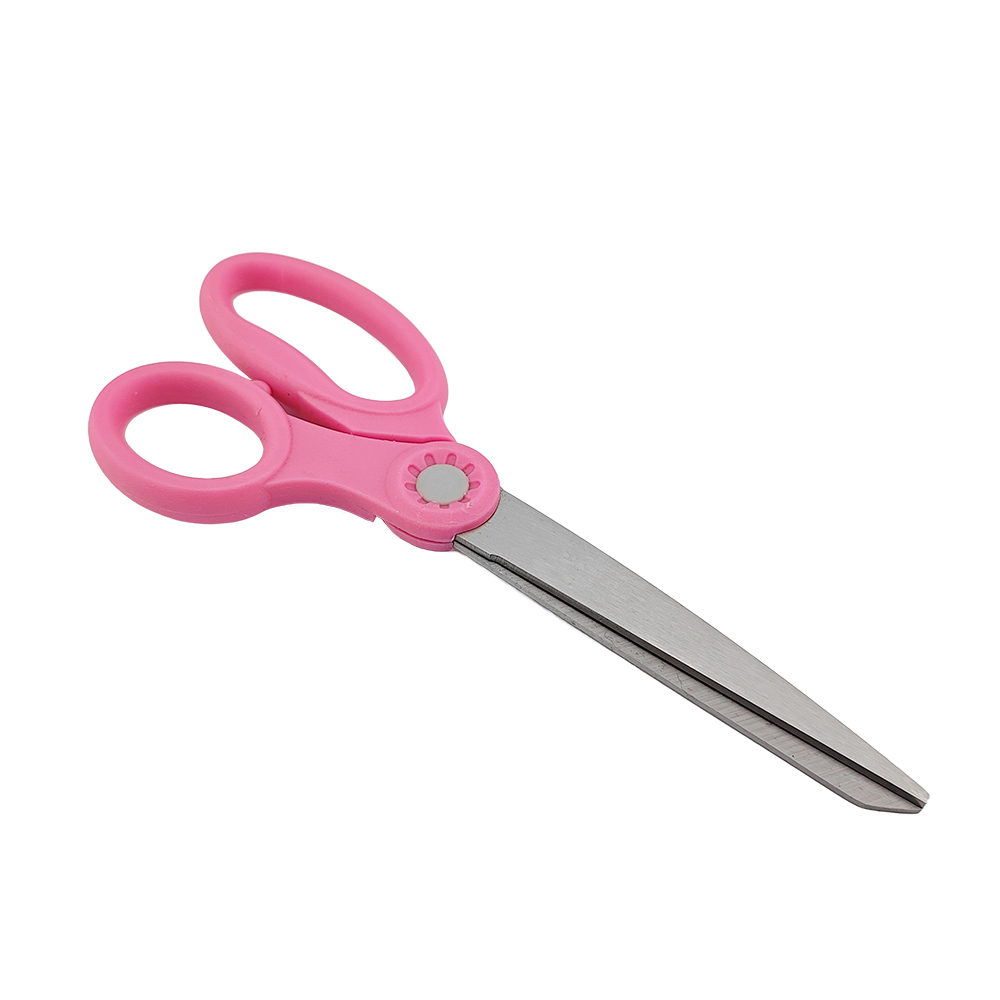
The original product presentation highlights a pastel pink design, ergonomic handles, lightweight balanced construction, stainless steel blades, and an adjustable pivot screw. Those are useful starting points, but a sourcing decision should go further. Buyers should request samples, compare cutting feel, check consistency across units, and ask the supplier clear questions before confirming an OEM order.
Key Takeaways
- For OEM sourcing, judge household scissors by cutting consistency, comfort, finish, packaging fit, and supplier communication.
- A 7-inch size is practical for general home, office, school, and craft use, but it should be tested against the materials your customers actually cut.
- Do not rely on appearance alone; verify blade alignment, pivot adjustment, handle comfort, and sample-to-sample consistency.
- Ask suppliers about customization options, inspection process, packaging choices, lead time, and documentation before placing a wholesale order.
Who Should Source 7-Inch Household Scissors?
This product type is relevant for distributors, supermarket buyers, stationery brands, homeware importers, e-commerce sellers, and promotional product companies. A 7-inch household scissor can work as a standalone SKU, part of a kitchen or craft assortment, or an item in a school and office supplies range. Because the size is familiar to many users, it can be positioned as a general-purpose tool rather than a specialist cutting instrument.
For B2B buyers, search intent usually centers on three questions: Can the supplier make a consistent product? Can the scissors be adapted for private label requirements? Will the final product meet the target price, packaging, and quality level for the chosen sales channel? A good sourcing process answers these questions before the purchase order is signed.
Design Features to Evaluate
The original article mentions a pastel pink design and ergonomic handles. Color and handle shape matter because household scissors are often bought quickly, displayed visually, and used by people with different hand sizes. A comfortable grip can reduce strain during repeated cutting, while a balanced feel helps users control the blades more easily.
When reviewing samples, ask several team members to use the scissors rather than relying on one opinion. Check whether the handle edges feel smooth, whether the finger openings suit the target market, and whether the scissor remains stable when opening and closing repeatedly. If you plan to sell into a family, craft, or office channel, the handle design should feel approachable and easy to control.
Blade and Cutting Performance Checks
The source content states that the scissors use stainless steel blades and include an adjustable pivot screw for blade alignment. These details are helpful, but they should still be checked during sample evaluation. Buyers can test the scissors on standard office paper, thin cardboard, gift wrap, thread, ribbon, and fabric samples if those materials match the product positioning.
Look for clean cutting from the blade base to the tip. If the scissors push material forward, snag fabric, or fail to cut near the tip, ask the supplier whether the issue is related to blade grinding, pivot tension, or sample finishing. The adjustable pivot screw can be useful, but buyers should also confirm whether it remains stable after repeated opening and closing.
Comparison Checklist for OEM Evaluation
| Evaluation Point | What to Check | Questions to Ask the Supplier |
|---|---|---|
| Size and application | Confirm the 7-inch format suits home, office, craft, or retail bundle use. | Can the same model be supplied in other sizes if the range expands? |
| Blade material | Verify the stated stainless steel blade and inspect finish consistency. | What blade material details can be provided on the quotation or specification sheet? |
| Cutting performance | Test paper, packaging, light craft materials, and fabric if relevant. | What in-house cutting checks are performed before shipment? |
| Handle comfort | Review grip shape, edge smoothness, balance, and control. | Are handle colors, logos, or molds customizable for OEM projects? |
| Pivot screw | Open and close repeatedly to check blade alignment and tension. | How is pivot tightness checked during production inspection? |
| Packaging | Match packaging to retail display, online shipping, or bulk distribution. | Can the supplier provide packaging templates, artwork requirements, and carton details? |
OEM and Private Label Questions
OEM sourcing is about control. A buyer may need a specific color, logo position, barcode label, packaging card, blister pack, or carton mark. Before discussing price, clarify which elements can be customized and which require additional tooling, artwork setup, or order volume. Do not assume that every detail shown in a sample can be changed without cost or lead-time impact.
- Request a written product specification for the exact scissor model being quoted.
- Ask whether the sample is from current production or made only for presentation.
- Confirm available handle colors, logo methods, packaging options, and carton packing.
- Ask how the supplier controls blade alignment, handle finish, and final inspection.
- Clarify lead time, payment terms, sample approval process, and shipment documentation.
Quality Control Before Wholesale Orders
A simple inspection plan can prevent many sourcing problems. At the sample stage, compare at least several units rather than one polished example. During production, define acceptable limits for scratches, loose screws, uneven handles, poor cutting, and packaging damage. If the goods are intended for a regulated market or a specific retailer, ask what documentation the supplier can provide and verify requirements independently.
It is also useful to keep an approved reference sample. This gives both buyer and supplier a practical benchmark for color, handle feel, opening tension, blade finish, logo placement, and packaging quality. For repeat orders, compare new samples with the approved reference before mass production.
Practical Use and Care Guidance
For end users, household scissors last longer when used within their intended purpose. A 7-inch pair should not be marketed as a heavy-duty industrial cutter unless the supplier provides clear support for that claim. Recommend wiping the blades after use, keeping the pivot area dry, and storing the scissors safely away from moisture and children. If the pivot screw is adjustable, users should adjust carefully and avoid over-tightening, which can make cutting harder.
FAQ
Are 7-inch household scissors suitable for private label programs?
Yes, they can be suitable if the supplier supports the required logo, color, packaging, and inspection process. Buyers should confirm all customization details in writing.
What should buyers test before ordering OEM household scissors?
Test cutting on the target materials, handle comfort, blade alignment, opening smoothness, pivot stability, finish quality, and packaging durability.
Can stainless steel blades still vary in quality?
Yes. Stainless steel is a broad description, so buyers should ask for material details, sample consistency, and the supplier's quality control process.
What information should be included in a supplier quotation?
A useful quotation should identify the model, size, materials stated by the supplier, customization options, packaging, carton packing, lead time, payment terms, and any available documentation.
How can buyers reduce sourcing risk?
Approve reference samples, define inspection criteria, confirm packaging artwork early, ask practical supplier questions, and avoid relying only on catalog photos.
Final Sourcing Advice
OEM household scissors can be a dependable product category when the buyer treats sourcing as a structured evaluation rather than a quick visual choice. The pastel pink appearance, ergonomic handle concept, stainless steel blades, and adjustable pivot screw described in the original product content are relevant features, but they should be verified through samples and clear supplier communication. For wholesale and private label buyers, the best decision comes from matching the scissors to a real market need, documenting specifications, and confirming quality expectations before production begins.
