





OEM Household Scissors: Practical Sourcing Guide for Wholesale Buyers
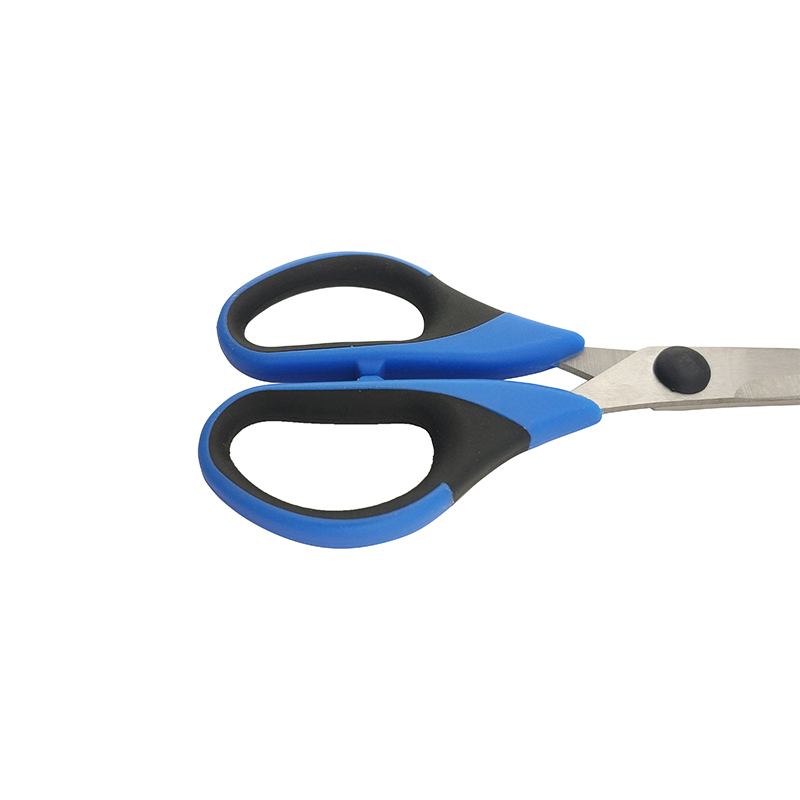
OEM household scissors are a small product category, but they can create large sourcing problems when quality is inconsistent. A pair of scissors may look simple in a product photo, yet buyers still need to evaluate cutting performance, blade finish, handle comfort, packaging, branding options and supplier communication before placing a wholesale or private label order. For importers, retailers, promotional product companies and household goods distributors, the goal is not only to find a low unit cost. The goal is to source a repeatable product that fits the intended market and reduces avoidable complaints.
The original product description highlights several useful details: stainless steel blades, a satin finish, ergonomic handles, blue and black rubber accents, and suitability for common household tasks such as cutting paper, fabric and lightweight cardboard. Those are good starting points, but B2B buyers should still confirm specifications directly with the factory or supplier before committing to an OEM program.
Key Takeaways
- Confirm blade material, hardness, edge sharpness and finish instead of relying only on product photos.
- Check handle comfort with real samples, especially if the scissors are intended for frequent household or office use.
- Ask the supplier what OEM options are available, including logo placement, color matching, packaging and carton labeling.
- Request pre-production samples and inspection criteria before wholesale production begins.
- A Chinese factory or wholesale scissors supplier should provide clear answers on specifications, quality control and lead time before purchase.
What Makes Household Scissors Suitable for OEM Projects?
Household scissors are used in many everyday settings: kitchens, home offices, craft rooms, school supply kits, sewing baskets and general utility drawers. Because the product is handled directly by the end user, comfort and perceived quality matter as much as appearance. OEM buyers should evaluate whether the scissors fit a defined use case. A pair designed for light paper cutting may not satisfy users who expect smooth cutting through fabric or thicker packaging material.
For private label programs, consistency is especially important. If one shipment cuts cleanly but the next shipment feels loose, dull or uncomfortable, the brand owner receives the complaint, not only the factory. That is why an OEM order should begin with a written product specification, approved sample and inspection checklist.
Blade Quality: Questions Buyers Should Ask
The source article states that the scissors use stainless steel blades with a satin finish. Stainless steel can be a practical choice for household scissors because it is commonly used in daily-use cutting tools, but buyers should not assume the exact grade, thickness or hardness unless the supplier confirms it in writing.
Useful questions include: What stainless steel grade is used? What is the blade thickness? Is the edge machine-ground, hand-finished or both? What cutting test is used before shipment? How is the pivot tension controlled? Does the satin finish affect cleaning, glare reduction or appearance only? These questions help buyers compare suppliers on measurable points rather than broad claims such as “premium quality.”
Handle Comfort and User Fit
The original article mentions ergonomic handles with blue and black rubber accents and a comfortable grip. For household scissors, the handle is often what separates a product that feels useful from one that is quickly replaced. Buyers should check finger-hole size, grip texture, surface softness, handle balance and whether the scissors feel stable during repeated opening and closing.
If the product is marketed to broad household users, ask whether the design is suitable for right-handed and left-handed users, and verify that claim through samples. If the scissors are intended for craft, office or kitchen accessory ranges, test them with the type of cutting tasks the final customer is likely to perform. A short sample review by several users can reveal discomfort that is not visible in a catalog image.
OEM and Private Label Options to Confirm
OEM sourcing usually involves more than choosing an existing product and adding a logo. The supplier may offer different handle colors, packaging formats, hang tags, blister cards, barcode labels or carton marks. However, buyers should avoid assuming that every customization is available for every order size. Instead, ask the supplier to explain which changes are possible, what files are required, how color matching is handled and whether there are setup charges or minimum order requirements.
For household scissors, common private label decisions may include logo position, handle color combination, retail card design, user instructions, safety warnings and export carton layout. If the product will be sold in a regulated market, buyers should ask what product labeling and documentation they need to provide or verify with their own compliance advisor.
Comparison Checklist for Wholesale Scissors Suppliers
| Evaluation Point | What to Check | Why It Matters |
|---|---|---|
| Blade material | Confirmed stainless steel grade, thickness and finish | Supports consistent cutting performance and buyer comparison |
| Cutting performance | Sample tests on paper, fabric and lightweight cardboard | Matches the product to real household use |
| Handle design | Grip comfort, rubber accents, balance and user fit | Reduces fatigue and improves customer satisfaction |
| OEM options | Logo, color, packaging, carton labels and artwork process | Helps private label buyers plan branding accurately |
| Quality control | Inspection standard, defect definitions and sample approval | Limits disputes before mass production ships |
| Commercial terms | MOQ, lead time, payment terms and shipping support | Clarifies total sourcing cost and production schedule |
Sampling and Inspection Before Bulk Orders
A product sample is essential for OEM household scissors. Buyers should request at least one reference sample before confirming specifications, and a pre-production sample after artwork or color changes are applied. When checking samples, do not only look at the appearance. Open and close the scissors repeatedly, listen for grinding or looseness, inspect the blade alignment and test the cut from the base to the tip.
For wholesale orders, define acceptable and unacceptable defects. Examples may include blade chips, uneven handle color, loose pivots, poor logo printing, damaged packaging or inconsistent carton labels. A simple inspection checklist can prevent confusion when goods are produced at scale. If third-party inspection is needed, share the checklist with both the inspector and supplier before production is completed.
Packaging and Retail Presentation
Packaging affects both shipping protection and retail conversion. Household scissors are often sold on hanging cards, in blister packaging, in paper sleeves or as part of a tool set. The right format depends on the sales channel. E-commerce sellers may care more about compact packaging and damage reduction, while physical retailers may require clear hanging display options and scannable barcodes.
Ask whether the supplier can provide packaging dielines, print proofs and carton packing details. Buyers should also confirm whether sharp edges are safely covered during transport and handling. Good packaging should protect the product, explain basic use clearly and present the private label brand without overpromising performance.
FAQ: OEM Household Scissors Sourcing
How should I compare different household scissors suppliers?
Compare approved samples, written specifications, OEM options, packaging quality, response speed and inspection process. Price is important, but it should be reviewed together with defect risk and consistency.
Can I request custom handle colors for private label scissors?
Possibly. Ask the supplier whether custom colors are available, what color reference system they use, whether a minimum order applies and whether a color sample can be approved before production.
What cutting tests should be used for household scissors?
Test the materials the end user is likely to cut, such as paper, fabric and lightweight cardboard. Check cutting from the heel to the tip of the blade, not only in the middle.
Should I rely on product photos when selecting scissors?
No. Photos help with appearance, but they do not prove sharpness, pivot smoothness, handle comfort or packaging strength. Samples and clear inspection criteria are necessary.
What should I ask before placing a wholesale order?
Ask about blade specifications, handle material, OEM choices, MOQ, lead time, sample approval, packaging, defect standards, payment terms and shipping documentation. Written answers make later production easier to manage.
