




OEM Household Scissors: Quality and Versatility Explored
OEM household scissors are everyday cutting tools used in kitchens, craft areas, offices, sewing kits, school packs, and general home storage drawers. For wholesale buyers, private-label brands, and distributors, the sourcing question is not simply whether a pair of scissors cuts well on the first try. The more important issue is whether the product can deliver consistent performance, safe handling, acceptable finishing, and repeatable quality across a production order.

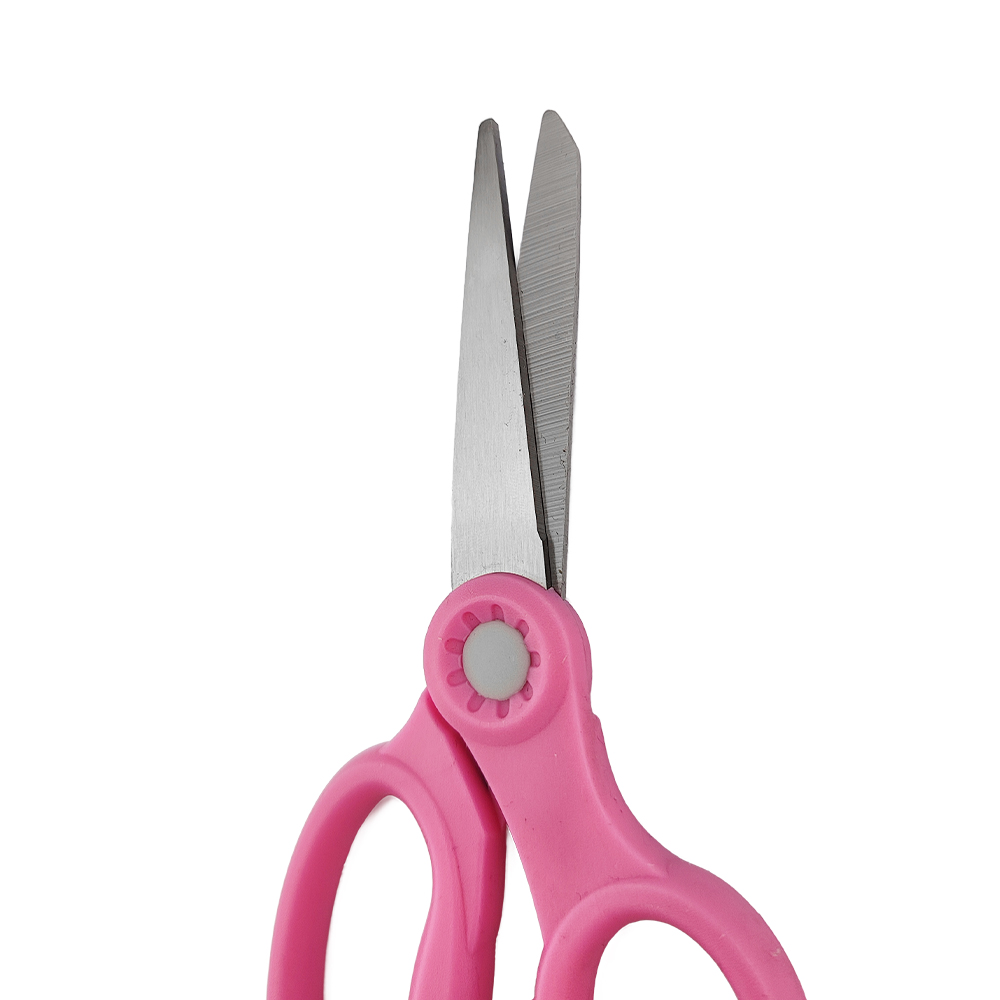
The original product description highlights common buyer interests: stainless steel blades, ergonomic handles, durable plastic grips, a visible pink color, and suitability for daily household tasks such as trimming wrapping paper, snipping herbs, cutting fabric, and handling cardboard. This guide expands those points into a practical sourcing framework for buyers comparing OEM household scissors from a scissors factory or custom scissors manufacturing partner.
Key Takeaways
- Household scissors should be evaluated for repeatable cutting performance, not only appearance.
- Stainless steel blades are mentioned in the source, but buyers should ask the supplier to confirm the exact grade and finishing process.
- Ergonomic plastic handles can improve comfort, especially for frequent light-duty use.
- OEM customization should be reviewed through samples, drawings, packaging proofs, and quality criteria.
- For wholesale orders, ask clear questions about inspection methods, tolerances, packaging protection, and after-sales handling.
What OEM Household Scissors Are Designed to Do
Household scissors are general-purpose tools, not industrial cutting equipment. Their main role is to handle routine home and light commercial tasks: opening packaging, cutting paper, trimming labels, preparing craft materials, snipping herbs, and cutting lightweight fabric or cardboard. A dependable pair should open smoothly, close cleanly, and cut near the tip as well as along the blade body.
For retailers and importers, this broad usage creates both an opportunity and a risk. The product appeals to many customer groups, but expectations vary. A kitchen user may care about easy cleaning and grip comfort. A craft user may focus on tip control and precision. A household buyer may simply want scissors that stay sharp and are easy to find in a drawer. The pink color noted in the original article may help visibility and shelf distinction, but color alone should not replace quality checks.
Blade Quality: What Buyers Should Verify
The source article states that the scissors use stainless steel blades and provide clean cuts in daily use. Stainless steel is a common choice for household scissors because it can offer practical corrosion resistance and everyday durability. However, buyers should avoid assuming details that are not confirmed. The supplier should be asked to identify the blade material grade, hardness range, surface treatment, sharpening process, and whether the blade edge is suitable for the intended retail positioning.
When reviewing a sample, test several common materials rather than relying on one quick paper cut. Use wrapping paper, thin cardboard, kitchen herb stems, fabric scraps, and plastic packaging film. A useful household scissor should not crush thin paper, snag fabric, or require excessive hand pressure on ordinary tasks. If the scissors perform well when new but lose cutting quality quickly, buyers should discuss edge retention and sharpening standards with the factory before placing a larger order.
Handle Comfort and Daily Usability
The original article mentions ergonomic handles and durable plastic grips that help reduce hand fatigue during extended use. For household scissors, handle design is one of the main drivers of customer satisfaction. A sharp blade with an uncomfortable handle can still generate poor reviews, especially if the product is used for crafts, food preparation, or repeated packaging tasks.
Buyers should check whether the handle opening suits the target market. Finger holes that are too small may frustrate adults, while oversized openings can reduce control. The inner edges of the handle should feel smooth, without sharp molding lines or rough plastic burrs. If the product is intended for broad household use, request samples from different production stages or batches to check whether handle comfort remains consistent.
Comparison and Inspection Checklist
A structured checklist helps buyers compare household scissors across suppliers without relying only on product photos or catalog claims.
| Inspection Area | What to Check | Questions to Ask the Supplier |
|---|---|---|
| Blade performance | Clean cutting on paper, herbs, fabric, and light cardboard | What blade material, hardness range, and sharpening process are used? |
| Blade alignment | Even closing action with no visible crossing gap or rubbing issue | How is blade alignment inspected during production? |
| Handle comfort | Smooth plastic edges, stable grip, comfortable finger openings | Can handle shape, color, or logo position be customized? |
| Finish quality | No burrs, stains, loose screws, rough rivets, or uneven coating | What cosmetic defect standards apply before shipment? |
| Packaging | Protection for tips and blades during transport and retail display | Can packaging artwork, barcode placement, and warning text be reviewed before production? |
| Order consistency | Samples match bulk goods in color, cutting feel, and finish | How are pre-production and final inspection samples approved? |
OEM Customization: Useful Options to Discuss
Custom scissors manufacturing can cover color selection, handle style, logo placement, packaging design, and assortment planning. The original article notes a vibrant pink color, which may suit a retail line aimed at household visibility or coordinated kitchen tools. Other buyers may prefer neutral colors, multi-color packs, or private-label packaging.
Before approving customization, buyers should provide clear artwork files, Pantone or color references when needed, packaging dimensions, and any market-specific labeling requirements. Do not assume the factory will automatically know the correct retail language, safety wording, or barcode format for your sales channel. These details should be confirmed in writing and checked on a physical or high-quality digital proof.
How to Evaluate a Scissors Factory
For B2B sourcing, factory evaluation should focus on communication, sample accuracy, quality control, and production repeatability. A supplier that responds quickly but cannot answer technical questions may not be the best fit for an OEM program. Ask for information that directly affects your order, such as available handle molds, blade options, packaging formats, inspection steps, and lead-time assumptions. If certifications, compliance documents, or test reports are required for your market, ask the supplier what they can provide rather than assuming they already meet every standard.
It is also useful to define acceptable quality levels before mass production. For example, decide how you will treat minor handle color variation, small cosmetic marks, blade stiffness, or packaging dents. Written criteria reduce confusion if a shipment inspection reveals borderline issues.
Use Cases and Product Positioning
OEM household scissors can be positioned for several retail or wholesale channels. A budget household line may prioritize simple packaging and dependable general cutting. A kitchen-focused line may emphasize easy drawer storage and comfortable grip. A craft or office range may need sharper tips and more precise cutting control. The same product should not be marketed as suitable for every heavy-duty task unless the supplier can support that claim with appropriate product design and verification.
The original review notes that the scissors are best suited for lighter tasks rather than industrial cutting. That distinction is important. Clear positioning helps reduce returns and customer disappointment. If buyers need scissors for heavy cardboard, thick textiles, or commercial workstations, they should request a more specialized model and test it under real working conditions.
Practical FAQ
Are OEM household scissors suitable for kitchen use?
They can be suitable for light kitchen tasks such as snipping herbs or opening food packaging, as noted in the original article. Buyers should ask the supplier about cleaning guidance, material details, and any market-specific requirements before promoting them for food-related use.
Can the handle color and packaging be customized?
OEM programs often include customization discussions, and the source mentions a pink handle color. Buyers should confirm available colors, logo methods, packaging templates, approval steps, and any cost or order implications directly with the supplier.
How should buyers test samples before ordering?
Test the scissors on the materials your customers are likely to cut, including paper, light cardboard, fabric, herbs, and packaging film. Also check blade alignment, handle comfort, screw or pivot stability, and packaging durability.
What should not be assumed when sourcing from a scissors factory?
Do not assume blade grade, compliance status, production capacity, MOQ, pricing, or test results unless the supplier provides clear confirmation. Treat these as sourcing questions to verify during quotation and sample approval.
Final Sourcing Advice
OEM household scissors can be a strong product for homeware, kitchen, craft, and general merchandise ranges when buyers evaluate them carefully. The best sourcing process combines hands-on sample testing with clear supplier questions about blade material, handle comfort, customization, packaging, and inspection. A reliable pair of household scissors should feel simple to use, but building a reliable wholesale program requires detailed review before production begins.
