





OEM Household Scissors: Quality, Design & Comfort
OEM household scissors are a small product category, but buyers should not treat them as simple commodities. For retailers, distributors, gift brands, and private-label houseware programs, scissors need to cut cleanly, feel comfortable, look consistent on the shelf, and arrive with packaging that matches the target market. A low unit cost is helpful, but poor cutting performance, uncomfortable handles, or weak quality control can quickly create returns and brand complaints.
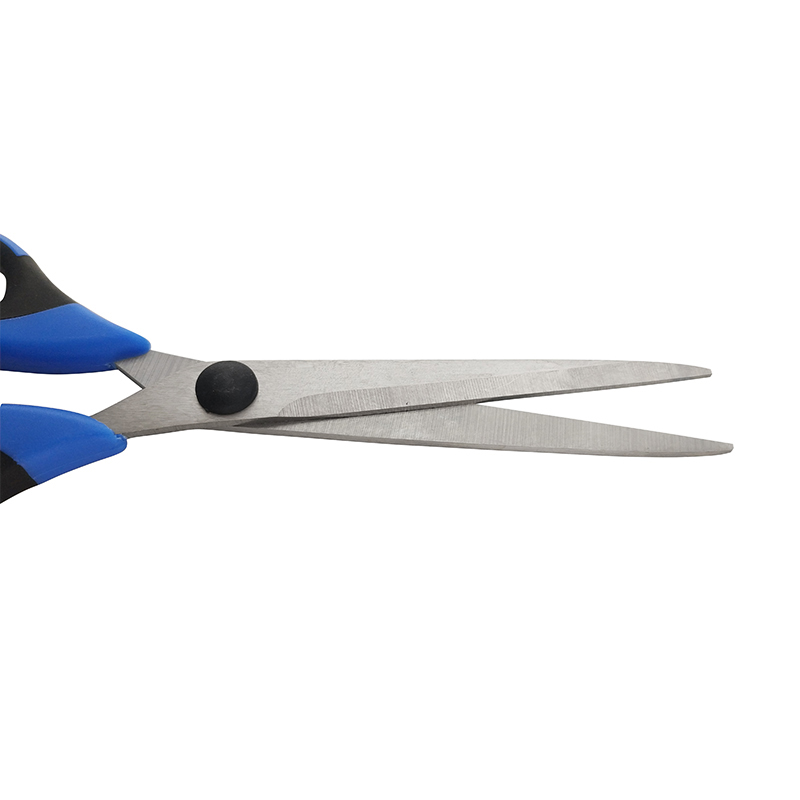
The original product description highlights stainless steel blades, ergonomic design, precision cutting, a modern blue and black appearance, and a soft-touch rubber grip. Those are useful starting points, but a responsible sourcing decision should go further. Buyers should confirm materials, finishing, handle construction, sample performance, packaging options, and quality inspection steps before placing a wholesale or OEM order.
Key Takeaways
- Evaluate OEM household scissors by cutting performance, comfort, finish consistency, and packaging readiness, not price alone.
- Ask suppliers to confirm blade material, handle material, coating or plating details, and any available test reports instead of assuming specifications.
- Request pre-production samples and test them on paper, fabric, plastic film, cardboard, and other materials relevant to your customers.
- For wholesale sourcing from a Chinese factory or supplier, clarify customization scope, lead time, inspection process, and carton packing before ordering.
What Makes Household Scissors Suitable for OEM Programs?
An OEM scissors program usually requires more than placing a logo on an existing tool. The product must fit a defined customer use case. General household scissors may be used for paper, packaging, kitchen wrapping, craft materials, light fabric, or office tasks. Because the use is broad, the design should balance sharpness, safety, grip comfort, and durability.
For private-label buyers, the most important question is whether the supplier can produce the same product repeatedly. A good sample is not enough if later bulk shipments vary in blade alignment, handle color, grip feel, or packaging print quality. Ask how the supplier controls incoming materials, blade grinding, assembly, and final inspection. If the supplier cannot explain those steps clearly, the order carries more risk.
Blade Quality: What Buyers Should Check
The source description states that the scissors use stainless steel blades and are designed for precision cutting. Stainless steel is commonly chosen for household scissors because it can support sharp edges and resist everyday moisture better than some untreated metals. However, buyers should still ask for the exact stainless steel grade, hardness range if available, blade thickness, surface finish, and whether any anti-rust treatment is applied.
Sample testing should be practical. Open and close the scissors repeatedly to feel for grinding, wobble, or uneven pressure. Cut thin copy paper from base to tip and check whether the blades push the paper instead of slicing it. Then test thicker paper, light fabric, and common packaging materials. If your market includes sewing, crafts, kitchen prep, or school use, build tests around those applications.
Handle Comfort and Grip Design
The original article notes ergonomic handles and a soft-touch rubber grip. These details matter because household scissors are often used for repetitive tasks. A handle that looks attractive but presses into the fingers can lead to discomfort, especially during gift wrapping, office use, or craft projects.
When comparing samples, have several people test the same scissors. Hand size, cutting angle, and dominant hand can change the experience. Check whether the finger loops are smooth, whether the soft-touch area feels secure, and whether the handle material has any strong odor. For OEM projects, also ask whether handle colors can be matched to a Pantone reference, whether color variation is controlled, and whether the grip material can be customized.
Comparison and Supplier Checklist
| Evaluation Area | What to Check | Questions to Ask the Supplier |
|---|---|---|
| Blade performance | Clean cutting from base to tip on intended materials | What blade material, hardness, and finishing details can be confirmed? |
| Handle comfort | Grip shape, finger pressure, slip resistance, and odor | Can handle color, texture, or soft-touch grip be customized? |
| Assembly quality | Screw or rivet stability, blade alignment, smooth opening | How is blade tension checked during production? |
| Appearance | Consistent blue and black color, clean edges, no scratches | What appearance defects are accepted or rejected in inspection? |
| Packaging | Retail card, blister, box, barcode, and carton protection | Can packaging artwork, labeling, and carton marks be prepared for my market? |
| Order planning | Samples, production timing, inspection, and shipping readiness | What are the MOQ, lead time, payment terms, and quality control steps? |
Why Source Household Scissors from a Chinese Factory?
Many buyers consider a Chinese scissors factory or wholesale scissors supplier because China has a broad houseware manufacturing base, experienced export workflows, and access to varied packaging, handle, and blade processing options. This can be useful for OEM programs that need consistent supply and customized retail presentation.
That said, buyers should avoid broad assumptions. Not every factory offers the same engineering support, finishing quality, or export documentation. Before selecting a supplier, ask whether the company is a manufacturer or trading company, which processes are handled in-house, which are outsourced, and how quality problems are resolved. If compliance documents or product tests are required for your market, ask what the supplier can provide and verify whether those documents apply to the exact product being ordered.
Packaging, Branding, and Wholesale Readiness
Scissors are often sold in competitive retail environments, so packaging needs to protect the product while explaining its use clearly. For wholesale and OEM projects, packaging choices may include hanging cards, blister packs, paper boxes, or multi-piece sets. The right choice depends on channel requirements, freight cost, display method, and local labeling rules.
Brand owners should prepare logo files, color references, barcode requirements, warning text, and language versions early. Ask the supplier for dielines and confirm whether packaging samples can be reviewed before mass production. Carton strength and inner packing also matter because scuffed handles or bent cards can reduce sell-through even when the scissors themselves are acceptable.
How to Evaluate Samples Before Ordering
- Inspect appearance under good lighting for scratches, burrs, stains, color mismatch, and loose parts.
- Cut several materials that match real customer use, including paper, thin card, packaging film, and light fabric if relevant.
- Check comfort by using the scissors for several minutes rather than making only one or two cuts.
- Open and close the scissors repeatedly to judge smoothness, blade tension, and pivot stability.
- Review packaging samples for print clarity, product fit, hanging strength, and carton packing method.
- Record sample results with photos and written acceptance criteria so the supplier understands bulk order expectations.
Common OEM Sourcing Mistakes to Avoid
One common mistake is approving a sample without defining measurable requirements. A buyer may like the first sample, but later discover that bulk goods feel different or packaging is not retail ready. Another mistake is focusing only on blade sharpness while ignoring handle comfort, opening smoothness, and appearance consistency.
Buyers should also avoid assuming that every claim is already verified. If a supplier mentions a material grade, coating, test result, or certification, ask for documentation and confirm it belongs to the same model. For market-specific requirements, consult your compliance specialist or local importer before production. This is especially important for children’s products, food-adjacent uses, or markets with strict labeling rules.
Practical FAQ
What should I ask before ordering OEM household scissors?
Ask about blade material, handle material, customization options, sample cost, MOQ, lead time, packaging choices, inspection process, payment terms, and what documents can be provided for your target market.
Are stainless steel blades always the best choice?
Stainless steel is a common and practical choice for household scissors, but performance depends on the specific grade, heat treatment, blade geometry, sharpening, and assembly quality. Confirm details with the supplier.
How can I test handle comfort?
Use the scissors for repeated cuts over several minutes, involve testers with different hand sizes, and check for pressure points, slipping, stiffness, and any strong odor from soft-touch materials.
Can a wholesale scissors supplier customize colors and packaging?
Many suppliers can offer color and packaging customization, but capabilities vary. Ask for available color matching methods, artwork requirements, sample timelines, and any minimum order conditions.
What should be included in a quality inspection?
A basic inspection should cover blade sharpness, blade alignment, pivot strength, handle finish, grip security, appearance defects, packaging accuracy, barcode checks, carton marks, and quantity verification.
