





OEM Kitchen Scissors: Practical Sourcing Guide for Buyers
For retailers, distributors, promotional product teams, and private label brands, OEM kitchen scissors are a practical category with broad household demand. A good pair of kitchen shears can support everyday food preparation, from cutting herbs to trimming meat or opening packaging. For business buyers, however, the sourcing decision should go beyond appearance. The right supplier should be able to explain materials, construction, quality control, packaging options, and customization limits clearly.
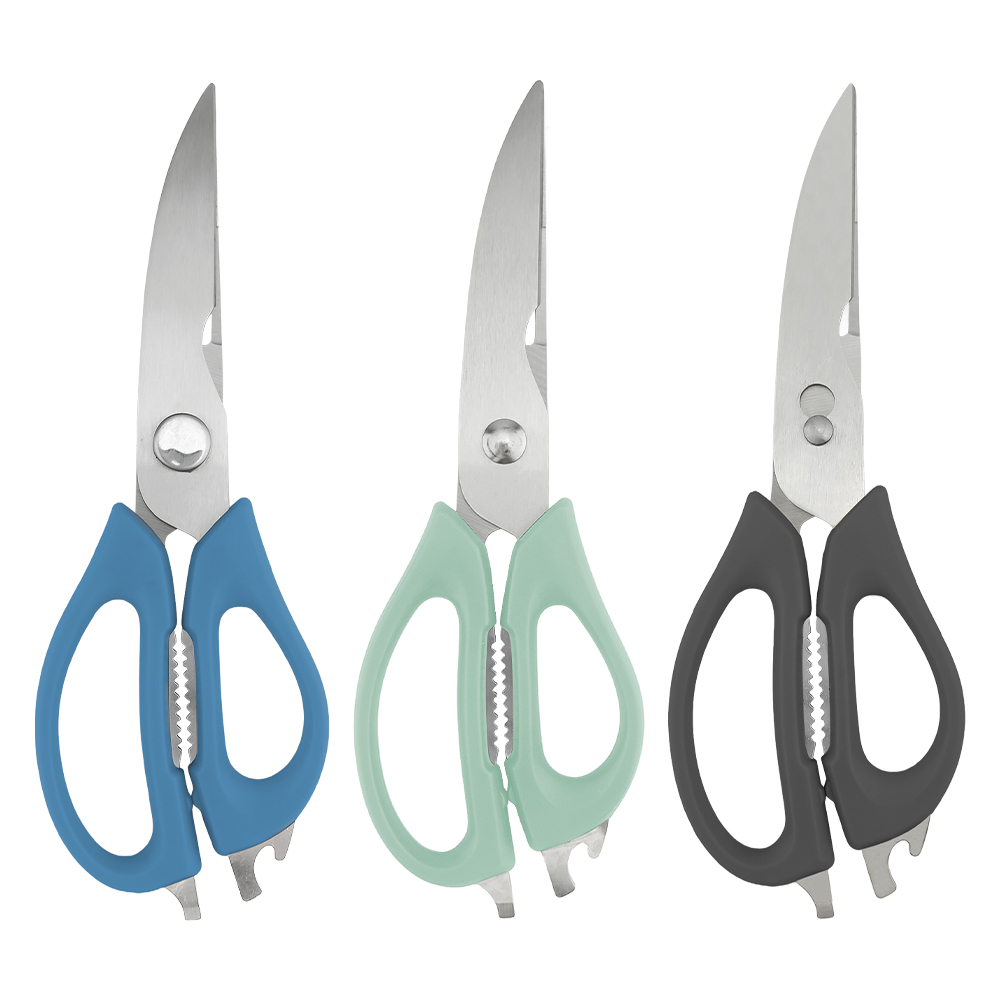
The original product information highlights multi-functional kitchen shears with stainless steel blades, ergonomic soft-grip handles, and three color options: black, mint, and blue. It also notes added functions in the handle area, including a bottle opener and nutcracker. These are useful selling points, but buyers should verify every technical detail with the supplier before confirming an order, especially when planning wholesale, OEM, or private label programs.
Key Takeaways
- OEM kitchen scissors should be evaluated by blade performance, handle comfort, safety, packaging, and supplier communication.
- Useful features in the source product include stainless steel blades, soft-grip handles, black, mint, and blue color options, plus bottle opener and nutcracker functions.
- Yangjiang is known as a blade-making region, but buyers should still ask each factory for process details and quality control evidence.
- Do not rely on catalog photos alone; request samples and test cutting, grip comfort, cleaning ease, and packaging durability.
- Commercial details such as MOQ, lead time, certifications, and customization scope should be confirmed directly with the supplier.
What Buyers Should Look For in OEM Kitchen Scissors
Kitchen scissors look simple, but small differences can affect customer satisfaction. For B2B buyers, the first priority is consistent cutting performance. Ask whether the blades are designed for general household food preparation, packaging, poultry, herbs, or mixed-use tasks. If the supplier describes the blades as stainless steel, request the exact steel type, hardness target, surface treatment, and corrosion-resistance expectations rather than assuming a grade.
Handle comfort is another important factor. The source article mentions ergonomic soft-grip handles, which can help reduce hand fatigue during repeated use. Buyers should test whether the handle opening fits different hand sizes, whether the grip becomes slippery when wet, and whether the pressure points feel comfortable during tougher cuts.
Feature Comparison Checklist
| Evaluation Area | What to Check | Questions to Ask the Supplier |
|---|---|---|
| Blade material | Stainless steel is stated in the source information | What steel type is used, and how is corrosion resistance verified? |
| Cutting performance | Clean cuts on herbs, packaging, and common kitchen ingredients | Can samples be tested before order confirmation? |
| Handle design | Soft-grip, ergonomic feel, control, and comfort | What handle material options and colors are available? |
| Extra functions | Bottle opener and nutcracker functions are described | Are these functions included in the standard model or optional? |
| Packaging | Retail card, box, insert, barcode, and private label needs | What packaging customization can be supported? |
| Quality control | Visual finish, blade alignment, screw tightness, and safe edges | What inspection steps are performed before shipment? |
Design and Function: More Than a Cutting Tool
Multi-functional kitchen scissors can be attractive to both retail and hospitality buyers because they reduce the need for separate small tools. The source product includes a handle structure with a bottle opener and nutcracker. These functions may add shelf appeal, but they should be tested carefully. A bottle opener area should feel stable, and a nutcracker section should not create uncomfortable pressure during normal cutting.
Color can also support product positioning. The original article lists three colors: classic black, mint, and blue. Black may suit general retail assortments, while mint and blue may work better for seasonal, gift, or lifestyle-oriented kitchen ranges. If you need brand colors, ask whether custom color matching is possible and what sample approval process is required.
Why Yangjiang Matters, and What Still Needs Verification
The original article identifies the product as Yangjiang kitchen scissors. Yangjiang is widely associated with knife and scissors manufacturing, so many buyers include the region in supplier searches. This can be a useful starting point when looking for a kitchen shears supplier, but location alone is not a substitute for supplier evaluation.
Before placing a wholesale or OEM order, ask the factory how it controls blade forming, sharpening, assembly, handle molding, and final inspection. If the supplier claims specific compliance, certification, or test performance, request current documents that match the exact product model and target market. Avoid assuming that one model, one factory, or one region automatically meets your market requirements.
OEM and Private Label Questions to Ask
OEM sourcing works best when buyers provide clear requirements early. A supplier can respond more accurately when they know the target market, order channel, packaging format, expected retail price range, and any buyer-specific inspection standard. For kitchen scissors, confirm whether customization applies to color, logo placement, packaging, blade finish, handle material, or accessory functions.
- What is the available customization scope for logo, handle color, packaging, and inserts?
- What is the minimum order quantity for standard colors and custom colors?
- Can the supplier provide pre-production samples for approval?
- What inspection criteria are used for blade sharpness, alignment, appearance, and packaging?
- What lead time applies after sample approval and packaging artwork confirmation?
- Which documents are available for the target sales market, if required?
Sample Testing Before a Wholesale Order
Samples are essential because kitchen scissors depend on hand feel as much as technical data. Test the shears on common use cases such as cutting herbs, trimming thin meat, opening food packaging, and cutting paperboard packaging if that matches your customer use. Check whether the blades separate cleanly if designed that way, whether cleaning is convenient, and whether any edges near the handle feel rough.
For retail programs, also test the packaging. Hang cards should resist tearing, boxes should protect the product during transit, and printed instructions should be clear. If the scissors include a bottle opener or nutcracker, consider whether simple usage icons or packaging notes are needed so customers understand the added functions.
Practical FAQ
What are OEM kitchen scissors?
OEM kitchen scissors are kitchen shears produced for a buyer's brand, packaging, or product program. Depending on the supplier, customization may include logo, handle color, packaging, and other design details.
Are stainless steel blades always the same quality?
No. The source article states that the blades are stainless steel, but buyers should ask the supplier for the specific steel type, finish, hardness target, and corrosion-resistance expectations before confirming an order.
What features are included in this product concept?
The original information describes stainless steel blades, ergonomic soft-grip handles, black, mint, and blue color options, plus integrated bottle opener and nutcracker functions.
How should buyers choose a Yangjiang kitchen scissors factory?
Use Yangjiang as a sourcing region to explore, then compare suppliers by sample quality, communication, customization support, quality control process, packaging capability, and documentation for your target market.
What should be confirmed before mass production?
Confirm the final sample, approved artwork, packaging structure, inspection standard, order quantity, lead time, shipment terms, and any documents required for your sales channel or destination market.
Final Selection Advice
OEM kitchen scissors are a small product, but they carry many details that affect buyer success. Strong sourcing decisions come from clear specifications, careful sample testing, and direct supplier questions. Use the stated product strengths as a starting point: stainless steel blades, soft-grip ergonomic handles, three color choices, and added bottle opener and nutcracker functions. Then verify the details that matter for your market before committing to wholesale production.
