




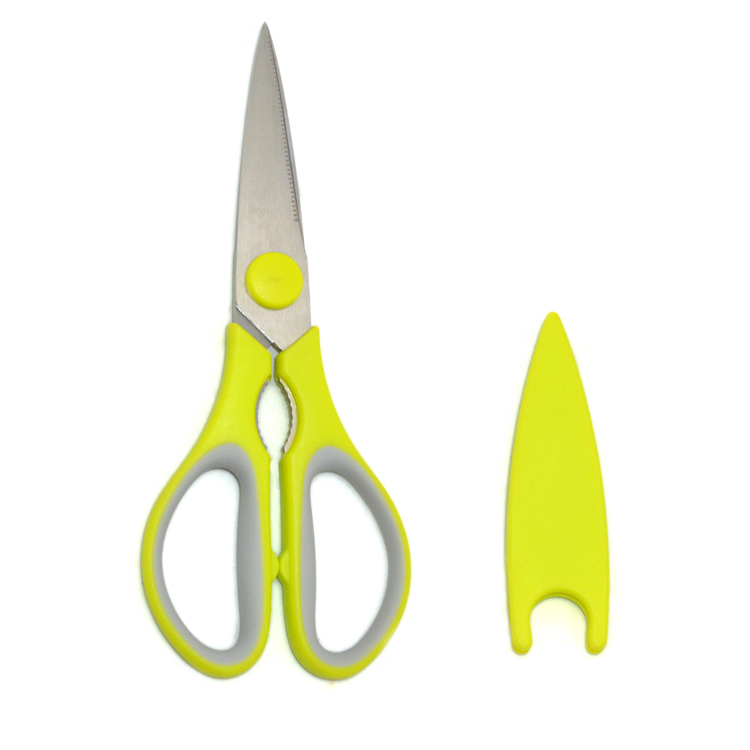
OEM Kitchen Scissors: Essential Multi-Purpose Shears
OEM kitchen scissors are practical tools for retailers, distributors, promotional buyers, and kitchenware brands that want to offer a useful everyday product under their own label. Unlike decorative kitchen accessories, scissors are judged quickly by how they cut, how they feel in the hand, how safely they store, and how well they hold up after repeated use. The original article highlights stainless steel blades, multi-purpose use, ergonomic handling, and a protective magnetic sheath. Those are relevant points for buyers, but they should be evaluated through samples, supplier questions, and clear purchasing specifications before any wholesale order is placed.
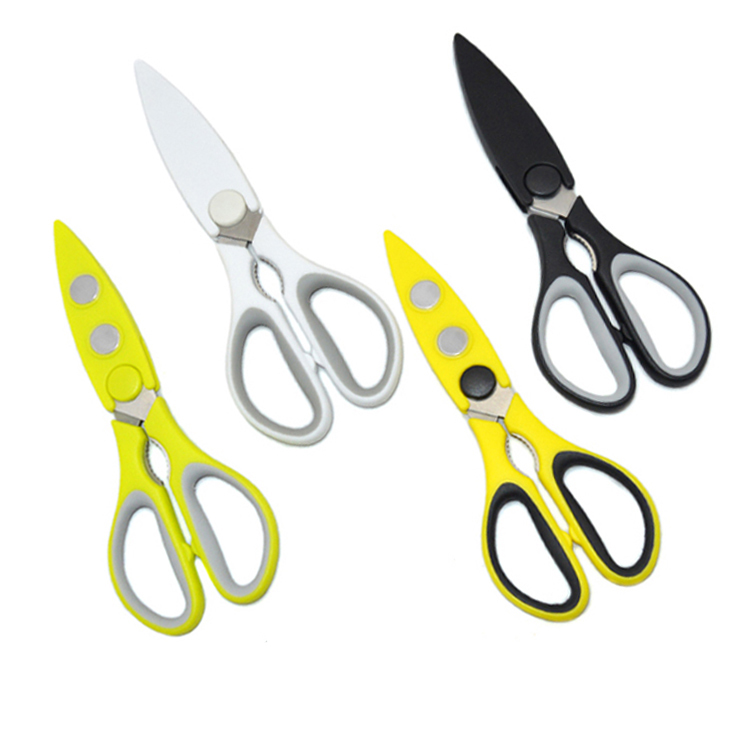
Key Takeaways
- OEM kitchen scissors should be assessed by cutting performance, comfort, storage safety, packaging options, and consistency across batches.
- Stainless steel blades are useful, but buyers should ask the supplier to confirm the specific material, hardness, corrosion resistance expectations, and care instructions.
- A protective magnetic sheath can improve storage convenience, but it should be tested for fit, hold, and ease of cleaning.
- Wholesale pricing is only one part of the decision; sample approval, quality inspection, lead time, labeling, and after-sales support are also important.
What OEM Kitchen Scissors Are Used For
Kitchen scissors, also called kitchen shears, are designed to handle quick cutting tasks that may be inconvenient with a knife and board. Common uses include snipping herbs, trimming food packaging, cutting vegetables into smaller pieces, portioning cooked foods, and preparing meat or poultry when the design is suitable for that level of use. For a wholesale buyer, the key question is not simply whether the scissors can perform one task well, but whether they can perform common kitchen tasks safely and consistently for the target customer.
Multi-purpose positioning is useful in retail because it is easy for shoppers to understand. However, product claims should remain realistic. If a supplier describes the scissors as suitable for poultry, ask for sample testing and any available internal test method rather than relying on a broad marketing phrase. If the product is mainly intended for light food preparation and package opening, the packaging and product page should say so clearly.
Blade, Handle, and Storage Features to Review
The original product description refers to high-quality stainless steel blades. Stainless steel is a common choice for kitchen scissors because it is associated with corrosion resistance and easy cleaning, but the exact grade and performance level should not be assumed. Buyers should ask the supplier what stainless steel is used, whether the blades are hardened, how sharpness is checked, and what care instructions should be printed for end users.
Handle comfort also matters. Ergonomic design can reduce hand fatigue, especially for customers who use scissors frequently in home kitchens, meal prep services, cafeterias, or small food businesses. During sampling, ask several people to test the grip. Check whether the handle suits different hand sizes, whether the finger openings feel restrictive, and whether the scissors remain stable when cutting thicker items.
The protective magnetic sheath mentioned in the original article is a useful storage feature because it may help keep the blades covered and accessible. Buyers should examine whether the sheath fits securely, whether the magnet is strong enough for the intended storage position, and whether the cover can be cleaned easily. The supplier should clarify safe-use instructions and any limitations for magnetic storage.
Comparison Checklist for Wholesale Evaluation
| Evaluation Area | What to Check | Questions to Ask the Supplier |
|---|---|---|
| Blade performance | Sharpness, cutting smoothness, edge alignment, resistance to bending | What blade material is used, and how is sharpness inspected before shipment? |
| Handle comfort | Grip shape, hand fit, slipping, pressure points during repeated cuts | Can handle color, finish, or branding be customized for OEM orders? |
| Storage cover | Sheath fit, magnetic hold, blade protection, ease of removal | What surfaces is the magnetic cover intended for, and are safety instructions provided? |
| Packaging | Retail box, hang card, barcode space, instruction insert, shipping protection | What packaging formats are available, and can artwork be supplied by the buyer? |
| Order control | Sample approval, inspection plan, defect handling, shipment consistency | What are the MOQ, lead time, sample cost, and process for handling quality issues? |
How B2B Buyers Should Source OEM Kitchen Scissors
For OEM sourcing, start with a clear specification sheet. Include the intended market, target retail channel, blade material request if known, handle color, packaging type, logo placement, barcode requirements, care instructions, and any safety warnings that must appear on the package. A precise specification reduces misunderstandings and makes supplier quotations easier to compare.
Next, request samples before discussing large-volume pricing in detail. A low unit price is not useful if the sample feels weak, cuts unevenly, or arrives in packaging that does not protect the product. When reviewing samples, test several common tasks rather than one dramatic cut. For example, cut herbs, thin packaging, cooked food, and a thicker item that matches the claimed use. Wash and dry the scissors according to the supplier's care guidance, then check whether the blades still open smoothly.
Buyers should also confirm commercial details directly with the supplier instead of assuming them. Important questions include minimum order quantity, production lead time, available customization, payment terms, carton details, spare parts or replacement policy, inspection options, and documentation available for the destination market. If regulatory or retailer compliance is required, ask what documents the supplier can provide and verify them independently when necessary.
Wholesale Packaging and Retail Positioning
Kitchen scissors are often purchased because they solve small daily problems. Retail packaging should make that benefit clear without exaggeration. Practical points to communicate include multi-purpose kitchen use, stainless steel blades if confirmed, comfortable grip, and included protective magnetic sheath if it is part of the final product. Avoid claims such as professional-grade, food-safe certification, dishwasher safe, or heavy-duty poultry shears unless the supplier can substantiate them and the exact product supports the claim.
For e-commerce, clear photography is important. Show the scissors open and closed, the handle shape, the blade cover, and the package contents. For physical retail, make sure the product is secured so shoppers can understand the size and grip without creating a safety issue. If the scissors are sold as part of a kitchenware line, align the color, packaging, and naming with the rest of the range.
Quality Control Before Shipment
A basic pre-shipment check can prevent many customer complaints. Inspect blade alignment, opening and closing movement, handle finish, visible scratches, cover fit, logo position, packaging print, barcode readability, and carton labeling. Random cutting tests should be included if the order volume is significant. Buyers can also define acceptable defect categories in advance, such as critical safety issues, major functional defects, and minor cosmetic marks.
Because scissors have sharp edges, shipping protection matters. Packaging should prevent the blades from moving freely or piercing the outer carton. The protective sheath can help, but it should not be the only control if the retail packaging is weak. Ask the supplier how the product is packed for export cartons and whether drop or transit handling has been considered.
Practical FAQ
Are OEM kitchen scissors the same as regular kitchen scissors?
The function may be similar, but OEM kitchen scissors are produced or customized for a buyer's brand, packaging, or retail requirements. Buyers should define logo, color, packaging, and performance expectations before ordering.
What should I test in a sample?
Test cutting smoothness, handle comfort, blade alignment, cleaning ease, cover fit, packaging strength, and whether the product matches the supplier's description. Use tasks that reflect your target customer's real use.
Can I claim the scissors are dishwasher safe?
Only make that claim if the supplier confirms it for the exact model and you are satisfied with the evidence or testing. Otherwise, provide conservative care instructions such as hand washing and drying after use.
Is a magnetic sheath useful for retail buyers?
Yes, it can be a useful storage and blade-protection feature. Buyers should still test the magnetic hold, fit, cleaning convenience, and safety instructions before including it in product claims.
What commercial details should I ask before placing a wholesale order?
Ask about MOQ, lead time, customization options, packaging formats, sample approval, inspection process, payment terms, carton information, and how defects or replacements are handled.
