




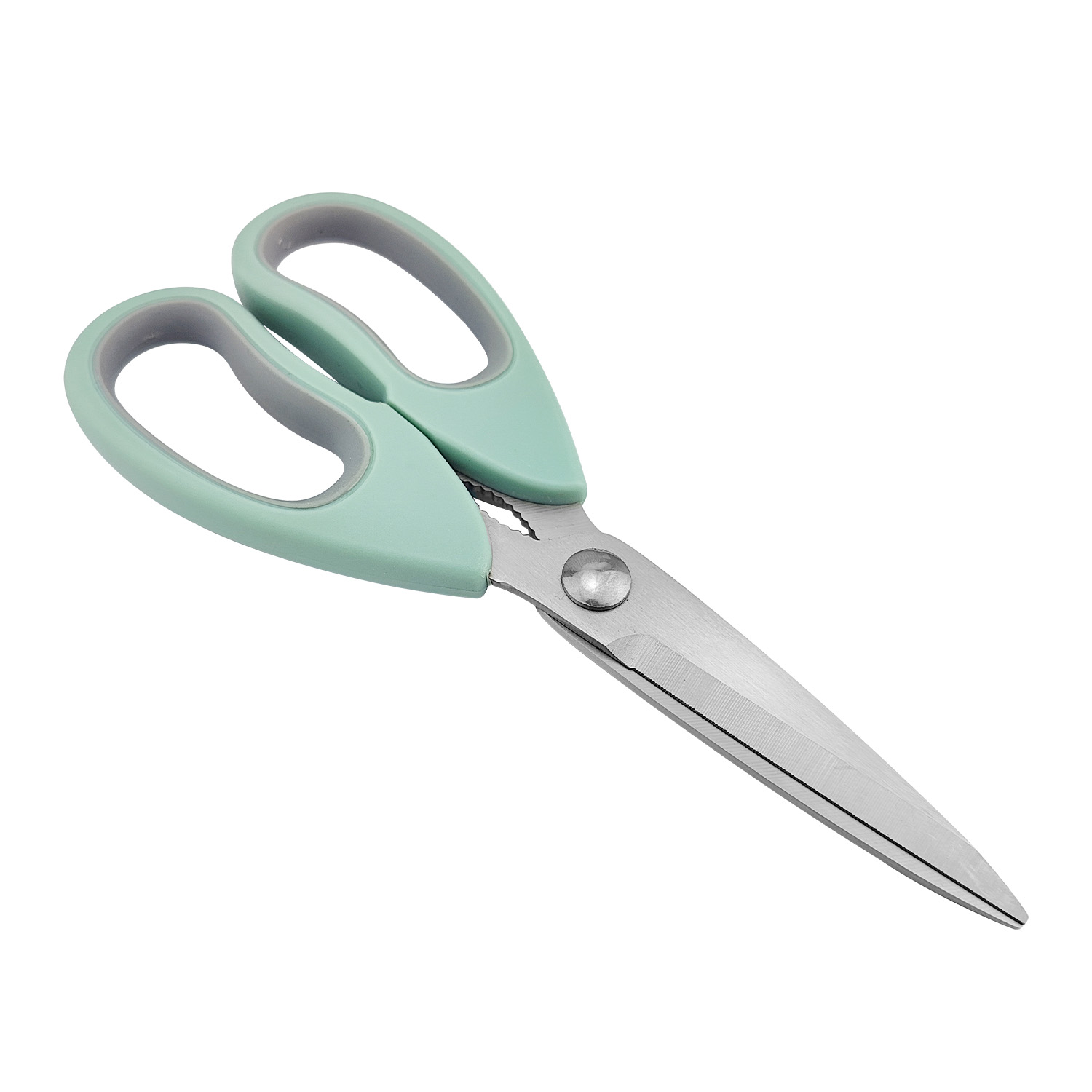
OEM Kitchen Scissors from Yangjiang's Finest Manufacturer
OEM kitchen scissors are a practical product category for importers, kitchenware brands, promotional buyers, and distributors that need a dependable cutting tool with room for customization. The original article highlighted a silver stainless steel blade, vibrant red handles, an ergonomic shape, and a distinctive blade design with two circular holes. Those details are useful, but buyers also need a clearer sourcing framework: what to check, what to ask, and how to avoid choosing a supplier based only on appearance.
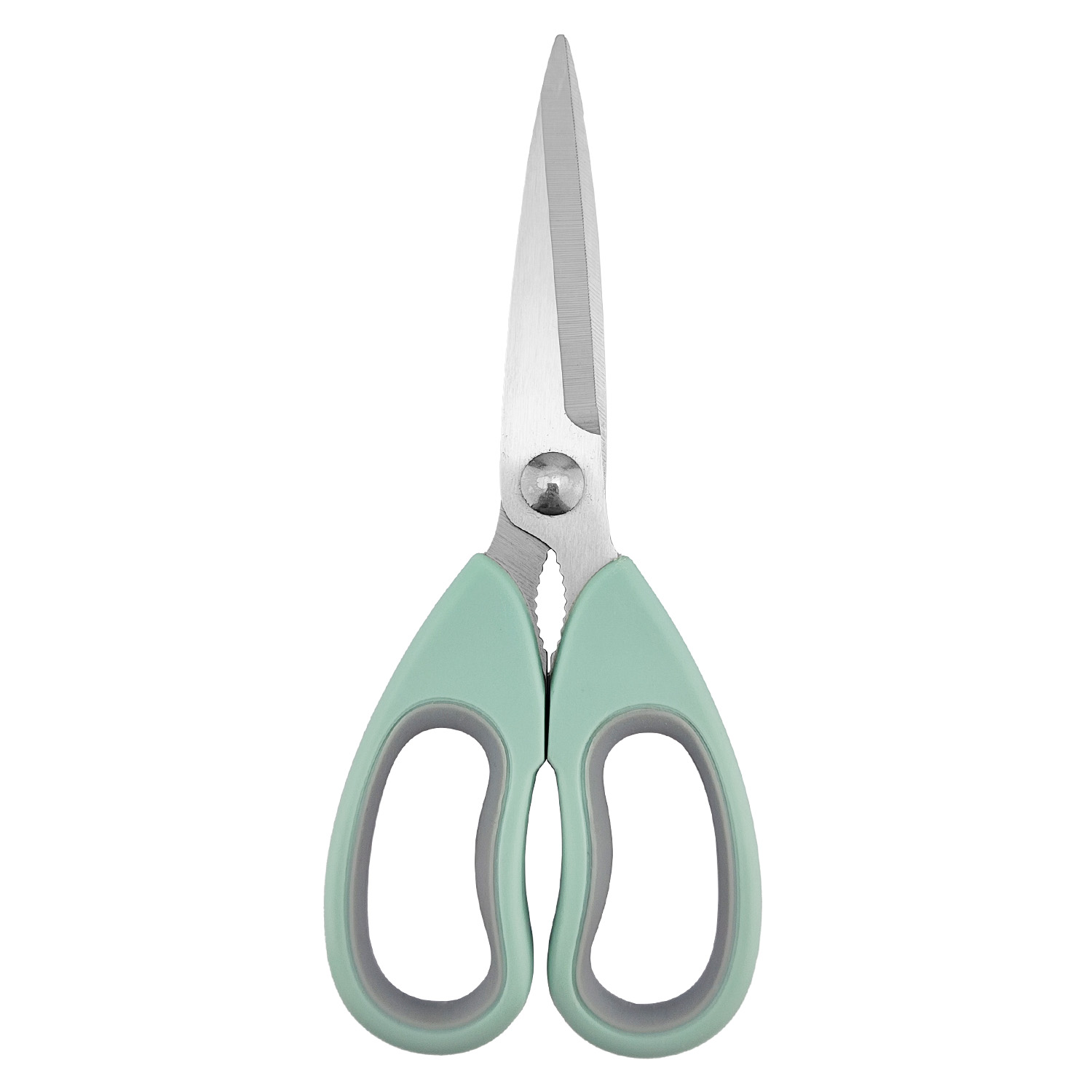
Yangjiang is widely associated with knives and scissors manufacturing, which makes it a common sourcing location for kitchen cutting tools. Still, the right partner should be evaluated by sample quality, communication, production consistency, packaging capability, and the ability to answer technical questions clearly. This guide explains how to assess OEM kitchen scissors for wholesale or private-label programs without relying on unsupported claims.
Key Takeaways
- Start with the intended use: home kitchen, promotional gift, retail set, office use, or multi-purpose household cutting.
- Confirm blade, handle, and packaging details with the supplier instead of assuming specifications from photos.
- Ask for samples and compare cutting feel, grip comfort, hinge stability, finish, and packaging quality.
- For OEM orders, clarify logo placement, color matching, carton packing, lead time, and approval process before confirming.
What Makes OEM Kitchen Scissors Different?
Standard kitchen scissors are usually purchased as finished goods, while OEM kitchen scissors are made or adapted for a buyer's brand, market, or retail channel. OEM work may include handle color selection, logo application, packaging design, instruction inserts, barcode labels, or set configuration. Some buyers may also request changes to blade shape or grip details, although any structural change should be discussed carefully because it can affect tooling, cost, testing, and production time.
The product described in the source article features a sleek silver blade, red handles, ergonomic molding, and two circular holes in the blade area. The holes were described as helping with visual style and weight distribution. For B2B buyers, that means the sample should be handled and tested, not just reviewed in a catalog. A good-looking scissor still needs to cut consistently, feel stable in the hand, and remain comfortable during repeated use.
Blade Design and Cutting Performance
The blade is the core of any kitchen scissor. The source article states that the product uses a stainless steel blade, but it does not specify the exact grade, hardness, coating, or edge angle. Buyers should not assume these details. Instead, ask the supplier which material is used, whether alternative material options are available, and whether the factory can provide relevant documentation for your market requirements if needed.
During sample review, test the scissors on materials that match your target customer use. For kitchen buyers, this may include herbs, food packaging, parchment paper, thin plastic bags, or poultry packaging. For multi-purpose positioning, test paper, string, light cardboard, and household packaging. Avoid overstating performance in marketing unless it is supported by testing or clear supplier confirmation.
Handle Comfort, Grip, and User Control
The original article describes soft-touch red handles, an ergonomic molded shape, comfort, and non-slip grip. These are useful selling points when confirmed on physical samples. Handle comfort matters because scissors are often judged in seconds by retail buyers and end users. If the finger loops feel too tight, the grip is slippery, or the balance feels awkward, even a sharp blade may receive poor feedback.
For OEM projects, handle color is often one of the easiest ways to match a brand identity or product line. Ask whether the supplier can match a Pantone reference, provide pre-production color samples, and maintain consistent color across batches. If the handle material is important for your product positioning, ask the supplier to confirm the material and available alternatives in writing.
Supplier Comparison Checklist
Before placing a wholesale or OEM order, compare suppliers using the same questions and the same sample tests. This keeps the evaluation objective and helps your purchasing team document why one kitchen scissors supplier is stronger than another.
| Evaluation Area | What to Check | Questions to Ask the Supplier |
|---|---|---|
| Blade | Sharpness, finish, alignment, hinge stability | What blade material is used? Are other options available? |
| Handle | Comfort, grip, color consistency, molding quality | Can you match our handle color and provide samples? |
| OEM branding | Logo placement, print clarity, packaging layout | Which logo methods are available for this model? |
| Packaging | Retail display, protection, barcode space, carton strength | Can you support our packaging file and carton requirements? |
| Quality control | Sample consistency, inspection process, defect handling | What checks are done before shipment? |
| Commercial terms | MOQ, lead time, payment terms, sample cost | What is the MOQ and production timeline for our version? |
OEM Customization Points to Confirm
OEM customization should be planned before quotation, not after price approval. Small changes can affect packaging dimensions, material cost, tooling, and production scheduling. A buyer should prepare a clear brief that includes intended market, target retail price range, preferred packaging type, logo requirements, and any compliance or documentation expectations.
- Request current product photos, a physical sample, and available packaging examples.
- Confirm whether the red handle and silver blade shown in the source image are standard or customizable.
- Ask where a logo can be placed: handle, blade, packaging, insert card, or outer carton.
- Clarify whether the two circular blade holes are fixed in the model design or can be changed.
- Approve a pre-production sample before mass production whenever order value justifies it.
Quality Control for Wholesale Orders
For a wholesale kitchen scissors order, quality control should include more than counting cartons. Buyers should define acceptable visual standards and functional checks before production. Common review points include blade alignment, smooth opening and closing, screw or rivet tightness, handle defects, sharp edges in unwanted areas, rust marks, printing defects, and packaging damage.
If your company uses third-party inspection, share the checklist with the supplier early. If you rely on the supplier's internal inspection, ask what is checked, how defects are recorded, and how replacement or rework is handled. Do not claim a product meets a standard unless the supplier provides suitable documentation and your team confirms that it applies to your destination market.
How to Position Kitchen Scissors for Your Market
Kitchen scissors can be sold as a single utility item, part of a kitchen tool range, a promotional product, or a private-label retail accessory. The best positioning depends on your customer. A supermarket buyer may value packaging clarity and shelf price. A kitchenware brand may focus on handle comfort and visual consistency with a product line. A distributor may prioritize stable supply and reorder reliability.
Use product copy that is specific and verifiable. For example, it is safer to describe the visible red handles, stainless steel blade, ergonomic form, and multi-purpose household use than to make unsupported claims about certifications, exact blade hardness, or professional performance. Clear, accurate copy reduces disputes and helps your sales team answer buyer questions confidently.
FAQ
What should I ask before ordering OEM kitchen scissors?
Ask about blade material, handle material, logo options, packaging formats, MOQ, lead time, sample approval, inspection process, and whether the supplier can meet your destination market documentation needs.
Can the handle color be customized?
Many OEM kitchen scissors projects include handle color customization, but availability depends on the supplier, material, MOQ, and production process. Request a color sample before confirming mass production.
Are these scissors only for kitchen use?
The source article describes use for kitchen tasks, office duties, and crafting projects. If you plan to market them for multiple uses, test samples on the materials your customers are likely to cut.
How do I compare a Yangjiang scissors manufacturer with another supplier?
Use the same sample tests and sourcing checklist for each supplier. Compare cutting feel, handle comfort, finish, packaging, communication speed, OEM support, and ability to answer technical questions clearly.
Should I request testing documents?
If your market, retailer, or product category requires documentation, ask the supplier what they can provide. Do not assume certifications or test results are available unless they are confirmed in writing.
Final Sourcing Advice
OEM kitchen scissors can be a strong addition to a private-label or wholesale kitchenware range when the product is chosen carefully. The visible design details from the original article, including the silver stainless steel blade, red ergonomic handles, and circular blade holes, give buyers a starting point. The real sourcing work is to verify performance, confirm customization options, and document commercial terms before production. A reliable supplier should be able to provide clear answers, consistent samples, and a practical path from artwork approval to shipment.
