




OEM Kitchen Scissors: How to Source Durable Multi-Purpose Shears
OEM kitchen scissors are practical cutting tools for retailers, importers, private-label brands, and distributors that need a reliable item for everyday kitchen use. A good pair should cut herbs, food packaging, parchment, twine, and light poultry preparation with control. For B2B buyers, however, the real question is not only whether the scissors look useful. The better question is whether the supplier can repeatedly produce the same cutting feel, finish, handle comfort, packaging quality, and inspection standard across a full order.
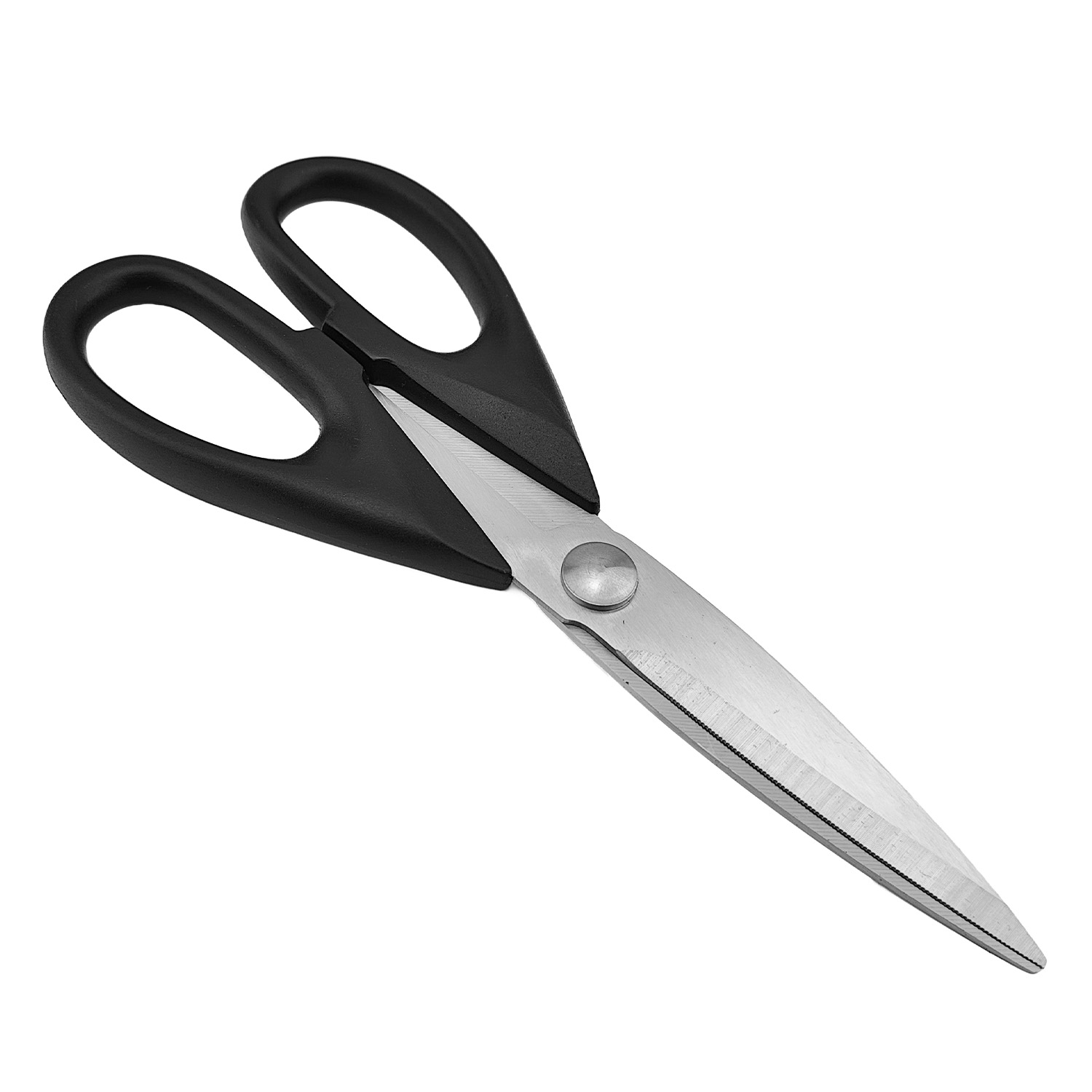
The original product information highlights stainless steel construction, a multi-purpose design, ergonomic black handles, and sourcing from Yangjiang, a Chinese city widely associated with knives and scissors manufacturing. Those details are useful, but buyers should still verify the exact material, hardness, surface finish, handle material, packaging, customization options, and quality control method before confirming an OEM order.
Key Takeaways
- OEM kitchen scissors should be evaluated for cutting performance, handle comfort, corrosion resistance, and consistency across samples.
- Yangjiang is known for metalware production, but buyers should still audit each supplier on process control and communication.
- Do not rely on appearance alone; request details on blade material, handle material, rivet or joint construction, packaging, and inspection criteria.
- For private-label orders, confirm branding placement, artwork requirements, carton markings, lead time, sample approval steps, and defect handling before mass production.
What Buyers Should Expect From OEM Kitchen Scissors
Kitchen scissors are different from general office scissors because they are exposed to food preparation, moisture, packaging materials, and repeated washing. For consumer-facing retail, the product also needs to feel safe and comfortable in the hand. The blades should meet cleanly, open smoothly, and hold alignment after normal use. If the scissors twist, pinch, or leave uncut fibers, customer complaints can follow quickly.
For OEM sourcing, buyers should define the intended market first. A budget supermarket item, a cookware accessory set, a professional kitchen tool, and an online private-label product may all require different choices. Before discussing price, prepare a clear product brief that includes target retail channel, expected use cases, preferred handle color, packaging format, branding needs, order quantity estimate, and any market-specific compliance questions that must be answered by the supplier.
Why Yangjiang Kitchen Scissors Are Commonly Considered
Yangjiang has a long association with metal cutting tools, including kitchen knives, scissors, and related houseware products. This manufacturing cluster can be attractive because buyers may find factories and trading companies familiar with export packaging, OEM customization, and product development discussions. The original article also points to Yangjiang kitchen scissors as a source category connected with craftsmanship and modern production.
Still, region alone is not a quality guarantee. Two suppliers in the same city can differ greatly in tooling, polishing quality, inspection discipline, communication speed, and willingness to solve problems. When sourcing from a Yangjiang scissors manufacturer, ask for recent product samples, production photos or videos where appropriate, a clear quotation sheet, and written confirmation of what is included in the price. If commercial details are missing, treat them as questions to clarify rather than assumptions.
Comparison Checklist for Supplier Evaluation
The following checklist helps buyers compare OEM kitchen scissors suppliers in a structured way. Use it during sample review and quotation comparison, not after the order is already in production.
| Evaluation Point | What to Check | Questions to Ask the Supplier |
|---|---|---|
| Blade material | Stainless steel is mentioned in the source, but the exact grade is not specified. | What stainless steel grade is used, and can it be documented? |
| Cutting performance | Test paper, herbs, packaging, twine, and light kitchen tasks. | What cutting tests are used during inspection? |
| Handle comfort | Black ergonomic handles are shown in the source; check grip size and edges. | What handle material is used, and can the color be customized? |
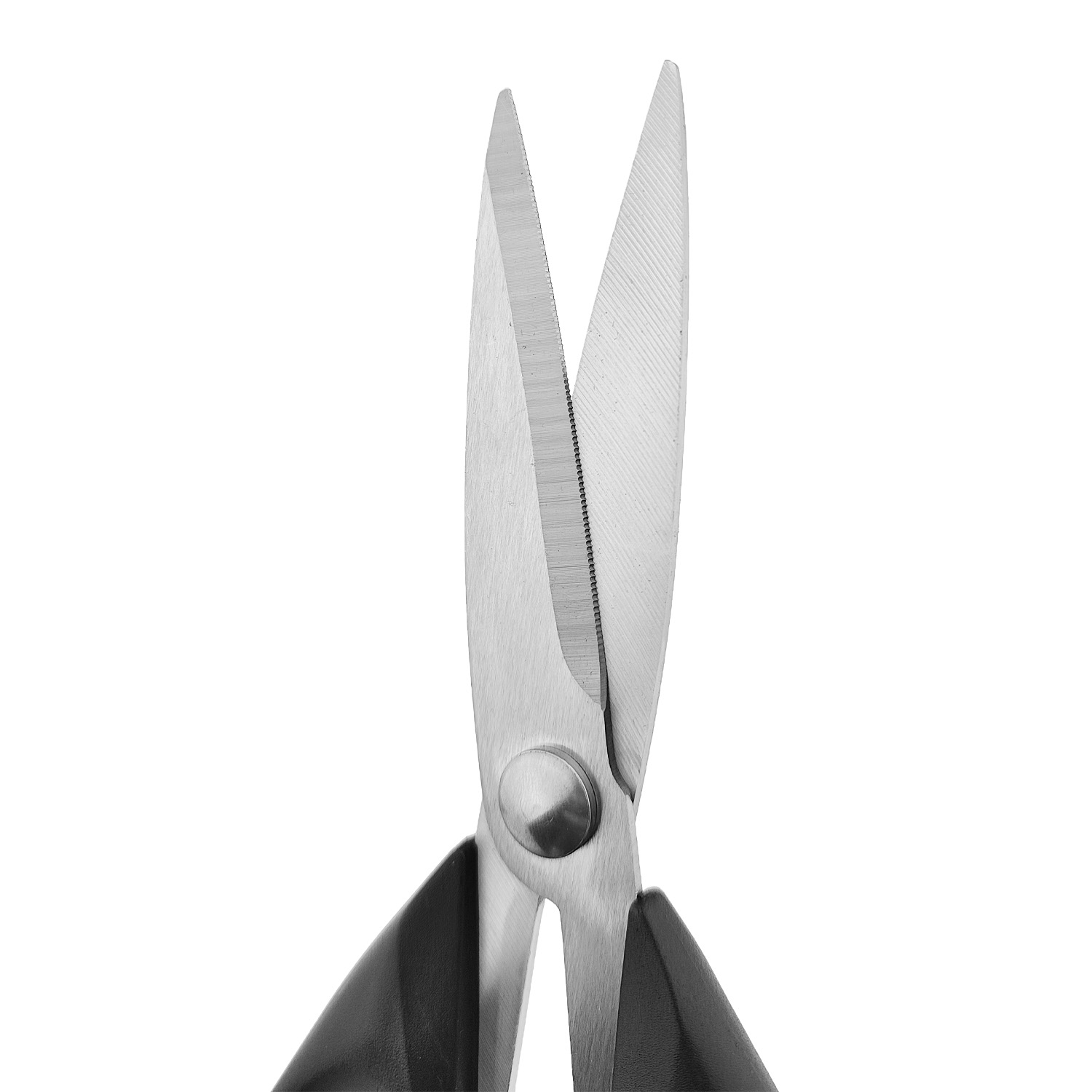
| Joint alignment | Open and close repeatedly; check looseness, rubbing, and blade contact. | How is blade alignment controlled in production? |
| OEM packaging | Confirm retail card, box, barcode, warning text, and carton labels. | What artwork files, dielines, and approvals are needed? |
| Quality control | Define acceptable cosmetic and functional defects before production. | What inspection standard and AQL level can be agreed in writing? |
Product Features to Verify Before Ordering
The source article describes the scissors as stainless steel, sharp, durable, multi-purpose, and fitted with ergonomic black handles. These are useful starting points, but B2B buyers should translate them into measurable checkpoints. For example, sharpness can be checked through repeatable cutting tests. Durability can be reviewed through opening and closing cycles, joint stability, and resistance to visible rust under reasonable washing and drying conditions. Handle comfort can be assessed by different hand sizes and by checking whether the inner handle edges feel rough.
If the product will be sold as kitchen scissors, also review cleaning instructions. Some kitchen scissors are separable for cleaning, while others are not. The original information does not state a detachable design, so do not assume it. Ask the supplier whether the blades can be separated, whether dishwasher use is recommended, and what care instructions should appear on retail packaging.
OEM Customization and Branding Questions
OEM kitchen scissors often require more than a logo. A buyer may need a specific handle color, packaging layout, barcode placement, carton marks, instruction text, or product bundle. Before requesting a final price, decide whether your brand needs changes to the handle color, surface finish, logo method, card design, or set configuration.
- Ask whether logo printing, laser marking, or packaging-only branding is available for the chosen model.
- Confirm whether the same sample materials will be used in mass production.
- Request a pre-production sample when artwork, color, or packaging changes are involved.
- Clarify who approves packaging text, warning labels, and market compliance wording.
- Agree how defects, shortages, color deviations, and late changes will be handled.
Because the source does not provide MOQ, lead time, certifications, test reports, or pricing, buyers should request those details directly and keep written records. Avoid basing a purchase decision on verbal claims alone.
Sample Testing Before Mass Production
Sample review is one of the most important steps in scissors sourcing. Do not test only one cut and approve the product. Open and close the scissors many times, check whether the blades scrape unevenly, and inspect the tip alignment. Cut different materials that match the intended consumer use, then wipe and dry the scissors to observe whether the finish remains clean.
It is also useful to compare several samples from the same supplier. If one sample cuts well and another feels loose, that may indicate inconsistent assembly. For retail products, check cosmetic details under normal light: scratches, burrs, uneven handle molding, oil marks, poor polishing, and packaging damage can all affect customer perception.
How to Build a Better Supplier Brief
A clear sourcing brief saves time and reduces misunderstanding. Include the product photo or reference model, target market, expected use, preferred packaging, logo requirements, estimated order quantity, inspection expectations, and shipment timing. If you need the scissors for food-contact retail, ask the supplier what documentation is available and whether additional testing is required for your market. The supplier should not be expected to guess your legal obligations.
For wholesale and private-label buyers, the best supplier is not simply the one with the lowest unit price. It is the one that can communicate clearly, provide consistent samples, explain production choices, and cooperate on quality control. OEM kitchen scissors are simple in appearance, but poor alignment, weak handles, or inconsistent packaging can create avoidable after-sales problems.
Practical FAQ
What materials are these OEM kitchen scissors made from?
The original article states stainless steel construction and black ergonomic handles. It does not specify the stainless steel grade or handle material, so buyers should ask the supplier for exact material details.
Are Yangjiang kitchen scissors always better?
Yangjiang is known for cutting-tool manufacturing, but quality depends on the individual supplier, production process, inspection standard, and sample consistency.
Can OEM kitchen scissors carry a private-label logo?
Many OEM programs can include branding, but the available logo method, placement, cost, and minimum order quantity should be confirmed with the supplier.
What should buyers test in a sample?
Check cutting performance, blade alignment, handle comfort, surface finish, packaging quality, and cleaning instructions. Test more than one sample when possible.
What details should be confirmed before payment?
Confirm material, packaging, artwork, sample approval, lead time, inspection criteria, defect policy, shipment terms, and any required documentation for your sales market.
