





OEM Kitchen Scissors: Practical Sourcing Guide for Buyers
OEM kitchen scissors are a common item in houseware, cookware, supermarket, promotional, and private-label product lines. They are used for everyday kitchen tasks such as cutting herbs, trimming poultry, opening food packaging, and handling light preparation work. For buyers, the main challenge is not simply finding a low unit price. The better question is whether the scissors are comfortable, consistent, safe to use, suitable for the target market, and supported by a supplier who can answer technical and packaging questions clearly.
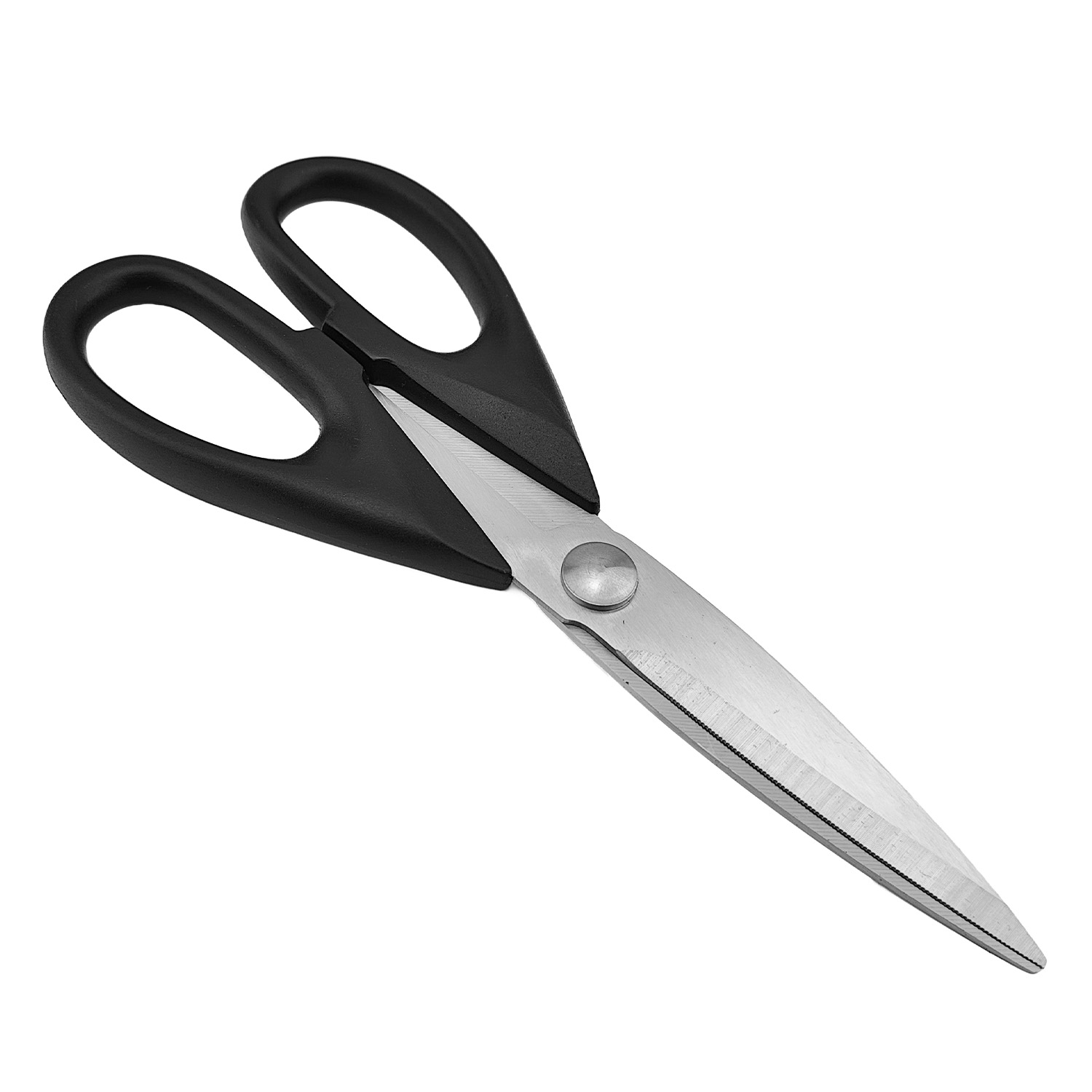
The original product information highlights stainless steel blades, ergonomic handles, non-slip handles, rust-resistant blades, lightweight handling, and use cases including herbs, poultry, packaging, dough trimming, and opening stubborn jars. It also identifies Yangjiang as an important production hub for kitchen scissors. This guide expands those points into a practical sourcing framework for importers, wholesalers, and brand owners evaluating OEM kitchen scissors.
Key Takeaways
- Start sourcing with the intended use: home cooking, professional kitchen use, retail gifting, or promotional distribution.
- Check sample performance on real kitchen materials, not only paper or thin plastic.
- Ask suppliers to confirm blade material, handle material, finish, packaging, and any applicable test reports rather than assuming specifications.
- Compare Yangjiang kitchen scissors suppliers on consistency, communication, customization support, and quality control process.
- A well-written OEM brief reduces misunderstandings around logo placement, packaging artwork, carton marks, and inspection standards.
What OEM Kitchen Scissors Should Do Well
Kitchen scissors are expected to perform a wider range of tasks than office scissors. A buyer should evaluate whether the product can cut herbs cleanly without crushing them, trim poultry skin or small bones within reasonable household use, open sealed food packaging, and handle basic preparation jobs such as cutting dough or parchment. The original article describes sharp stainless steel blades and clean cutting performance, which are sensible points to verify during sample review.
Comfort is also important. Ergonomic and non-slip handles can reduce hand fatigue during repeated use, especially for consumers who cook frequently or for light commercial kitchen environments. If the scissors feel unstable when wet, too tight at the pivot, or uncomfortable for larger hands, customers may notice quickly. Lightweight design can help maneuverability, but buyers should balance weight with a feeling of durability.
Yangjiang Kitchen Scissors and Supplier Evaluation
Yangjiang is widely known as a production area for knives, scissors, and kitchen tools, so many buyers begin supplier searches there. A Yangjiang scissors manufacturer may offer OEM support, but buyers should still evaluate each supplier on evidence rather than location alone. Useful questions include: What blade and handle materials are available? Can the supplier provide samples from current production? Which parts of the process are completed in-house? How are sharpness, pivot tightness, appearance, and packaging checked before shipment?
A supplier should be able to explain product options in clear commercial terms. For example, buyers may need help deciding between different handle shapes, color options, blade finishes, hanging cards, blister packaging, or retail boxes. If specific certifications, compliance documents, or test reports are required for a destination market, ask whether they are available for the exact item being quoted. Do not assume that one report applies to all models.
Comparison Checklist for OEM Sample Review
| Review Item | What to Check | Buyer Questions |
|---|---|---|
| Blade performance | Clean cutting on herbs, poultry skin, packaging, and dough | What blade material and finish are used for this sample? |
| Handle comfort | Grip stability, finger space, non-slip feel, left/right hand suitability | Can handle color or material be customized? |
| Pivot and alignment | Smooth opening, no excessive looseness, blades meet evenly | How is pivot tightness checked during production? |
| Rust resistance | Supplier claims, care instructions, and sample behavior after washing | Are any corrosion or salt-spray test reports available for this model? |
| Packaging | Retail appearance, barcode area, warning text, carton protection | Can the supplier follow buyer artwork and packing requirements? |
| OEM details | Logo position, color matching, carton marks, instruction sheet | What is the lead time for artwork proofing and pre-production samples? |
How to Prepare an OEM Kitchen Scissors Brief
A clear product brief helps the supplier quote accurately and reduces back-and-forth communication. Include the target sales channel, expected retail price range, preferred packaging type, estimated order quantity, logo method, color references, carton requirements, and any market-specific compliance needs. If the scissors will be sold as part of a cookware set or kitchen gadget assortment, share the visual style so the supplier can match handle color and packaging direction.
- Define the target user, such as home cooks, restaurant buyers, supermarkets, or promotional customers.
- List the expected cutting tasks and any functions that must be included or avoided.
- Request current samples before approving a custom version.
- Confirm all materials, finishes, packaging, and labeling in writing.
- Approve a pre-production sample before mass production whenever possible.
Quality Control Points Before Shipment
Kitchen scissors have moving parts, cutting edges, and direct contact with food preparation environments, so inspection should be more detailed than a simple appearance check. Buyers can ask suppliers how they control blade sharpness, handle molding quality, pivot strength, surface finishing, printing accuracy, and packaging protection. If the product includes extra features such as a jar opener or bottle opener, those functions should also be checked on samples.
For retail programs, packaging consistency is often as important as the scissors themselves. Inspect color, printing, barcode readability, hanging hole strength, and whether the product is secured safely inside the pack. For wholesale or foodservice distribution, inner carton strength and clear item labeling may matter more than shelf presentation. In both cases, the inspection checklist should be agreed before production starts.
Use and Care Guidance for End Customers
Even when sourcing as a B2B buyer, thinking about end-user care instructions can reduce complaints. Kitchen scissors should usually be cleaned after contact with meat, dried after washing, and stored safely away from children. If the supplier recommends hand washing, that instruction should appear clearly on the packaging or insert. Buyers should ask whether the product can be disassembled for cleaning only if that feature is explicitly designed into the model.
Care copy should be practical rather than exaggerated. For example, advise users not to cut metal, frozen bones, or materials outside normal kitchen use unless the supplier has confirmed that the scissors are designed for those tasks. Clear instructions protect both the consumer experience and the brand reputation.
Practical FAQ
What should buyers ask before ordering OEM kitchen scissors?
Ask about blade material, handle material, available colors, logo method, packaging choices, sample timing, production lead time, inspection process, and whether relevant test reports are available for the exact model.
Are Yangjiang kitchen scissors always the best option?
Yangjiang is a recognized production hub for scissors and kitchen tools, but buyers should still compare suppliers by sample quality, communication, documentation, customization support, and shipment consistency.
How can I test kitchen scissors samples effectively?
Test the same sample on herbs, poultry skin, plastic packaging, dough, and repeated open-close cycles. Also check handle comfort with dry and slightly wet hands.
Can OEM kitchen scissors be customized for retail brands?
Many OEM programs may include logo placement, handle color selection, and packaging customization. Buyers should confirm available methods, costs, minimum order requirements, and artwork approval steps directly with the supplier.
What details should be confirmed in the purchase order?
Confirm model number, materials, color, logo position, packaging, carton packing, inspection standard, approved sample reference, delivery terms, and any required documentation.
Final Thoughts for Sourcing Teams
OEM kitchen scissors look simple, but small differences in blade alignment, handle comfort, pivot control, and packaging can affect customer satisfaction. Buyers sourcing from a Yangjiang scissors manufacturer or any kitchen scissors supplier should focus on verified sample performance and clear written specifications. A disciplined review process helps turn a basic kitchen tool into a reliable product for wholesale, retail, or private-label programs.
