




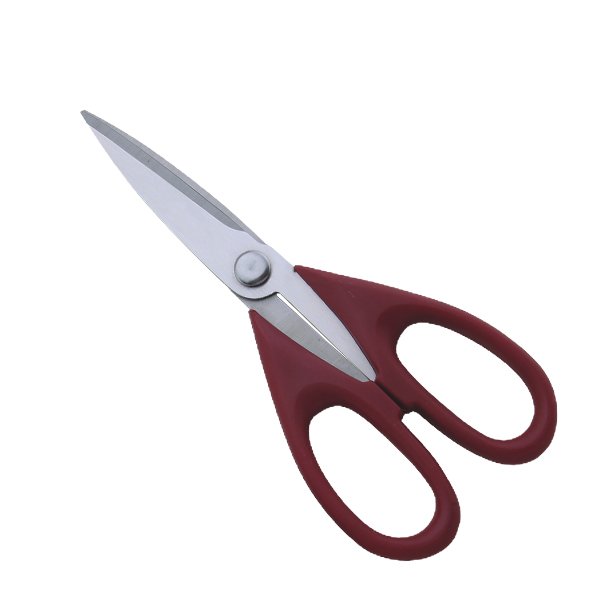
OEM Kitchen Scissors: Sourcing Guide for Practical, Reliable Cutting Tools
OEM kitchen scissors are a common product for cookware brands, supermarket programs, promotional suppliers, and household goods distributors. Buyers usually search for them because they need a practical cutting tool that can be customized, packed for retail, and sourced consistently from a dependable kitchen scissors factory. The original article highlighted precision, durability, sharp cutting performance, ergonomic handles, ambidextrous use, a high-tension pivot, and a burgundy multi-purpose design. Those points are useful, but a serious sourcing decision should go further than appearance or broad claims.
For importers and wholesale buyers, the real question is not simply whether a pair of scissors looks attractive. It is whether the product matches the target market, whether the supplier can explain materials and production controls clearly, and whether samples perform well in realistic household tasks. The linked product image should remain part of the evaluation because it shows the visual direction of the current item: 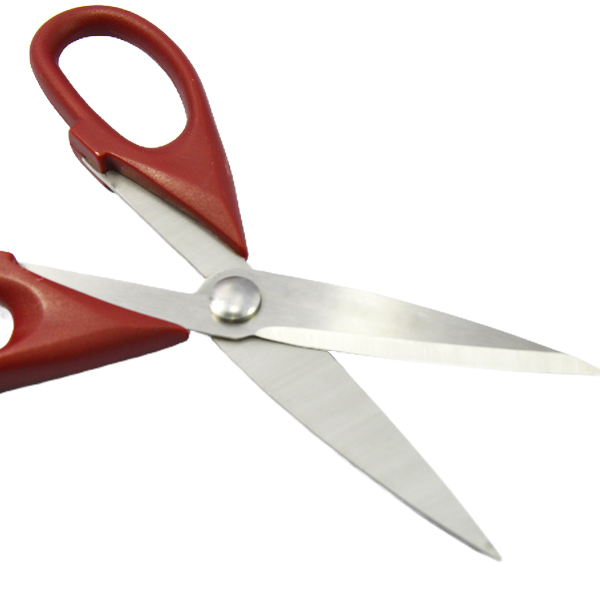
Key Takeaways
- OEM kitchen scissors should be assessed by cutting performance, handle comfort, pivot smoothness, packaging readiness, and supplier communication.
- Do not rely on generic claims such as premium steel or strict standards unless the supplier provides documents, samples, or test information.
- For B2B orders, ask about customization options, quality inspection steps, packaging choices, lead times, and any applicable compliance requirements for your market.
- A multi-purpose design may suit kitchen, household, fabric, and cardboard cutting tasks, but the final use case should be verified during sample testing.
What Buyers Should Expect from OEM Kitchen Scissors
OEM kitchen scissors are made for brands or buyers who want a product supplied under their own packaging, design direction, or retail program. Depending on the supplier, OEM service may include handle color selection, logo placement, blister card or box packaging, barcode labeling, carton marking, and documentation support. However, these options should never be assumed. They need to be confirmed directly with the factory or trading partner.
The source article describes a burgundy multi-purpose scissor with ergonomic handles, ambidextrous usability, and a high-tension pivot intended for smoother operation. Those are relevant product-selection points. Ergonomic handles can matter for buyers targeting frequent household use because hand comfort affects repeat use and consumer satisfaction. Ambidextrous design may also simplify inventory planning because one SKU can serve left- and right-handed users. A stable pivot is important because loose or uneven movement can make scissors feel low quality, even if the blades are sharp when new.
How to Evaluate a Kitchen Scissors Factory
When sourcing from a kitchen scissors factory, begin with transparent communication. A capable supplier should be able to explain what can be customized, what cannot, which product details are fixed, and which details depend on order quantity or tooling. If the supplier mentions stainless steel, surface treatment, handle material, or blade hardness, ask for the exact specification and how it is verified. The original content refers to stainless steel blades, but buyers should still request the detailed grade and confirmation method before using that claim in retail copy.
Factory evaluation should also include sample consistency. One good sample is not enough if the buyer plans a wholesale order. Ask whether pre-production samples, sealed approval samples, in-line checks, and final random inspection are available. If the target market has labeling, food-contact, chemical, or safety requirements, ask the supplier what documents they can provide and whether third-party testing is possible. Avoid assuming certifications or compliance unless they are documented for the exact item and shipment.
Product Selection Checklist for Wholesale Buyers
| Evaluation Point | Why It Matters | Questions to Ask the Supplier |
|---|---|---|
| Blade sharpness | Determines cutting performance on food packaging, herbs, paper, fabric, or cardboard. | What material and edge process are used? Can samples be tested before approval? |
| Pivot tension | Affects smoothness, stability, and perceived quality. | How is pivot tightness checked during production? |
| Handle comfort | Influences usability during repeated cutting tasks. | What handle material is used? Is the design suitable for different hand sizes? |
| Ambidextrous use | Can broaden retail appeal and reduce SKU complexity. | Is the product comfortable for both left- and right-handed users? |
| Color and branding | Supports retail differentiation and private label programs. | Which colors, logo methods, and packaging formats are available? |
| Quality control | Reduces returns and inconsistent shipments. | What inspection steps are used before packing and shipment? |
Sample Testing Before Placing an OEM Order
Sample testing should copy real use, not just showroom handling. Test the scissors on materials your customers are likely to cut. For a kitchen-focused SKU, that may include herb stems, food packaging, parchment paper, thin plastic packaging, and kitchen twine. For a multi-purpose household SKU, add light cardboard, cloth scraps, and paperboard. Record whether the blades cut cleanly, whether the handles create pressure points, and whether the pivot becomes loose after repeated use.
Buyers should also compare multiple samples from the same supplier. Check whether color, blade alignment, handle finish, packaging, and opening resistance are consistent. If one sample feels smooth and another feels rough, ask how the factory controls variation. For retail programs, packaging quality deserves attention too. A good scissor in weak packaging may still create shelf damage, barcode problems, or poor customer perception.
Customization and Packaging Questions
OEM sourcing often depends on practical customization rather than dramatic product redesign. The burgundy handle mentioned in the original article is a useful example of how color can support a specific retail look. Still, buyers should ask whether color matching is based on a Pantone reference, existing stock color, or custom material preparation. Logo placement should be checked on physical samples because curved handles and textured surfaces can affect clarity.
- Ask which packaging formats are available, such as carded packaging, blister packaging, sleeve packaging, or gift box options.
- Confirm whether retail barcodes, warning text, importer information, and multilingual labels can be applied.
- Request carton dimensions, gross weight, packing quantity, and pallet information when planning logistics.
- Clarify whether artwork files require a specific format and whether a packaging proof is provided before mass production.
- Confirm how changes after sample approval affect price, timing, or tooling.
Common Sourcing Risks to Avoid
One common risk is approving a product based only on photos. Photos can show handle color and general shape, but they cannot show cutting feel, blade alignment, grip comfort, or pivot stability. Another risk is using supplier marketing claims without verification. Words such as durable, professional, premium, and food safe should be supported by specifications, test reports, or a clear explanation of the intended market.
Buyers should also avoid unclear purchase requirements. If you need OEM kitchen scissors for a supermarket promotion, a kitchenware brand, or an online marketplace, the supplier needs to know the packaging standard, labeling language, shipping method, and inspection expectations. Clear requirements at the quotation stage reduce misunderstandings later.
FAQ
What makes OEM kitchen scissors different from regular stock scissors?
OEM kitchen scissors are usually supplied for a buyer's brand, packaging, or retail program. They may use an existing factory model with customized color, logo, or packaging, or they may involve deeper product changes if the supplier supports them.
Can I claim the scissors use a specific stainless steel grade?
Only if the supplier confirms the exact grade and provides reliable documentation. The source article mentions stainless steel blades, but it does not specify a grade, so buyers should verify before making retail claims.
What should I test in a kitchen scissors sample?
Test cutting performance, blade alignment, pivot smoothness, handle comfort, surface finish, packaging strength, and consistency across more than one sample. Use materials that match your target customer use.
What should I ask a kitchen scissors factory before ordering?
Ask about customization limits, sample approval, inspection steps, packaging options, lead time, carton packing, labeling support, and any documents needed for your destination market.
Are multi-purpose kitchen scissors suitable for wholesale programs?
They can be, especially when the design handles common household cutting tasks and packaging explains the intended use clearly. Buyers should confirm performance through samples before committing to a large order.
