




Kitchen Scissors Factory: Quality, Customization & Precision
For kitchenware brands, importers, distributors, and private-label buyers, kitchen scissors are a small product with a large impact on the customer experience. A good pair needs to cut cleanly, feel safe in the hand, resist daily kitchen use, and fit the positioning of the retail line. When sourcing from a kitchen scissors factory, the goal is not only to find a low unit cost. Buyers also need to understand blade quality, handle comfort, packaging options, inspection expectations, and how customization will affect production planning.
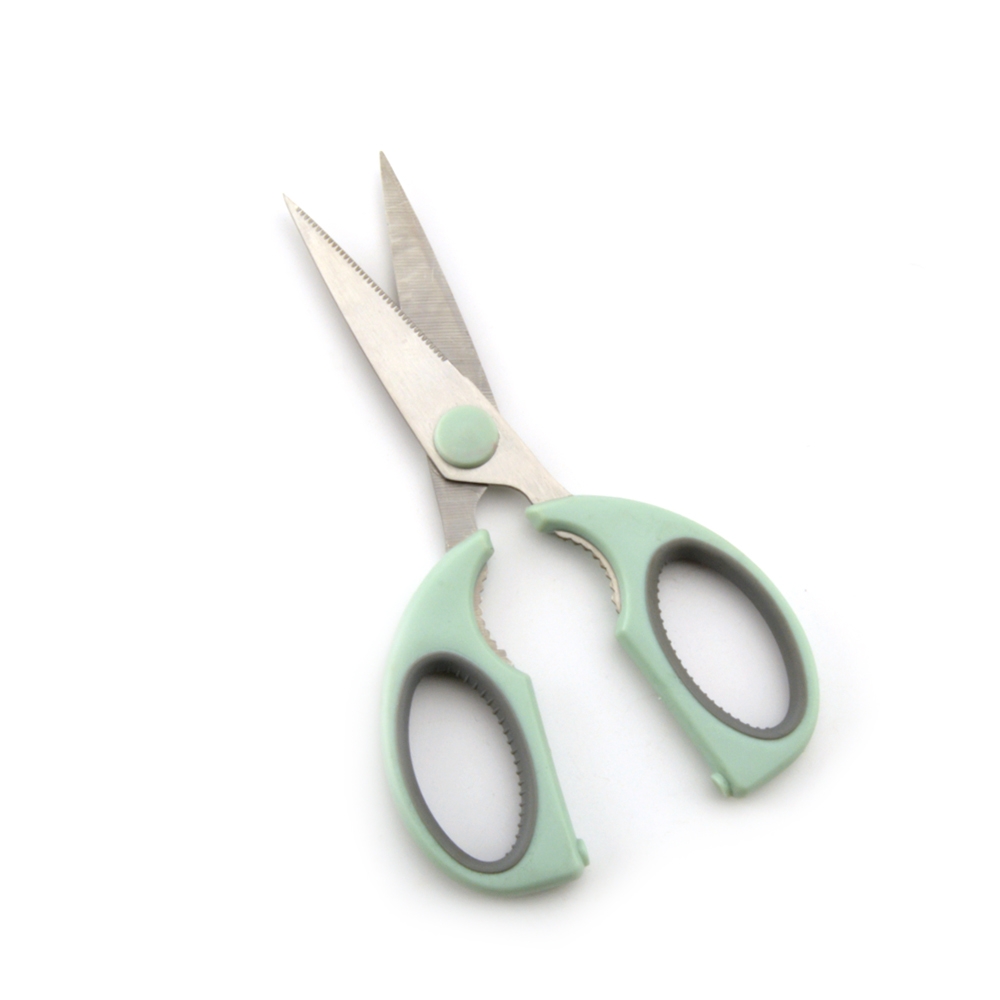
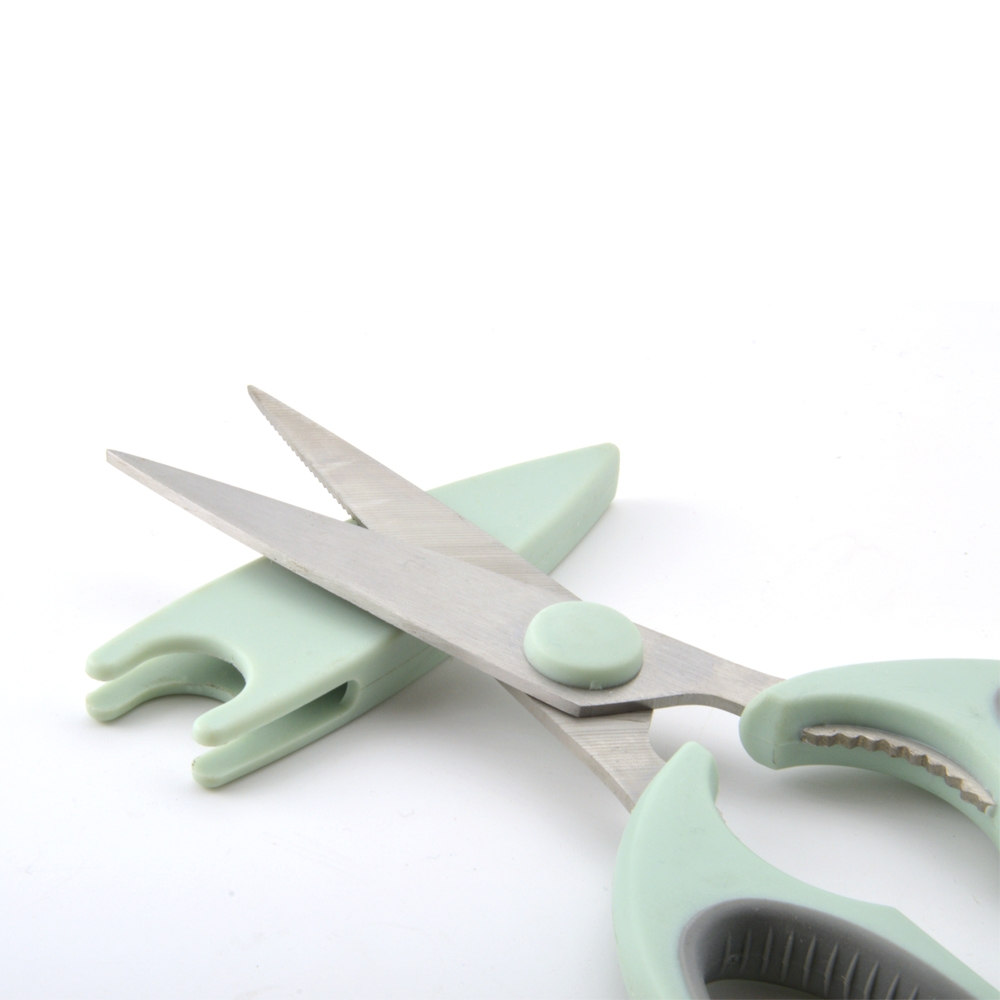
The original product information highlights OEM kitchen scissors with stainless steel blades, serrated cutting edges, ergonomic soft-touch handles, optional colors such as pastel green or ocean mist, integrated functions such as a bottle opener, and a protective cover. These are useful starting points, but a professional sourcing process should confirm every detail with samples, written specifications, and quality checks before placing volume orders.
Key Takeaways
- Define the target user first: home cooking, retail kitchenware, promotional sets, or professional food preparation.
- Confirm blade material, edge design, handle construction, cover design, and integrated functions in writing.
- Use samples to test cutting performance, comfort, opening and closing feel, and packaging presentation.
- Ask the factory about customization limits, tooling needs, logo methods, inspection process, lead time, and order requirements.
- Do not rely on product photos alone; approve a final specification sheet before production.
What Makes Kitchen Scissors Suitable for OEM Sourcing?
Kitchen scissors are well suited to OEM and private-label programs because they combine practical function with visible design elements. The buyer can evaluate how the product cuts, how the handle feels, how it looks on a retail shelf, and how it supports a brand's kitchenware range. Compared with highly complex appliances, scissors are easier to sample and compare, but they still require careful control because small differences in blade alignment, handle fit, or edge finish can change the user's impression.
For an OEM project, start by deciding the product tier. A basic household pair may focus on reliable cutting and safe storage. A more differentiated retail product may add serrated blades, soft-touch handles, a protective cover, distinctive color choices, or an integrated bottle opener. If these features are required, list them clearly in the request for quotation instead of assuming that every supplier interprets kitchen scissors in the same way.
Quality Factors to Check Before Choosing a Factory
The original article mentions stainless steel blades and serrations for better grip on slippery foods. These are important details to verify. Ask the supplier to specify the blade material, blade thickness, edge type, surface finish, hardness target if available, and whether the cutting edge is straight, serrated, or partially serrated. If a material grade is important for your market, request documentation and confirm it through your own compliance and quality process.
Handle design also deserves close attention. Ergonomic or soft-touch handles can reduce discomfort during repeated use, but comfort is subjective. Test the sample with different hand sizes and common kitchen tasks such as cutting herbs, poultry packaging, parchment, food bags, or light cardboard. Open and close the scissors repeatedly to check whether the pivot feels smooth and whether the blades meet evenly from base to tip.
Customization Options Buyers Should Define
Customization is one of the main reasons to work with a kitchen scissors factory. The source content mentions handle colors such as pastel green and ocean mist, ergonomic shapes, branded logos, and custom kitchen scissors for brand identity. Before asking for pricing, prepare a practical customization brief. Include the intended handle color, logo location, logo method, packaging style, barcode needs, language requirements, and whether the protective cover should be plain or branded.
Buyers should also ask which changes require new tooling and which can be handled through existing molds or standard components. Changing a handle color may be simpler than changing the handle shape. Adding a logo may be different from redesigning a cover. Packaging changes can affect carton size, shipping weight, and shelf presentation. A good sourcing discussion separates cosmetic customization from structural customization so that cost and lead time are easier to compare.
Supplier Comparison Checklist
Use a structured checklist when comparing suppliers. This helps purchasing, product development, and quality teams evaluate offers on more than price alone.
| Evaluation Area | What to Ask | Why It Matters |
|---|---|---|
| Blade specification | What stainless steel, thickness, edge type, and finish are used? | Blade details affect cutting performance, durability, and buyer expectations. |
| Handle and grip | What handle material, color options, and ergonomic designs are available? | Comfort and appearance influence reviews and repeat sales. |
| Functions | Can the design include serrations, a bottle opener, or a protective cover? | Added functions should be useful, safe, and consistent across production. |
| Customization | Which logo, color, packaging, and shape changes are possible? | Clear limits prevent misunderstandings before sampling. |
| Quality control | What inspections are done before shipment, and can the buyer arrange third-party inspection? | Inspection reduces the risk of uneven cutting, poor finish, or packaging defects. |
| Commercial terms | What are the MOQ, sample cost, lead time, payment terms, and carton details? | These details determine whether the supplier fits the project plan. |
Why Yangjiang Is Often Considered for Scissors Sourcing
The original article refers to Yangjiang as a region known for blade craftsmanship. Many buyers consider Yangjiang when sourcing scissors, knives, and related kitchen tools because the area has a long association with metal cutting products. However, a regional reputation should not replace supplier due diligence. Buyers should still review samples, factory communication, export experience, quality procedures, and the supplier's ability to follow written specifications.
If you are comparing a Yangjiang scissors factory with suppliers from other regions, use the same evaluation standard for each. Ask for product photos, sample availability, production capabilities relevant to your design, and references to the supplier's normal process without requesting confidential customer details. If compliance is required in your target market, ask what documents can be provided and verify them independently.
How to Prepare a Strong RFQ
A clear RFQ saves time and produces more accurate quotations. Instead of asking only for “OEM kitchen scissors,” describe the product in detail. Include the intended market, annual forecast if available, first order quantity target, blade requirements, handle colors, logo requirements, packaging style, and preferred inspection standard. If the product needs to match an existing retail line, provide color references and artwork files.
- Request at least one physical sample before approving production.
- Check the sample against a written specification sheet.
- Confirm whether the quoted price includes the protective cover, packaging, logo, and any integrated functions.
- Ask how pre-production samples and mass-production samples will be approved.
- Clarify who is responsible for inspection, defect handling, and shipment documentation.
Common Mistakes to Avoid
One common mistake is choosing the lowest quotation without comparing the specification. Two scissors may look similar in a photo but differ in blade thickness, handle material, finish quality, or packaging. Another mistake is approving a sample but failing to document the final standard. Keep one approved sample and a matching specification sheet so both buyer and supplier can reference the same target.
Buyers should also avoid over-customizing the first order. If a new product line is being tested, it may be safer to start with a proven structure and customize color, logo, and packaging. More complex changes can be introduced after market feedback confirms demand.
Practical FAQ for OEM Kitchen Scissors Buyers
What should I test on a kitchen scissors sample?
Test cutting performance, blade alignment, handle comfort, pivot smoothness, surface finish, cover fit, and packaging condition. Use realistic kitchen materials rather than only paper.
Can I request custom colors and a logo?
Yes, the original product information notes color and logo customization as OEM possibilities. Confirm available color matching methods, logo placement, logo durability, and whether extra tooling or setup charges apply.
Should I ask for certifications?
Ask the supplier what documents are available for your target market, but do not assume certification exists unless it is provided and verified. Requirements vary by country, retailer, and product use.
Is a protective cover important?
A cover can improve storage safety and help protect the cutting edge. If included, confirm its material, fit, color, branding options, and whether it is included in the quoted price.
How do I compare factory quotations fairly?
Compare the same specification, packaging, customization level, inspection requirements, and delivery terms. A lower price may not be comparable if it excludes logo printing, cover, packaging, or quality checks.
Kitchen scissors sourcing works best when buyers combine product design goals with disciplined supplier evaluation. By confirming the blade, handle, functions, customization scope, and inspection plan early, brands can develop OEM kitchen scissors that are practical for users and manageable for production.
