









OEM Kitchen Scissors: Quality from Yangjiang Factory
Kitchen scissors are no longer a small add-on in a kitchenware range. For retailers, importers, distributors, and private-label brands, they can be a practical product category with repeat demand across home cooking, food preparation, barbecue, and light household use. The challenge is not simply finding a low unit cost. Buyers need to understand product function, supplier capability, packaging options, quality control, and the questions that should be answered before placing an OEM order.
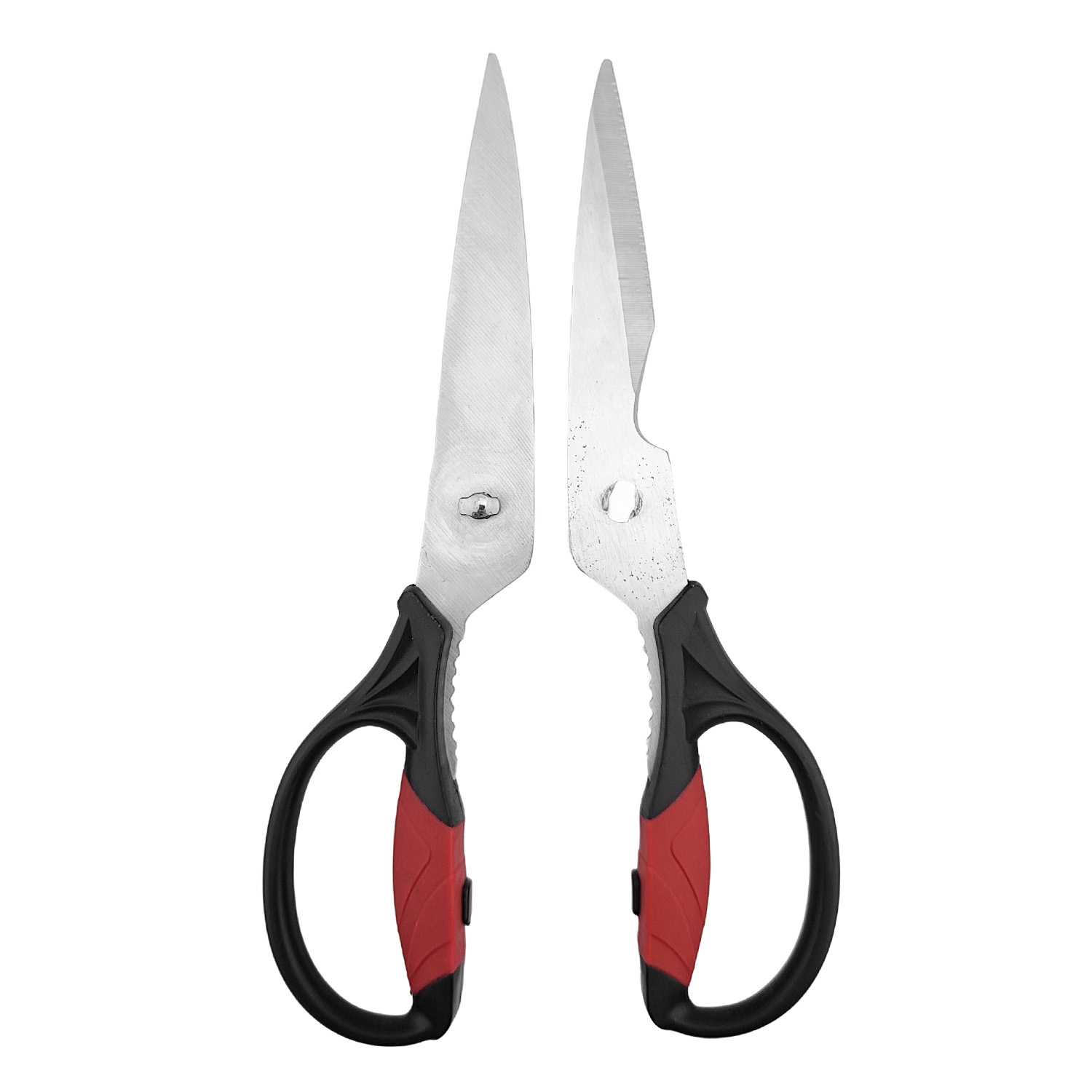
This guide rewrites the sourcing topic around what matters most for organic search and real purchasing decisions: how to evaluate OEM kitchen scissors, what to ask a Yangjiang kitchen scissors factory, and how to compare multi-functional designs without relying on vague marketing claims.
Key Takeaways
- OEM kitchen scissors should be assessed by cutting performance, handle comfort, safety, cleaning needs, and packaging suitability.
- Yangjiang is widely associated with cutlery and blade manufacturing, but each factory still needs individual verification.
- Do not assume material grade, testing results, MOQ, certification, or production capacity; ask the supplier for written details.
- Samples, inspection criteria, and packaging artwork approval are essential before confirming a private-label order.
Why OEM Kitchen Scissors Deserve Careful Sourcing
Kitchen scissors sit between cutlery, utensils, and general household tools. Consumers may use them to cut herbs, trim food packaging, portion cooked meat, open bags, or handle quick preparation tasks where a knife and board feel unnecessary. Because the product is handled frequently and often around food, poor sharpness, weak pivots, uncomfortable handles, or difficult cleaning can quickly lead to complaints.
For B2B buyers, OEM sourcing adds another layer of responsibility. A private-label product represents your brand, not just the supplier's workshop. Before choosing a kitchen scissors supplier, define the market position clearly. Are the scissors for entry-level retail, supermarket multipacks, online kitchenware, promotional bundles, or a higher-end cooking range? The answer affects blade thickness, handle design, packaging, testing expectations, and the level of inspection needed.
What Multi-Functional Kitchen Scissors Usually Need to Do
The original article correctly identifies the rise of multi-functional kitchen scissors. A well-designed pair may combine stainless steel blades, an ergonomic handle, rubberized grip areas, and features such as an adjustable pivot screw. However, buyers should treat these as specifications to confirm, not assumptions. Ask the factory exactly which materials, finishes, and handle components are used in the quoted model.
Useful functions depend on the target customer. Some buyers want a simple food-preparation scissor with clean cutting action. Others may request added functions such as bottle-opening notches, herb stripping gaps, nut-cracking sections, or detachable blades for cleaning. More functions are not always better. Extra features can add cost, complicate tooling, or create confusing product claims if they are not explained on the packaging.
Comparison Checklist for OEM Kitchen Scissors
| Evaluation Area | What to Check | Questions for the Supplier |
|---|---|---|
| Blade performance | Sharpness, alignment, cutting feel, edge consistency | What blade material and hardness are used, and how is sharpness checked? |
| Pivot and tension | Smooth opening, no looseness, stable screw or rivet | Is the pivot adjustable, fixed, or detachable, and what inspection standard applies? |
| Handle comfort | Grip shape, hand fit, slip resistance, left/right usability | Can handle material, color, or texture be customized for OEM orders? |
| Cleaning and hygiene | Food-contact surfaces, gaps, detachable parts, drying ease | What cleaning instructions should appear on the packaging or manual? |
| Packaging | Retail display, barcode area, warnings, brand artwork | Can the factory provide dielines, sample packaging, and carton details? |
| Quality control | Incoming materials, in-process checks, final inspection | Which inspection records, AQL level, or third-party checks can be arranged? |
Working with a Yangjiang Kitchen Scissors Factory
Yangjiang has a long reputation in China for knives, scissors, and related blade products. That reputation can be useful for buyers because many suppliers in the area understand cutting tools, handle molding, polishing, assembly, and export packaging. Still, location alone does not prove that a factory is the right fit for your project.
When contacting a Yangjiang kitchen scissors factory, request product photos, current model options, available customization points, and sample lead times. If you need a fully custom design, ask whether the supplier supports new tooling and who owns the mold after payment. If you prefer faster sourcing, choose an existing model and customize safer elements such as handle color, logo placement, instruction cards, blister cards, or cartons.
Buyers should also ask practical commercial questions without assuming the answers: What is the MOQ for the selected model? What packaging formats are available? Can the supplier support barcode labels or retailer-specific carton marks? What certificates or test reports are already available, and are they valid for the exact product being quoted? If compliance is required for your destination market, confirm it with professional testing rather than relying on general statements.
Sample Review Before Production
A sample is not only a visual approval item. It is the best opportunity to test how the scissors feel in everyday use. Open and close the scissors repeatedly, cut common kitchen materials, check whether the blades meet cleanly, and examine the handle for sharp edges or uncomfortable pressure points. If the product includes an adjustable pivot-point screw, test whether the tension remains stable after repeated use.
- Confirm the approved sample number, material description, color, logo position, and packaging layout.
- Record any changes in writing before mass production begins.
- Request pre-production or production samples if artwork, color, or parts change after approval.
- Set final inspection criteria for sharpness, assembly, appearance, packaging, and carton marks.
Packaging and Private-Label Details
For OEM kitchen scissors, packaging often decides whether the product communicates value clearly. A simple card, blister pack, paper box, or hanging display may all work, depending on the channel. Online sellers may prioritize protective packaging and clear lifestyle images. Retail buyers may need hanging holes, barcode space, multilingual instructions, and warning statements.
Avoid unsupported claims on packaging. If you want to mention stainless steel, dishwasher suitability, food-contact compliance, or special performance benefits, ask for the exact basis and keep records. The safest approach is to use clear, verifiable wording that matches the supplier's documentation and the destination market's rules.
FAQ: OEM Kitchen Scissors Sourcing
What should I ask before ordering OEM kitchen scissors?
Ask about blade material, handle material, pivot structure, customization options, MOQ, sample cost, packaging choices, production lead time, inspection process, and available test documentation for the exact model.
Is a Yangjiang kitchen scissors factory always the best choice?
Yangjiang is well known for blade and cutlery manufacturing, but buyers should still compare samples, communication, quality systems, packaging support, and export experience before choosing a supplier.
Can I customize the scissors with my own brand?
Many OEM suppliers can discuss logo, handle color, packaging artwork, and carton marks. The available options depend on the model, order quantity, tooling, and supplier capability.
How can I reduce quality risks?
Approve a physical sample, define inspection standards, confirm packaging artwork, request production updates, and consider third-party inspection for larger or retailer-bound orders.
Final Sourcing Advice
OEM kitchen scissors can be a strong addition to a kitchenware line when the product is selected with discipline. Focus on real user needs: clean cutting, comfortable grip, reliable assembly, easy cleaning, and accurate packaging. A Yangjiang kitchen scissors factory may provide relevant experience and product options, but the buyer's job is to verify every important detail before purchase. Clear questions, tested samples, and documented specifications will do more for long-term product quality than broad claims about being premium or multi-functional.
