




OEM Kitchen Scissors: Practical Sourcing Guide for Versatile Kitchen Shears
OEM kitchen scissors are often a small item in a kitchenware catalog, but they can carry a lot of buying risk if the details are not checked early. For importers, wholesalers, promotional buyers, and private-label brands, the question is not only whether a pair of scissors can cut. The better question is whether the product design, materials, packaging, safety cover, and supplier communication match the intended retail channel and end user.
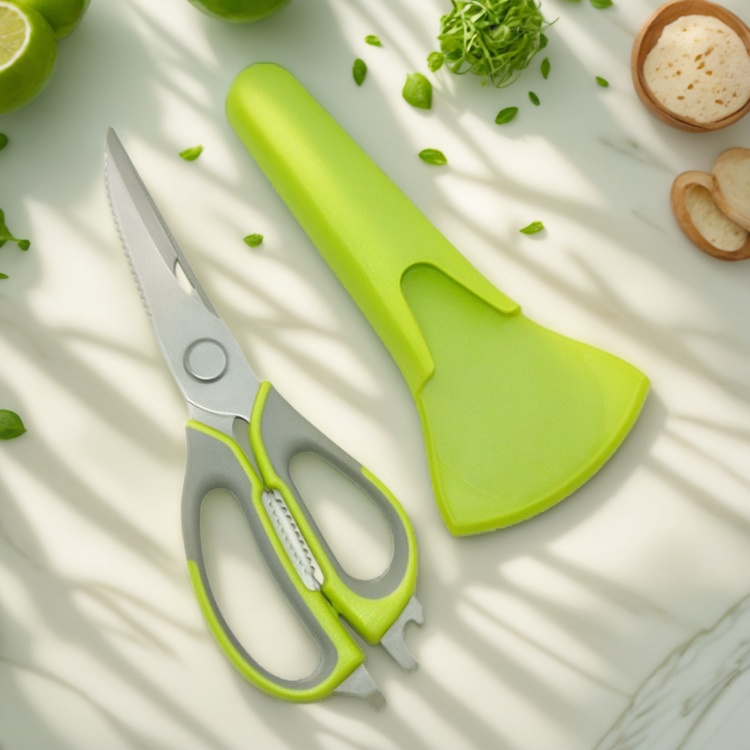
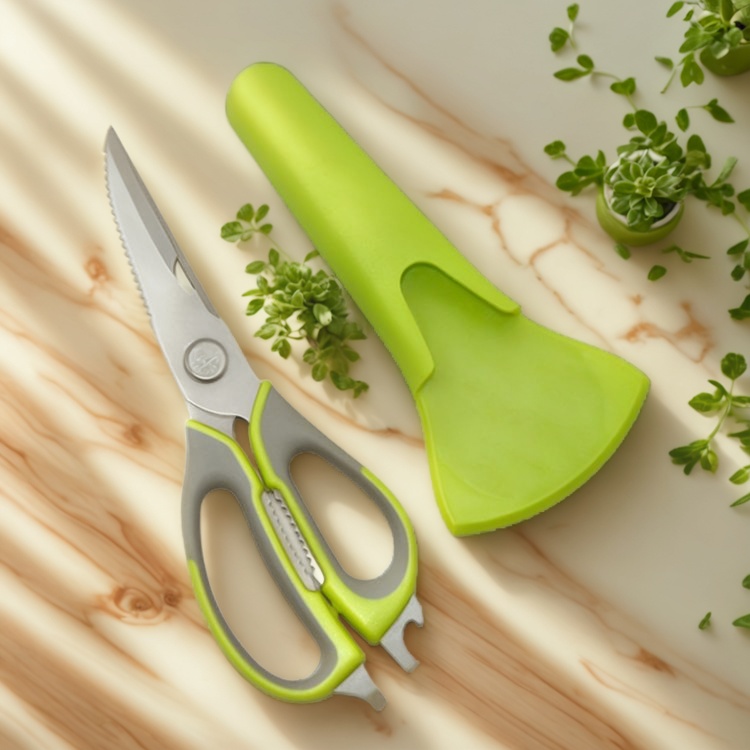
The kitchen scissors shown in the original product article are presented as multi-functional kitchen scissors with stainless steel blades, ergonomic non-slip grips, lime green and soft gray handles, a green protective blade cover, a nutcracker function in the handle, a bottle opener, and a serrated edge for scaling fish. Those are useful features, but buyers should still verify material details, test performance, and clarify customization options before confirming an OEM order.
Key Takeaways
- Choose OEM kitchen scissors based on the target user, not only on the number of functions.
- Confirm blade material, handle material, finish, hardness, and corrosion expectations directly with the supplier.
- Check the safety cover fit, edge protection, packaging strength, and labeling before approving production.
- Ask for samples and perform cutting, cleaning, grip, and storage checks under realistic kitchen conditions.
- Avoid vague OEM assumptions; document artwork, color, packing, inspection standards, and shipment requirements in writing.
What Makes OEM Kitchen Scissors Worth Evaluating?
Kitchen scissors can support many preparation tasks: trimming herbs, cutting food packaging, portioning poultry, opening bottles, cracking nuts, or scaling fish. A multi-functional design can be attractive for retail shelves because it gives shoppers a clear reason to compare it with ordinary scissors. However, every added function should be practical, durable, and easy to understand.
For B2B buyers, the main sourcing value is consistency. A good sample is not enough if bulk production varies in blade alignment, handle color, cover fit, or packaging. When discussing OEM kitchen scissors with a supplier, ask how the production sample will be controlled against the approved sample. Also ask what inspection points are used for sharpness, opening and closing smoothness, handle bonding, and visible surface defects.
Feature Checklist for Multi-Functional Kitchen Shears
The original article highlights stainless steel blades and several added functions. Use the table below as a practical checklist when comparing samples from different suppliers.
| Feature | Why It Matters | Questions to Ask the Supplier |
|---|---|---|
| Stainless steel blades | Blade material affects cutting performance, cleaning, and corrosion resistance. | What stainless steel type is used? What finish and hardness targets apply? |
| Nutcracker in handle | Adds utility but may increase stress on the handle area. | Has the handle been checked for cracking or loosening during use? |
| Bottle opener | Can be useful, but edges must be formed cleanly. | Is the opener area smooth and safe to handle? |
| Serrated fish-scaling edge | Helps with fish preparation when the target market values this function. | Is the serration depth consistent across production? |
| Non-slip ergonomic grips | Grip comfort affects control, especially with wet hands. | What handle material is used, and can grip color be customized? |
| Protective cover | Improves storage safety and protects the blade edge. | Does the cover stay secure during shipping and drawer storage? |
Blade, Grip, and Cover Details to Confirm
The blade is the first area to evaluate because it defines the product experience. Ask the supplier to identify the stainless steel grade, blade thickness, surface treatment, and edge process. If these details are not published, treat them as open commercial questions rather than assumptions. Buyers should also request information on how blade alignment is checked, because poor alignment can make scissors feel stiff or weak even when the blades are sharp.
The handle should be comfortable and stable. The original product description mentions ergonomic design and non-slip grips in lime green and soft gray. For OEM projects, confirm whether those colors are standard or only shown as one available version. If your brand uses a specific color system, provide color references and request a pre-production sample under normal lighting.
The protective cover is another important detail. A cover that is too loose can fall off in a drawer or carton. A cover that is too tight can frustrate users and create a safety issue when removed. Check whether the green cover slides on smoothly, covers the edge adequately, and resists cracking during packing and transport.
OEM and Wholesale Sourcing Questions
Before placing a private-label or wholesale order, buyers should turn the product description into a clear specification sheet. Do not rely only on catalog photos or short marketing text. A specification sheet reduces misunderstanding and makes inspection easier.
- Which blade material, handle material, and cover material are supplied for this model?
- Can the handle color, cover color, logo position, and retail packaging be customized?
- What artwork files, color references, and packaging dielines does the supplier require?
- What sample approval process is used before bulk production starts?
- What inspection standard covers sharpness, appearance, safety cover fit, and carton packing?
- Are there market-specific labeling or documentation requirements the buyer must provide?
If the supplier offers OEM service, ask for the exact scope. OEM can mean simple logo printing, packaging customization, color changes, or more complex tooling and design changes. Each level affects cost, lead time, and approval steps, so it should be clarified early.
How to Test Samples Before Ordering
A practical sample test does not need to be complicated, but it should reflect real kitchen use. Cut herbs, thin packaging, meat skin, poultry joints if appropriate for the target claim, and other materials relevant to your market. Try the nutcracker and bottle opener carefully to see whether the handle remains stable and comfortable.
Wash and dry the scissors according to the supplier's care instructions. Then check for staining, rough edges, stiffness, or trapped residue. If the product will be sold as kitchen scissors with cover, test the cover after repeated use, not only when the sample is new. Retail complaints often come from small frustrations such as loose covers, uncomfortable grips, or difficult cleaning.
Packaging and Retail Presentation
For wholesale kitchen scissors, packaging must protect the product and explain the functions clearly. A multi-functional tool can confuse shoppers if the package does not show what each feature does. Use plain diagrams or short labels for the blade, nutcracker, bottle opener, serrated fish-scaling edge, and protective cover.
Ask the supplier whether packaging can be supplied as a blister card, color box, hang card, or other format suitable for your sales channel. Also confirm carton packing, inner box quantities, barcode placement, and warning language. If your destination market has specific labeling rules, provide them to the supplier instead of assuming standard packaging will be acceptable.
Practical FAQ
Are OEM kitchen scissors only for factories and importers?
No. The term OEM is most relevant to brands, distributors, and buyers who want customized products or packaging. Consumers can still use the same type of kitchen scissors, but sourcing questions matter more for B2B purchasing.
Can buyers assume the blades are a specific stainless steel grade?
No. The original article states that the scissors use stainless steel blades, but it does not specify the grade. Buyers should ask the supplier to confirm the grade, finish, and any related performance expectations.
Is a protective cover necessary?
A cover is useful for safer drawer storage and blade protection. For this product, the original description includes a green protective blade cover, so buyers should test how securely it fits.
What should be checked before approving bulk production?
Approve a signed sample, color standard, packaging artwork, logo placement, inspection checklist, and carton requirements. Confirm any missing commercial details such as MOQ, lead time, and customization costs directly with the supplier.
How should end users care for kitchen scissors?
Users should follow the supplier's care instructions, clean food residue promptly, dry the scissors after washing, and store them with the cover when not in use. Avoid using kitchen scissors for tasks outside their intended purpose.
