




OEM Kitchen Scissors: Sourcing Guide for Practical Cutting Tools
OEM kitchen scissors are a small product category with a surprisingly wide range of buyer requirements. For importers, distributors, promotional product companies, and houseware brands, the goal is not simply to find a pair of scissors that looks good in photos. The better question is whether the scissors fit the intended market, retail price point, packaging plan, and day-to-day cutting tasks customers expect.
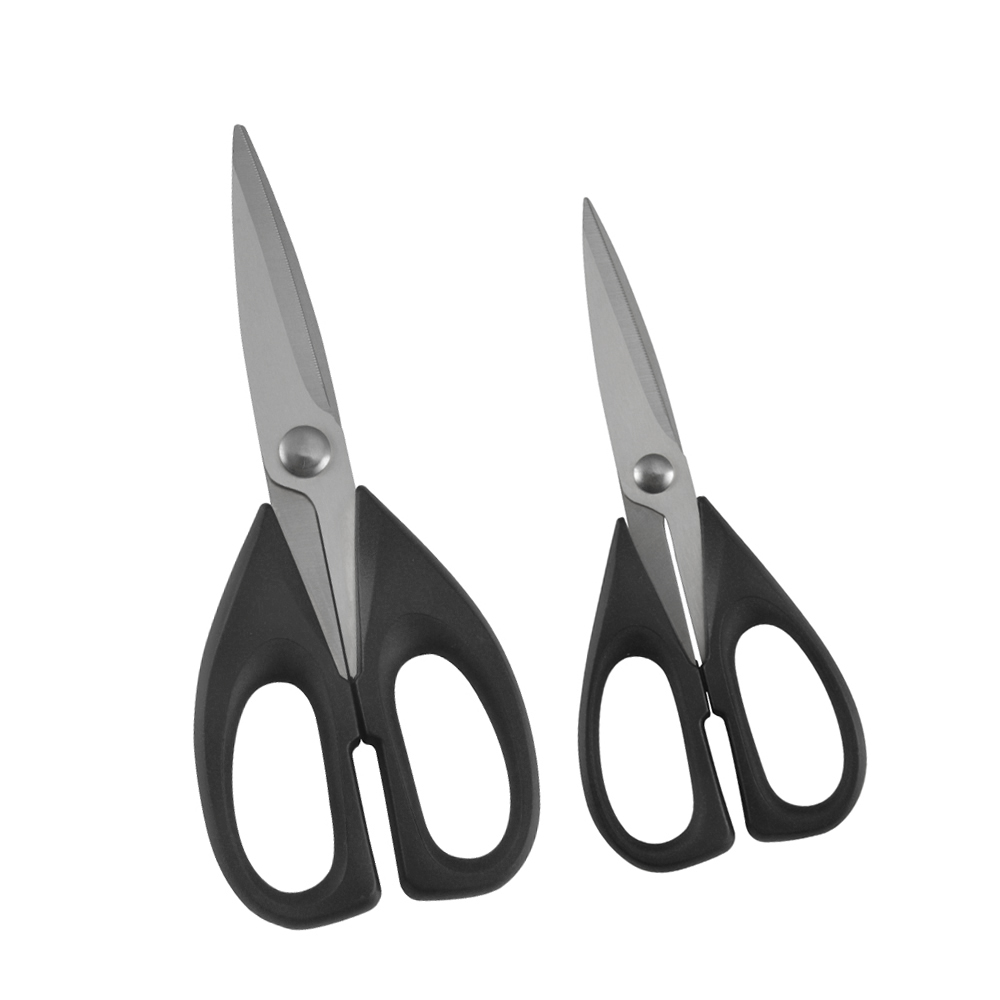
The original product description highlights several useful points: kitchen scissors can be used for poultry, herbs, packaging, fabric, paper, home tasks, office tasks, and educational settings. It also notes a scissor set with two different sizes and a matte black handle finish. Those details make this topic especially relevant for buyers comparing OEM kitchen scissors, general-purpose scissors, and multi-piece household scissor sets.
Key Takeaways
- OEM kitchen scissors should be selected around real cutting tasks, not only handle color or catalog appearance.
- A two-size scissor set can support broader household use, but buyers should confirm blade dimensions, packaging, and intended applications.
- Factory discussions should cover materials, sharpness, handle comfort, quality inspection, packaging, branding, and replacement policy.
- Do not assume stainless steel grade, certifications, MOQ, or test results unless the supplier provides written confirmation.
What OEM Kitchen Scissors Usually Need to Do
Kitchen scissors are commonly expected to cut ingredients and non-food items around the kitchen. Typical uses include trimming herbs, opening food packaging, cutting parchment, portioning poultry, or handling small household cutting jobs. Some buyers also position scissor sets for office, school, craft, or general home use, especially when the set includes two different sizes.
Because the application range is broad, buyers should define the main use case before discussing customization. A scissor intended mainly for kitchen packaging does not need the same blade profile as one intended for poultry preparation. A set intended for supermarkets may require different packaging than a set intended for online retail. Clear positioning helps a kitchen scissors factory recommend more suitable options and reduces the risk of over-specifying or under-specifying the product.
How to Evaluate a Kitchen Scissors Factory
When sourcing OEM kitchen scissors, buyers should focus on repeatability and communication as much as on the sample itself. A good sample is important, but the production batch needs to match the approved sample in blade alignment, handle finish, packaging, and overall appearance. Ask the supplier how they control sharpness, handle assembly, surface finish, and carton packing during production.
It is also important to separate confirmed facts from assumptions. If a supplier mentions stainless steel, ask which grade is used and whether it can be documented. If the product is promoted as ergonomic, ask what handle dimensions, grip design, or user feedback support that description. If compliance is required for your market, ask which tests are available and whether reports are current, relevant, and issued for the exact product or material.
Comparison Checklist for OEM Buyers
| Selection Point | What to Check | Questions to Ask the Supplier |
|---|---|---|
| Blade performance | Sharpness, alignment, cutting feel, edge consistency | How is blade sharpness inspected before shipment? |
| Material claim | Steel type and handle material | Can you confirm the material in writing and provide supporting documents if needed? |
| Handle comfort | Grip size, finish, hand fatigue during repeated cuts | Are different handle molds or finishes available for OEM orders? |
| Set configuration | Single pair, two-size set, or multi-purpose set | What sizes are included, and can the set be adjusted for our market? |
| Branding and packaging | Logo, insert card, blister, box, barcode, carton layout | What packaging formats are available, and what artwork files are required? |
| Quality control | Inspection steps, defect handling, sample approval | Can production be matched to an approved pre-production sample? |
Product Details Worth Confirming Before Ordering
The original article mentions a scissor set with two different sizes and a modern matte black handle finish. These are useful starting points, but wholesale buyers should confirm the exact specifications before making purchasing decisions. Size, blade thickness, handle material, weight, packaging dimensions, and carton quantity can all affect shipping cost, retail presentation, and user satisfaction.
For example, a larger pair may be better for kitchen packaging or heavier household tasks, while a smaller pair may be more convenient for paper, herbs, or light craft use. If the set is marketed for both kitchen and office use, packaging copy should avoid overstating food-preparation performance unless the product has been designed and documented for that purpose.
OEM Customization: Practical Options to Discuss
OEM customization can include handle color, logo placement, packaging artwork, set configuration, and retail presentation. Some buyers may want a minimal private-label design, while others may need a full branded pack with instructions, barcode, warnings, and multilingual text. The right scope depends on the sales channel and destination market.
Before requesting a quotation, prepare a simple sourcing brief. Include target market, expected sales channel, preferred set configuration, packaging type, logo requirements, estimated order quantity, and any compliance requirements. If these details are not yet fixed, ask the supplier which information is needed to quote accurately and which items affect tooling, lead time, or unit cost.
Quality Checks for Samples and Production
Sample review should be structured. Do not only check whether the scissors look attractive. Open and close the scissors repeatedly to feel the joint movement. Test common cutting tasks that match your target customer. Check whether both blades meet cleanly, whether the handle edges feel comfortable, and whether the finish is consistent between pieces in a set.
- Compare the sample against the written specification and product photos.
- Test cutting performance on the materials your customers are likely to use.
- Check handle comfort with both short and repeated cutting motions.
- Review packaging strength, labeling accuracy, and barcode placement.
- Confirm how defects will be classified and handled before mass production.
For production orders, ask whether the supplier can keep an approved sample for reference. This helps avoid disputes if the delivered goods differ in handle color, blade finish, packaging layout, or cutting feel.
Common Sourcing Mistakes to Avoid
One common mistake is choosing the lowest quote without comparing specifications. Two scissors may look similar online but differ in blade material, handle construction, finish quality, packaging, and inspection process. Another mistake is using broad claims such as “professional grade” or “food safe” in marketing copy without documentation. Claims should match available evidence and destination-market rules.
Buyers should also avoid vague purchase orders. A clear order should define the product version, packaging, artwork approval, inspection expectations, delivery terms, and any required documents. If MOQ, lead time, or certification details are important, ask for confirmation from the supplier rather than assuming standard availability.
FAQ
What should I ask before buying OEM kitchen scissors?
Ask about blade material, handle material, size, packaging options, logo methods, sample process, quality inspection, MOQ, lead time, and available compliance documents. Request written confirmation for any claim that affects your market or marketing copy.
Are two-size scissor sets useful for wholesale programs?
They can be useful when the target customer needs both kitchen and general household cutting tools. However, buyers should confirm the exact sizes and decide whether the set fits the intended retail channel.
Can kitchen scissors be customized with a private label?
Many OEM programs offer some form of customization, such as logo placement or packaging artwork. The available options, costs, and order requirements should be confirmed directly with the supplier.
How can I judge sample quality?
Check cutting performance, blade alignment, handle comfort, finish consistency, opening and closing movement, packaging quality, and whether the sample matches the agreed specification.
Should I request test reports or certifications?
If your market, retailer, or product claim requires documentation, request current and relevant reports from the supplier. Do not assume certification coverage unless the supplier provides clear evidence for the exact product.
Final Sourcing Advice
OEM kitchen scissors are best sourced with a clear product brief and careful sample review. The matte black two-size scissor set described in the original article may suit buyers looking for a practical household cutting set, but commercial decisions should be based on confirmed specifications, packaging requirements, and documented supplier capabilities. For wholesale sourcing, the strongest results usually come from asking precise questions before production starts.
