




OEM Kitchen Scissors: Stylish Multi-Purpose Shears
OEM kitchen scissors can be a useful addition to a kitchenware range because they solve several everyday cutting tasks in one compact tool. For importers, distributors, promotional product buyers, and private-label kitchenware brands, the real question is not simply whether the scissors look attractive. It is whether the design, materials, packaging, safety features, and supplier communication are suitable for repeat wholesale business.
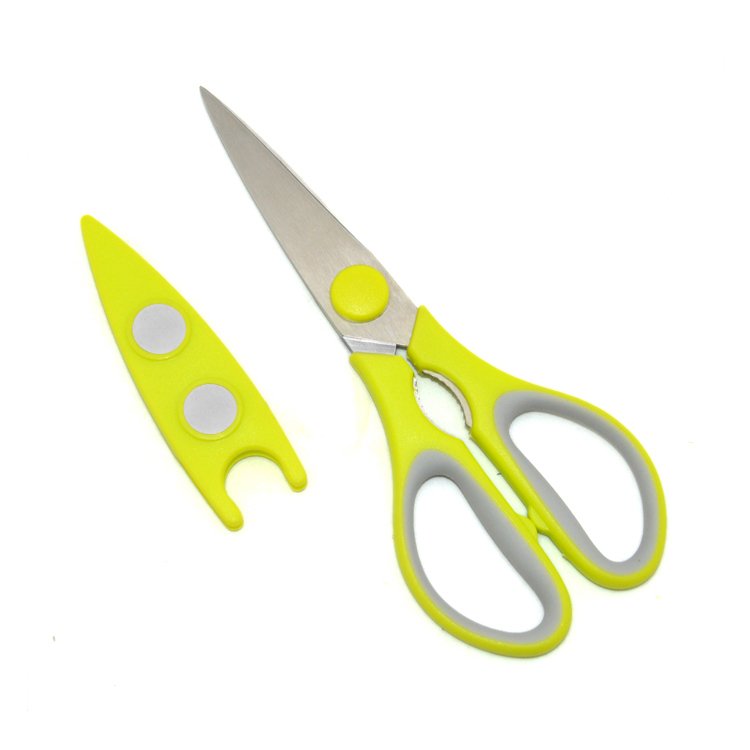
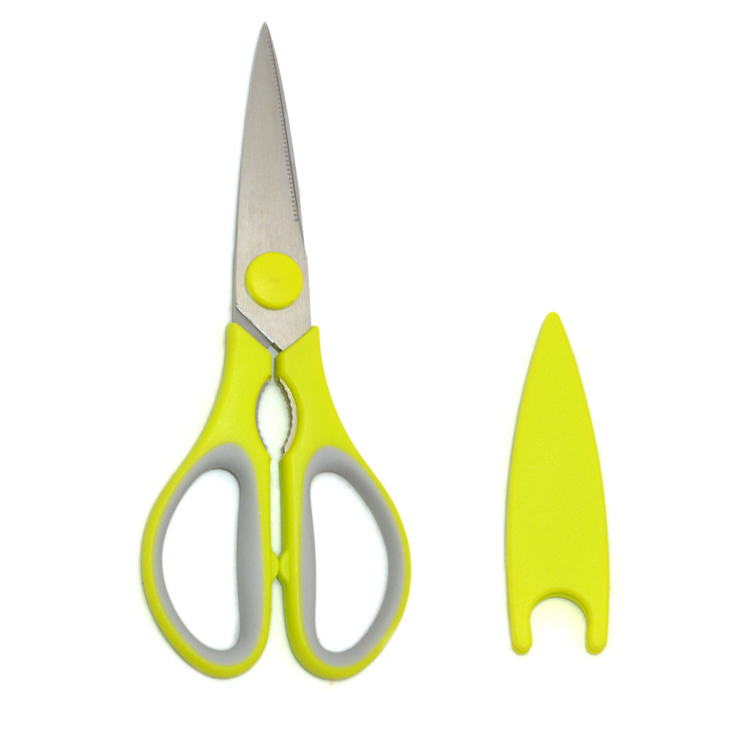
The original product example highlights a pair of multi-purpose kitchen scissors with stainless steel blades, a vibrant lime green appearance, soft-touch grey rubber grip handles, and a protective sheath with dual magnets. Those explicit features make the product relevant for modern kitchen assortments, gift sets, supermarket programs, and online bundles. However, buyers should still verify all commercial and technical details with the supplier before confirming an OEM order.
Key Takeaways
- OEM kitchen scissors should be assessed for cutting performance, handle comfort, sheath safety, and brand customization options.
- Stainless steel blades, as stated in the source, are a useful feature, but buyers should ask the supplier to confirm the exact grade and care instructions.
- A protective sheath with dual magnets can help keep blades covered when stored, especially in crowded drawers.
- Wholesale buyers should request samples, packaging details, quality checks, and OEM artwork requirements before placing volume orders.
- A stylish color such as lime green can support shelf appeal, but durability and consistent production quality matter more for long-term sourcing.
Why Multi-Purpose Kitchen Scissors Matter in Wholesale Assortments
Kitchen scissors are widely understood by consumers, which makes them easy to merchandise across different retail channels. They can be used for snipping herbs, cutting food packaging, trimming ingredients, opening sealed bags, and handling small preparation tasks where a knife and board may feel inconvenient. For B2B buyers, this broad use case helps explain why multi-purpose scissors often fit into entry-level kitchen tool ranges as well as more design-focused collections.
The product positioning is especially relevant when a buyer wants a compact item that offers visible utility without requiring detailed consumer education. A clear product card, simple usage guidance, and a safe storage feature can make the item easier to sell online or in store. When sourcing OEM kitchen scissors, focus on whether the product can be explained in one sentence and whether its practical benefits are visible from the packaging.
Feature Checklist for OEM Kitchen Scissors
The source article mentions several useful features: stainless steel blades, a lime green color, soft-touch grey rubber grip handles, and a protective sheath with dual magnets. These details provide a good starting point, but OEM buyers should turn them into a formal checklist during supplier discussions.
| Feature to Review | Why It Matters | Questions to Ask the Supplier |
|---|---|---|
| Stainless steel blades | Supports durability and cutting precision for common kitchen tasks. | What stainless steel grade is used, and what care instructions should appear on packaging? |
| Blade sharpness and alignment | Affects cutting comfort, safety, and perceived quality. | How is blade sharpness checked during production, and can samples be tested before ordering? |
| Soft-touch grey rubber grip | Improves comfort during repeated cutting tasks. | What handle material is used, and can the grip color be customized? |
| Lime green design | Creates visibility in drawers and supports a recognizable retail look. | Are other colors available for private-label programs? |
| Protective sheath with dual magnets | Helps cover blades during storage and may attach to magnetic surfaces if suitable. | How strong are the magnets, and how should end users store the shears safely? |
| Packaging | Impacts retail display, shipping protection, and brand presentation. | What packaging formats are available, and what artwork files are required? |
Blade and Handle Considerations
Blade quality is one of the main reasons consumers either keep using kitchen scissors or replace them quickly. The original article states that the blades are stainless steel, which is a useful fact to preserve. Still, stainless steel can vary by grade, thickness, hardness, finish, and corrosion resistance. A responsible buyer should ask for the exact material specification rather than relying on a general phrase.
Handle comfort is also important because kitchen scissors are often used with wet hands, oily packaging, or quick repetitive cuts. The soft-touch grey rubber grip mentioned in the source suggests a comfort-oriented design. Before confirming a custom order, buyers should check whether the handle is comfortable for different hand sizes, whether the grip feels secure, and whether the material odor is acceptable after unpacking. A sample review should include real tasks such as cutting herbs, trimming food bags, and opening cardboard sleeves.
Protective Sheath and Magnetic Storage
A protective sheath is more than a design accessory. It can reduce accidental contact with the blade edge when the scissors are placed in a drawer or packed into a kitchen tool set. The source article specifically mentions a sheath featuring dual magnets. This can be attractive for households that want visible storage or quick access, although buyers should avoid making unverified claims about magnet strength or compatible surfaces unless confirmed by testing.
For wholesale sourcing, ask how securely the sheath holds the scissors, whether the sheath remains stable during transport, and whether the magnets are enclosed safely. If the product is intended for family kitchens, packaging should include sensible storage guidance. Buyers should also confirm whether any regional labeling or safety warnings are required for the markets where the product will be sold.
OEM and Private-Label Sourcing Questions
OEM kitchen scissors can be customized in many ways, but the exact options depend on the supplier. Instead of assuming capabilities, buyers should prepare a clear request that covers color, logo placement, packaging, sample timing, production lead time, quality control, and shipment terms. This avoids confusion later in the sourcing process.
- Ask whether the lime green and grey color combination can be kept or adjusted to match your brand palette.
- Request details on logo application methods for the handle, sheath, packaging, or insert card.
- Confirm the minimum order quantity, sample cost, tooling requirements, and estimated production schedule.
- Ask what product checks are performed before shipment, including blade alignment, handle finish, sheath fit, and packaging inspection.
- Clarify carton packing, barcode requirements, instruction language, and any market-specific documentation the buyer must provide.
Good B2B sourcing depends on documented answers. If a supplier cannot confirm a detail, treat it as an open item rather than a promise. This is especially important for material grades, compliance statements, test reports, and retail packaging claims.
Wholesale Merchandising and Product Positioning
The visual design described in the original article gives these kitchen scissors a bright, easy-to-spot appearance. Lime green can help the product stand out in a drawer, on a retail peg, or in an online product thumbnail. For wholesale buyers, the key is to match the color and feature set to the sales channel. A supermarket buyer may prioritize simple packaging and value messaging, while an online seller may need lifestyle images, clear feature bullets, and strong product dimensions verified by the supplier.
The product can also work as part of a kitchen preparation set, a housewarming bundle, or a private-label utensil line. If bundling, check that all items share compatible colors, packaging dimensions, and quality levels. A strong bundle can be weakened if one component feels noticeably cheaper than the others.
Sample Evaluation Before Placing an Order
Before committing to a wholesale order, test samples under realistic conditions. Use the scissors to cut herbs, thin plastic packaging, paperboard, and common food preparation items. Check whether the blades open smoothly, whether the handles create pressure points, and whether the sheath is easy to remove without feeling loose. If the scissors will be sold online, photograph the sample and confirm that the color appears consistent under typical lighting.
Buyers should also record feedback from multiple users. A product that feels comfortable to one person may feel too tight, too wide, or too heavy to another. Simple evaluation notes can help compare suppliers and support future reorder decisions.
FAQ
What are OEM kitchen scissors?
OEM kitchen scissors are kitchen shears produced for a buyer's brand or specification. Depending on the supplier, customization may include color, logo, packaging, and product set configuration.
What features are stated for this product example?
The source describes stainless steel blades, a lime green design, soft-touch grey rubber grip handles, and a protective sheath with dual magnets.
Can buyers assume the stainless steel grade?
No. The source only states stainless steel blades. Buyers should ask the supplier to confirm the exact grade, finish, care guidance, and any available test documentation.
Are magnetic sheaths suitable for every kitchen?
Not always. A magnetic sheath may be useful for storage, but performance depends on magnet design and the surface used. Buyers should test samples and avoid unsupported claims.
What should be confirmed before a wholesale order?
Confirm samples, MOQ, lead time, logo method, packaging artwork, inspection process, carton details, shipping terms, and any market-specific labeling needs.
Final Sourcing Advice
OEM kitchen scissors are a practical product category when the design balances cutting performance, comfortable handling, safe storage, and clear retail presentation. The lime green multi-purpose scissors described in the original article offer a useful starting point because they combine stainless steel blades, a soft-touch grip, and a protective magnetic sheath. For professional buyers, the next step is disciplined verification: request samples, ask precise questions, document specifications, and compare supplier responses before scaling to wholesale quantities.
