








OEM Kitchen Scissors: How to Source Custom Culinary Tools
Kitchen scissors are a small item, but they carry a lot of responsibility in a houseware range. Buyers expect them to cut food packaging, trim herbs, portion poultry, open bags, and handle many quick kitchen tasks without feeling awkward or unsafe. For brands, wholesalers, and importers, OEM kitchen scissors offer a way to create a product that fits a target market rather than relying only on a standard catalog item.
The original product concept highlights customization, quality manufacturing, and modern aesthetics. Those points are still important, but successful sourcing requires more than choosing a handle color. A buyer should define intended use, confirm available materials and features with the supplier, review samples carefully, and set clear inspection standards before bulk production.
Key Takeaways
- OEM kitchen scissors should be specified around real user tasks, not appearance alone.
- Customization may include handle color, grip feel, added functions, packaging, and brand presentation, depending on supplier capability.
- Do not assume blade material, hardness, certifications, or test results; ask the supplier to document them.
- Samples should be checked for cutting performance, comfort, alignment, finish, and safe handling.
- A clear sourcing brief helps reduce misunderstandings before quotation and production.
What OEM Kitchen Scissors Mean for Buyers
OEM sourcing means a factory or supplier produces kitchen scissors according to a buyer's requested design, branding, packaging, or market requirements. In practice, the level of customization can vary. Some projects may use an existing scissor shape with a private label logo and retail packaging. Others may involve custom colors, handle materials, accessory changes, or a more detailed product development process.
For a houseware brand, the main advantage is market fit. A product for supermarket retail may need simple packaging and a competitive cost structure. A product for a cookware brand may need a more refined visual identity. A food service distributor may focus more on durability, easy cleaning, and repeatable supply. The right OEM discussion starts with the channel, user, and price position.
Customization Options to Discuss with a Supplier
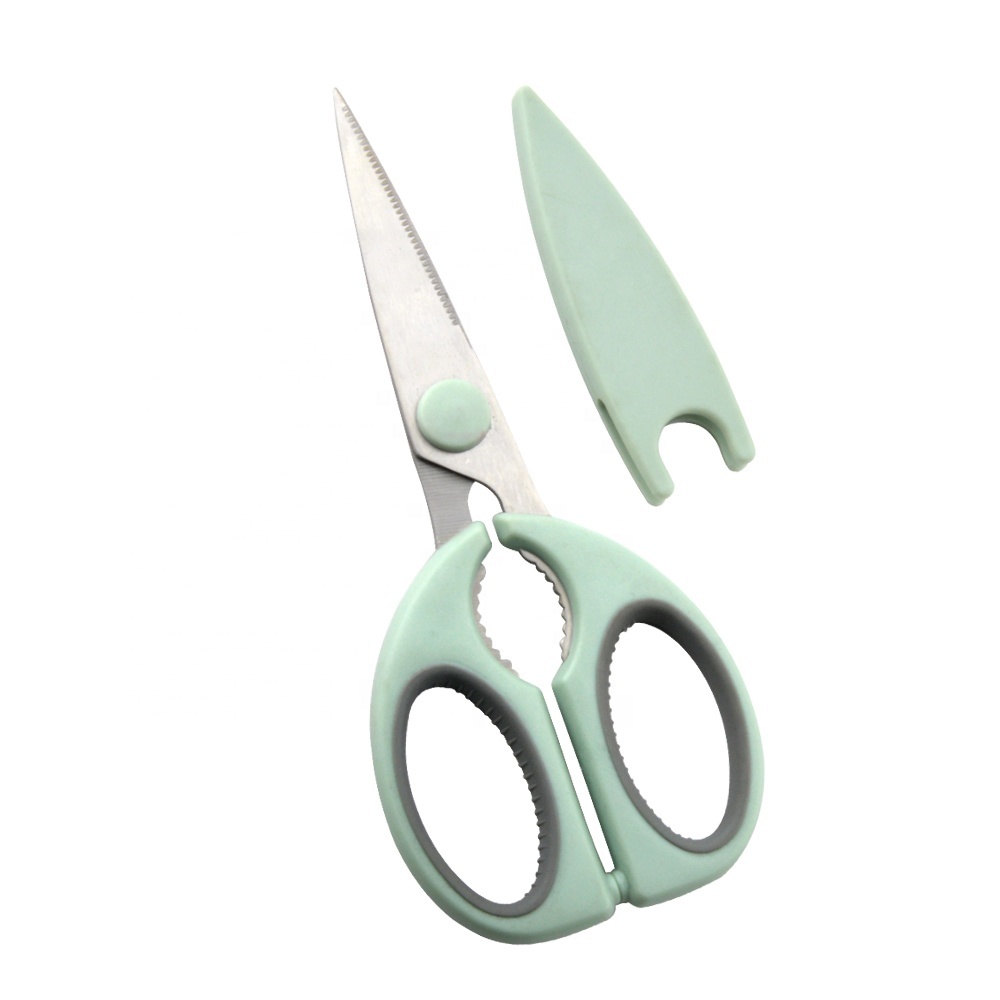
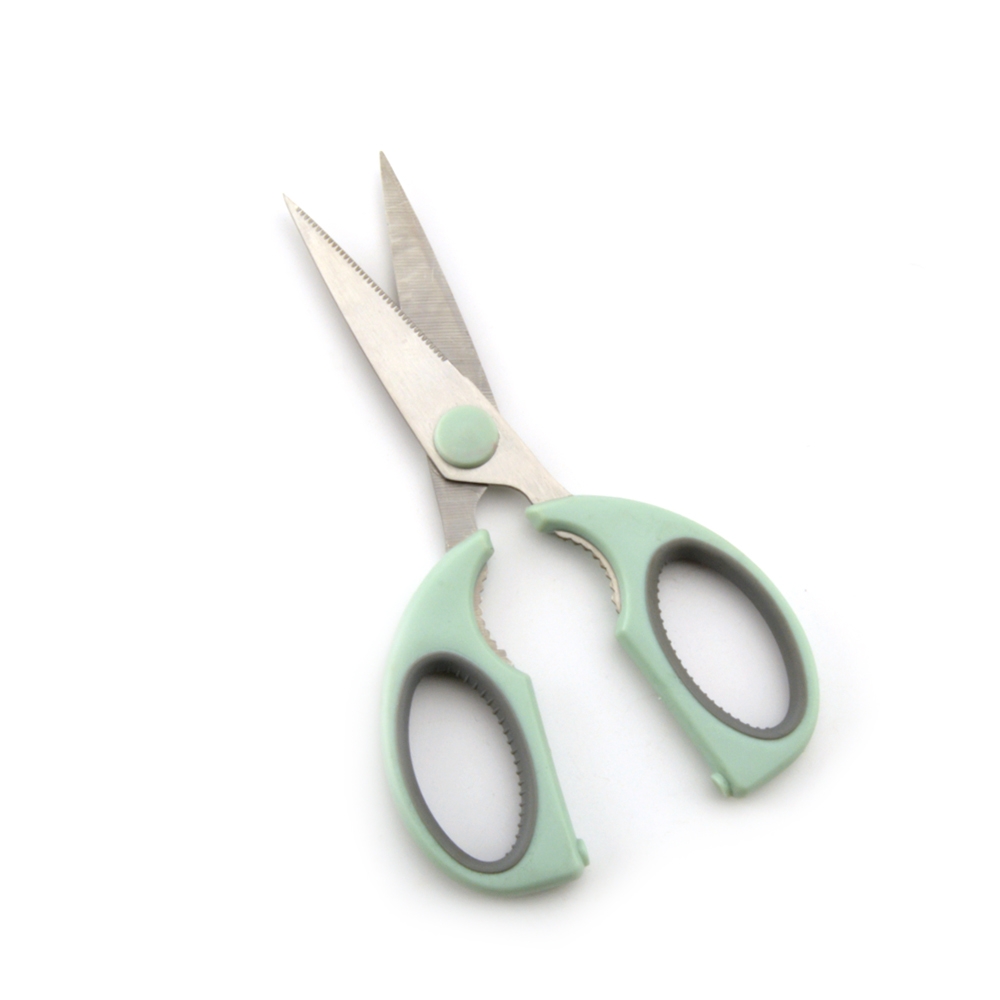
The original article mentioned ergonomic soft-touch handles, colors such as mint or soft sage green, and integrated features such as a bottle opener, nutcracker, or herb stripper. These are useful ideas, but buyers should treat them as options to confirm, not automatic features. Each added function can affect tooling, cost, cleaning, safety, and the final user experience.
Common customization points include:
- Handle color and surface feel, subject to available materials and production process.
- Branding method, such as logo placement on the handle, blade, sheath, or packaging.
- Functional add-ons, such as a bottle opener, nutcracker area, or herb stripper, if available.
- Protective sheath design, which can support safer storage and help protect the blades.
- Retail packaging, including card, blister, box, or other formats suitable for the sales channel.
Before requesting a quote, prepare a short product brief. Include target market, expected retail channel, required functions, preferred color direction, packaging expectations, estimated order volume, and any compliance or labeling requirements for your destination market. If you do not have final artwork, ask what file formats and logo positions the supplier can support.
Quality Manufacturing: What to Verify
A specialized scissors supplier, including factories in Yangjiang, may have experience in blade forming, sharpening, assembly, and handle production. However, buyers should verify capability through samples, documentation, and production communication. Avoid relying on broad claims. Ask precise questions and request evidence where it matters.
Key points to confirm include blade material, blade thickness, surface finish, edge type, pivot structure, handle material, food-contact considerations, and whether the scissors can be disassembled if that is important for the market. The original article refers to stainless steel blades and possible micro-serrated edges, but exact material grade and performance should be confirmed for the specific product being quoted.
For sample review, test the scissors on realistic kitchen tasks. Try cutting herbs, thin plastic packaging, parchment or food bags, and poultry skin if relevant to your product positioning. Check whether the blades meet cleanly from pivot to tip. Open and close the scissors repeatedly to feel for grinding, looseness, or stiffness. Also check for sharp burrs, poor polishing, handle gaps, color inconsistency, and packaging damage.
Comparison Checklist for OEM Kitchen Scissors
| Decision Area | What to Check | Questions to Ask the Supplier |
|---|---|---|
| Blade design | Shape, edge finish, alignment, cutting feel | What blade material and edge options are available for this model? |
| Handle comfort | Grip size, left/right hand use, surface feel | Can the handle color or material be customized, and what are the limits? |
| Added functions | Bottle opener, nutcracker, herb stripper, sheath | Which functions are standard, optional, or require tooling changes? |
| Branding | Logo position, durability, visual quality | What branding methods are supported, and can you provide artwork guidelines? |
| Packaging | Retail display, protection, barcode area, instructions | Can packaging be customized for our sales channel and destination market? |
| Quality control | Inspection criteria, sample approval, production consistency | What checks are performed before shipment, and can we define an inspection standard? |
Balancing Functionality and Modern Aesthetics
Kitchen scissors are often stored in a drawer, knife block, utensil pot, or hung near a prep area. Appearance still matters because consumers compare kitchen tools visually before purchase. A clean handle shape, coordinated sheath, and suitable packaging can make the product easier to understand at retail. However, visual design should never reduce usability.
For example, a soft-touch handle may feel comfortable, but buyers should ask how it performs after repeated washing and handling. A very light color may match a modern kitchen theme, but it may show stains more easily depending on material. A protective sheath can improve storage safety, but it should fit securely without being difficult to remove. The best design choices come from considering how the product will be used, cleaned, stored, and merchandised.
How to Build a Clear OEM Sourcing Process
A structured process helps both buyer and supplier move faster. Start with a written request rather than a vague inquiry. Include product references only as direction, not as a request to copy protected designs. Ask the supplier to recommend existing models if you need speed, or explain the development path if you require a more customized product.
- Define the user: home cook, gift buyer, food service user, retailer, or promotional channel.
- List required functions and optional functions separately.
- Confirm material, finish, packaging, and branding possibilities in writing.
- Request samples and evaluate them against practical cutting tasks.
- Agree on approved sample details before bulk production.
- Set inspection points for appearance, assembly, function, packaging, and labeling.
If your market has specific food-contact, labeling, or safety requirements, raise them early. The supplier can explain what information or documents they can provide, but buyers should verify destination-market obligations with their own compliance resources.
Common Mistakes to Avoid
One common mistake is focusing only on unit price. A low price may be suitable for some channels, but it can also limit handle comfort, packaging quality, finish consistency, or available customization. Another mistake is approving a product from photos alone. Scissors are tactile tools; cutting feel, pivot smoothness, and handle comfort are difficult to judge without a sample.
Buyers should also avoid overloading the product with too many functions. A bottle opener or nutcracker may be useful for some consumers, but every added feature should have a clear reason. If the target customer mainly needs clean cutting and easy storage, a simpler design with a protective sheath may perform better.
FAQ
What information should I send when asking for an OEM kitchen scissors quote?
Send the target market, expected quantity, preferred features, handle color ideas, logo needs, packaging type, destination country, and any compliance or labeling requirements you already know.
Can kitchen scissors be customized with brand colors?
Often yes, but available colors, minimum order requirements, and material options depend on the supplier and production process. Ask for color samples or references before approval.
Are stainless steel blades standard for kitchen scissors?
Many kitchen scissors use stainless steel, and the original product description refers to stainless steel blades. Still, buyers should confirm the exact material and finish for the specific model being ordered.
Should I choose scissors with many built-in functions?
Choose functions based on the end user. A bottle opener, nutcracker, or herb stripper can add value when relevant, but unnecessary functions may add cost or make cleaning and handling less convenient.
How should I evaluate a pre-production sample?
Check cutting performance, blade alignment, handle comfort, opening and closing smoothness, surface finish, logo quality, sheath fit, and packaging accuracy. Record approval details so production can match the accepted sample.
