




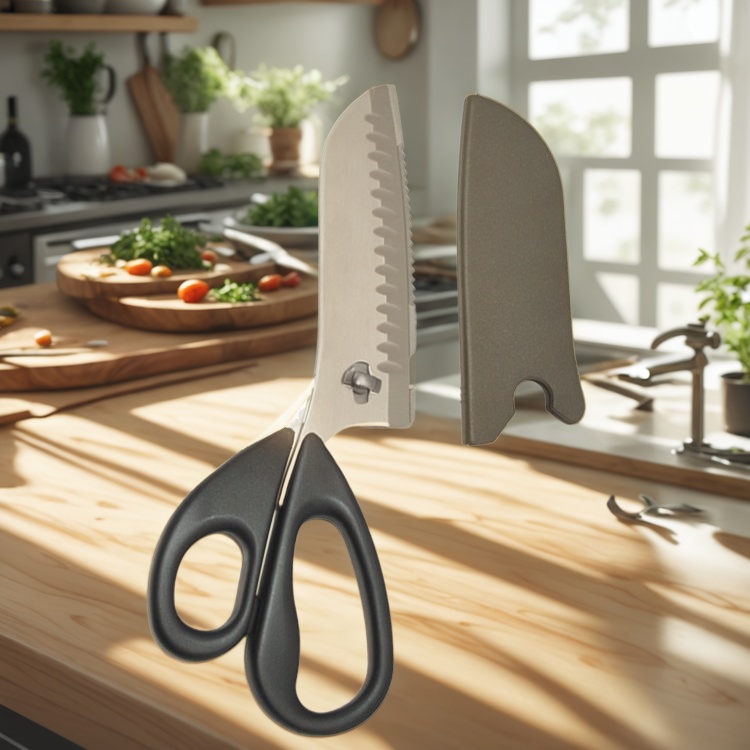
OEM Kitchen Scissors: Practical Sourcing Guide for Brands
OEM kitchen scissors can be a useful product for houseware brands, supermarket buyers, promotional distributors, and online retailers. Unlike ordinary office scissors, kitchen shears are designed for food preparation tasks such as cutting herbs, trimming vegetables, opening packaging, portioning cooked food, and handling small poultry or meat preparation jobs. For buyers, the main question is not simply whether the scissors look appealing, but whether the product is practical, safe to handle, easy to clean, and suitable for the intended sales channel.
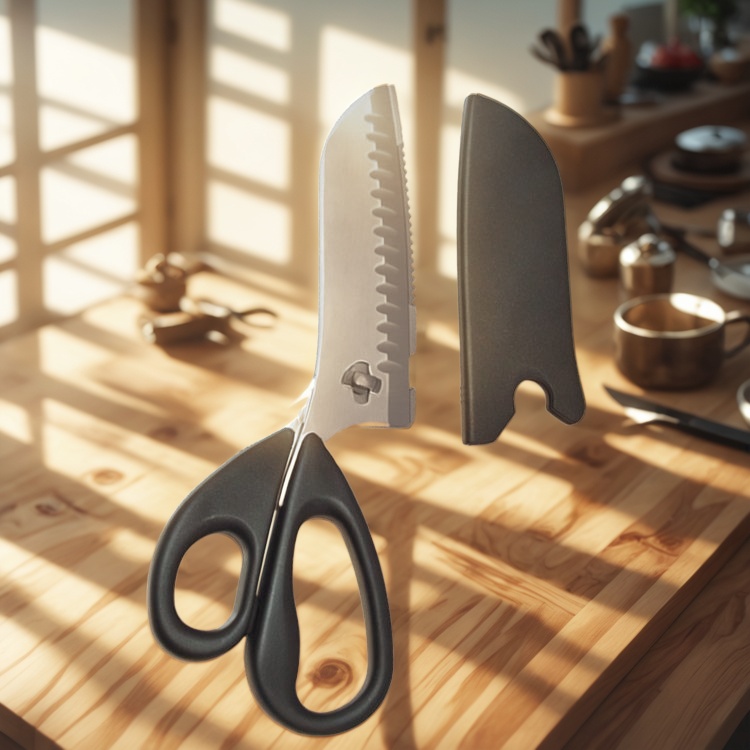
The original product information highlights multi-functional kitchen scissors with sharp stainless steel blades, a serrated section on one blade for gripping slippery materials, ergonomic handles, and a blade cover for storage safety. Those are useful starting points. However, a strong OEM sourcing process should go further by confirming materials, construction, packaging, quality control, and customization options directly with the supplier before placing an order.
Key Takeaways
- OEM kitchen scissors should be evaluated as food-preparation tools, not general-purpose scissors.
- Useful features may include sharp stainless steel blades, a serrated gripping section, ergonomic handles, and a protective blade cover.
- Buyers should ask suppliers to confirm material details, customization scope, packaging options, inspection standards, and applicable market requirements.
- Sampling and practical cutting tests are important before wholesale or private-label purchasing.
What Makes Kitchen Scissors Different?
Kitchen scissors are expected to perform in a more demanding environment than basic household scissors. They may contact moisture, food residue, oils, acids, and hard-to-grip ingredients. A good pair should feel stable in the hand, cut cleanly, and be simple enough for daily use. For consumer-facing brands, the product should also be easy to explain on packaging and product pages.
The phrase “kitchen scissors with knife” often reflects buyer interest in a tool that can replace a small knife for certain quick tasks. This does not mean scissors can do everything a kitchen knife can do. Instead, they can help users cut herbs directly into a pan, divide small food portions, trim packaging, or cut slippery items that may be awkward on a cutting board. Clear product positioning helps avoid exaggerated claims and improves customer trust.
Core Features to Evaluate
When reviewing an OEM kitchen scissors sample, focus on function before appearance. Sharp blades are important, but buyers should also check alignment, opening resistance, grip comfort, and ease of cleaning. The original product description mentions stainless steel blades and a serrated section, both of which can be meaningful features when properly executed.
- Blade performance: Test cuts on herbs, thin vegetables, packaging, and food-safe test materials that reflect real use.
- Serrated gripping area: Check whether it helps hold slippery ingredients without tearing them unnecessarily.
- Handle comfort: Ask multiple users to test the grip, especially if the product targets broad household use.
- Storage safety: Review the blade cover for fit, durability, and ease of removal.
- Cleaning design: Look for gaps, rough edges, or hinge areas where food residue may collect.
Comparison Checklist for OEM Buyers
A structured comparison can make supplier discussions more objective. Use the checklist below when comparing multiple kitchen shears samples or quotations.
| Evaluation Point | What to Check | Questions to Ask the Supplier |
|---|---|---|
| Blade material | Confirm the stated metal type and finish | What material is used, and can it be documented? |
| Cutting performance | Test herbs, vegetables, packaging, and small food items | What internal cutting tests are performed before shipment? |
| Serrated section | Check grip on slippery materials | Is the serration standard or customizable? |
| Handle design | Review comfort, size, and slip resistance | Can handle color, texture, or branding be customized? |
| Blade cover | Check fit and storage safety | Is the cover included by default or optional? |
| Packaging | Assess retail display and shipping protection | What packaging formats are available for private label? |
| Quality control | Review consistency across samples | What inspection steps are used for bulk orders? |
OEM Customization and Branding Considerations
For brands, OEM value often comes from matching a product to a target market. Customization may involve handle color, logo placement, packaging artwork, instruction inserts, bundle sets, or retail-ready display formats. Before assuming any option is available, confirm it with the supplier and request production samples or pre-production proofs.
Private-label buyers should also consider how the product will be presented. A premium retail listing may need lifestyle photography, clear feature descriptions, and care instructions. A wholesale or promotional order may prioritize simple packaging, cost control, and consistent branding. In both cases, avoid claims that have not been verified, such as specific certifications, dishwasher safety, or particular material grades unless the supplier provides supporting documentation.
Quality Questions to Ask Before Ordering
Kitchen tools are handled frequently, so small quality issues can quickly become customer complaints. Before moving from sample approval to bulk order, ask practical questions that reveal how the supplier manages consistency.
- What blade material and handle material are used, and are alternatives available?
- How is blade sharpness checked during production?
- How is blade alignment inspected?
- Is the serrated section included on all versions of the model?
- What packaging options protect the blade cover and handles during shipping?
- Can the supplier provide samples from current production rather than only showroom samples?
- What information should be included in care instructions for the target market?
These questions do not replace formal quality assurance, but they help buyers identify gaps early. For larger orders, consider third-party inspection or an agreed inspection checklist that covers appearance, function, packaging, labeling, and carton condition.
Use and Care Guidance for End Customers
If these multi-functional kitchen scissors are sold to consumers, clear use and care guidance can reduce misuse and returns. Customers should understand that kitchen shears are intended for food preparation and light kitchen tasks, not for cutting wire, bones beyond the product’s stated capability, frozen blocks, or other materials that may damage the blade.
Basic care guidance may include washing after contact with food, drying thoroughly before storage, keeping the blade cover on when stored in a drawer, and keeping the scissors away from children. If the product is advertised as dishwasher safe, that claim should be confirmed by the supplier. If not confirmed, hand washing is the safer recommendation.
FAQ
Are OEM kitchen scissors the same as ordinary scissors?
No. Kitchen scissors are designed for food-preparation tasks and may include features such as stronger blades, ergonomic handles, a serrated gripping section, or a protective blade cover.
Can kitchen scissors replace a knife?
They can replace a knife for some quick cutting tasks, such as herbs, packaging, and small food portions. They should not be presented as a full replacement for all knife work.
What should buyers confirm before private-label production?
Buyers should confirm material details, customization options, packaging, quality control procedures, care instructions, and any market-specific compliance requirements.
Is a blade cover important?
A blade cover is useful for drawer storage because it helps protect the blades and reduces accidental contact with sharp edges.
How should brands evaluate samples?
Test cutting performance, grip comfort, blade alignment, cleaning convenience, packaging durability, and consistency between multiple samples before approving bulk production.
Final Sourcing Advice
OEM kitchen scissors can be a practical addition to a houseware product line when the sourcing process is specific and evidence-based. Start with the features that matter to users: clean cutting, comfortable handling, secure storage, and easy care. Then verify the commercial details that matter to buyers: customization, packaging, inspection standards, and supplier communication. A well-chosen kitchen scissors model does not need exaggerated claims; it needs dependable performance and clear information that helps customers use it correctly.
