




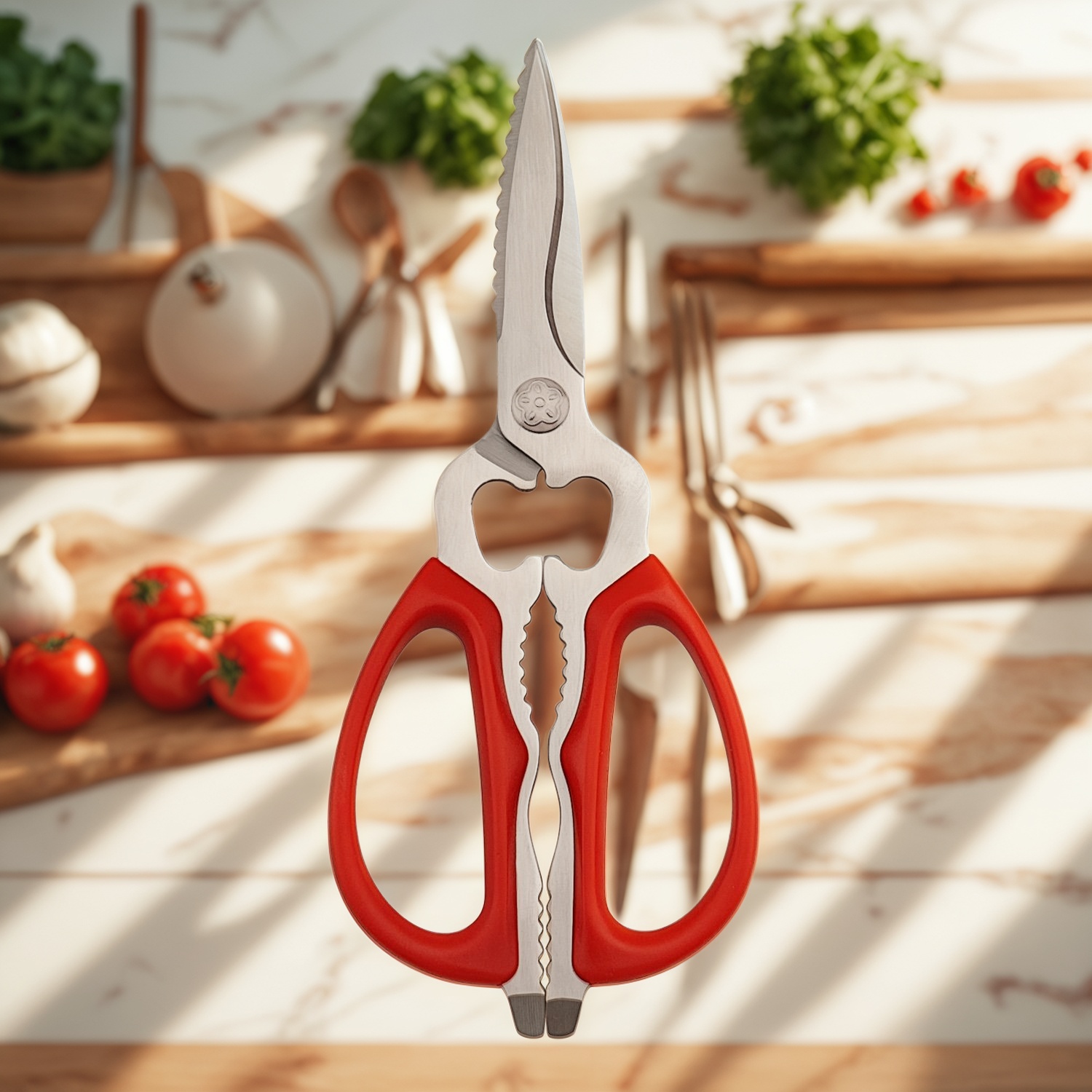
OEM Kitchen Scissors: REDLY Kitchen Shears Sourcing Review
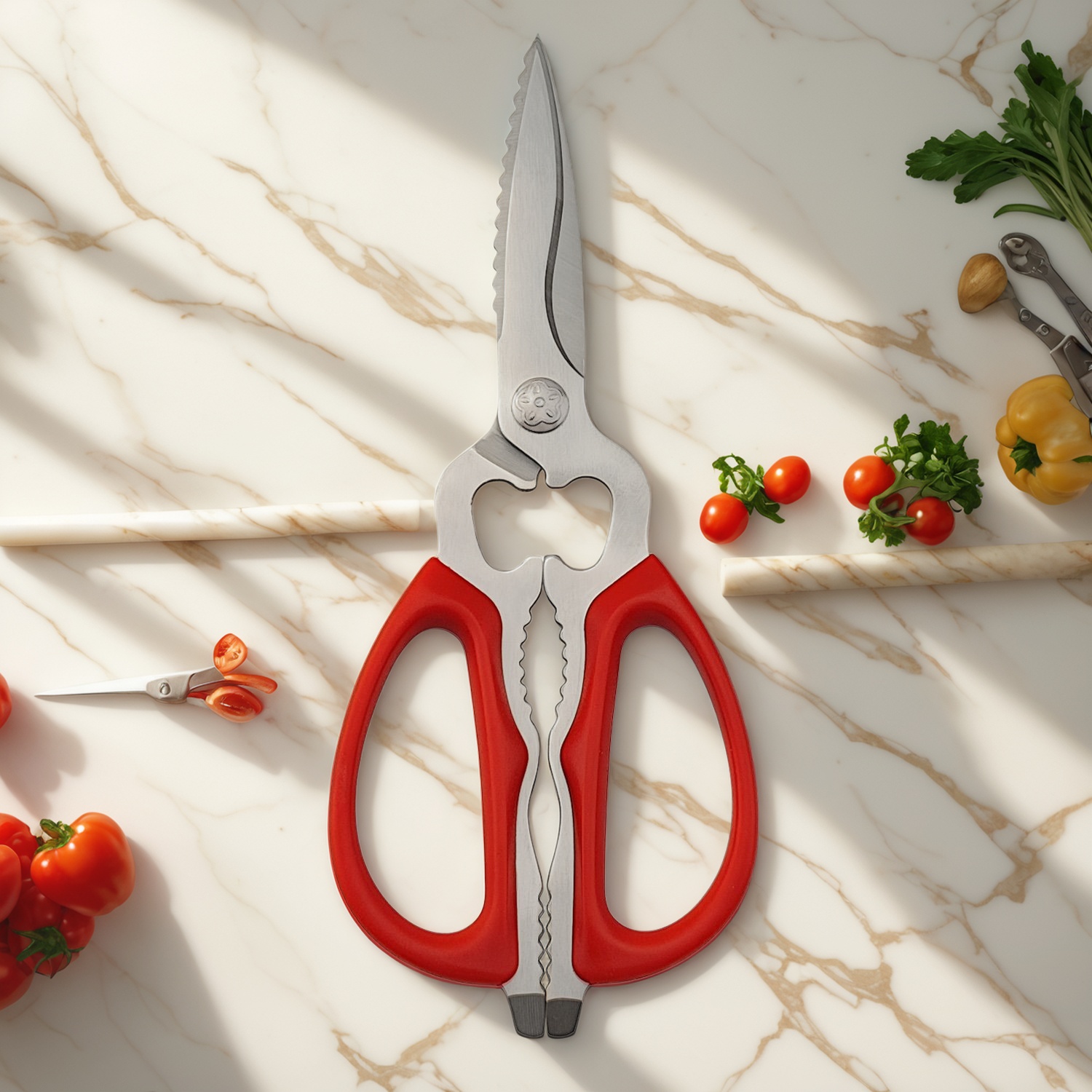
OEM kitchen scissors are a practical category for retailers, importers, promotional buyers, and kitchenware brands because one product can serve many everyday food-preparation needs. The REDLY Kitchen Shears shown in the original article are positioned as multifunctional kitchen scissors with red handles and added utility features. Rather than treating them only as a consumer review, this guide looks at the product through a sourcing lens: what buyers can assess from the sample, what claims need confirmation, and which questions should be asked before placing an OEM or wholesale order.
The original article highlighted several useful facts: the scissors are described as stainless steel, have ergonomic red handles, include a built-in bottle opener and nut cracker, and are intended for tasks such as cutting meat, vegetables, poultry, and packaging. It also noted that sharpening may be needed over time and that the handles may feel slippery when wet. Those observations are useful, but B2B buyers should still verify specifications, testing, packaging, and commercial terms directly with the supplier.
Key Takeaways
- REDLY Kitchen Shears are presented as multifunctional OEM kitchen scissors with red handles, stainless steel blades, a bottle opener, and a nut cracker.
- For sourcing, do not rely only on a product photo or sample impression; request material details, packaging options, inspection standards, and intended market compliance information.
- Multifunction features can improve shelf appeal, but they should be tested for comfort, durability, hygiene, and ease of cleaning.
- Buyers should confirm OEM customization options such as logo placement, handle color, retail packaging, and barcode requirements before ordering.
What the REDLY Kitchen Shears Appear to Offer
Based on the source content, these REDLY shears are designed for more than simple cutting. The stainless steel blades are described as sharp and durable, and the scissors are intended to handle common kitchen tasks such as cutting poultry, trimming vegetables, and opening packaging. The red handles are described as ergonomic, which is important because kitchen scissors often require grip strength when cutting through tougher food items.
The added bottle opener and nut cracker make the product more versatile for retail positioning. For buyers building an OEM kitchen scissors line, these features can help differentiate a basic item from a standard pair of scissors. However, each added function should be checked carefully. A bottle opener must sit at the right angle for effective use, and a nut cracker should apply pressure without bending the handle or causing discomfort.
B2B Sourcing Questions to Ask Before Ordering
If you are sourcing from a kitchen scissors supplier or discussing production with a factory, treat the sample as the beginning of evaluation, not the final answer. The original article mentions a possible connection with Yangjiang scissors factory expertise, but buyers should confirm the actual manufacturer, trading company role, and production process directly.
- What stainless steel type is used for the blades, and can the supplier provide a material statement?
- What blade hardness range is targeted, and how is it checked during production?
- Are the scissors detachable for cleaning, or are they fixed-blade construction?
- What handle material is used, and has wet-grip performance been evaluated?
- Can the bottle opener and nut cracker functions be tested on production samples?
- What OEM options are available for logo, handle color, packaging, and instruction inserts?
- Which inspection standard will be used for appearance, sharpness, assembly, and carton condition?
- What compliance documents are available for the intended sales market?
Feature Review and Buyer Checklist
A multifunctional tool should be judged by how well it performs the main cutting job first. Secondary features are useful only if they do not weaken comfort, cleaning, or durability. The following table can help buyers compare REDLY-style kitchen shears with alternative OEM samples.
| Evaluation Point | What to Check | Why It Matters |
|---|---|---|
| Blade material | Confirm the stainless steel specification with the supplier | Avoid unclear claims and align the product with your market expectations |
| Cutting performance | Test on poultry, vegetables, herbs, and packaging | Ensures the scissors work for common kitchen tasks |
| Handle grip | Try with dry and wet hands | The source noted possible slipperiness when wet |
| Added functions | Check bottle opener and nut cracker usability | Multifunction features should be practical, not decorative |
| Cleaning | Ask whether the design is detachable and how it should be washed | Food-contact tools need easy cleaning after use |
| OEM packaging | Review blister card, box, label, and instruction options | Packaging affects retail display, shipping protection, and brand consistency |
Use Cases for Retail and Wholesale Positioning
For a kitchenware retailer, these multifunctional kitchen shears can fit several product positions. They may be sold as general kitchen scissors for everyday meal preparation, as poultry shears for home cooking, or as an all-purpose kitchen tool with a bottle opener and nut cracker. The right positioning depends on verified performance. If the shears cut poultry well during testing, poultry preparation can be emphasized. If the main advantage is convenience, the product may be better presented as a general food-prep tool.
For wholesale and private-label programs, consider how the product will sit within a broader range. A red-handled model can be easy to recognize on a shelf, but color consistency should be confirmed across batches. If you plan to sell several SKUs, ask whether the same supplier can provide matching handle colors or packaging artwork for related kitchen tools.
Quality Control Points for OEM Kitchen Scissors
Quality control for kitchen scissors should include both appearance and function. Visual inspection should cover blade finish, handle molding, rivet or screw assembly, alignment, and any sharp burrs outside the cutting edge. Functional inspection should include open-and-close smoothness, cutting consistency, and stability of the added tools.
The original article says the shears may require occasional sharpening for optimal use. That is normal for many cutting tools, but buyers should still define an acceptable sharpness level for new goods. Ask the supplier how sharpness is checked at the factory and whether retained samples are kept for comparison. If your market requires specific labeling, care instructions, or warnings, provide the artwork and wording early so the supplier can confirm feasibility.
Packaging, Branding, and OEM Customization
OEM buyers should clarify customization before discussing final pricing. Common questions include whether the logo can be printed on the handle, etched on the blade, or applied to the packaging only. Each method has different durability, cost, and visual impact. Because the original source does not provide MOQ, lead time, or price information, those details should be requested from the supplier rather than assumed.
Packaging should also match the sales channel. E-commerce orders need protection against blade movement and carton damage. Retail shelves may require hang holes, clear product visibility, or multilingual instructions. Promotional buyers may prefer simple packaging with a strong logo presence. Whatever the channel, ask for a pre-production packaging sample to check color, barcode placement, warnings, and product fit.
Care and End-User Guidance to Include
Even in B2B sourcing, end-user instructions matter because they reduce misuse and complaints. Since these shears are intended for kitchen tasks, include clear guidance such as washing after contact with raw meat, drying before storage, and keeping the blades away from children. If the supplier confirms whether the product is dishwasher-safe, that instruction can be added. If not confirmed, avoid making dishwasher claims and recommend hand washing as a conservative care direction.
- Wash after use, especially after cutting poultry or meat.
- Dry thoroughly to reduce staining or corrosion risk.
- Use the nut cracker and bottle opener only as intended.
- Store with blades closed and away from children.
- Sharpen when cutting performance declines, following appropriate tool-care guidance.
FAQ
Are these REDLY shears suitable for OEM projects?
They may be suitable for OEM kitchen scissors programs, but buyers should confirm customization options, packaging choices, production details, and inspection standards with the supplier before ordering.
Can I claim the blades are a specific stainless steel grade?
Only if the supplier provides reliable documentation for the material grade. The source describes the blades as stainless steel but does not state a specific grade.
What should I test on a sample?
Test cutting performance, handle comfort, wet grip, bottle opener function, nut cracker strength, cleaning ease, and packaging fit. Compare several samples if possible.
Should I mention a Yangjiang scissors factory in marketing?
Only use factory-origin claims if they are confirmed by your supplier. Yangjiang is known for hardware and knife-related production, but marketing claims should be accurate and documented.
What is the main risk with multifunctional kitchen scissors?
The main risk is that added functions look attractive but perform poorly. Always check that the core cutting function remains strong and that extra features do not reduce comfort or durability.
