




Yangjiang Kitchen Scissors: OEM Sourcing and Selection Guide
Kitchen scissors look simple, but B2B buyers know that small differences in blade sharpness, handle comfort, finishing, packaging, and consistency can affect reviews, returns, and repeat orders. Yangjiang is widely associated with kitchen knives and scissors manufacturing, making it a common sourcing destination for brands, importers, distributors, and private-label houseware programs. This guide explains how to evaluate Yangjiang kitchen scissors for OEM, ODM, and wholesale projects without relying on vague claims or brochure language.
Key Takeaways
- Start with the end user: home cooks, gift-set buyers, restaurant supply customers, and promotional channels may need different scissors.
- Ask suppliers to confirm blade material, handle material, surface finish, packaging, MOQ, lead time, and sample policy in writing.
- Do not judge by appearance only; cutting performance, screw stability, grip comfort, and cleaning convenience matter.
- For OEM kitchen scissors, clarify logo method, packaging artwork, inspection standard, and responsibility for compliance documents before ordering.
- Request production samples and define acceptance criteria before mass production begins.
Why Yangjiang Kitchen Scissors Are Sourced for OEM Programs
Yangjiang has a long connection with cutting tools, so buyers often include it when searching for kitchen scissors suppliers. The advantage is not simply location; it is the concentration of factories, accessory suppliers, packaging vendors, and export-focused trading support. For a buyer, that can make product development easier, especially when comparing multiple scissor patterns, handle shapes, and retail packaging styles.
However, a sourcing region is not a quality guarantee. A responsible buyer should still verify each supplier individually. Ask whether the supplier is a factory or trading company, which production steps are handled in-house, and which are outsourced. If you need private-label kitchen scissors, confirm whether the supplier can manage logo placement, barcode labels, color boxes, blister cards, or other packaging requirements. If compliance documents are needed for your market, request details early and avoid assuming that all products automatically meet your import requirements.
Product Features Buyers Should Evaluate
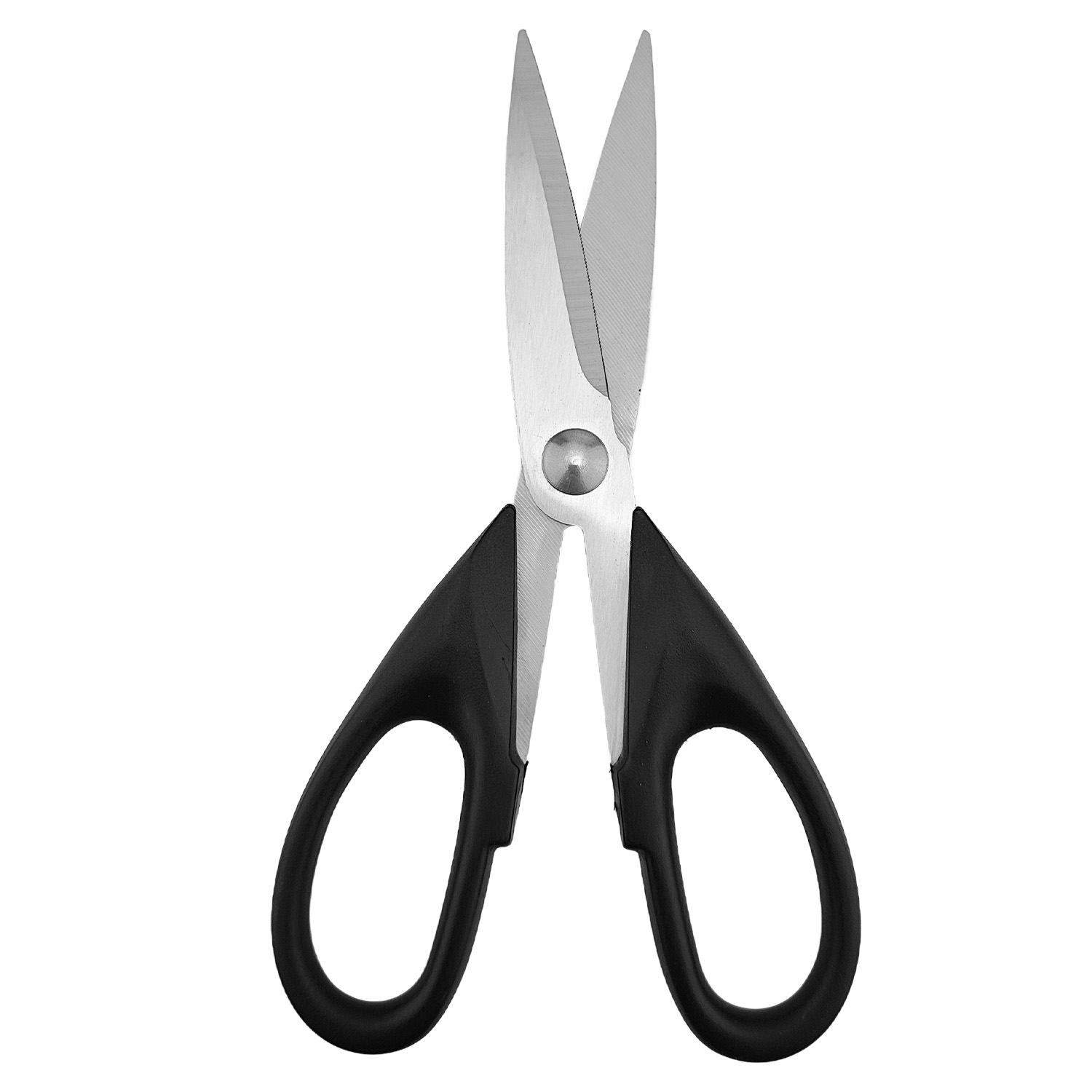
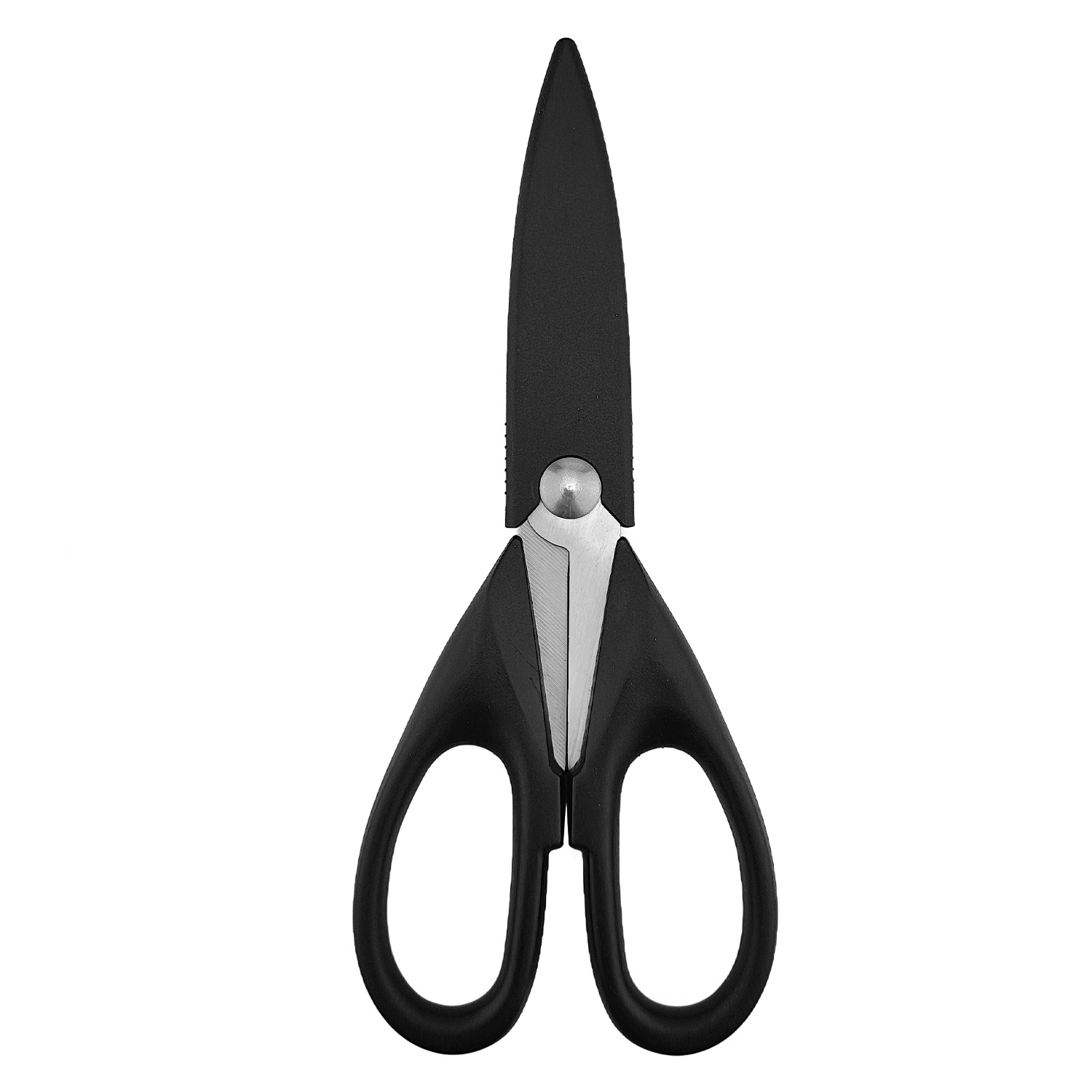
The original product description highlights stainless steel blades and ergonomic black handles. Those are useful starting points, but buyers should go deeper during sample review. Stainless steel is a broad category, so ask the supplier to state the exact material grade if that information is required for your product file. If the supplier cannot confirm it, do not add a grade claim to your listing or packaging.
For the blades, test whether the scissors cut herbs, poultry skin, thin plastic packaging, parchment, and light cardboard cleanly. Check whether the two blades meet evenly from the pivot to the tip. Uneven contact can cause slipping or tearing. For the handle, assess whether it fits different hand sizes and whether the inner edges feel smooth during repeated use. The original article mentions comfort for both left- and right-handed users; if ambidextrous use is important for your market, confirm it during sample testing rather than relying only on the product photo.
Comparison Checklist for Supplier Shortlisting
| Evaluation Area | What to Check | Questions to Ask the Supplier |
|---|---|---|
| Blade performance | Sharpness, alignment, tip cutting, edge consistency | What blade material is used, and how is sharpness checked before shipment? |
| Handle design | Grip comfort, surface texture, left/right-hand usability | What handle material is used, and can color or shape be customized? |
| Construction | Pivot tightness, opening smoothness, durability after repeated cuts | Is the screw or rivet adjustable, and what inspection standard is applied? |
| Finishing | Burrs, polishing marks, blade stains, handle flashing | How are cosmetic defects classified during final inspection? |
| Packaging | Retail presentation, protection in transit, labeling accuracy | Can the supplier provide dielines, carton marks, and packing details? |
| OEM support | Logo, color, artwork, sample approval, production control | What is the MOQ, sample cost, lead time, and artwork approval process? |
OEM and ODM Customization Questions
Customization can be useful, but it should be managed carefully. OEM kitchen scissors may involve a brand logo on the blade, handle, hang tag, color box, or master carton. ODM projects may go further by changing the handle profile, blade shape, or accessory set. Each change can affect tooling, cost, lead time, and inspection requirements.
Before discussing price, prepare a concise specification sheet. Include target market, expected retail channel, preferred packaging, logo position, color references, labeling language, carton requirements, and any compliance documents your importer requires. If you are not sure which standards apply, ask your compliance consultant or importer rather than expecting the supplier to make legal decisions for you.
- Request available standard models first to compare existing options.
- Choose two or three samples for hands-on cutting and packaging review.
- Confirm all product claims that will appear in online listings or retail packaging.
- Approve a pre-production sample before the supplier starts mass production.
- Define inspection points, defect limits, and shipping documentation in advance.
Quality Control Before Bulk Orders
For wholesale kitchen scissors, consistency is often more important than one impressive sample. A golden sample should be kept as the reference for blade sharpness, handle color, logo position, finishing, and packaging. If your order is large or destined for a strict retail channel, consider third-party inspection before shipment.
Inspection does not need to be complicated, but it must be specific. A practical checklist may include carton quantity, product dimensions, net and gross weight, barcode scanning, visual defects, blade opening and closing, cutting test, logo accuracy, and packaging drop resistance if relevant. Ask the supplier which defects are considered critical, major, or minor, then align that with your buyer requirements. If you sell through marketplaces, also consider how scratches, loose pivots, or packaging dents may influence customer complaints.
Packaging, Branding, and Retail Readiness
Kitchen scissors are often sold as a single utility tool, part of a kitchen tool set, or an add-on item in a broader houseware range. Packaging should match the sales channel. E-commerce sellers may prioritize protective packaging and clear product photos. Retail buyers may need hang holes, warning text, barcode placement, and strong shelf visibility. Promotional buyers may focus on simple branding and cost control.
Do not finalize packaging artwork until the product specifications are confirmed. Avoid adding claims such as a specific steel grade, dishwasher safety, antibacterial performance, or professional certification unless the supplier has provided reliable documentation and your team has approved the claim for the destination market. Clear, accurate packaging reduces risk and builds trust with distributors and end users.
How to Communicate With a Kitchen Scissors Supplier
Good sourcing depends on clear communication. Instead of asking only for the lowest price, send a structured inquiry. Mention your order purpose, estimated quantity, target packaging, shipping destination, and timeline. Ask for product photos, sample availability, packing information, and whether the model supports OEM branding. If you need custom colors or logo printing, request the available methods and any setup requirements.
It is also wise to ask what information the supplier cannot confirm. Honest limitations are better than vague promises. If material grade, test reports, lead time, or MOQ are still open, record them as questions to resolve before issuing a purchase order.
FAQ
What should I ask before ordering Yangjiang kitchen scissors?
Ask for blade material details, handle material, product size, packaging options, MOQ, sample policy, lead time, logo method, carton details, and inspection process. Confirm any compliance or labeling needs for your target market.
Can kitchen scissors be customized for private label?
Many suppliers offer some form of OEM support, such as logo placement or packaging customization. The exact options, cost, MOQ, and lead time should be confirmed with the supplier before design work begins.
How do I test kitchen scissors samples?
Test them on common kitchen tasks such as cutting herbs, food packaging, parchment, and poultry skin if relevant. Also check handle comfort, blade alignment, opening smoothness, visible burrs, and packaging quality.
Should I claim a specific stainless steel grade?
Only make that claim if the supplier provides confirmed material information and your team is comfortable using it in product listings or packaging. If the grade is not verified, use more general wording.
What is the biggest risk in sourcing low-cost kitchen scissors?
The main risk is inconsistent quality between the approved sample and mass production. Define specifications, keep an approved sample, and consider pre-shipment inspection to reduce that risk.
