




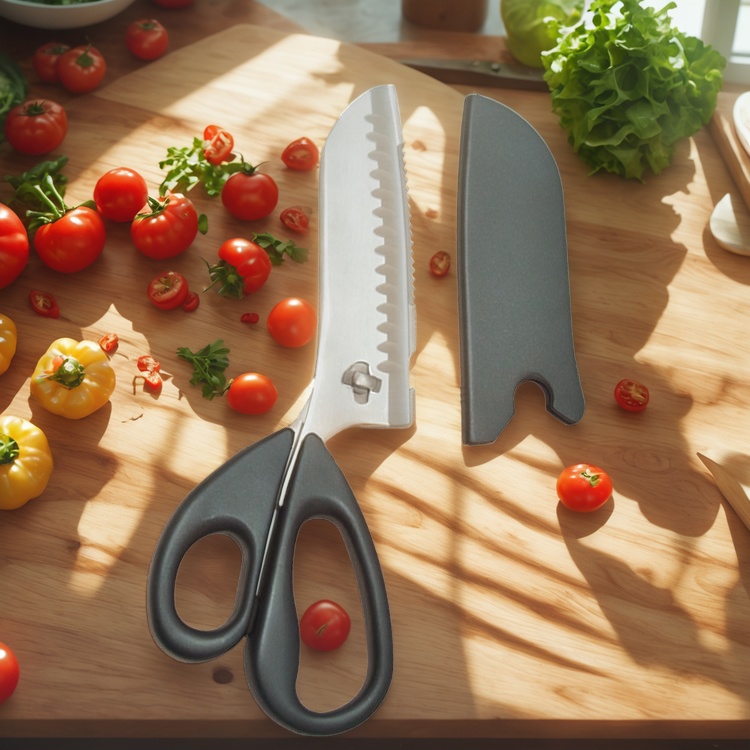
OEM Kitchen Scissors: Ultimate Multi-Functional Tool
Kitchen scissors are often treated as a simple accessory, but for retailers, importers, promotional buyers, and private label brands, they can be a practical product category with broad household appeal. A well-designed pair of OEM kitchen scissors can support everyday food preparation, packaging cuts, herb trimming, twine cutting, and other common kitchen tasks. For B2B buyers, the key is not only whether the scissors look appealing, but whether the design, materials, safety details, and supplier communication fit the target market.
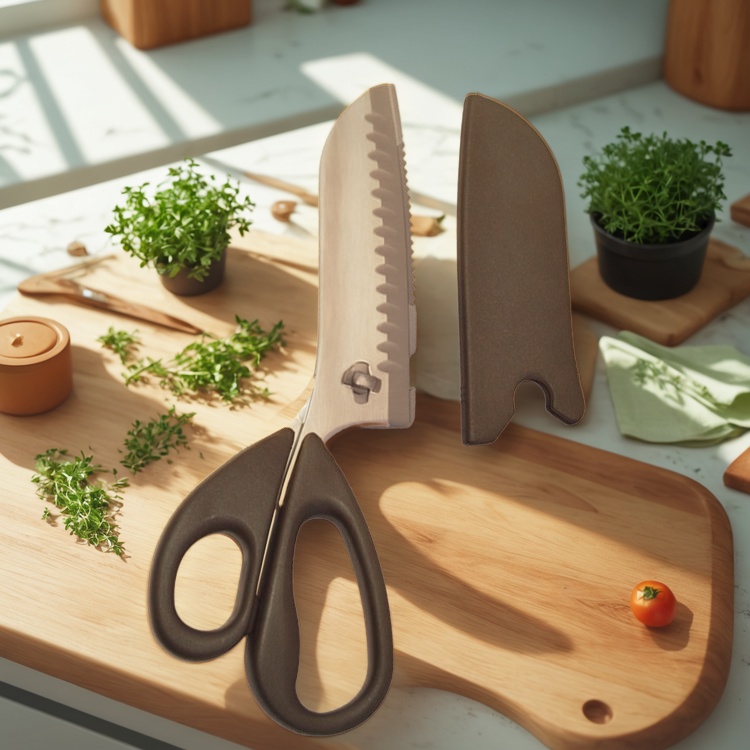
The original product description highlights several useful features: stainless steel blades with scalloped serrations, ergonomic non-slip handles, suitability for right- and left-handed users, and a protective sheath for storage. Those points make the product relevant to buyers looking for multi-functional kitchen scissors, but any OEM or wholesale decision should still be supported by clear product confirmation, samples, and quality expectations.
Key Takeaways
- OEM kitchen scissors should be evaluated by task performance, handle comfort, storage safety, and consistency across production.
- Scalloped serrations and stainless steel blades are useful features when confirmed by the supplier and sample testing.
- For private label or wholesale orders, ask about packaging options, logo methods, material details, sample lead time, and inspection standards.
- A protective sheath can improve storage safety and help preserve blade edges during handling and shipment.
What Makes Kitchen Scissors Multi-Functional?
Multi-functional kitchen scissors are designed to handle more than paper or light packaging. In a kitchen environment, users may cut herbs, trim meat, open bags, snip twine, portion cooked food, or work through poultry joints. The source article describes rugged stainless steel blades with sharp, scalloped serrations, which are intended to support controlled cutting on tougher or slippery materials.
For buyers, the important question is how that functionality matches the end user. A budget supermarket program may prioritize safe packaging, simple usage, and reliable cutting for everyday tasks. A specialty kitchenware line may require a more refined handle finish, stronger retail presentation, or additional product information. A promotional gift program may focus on perceived usefulness, compact packaging, and logo placement.
Blade Design and Cutting Performance
The blade is the core of any kitchen scissors product. The original article explicitly mentions stainless steel blades and scalloped serrations. Serrations can help grip certain foods and packaging, reducing slipping during cuts. However, buyers should avoid assuming a specific steel grade, hardness, coating, or corrosion resistance unless the supplier provides written details and supporting documentation.
When reviewing samples, test the scissors on realistic household materials. These may include herb stems, food packaging, parchment, kitchen twine, cooked meat, and raw poultry skin if that use is part of the product positioning. Check whether the blades close cleanly from base to tip, whether the pivot feels stable, and whether the scissors require excessive hand force. Also inspect the blade edge after repeated use to see whether performance remains consistent.
Handle Comfort, Grip, and User Safety
The source content notes ergonomic, non-slip handles and suitability for both right- and left-handed users. These are valuable selling points, especially for kitchen tools used during repetitive preparation. A comfortable handle can reduce strain and improve control, while a non-slip surface can support safer handling when hands are damp.
For OEM sourcing, request samples from different production batches if possible and check handle molding, finishing, balance, and grip feel. Look for rough edges, weak bonding, visible gaps, or inconsistent color. If the product is marketed to both right- and left-handed users, verify that the handle shape and blade visibility are practical in both hands rather than relying on a generic claim.
Protective Sheath and Storage Value
A protective sheath is a practical feature, not just a packaging accessory. The original article states that the shears come with a sleek, modern sheath for protective storage. In everyday use, a sheath can reduce accidental contact with the blade in drawers and may help protect the cutting edge from impact against other utensils.
For wholesale buyers, the sheath should be reviewed as part of the total product. Ask whether the sheath fits securely without being difficult to remove. Check whether it scratches easily, loosens during transit, or interferes with retail packaging. If the scissors are sold through online channels, the sheath can also support safer fulfillment and customer handling after delivery.
Comparison Checklist for B2B Buyers
| Evaluation Area | What to Check | Questions to Ask the Supplier |
|---|---|---|
| Blade | Cutting consistency, serration quality, pivot alignment | What stainless steel material is used, and can it be documented? |
| Handle | Grip comfort, non-slip feel, left/right hand usability | Can handle color, material, or finish be customized? |
| Safety | Sheath fit, blade exposure, retail handling | Is the sheath included as standard or optional? |
| Packaging | Retail display, shipping protection, barcode space | What packaging formats are available for OEM orders? |
| Branding | Logo position, print durability, private label layout | Which logo methods are possible and what artwork files are needed? |
| Quality Control | Sample consistency, defect criteria, inspection process | What inspection standard will apply before shipment? |
OEM and Wholesale Sourcing Guidance
Because this topic concerns OEM kitchen scissors, buyers should approach the product as a sourcing project rather than a single catalog selection. Start by defining the sales channel, target price range, packaging style, and key claims that can be supported. Do not rely on vague phrases such as premium, heavy duty, or professional unless the supplier can explain what those claims mean in measurable terms.
- Request a current product specification sheet with material, dimensions, weight, packaging, and included accessories.
- Order samples and test them against the intended usage scenarios.
- Confirm whether logo, color, handle finish, sheath design, or packaging can be customized.
- Ask about sample time, production lead time, minimum order expectations, and inspection options.
- Check import, labeling, and retail compliance requirements for the destination market with qualified advisors.
It is also wise to clarify responsibilities before placing an order. Who approves artwork? What happens if the color does not match the approved sample? How are defective units handled? Are replacement parts, extra sheaths, or updated packaging available? These questions help reduce misunderstandings and make the OEM process more predictable.
How to Position Kitchen Scissors for Different Markets
For consumer retail, the most useful positioning is practical and specific. Instead of broad lifestyle claims, describe real uses: cutting herbs, opening food packaging, trimming meat, or storing the tool safely with its sheath. For wholesale and distributor channels, emphasize product consistency, packaging flexibility, and clear specifications. For private label brands, focus on how the scissors fit an existing kitchenware range in color, packaging, and customer promise.
Avoid overstating the product. Kitchen scissors can reduce the need to switch between multiple tools for some tasks, but they do not replace every kitchen knife. Honest positioning builds trust and lowers the risk of customer disappointment.
Practical FAQ
Are these kitchen scissors suitable for both home and commercial kitchens?
They may be suitable for both, depending on the final specification and testing. Buyers should confirm blade material, durability expectations, cleaning guidance, and local requirements before positioning them for commercial use.
Can OEM kitchen scissors be customized with a private label?
Often, OEM projects allow some level of branding or packaging customization, but details vary by supplier. Ask about logo placement, artwork requirements, color options, packaging formats, and any order quantity conditions.
What should buyers test before placing a wholesale order?
Test cutting performance, handle comfort, sheath fit, blade alignment, packaging protection, and consistency across samples. Use materials that reflect the intended consumer use.
Is a protective sheath important?
Yes. A sheath can improve storage safety, protect the blade edge, and make the product easier to handle in retail or fulfillment environments.
What product claims should be avoided unless documented?
Avoid unsupported claims about steel grade, dishwasher safety, food-contact compliance, antibacterial properties, professional certification, or specific durability results unless the supplier provides reliable documentation.
Final Buying Advice
OEM kitchen scissors can be a useful, compact, and versatile addition to a kitchenware assortment when the product is selected carefully. The best sourcing decisions come from matching the scissors to a clear market need, confirming the stated features, and testing samples before scale production. Buyers should treat the stainless steel blade, scalloped serrations, ergonomic non-slip handles, right- and left-hand usability, and protective sheath as points to verify, not assumptions to repeat without evidence.
