




OEM Kitchen Scissors: Practical Sourcing Guide for Buyers
OEM kitchen scissors are small tools, but they can carry a lot of responsibility in a kitchenware range. A good pair may cut poultry, trim herbs, open packaging, handle seafood tasks and support quick preparation without switching tools. For retailers, distributors and private-label buyers, the challenge is not only finding scissors that look appealing. It is choosing a product that is consistent, safe to use, easy to clean and suitable for the expectations of your sales channel.
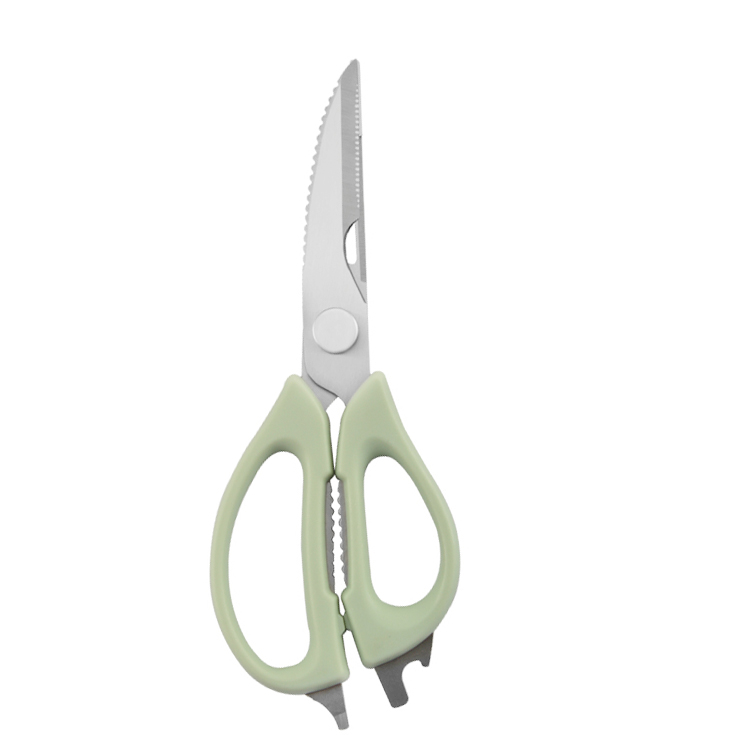
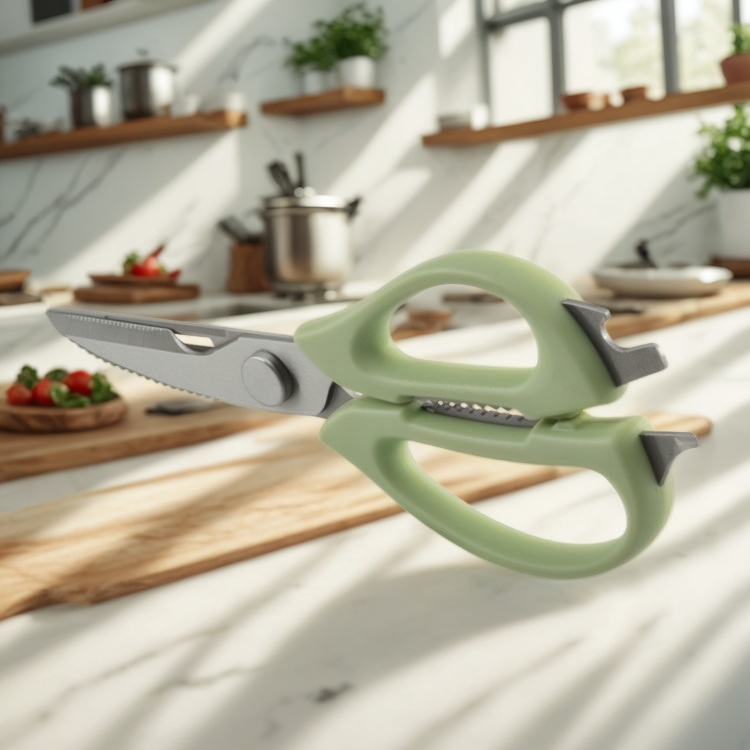
The original product description highlights several useful features: stainless steel blades, serrated cutting edges, soft sage-green ergonomic handles, a built-in bottle opener, a nutcracker in the handle and a detachable design for cleaning. Those details make the product a relevant candidate for OEM and wholesale programs, but buyers should still verify specifications, samples, packaging and compliance requirements before placing an order.
Key Takeaways
- OEM kitchen scissors should be assessed for cutting performance, cleaning convenience, grip comfort and repeatable quality.
- Explicit features in this product include stainless steel blades, serrated edges, detachable construction, sage-green ergonomic handles, a bottle opener and a nutcracker.
- Wholesale buyers should request samples and confirm blade material details, packaging options, branding methods, inspection standards and lead times directly with the supplier.
- Multi-function features are useful only when they do not weaken the main cutting function or make the product difficult to clean.
What Makes OEM Kitchen Scissors Different?
OEM kitchen scissors are designed for brands or buyers that want a product adapted to their market. The adaptation may involve handle color, packaging, logo placement, instruction sheets, bundle configuration or barcode labeling. In some cases, it may also include changes to accessory features, but any change should be reviewed carefully because scissors depend on balanced blade alignment and comfortable hand feel.
Compared with generic kitchen scissors, an OEM project needs a clearer specification sheet. Buyers should avoid vague requests such as “high quality kitchen scissors” and instead ask about blade material, blade thickness, surface finish, handle material, hinge structure, detachable mechanism, packaging dimensions and cleaning instructions. If details are not listed, treat them as questions for the supplier rather than assumptions.
Blade Design and Cutting Performance
The original article states that these kitchen scissors use stainless steel blades and serrated blades. Stainless steel is commonly chosen for kitchen tools because it can support everyday food preparation and cleaning routines, but the exact stainless steel grade is not provided in the source. Buyers should ask the supplier to confirm the grade, hardness target, corrosion-resistance expectations and whether any third-party test reports are available for the intended market.
Serrated edges can help grip slippery foods, which is useful for tasks such as trimming poultry skin or cutting seafood shells. However, serrations should still meet cleanly along the blade path. When reviewing samples, cut different materials such as herbs, thin plastic packaging, cooked meat, raw chicken skin and cardboard packaging. The goal is to test whether the scissors cut cleanly without twisting, crushing or forcing the user to squeeze too hard.
Handle Comfort and Everyday Usability
The product description mentions soft sage-green ergonomic handles. Handle design matters because kitchen scissors are often used with wet hands, oily ingredients or repeated cutting motions. A comfortable grip can reduce hand strain, but buyers should test more than appearance. The handle openings should suit the hand size of the target market, and the grip should not create sharp pressure points around the fingers.
Color can also support product positioning. Sage green gives a softer home-kitchen look than black or full-metal designs, which may work well for modern retail packaging or coordinated kitchenware collections. For OEM programs, ask whether handle colors can be customized, what color matching method is used and whether approval samples can be retained as production references.
Multi-Function Features: Useful or Overcomplicated?
These scissors include a built-in bottle opener and a nutcracker in the handle. Multi-function features can make a product more attractive in-store because customers quickly understand added utility. Still, buyers should check whether the additional functions are practical and durable. A bottle opener should not deform the handle area, and a nutcracker groove should not create uncomfortable grip pressure during normal cutting.
The best approach is to treat every extra function as a test item. Ask sample reviewers to open bottles, crack nuts of different sizes where appropriate and then use the scissors again for cutting. If the secondary function affects grip comfort or blade alignment, it may reduce repeat purchases even if the feature looks strong in product photos.
Cleaning, Hygiene and Detachable Construction
The original source says the scissors are easily detachable for hygiene and maintenance. This is a valuable feature because food residue can collect around the pivot of kitchen shears. A detachable structure allows users to separate the blades, rinse more thoroughly and dry each side before storage.
For sourcing, buyers should verify how the detachable mechanism works. It should be simple enough for consumers to use but secure enough that the blades do not separate unexpectedly during cutting. Request clear care instructions for packaging or inserts. If the product is described as dishwasher-safe, confirm that claim with the supplier and ask what testing supports it. If no claim is available, provide conservative cleaning guidance such as hand washing and drying after use.
Comparison Checklist for Wholesale Evaluation
| Evaluation Point | What to Check | Questions for Supplier |
|---|---|---|
| Blade material | Stainless steel is stated, but grade is not specified | What steel grade, hardness range and corrosion tests can be confirmed? |
| Cutting edge | Serrated blades should grip slippery foods cleanly | Can samples be tested on poultry, herbs, seafood and packaging? |
| Handle design | Soft sage-green ergonomic handles are described | Can color, texture or logo placement be customized for OEM orders? |
| Cleaning | Detachable design supports hygiene and maintenance | How does the locking or separation mechanism work, and what care instructions are recommended? |
| Extra functions | Bottle opener and nutcracker are included | Are these functions tested for repeated use, and do they affect grip comfort? |
| Retail readiness | Packaging and labeling are not specified | What packaging formats, barcode options and instruction inserts are available? |
OEM and Supplier Questions Before Ordering
Before moving from sample approval to bulk purchasing, create a written checklist. This reduces misunderstandings and helps compare one kitchen scissors supplier with another. At minimum, buyers should ask for:
- A full product specification sheet with materials, dimensions and net weight.
- Available OEM options for handle color, logo method, packaging and labeling.
- Sample lead time, production lead time and how pre-production samples are approved.
- Inspection criteria for blade sharpness, alignment, handle finish and detachable function.
- Any available compliance documents required for the destination market.
- Recommended carton packing, inner box details and shipping marks.
It is also wise to define acceptable quality limits before production. Kitchen scissors have moving parts, so small errors in the pivot, blade tension or handle molding can change the user experience. A clear inspection plan should include visual checks, function tests and packaging checks.
FAQ
Are OEM kitchen scissors suitable for professional and home kitchens?
They can be suitable for both, but the final use depends on confirmed specifications and testing. Professional users may need stronger durability expectations, while home users may prioritize comfort, safe cleaning and convenient storage.
What should buyers confirm about stainless steel blades?
Buyers should ask for the exact steel grade, hardness range, surface finish, corrosion-resistance expectations and any relevant test information. The original product description states stainless steel blades but does not provide a grade.
Why is a detachable design important?
A detachable design helps users clean around the pivot area where food residue can collect. Buyers should still verify that the mechanism is secure during cutting and easy for consumers to reassemble correctly.
Do bottle opener and nutcracker features add value?
They can add value when they work reliably and do not compromise grip comfort or blade performance. Buyers should test these features during sample evaluation rather than judging them only from product photos.
What packaging details matter for wholesale kitchen scissors?
Important packaging details include retail display format, instruction content, barcode placement, carton quantity, protection for blade tips and any market-specific labeling requirements. These details should be confirmed before production.
Final Buying Advice
OEM kitchen scissors are worth evaluating when they combine reliable cutting, comfortable handling and easy cleaning. The model described in the original article offers a practical feature mix: stainless steel serrated blades, ergonomic sage-green handles, detachable construction, a bottle opener and a nutcracker. For B2B buyers, the next step is careful verification. Request samples, test real kitchen tasks, document approved details and ask the supplier clear questions about customization, packaging and quality control. That process helps turn a versatile kitchen tool into a dependable wholesale product.
