




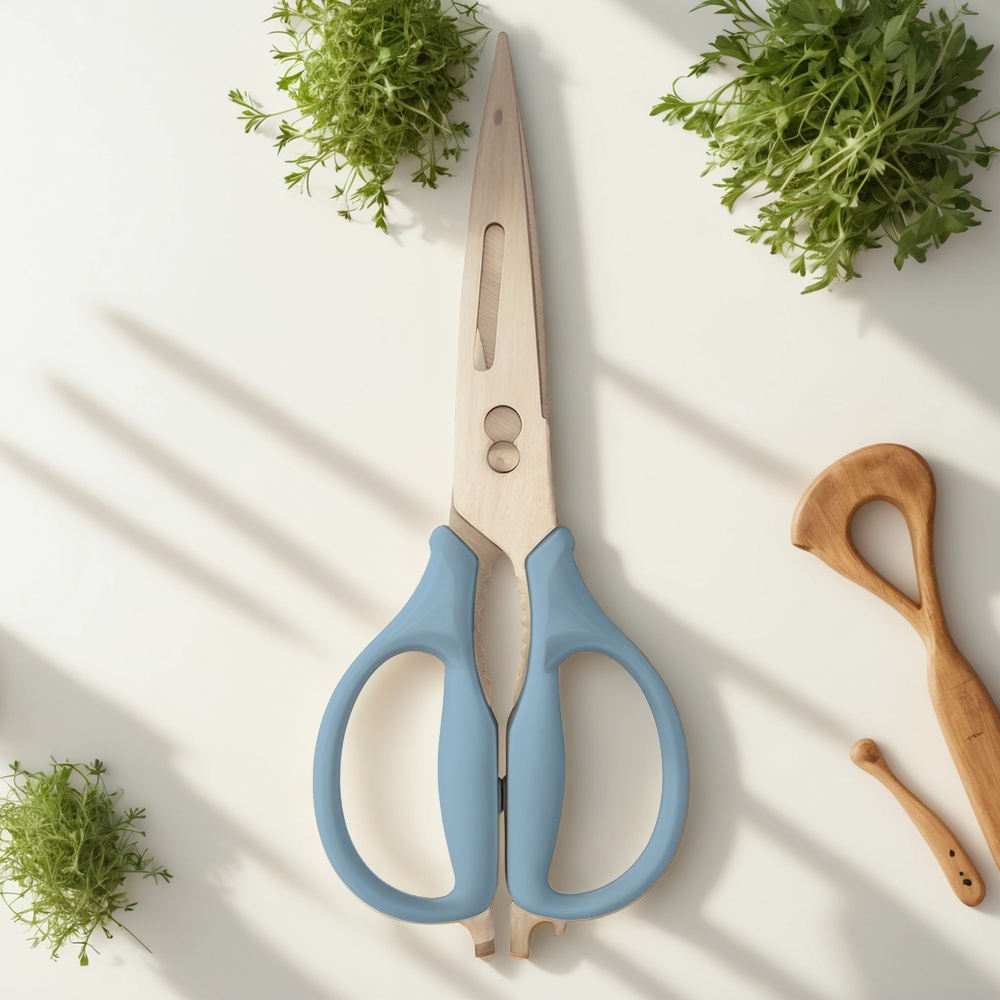
OEM Kitchen Scissors: Sourcing Guide for Buyers
OEM kitchen scissors are a practical category for cookware brands, kitchenware importers, promotional product buyers, and retailers that want a versatile cutting tool under their own label. Unlike a standard catalog purchase, OEM sourcing requires decisions about blade design, handle comfort, packaging, branding, and the quality checks that make the finished product suitable for repeat orders.
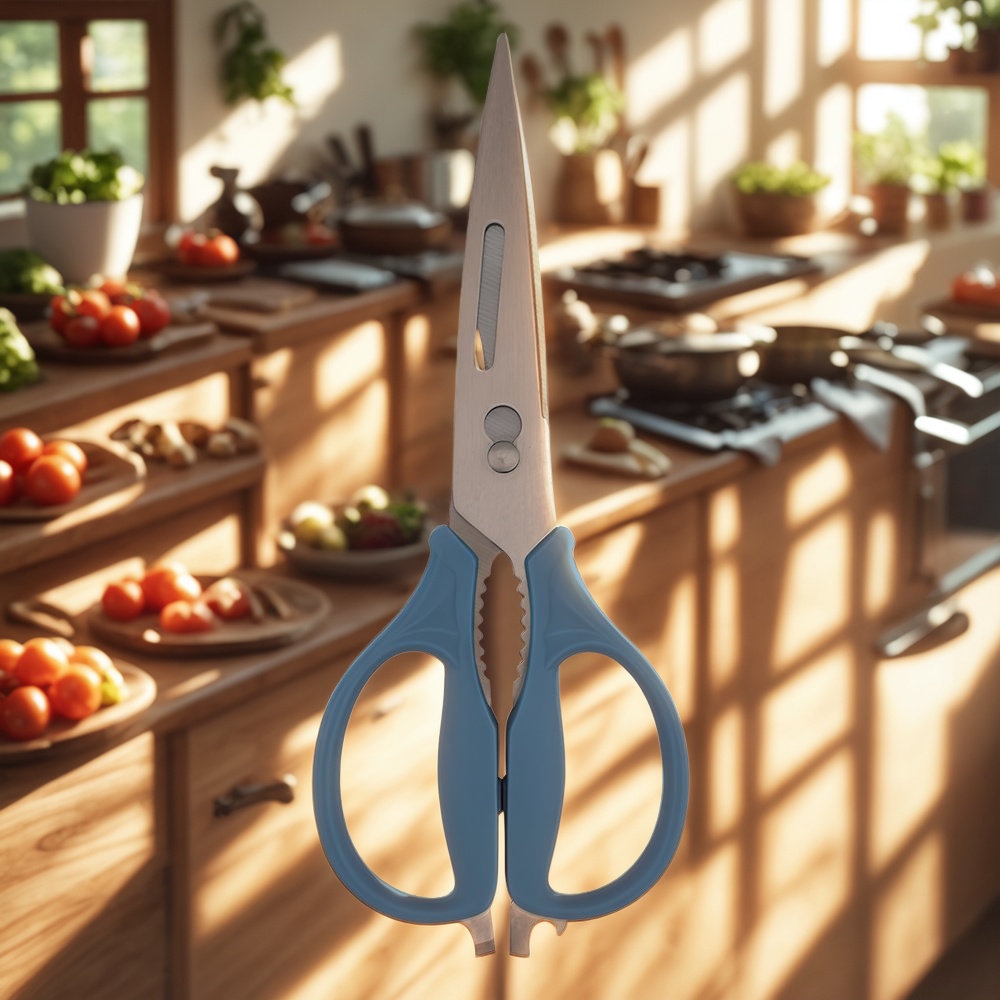
The original product concept highlights kitchen scissors with sturdy stainless steel blades, ergonomic handling, and possible multi-function features such as nutcrackers or bottle openers. For business buyers, the key is not simply choosing the most feature-rich model. The better approach is to match the scissors to your market position, expected use, packaging format, and after-sales risk.
Key Takeaways
- Define the target user first: home cooks, gift sets, professional kitchens, supermarket buyers, or private-label ranges.
- Ask suppliers to confirm blade material, hardness, finishing, handle material, and cleaning instructions instead of assuming specifications.
- OEM customization can cover logos, colors, packaging, accessory functions, and product instructions, but every change should be sampled and tested.
- Yangjiang is widely associated with kitchen tool production, but buyers should still evaluate each factory individually.
- Quality control should include cutting performance, hinge strength, handle comfort, packaging checks, and carton durability.
What Makes OEM Kitchen Scissors Different?
Kitchen scissors are often used for tasks that knives do not handle conveniently: cutting poultry portions, trimming herbs, opening food packaging, cutting noodles, or portioning flatbreads. OEM kitchen scissors add a sourcing layer to that function. The buyer chooses a design and works with a factory or supplier to adapt it for a brand, market, or channel.
In practice, OEM decisions may include whether the scissors are detachable for cleaning, whether the handle is symmetrical, whether the blade has serrations, whether the tool includes a bottle opener, and whether packaging is designed for e-commerce, retail hanging display, or a boxed kitchen set. These choices affect cost, user experience, inspection standards, and shipping protection.
Choosing the Right Design for Your Market
Before discussing artwork or pricing, clarify the sales channel. A supermarket line may need clear blister packaging and a simple feature message. An online brand may need stronger carton protection and detailed instructions to reduce returns. A hospitality or food-service buyer may care more about grip comfort and cleaning convenience than decorative packaging.
Common product-selection questions include:
- Will customers mainly cut meat, herbs, packaging, seafood, or general kitchen items?
- Do you need a detachable structure for easier cleaning, or is a fixed hinge acceptable?
- Should the scissors include extra functions such as a nutcracker or bottle opener?
- What handle size and grip shape fit your main customer group?
- Will the item be sold alone, bundled in a kitchen tool set, or used as a promotional gift?
Comparison Checklist for OEM Buyers
| Decision Area | What to Compare | Questions to Ask the Supplier |
|---|---|---|
| Blade | Material, thickness, edge type, finishing | What stainless steel is used, and can it be confirmed in writing? |
| Handle | Shape, grip comfort, color, surface texture | Can you provide samples for hand-feel and long-use comfort review? |
| Functions | Basic cutting, nutcracker, bottle opener, detachable design | Which features are standard, and which require new tooling or changes? |
| Branding | Logo position, printing method, packaging artwork | What logo methods are available, and what artwork format is required? |
| Quality Control | Sharpness, hinge fit, handle bonding, appearance | What inspection steps are used before shipment? |
| Packaging | Retail card, box, insert, master carton | Can packaging pass the shipping conditions of your sales channel? |
Supplier Evaluation in Yangjiang and Beyond
Yangjiang is known worldwide as a production base for knives, scissors, and kitchen tools. That reputation can be useful when searching for a kitchen scissors factory, but it should not replace due diligence. Factory capability varies, and a buyer should evaluate whether the supplier understands OEM communication, sampling discipline, packaging control, and export documentation needs.
When contacting a custom kitchen scissors manufacturer, ask for clear answers rather than broad claims. Useful questions include: What similar scissors have you produced? Which parts can be customized without new tooling? How do you handle pre-production samples? What inspection reports can be provided for an order? What are the packaging options? Are there any market-specific requirements the buyer must confirm independently?
Customization Options That Matter
Customization should improve market fit, not add complexity for its own sake. A logo on the blade or handle may be enough for a private-label range. For a retail launch, buyers may also need color-matched handles, instruction cards, barcodes, warning labels, or multilingual packaging. If the scissors are part of a set, confirm the dimensions so they fit the tray, box, or display plan.
Feature customization also needs careful review. Integrated nutcrackers or bottle openers can be useful, but they may change the handle shape and user comfort. Detachable blades can make cleaning easier, but the locking structure must feel secure. Serrated sections can improve grip on certain foods, but the edge design should be consistent across production. Each added function should be tested with realistic kitchen tasks.
Quality Checks Before Mass Production
A good sourcing process includes more than approving a photo. Buyers should request physical samples and evaluate cutting performance, balance, hinge movement, edge alignment, handle comfort, and visible finishing. If the scissors have printed or engraved branding, check placement, contrast, and durability expectations before confirming artwork.
For production orders, agree on inspection criteria in advance. Typical checks may include appearance, opening and closing smoothness, blade gap, cutting test, handle fit, packaging accuracy, barcode readability, and carton labeling. If your market has specific regulatory or retailer requirements, ask the supplier what documents they can provide and confirm any compliance needs with qualified professionals rather than relying on assumptions.
Packaging and Use Instructions
Kitchen scissors are handled directly by consumers, so instructions should be practical and clear. If the product has stainless steel blades, users still need guidance on washing, drying, and safe storage. If the model is detachable, explain how to separate and reassemble the blades safely. If it includes a bottle opener or nutcracker, show where those functions are located.
Packaging should protect the edge and hinge during transit. For e-commerce, consider drop resistance and inner protection. For retail, make sure the consumer can understand the main function quickly without exaggerated claims. For wholesale distribution, carton markings and consistent packing quantities help receiving teams and reduce warehouse errors.
Practical FAQ
What should I confirm before ordering OEM kitchen scissors?
Confirm blade material, handle material, dimensions, functions, logo method, packaging, sample approval process, inspection criteria, lead time, and commercial terms. Do not rely only on product photos.
Can kitchen scissors be customized with extra functions?
Many designs can include functions such as a nutcracker or bottle opener, but availability depends on the supplier's existing molds and tooling options. Ask whether the function is standard or requires development.
Are Yangjiang kitchen scissors automatically higher quality?
Yangjiang has a strong reputation for kitchen tool manufacturing, but quality depends on the specific factory, materials, process control, and inspection standards. Evaluate suppliers case by case.
What samples should a buyer request?
Request a reference sample first, then a branded or pre-production sample if customization is required. Test cutting performance, grip comfort, cleaning convenience, packaging fit, and branding accuracy.
How can buyers reduce sourcing risk?
Use written specifications, approve samples before production, define inspection standards, confirm packaging requirements, and keep records of all changes. Clear communication is often the best risk-control tool in OEM sourcing.
