




OEM Kitchen Scissors: Versatile Tools for Every Kitchen
OEM kitchen scissors are small tools, but they can influence how end users prepare food, open packaging, trim herbs, cut poultry, or handle fish. For importers, wholesalers, private-label brands, and kitchenware retailers, the buying decision is not only about sharp blades. It is about choosing a design that matches the target market, confirming reliable workmanship, and asking the supplier the right questions before production.
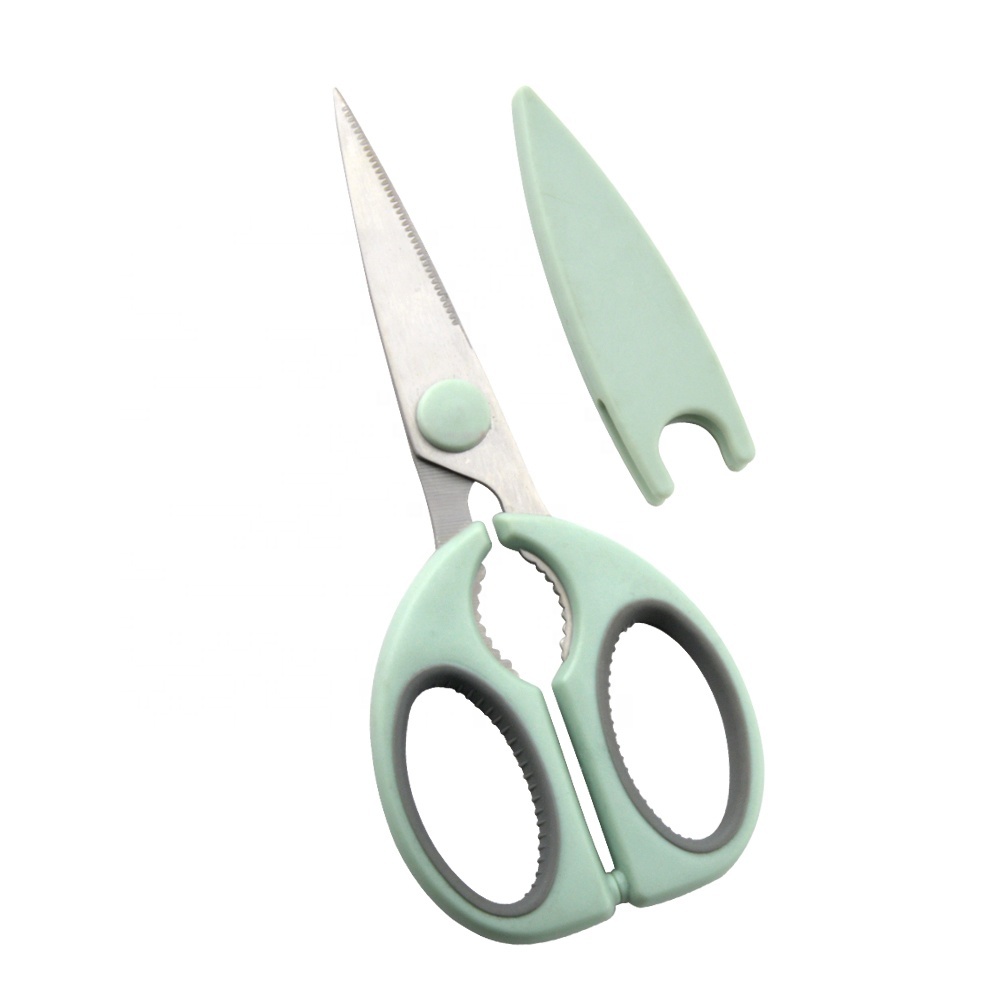
The original Bonet Houseware article introduced OEM kitchen scissors with a protective cover, serrated edge, non-slip grips, an integrated bottle opener, and a mint green finish. This updated guide keeps those useful product points while focusing on what B2B buyers should check when sourcing from a kitchen scissors manufacturer or a Yangjiang kitchen scissors factory.
Key Takeaways
- OEM kitchen scissors should be evaluated by function, comfort, safety, packaging, and consistency, not appearance alone.
- A protective cover helps reduce blade exposure during storage, shipping, and retail display.
- Ask suppliers to confirm material details, handle construction, packaging options, testing methods, lead time, MOQ, and customization scope.
- For wholesale programs, request pre-production samples and clear inspection criteria before placing a larger order.
Why OEM Kitchen Scissors Matter in a Product Line
Kitchen scissors are used frequently because they solve many everyday preparation tasks faster than a knife and cutting board. A well-chosen OEM design can fit several channels: supermarket kitchenware aisles, online household stores, promotional gift sets, restaurant supply catalogs, and private-label cookware collections.
For B2B buyers, the opportunity is flexibility. OEM kitchen scissors can often be adapted in color, packaging, branding, and accessory choices, depending on the supplier's actual capabilities. However, customization should be approached carefully. A new color or retail card may be simple, while changes to blade shape, handle mold, or added functions may require more discussion, tooling questions, sampling time, and cost confirmation.
Core Features to Review Before Ordering
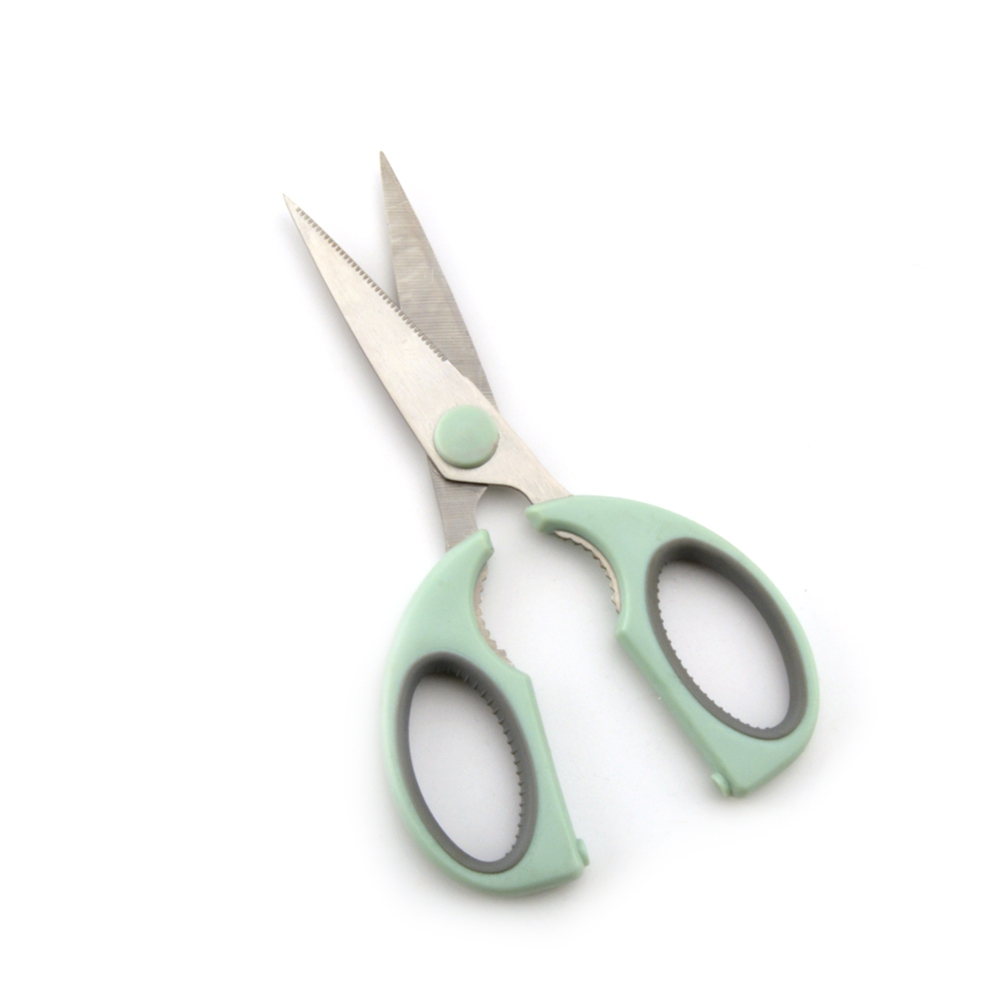
The source article describes a multi-functional kitchen scissors design with stainless steel blades, a serrated edge, ergonomic non-slip handles, a bottle opener, and a protective cover. These are useful features, but buyers should verify each detail with the supplier rather than assuming all models share the same specification.
When comparing samples, pay attention to:
- Blade alignment: The two blades should meet cleanly from pivot to tip without excessive looseness.
- Cutting performance: Test common use cases such as herbs, food packaging, thin meat, and poultry skin.
- Serrated edge function: A serrated area can help grip slippery or tougher materials, but it should not make general cutting feel rough.
- Handle comfort: Check whether the handle fits different hand sizes and whether pressure points appear during repeated use.
- Protective cover fit: The cover should attach securely enough for storage and shipping, while still being easy for consumers to remove.
- Extra functions: If a bottle opener is included, ask how it is formed, where it is positioned, and whether it affects comfort or cleaning.
Protective Cover: Small Accessory, Big Sourcing Detail
A kitchen scissors with cover can be easier to present in retail and safer to store in a drawer. For importers and brand owners, the cover is also a practical packaging and logistics detail. It helps protect the blade edge from accidental contact during handling and may reduce scratches to surrounding items inside a carton.
During sampling, check the cover as carefully as the scissors. Does it stay in place after repeated removal? Does the plastic feel too brittle or too flexible? Does it cover the sharp parts fully? Is there enough space for a hang hole or retail display format if your channel requires it? These questions are simple, but they prevent mismatches between product design and sales channel needs.
Comparison Checklist for B2B Buyers
| Area to Check | What to Look For | Questions to Ask the Supplier |
|---|---|---|
| Blade material | Supplier-stated metal type and surface finish | What exact material is used, and can it be confirmed in the quotation or specification sheet? |
| Cutting performance | Smooth cutting on target kitchen tasks | What in-house checks are performed before shipment? |
| Handle design | Comfort, grip, and fit for intended users | Can the handle color, logo, or packaging be customized? |
| Protective cover | Secure fit and sufficient blade coverage | Is the cover included as standard, and can its color or branding be changed? |
| Packaging | Retail-ready or bulk format based on channel | What packaging options are available for wholesale, e-commerce, or supermarket display? |
| Order terms | MOQ, lead time, sample policy, payment terms | What are the current MOQ, sampling time, production time, and carton details? |
How to Evaluate a Kitchen Scissors Manufacturer
Yangjiang is widely associated with knife and kitchen tool manufacturing, so many buyers search for a Yangjiang kitchen scissors factory when planning OEM sourcing. Location can be a useful starting point, but it should not be the only selection standard. A supplier should be evaluated by communication quality, sample consistency, production control, packaging support, and willingness to document agreed specifications.
Before confirming an OEM order, request a written specification sheet. It should include product dimensions if available, material descriptions, color references, packaging method, logo position, accessory list, carton packing information, and inspection points. If any information is missing, treat it as a question to clarify, not as a detail to assume.
It is also wise to compare at least two samples: one standard sample and one customized sample if branding or color changes are required. The customized sample helps confirm whether the final product will match your intended retail presentation.
OEM Customization Options to Discuss
Customization can support brand differentiation, but every change should be linked to the buying audience. A discount retailer may prioritize cost control and simple packaging. A gift set supplier may need a more refined color match and presentation box. A food-service distributor may care more about durability, easy cleaning, and repeat ordering consistency.
Discuss these options with the supplier:
- Handle color, including whether the mint green finish shown in the product image is standard or optional.
- Logo method and placement on handle, cover, blade, or packaging.
- Retail packaging, such as blister card, paper card, box, or bulk pack.
- Protective cover color and fit.
- Carton packing and labeling requirements for your warehouse or marketplace.
- Any market-specific documents, test reports, or compliance requirements your importer must review.
Do not rely on verbal promises for OEM details. Confirm them in writing before deposit, and keep approved samples for comparison during inspection.
Practical Quality Checks Before Shipment
Kitchen scissors are simple to inspect when the checklist is clear. Buyers or third-party inspectors can check appearance, cutting function, pivot tightness, cover fit, handle defects, logo position, packaging accuracy, and carton labeling. If the product includes a bottle opener, include it in the function check as well.
For wholesale orders, define acceptable tolerances before production. For example, specify how many pieces should be checked from each carton or batch, what counts as a major defect, and how packaging damage will be handled. These details help both buyer and supplier avoid disputes.
FAQ: OEM Kitchen Scissors Sourcing
What makes OEM kitchen scissors different from standard retail scissors?
OEM kitchen scissors are supplied for a buyer's brand, packaging, or product program. They may use an existing factory model with customized color, logo, or packaging, or they may require deeper design changes depending on the supplier's capability.
Is a protective cover necessary?
It is not always required, but it is useful for storage, retail presentation, and reducing exposed blade contact during handling. Buyers should test whether the cover fits securely and covers the blade area properly.
What should I ask a kitchen scissors manufacturer first?
Ask about available models, material details, customization scope, sample time, MOQ, lead time, packaging choices, inspection process, and what information can be included in a formal specification sheet.
Can I claim the scissors are rust-resistant or food-safe?
Only make claims that are supported by supplier documentation, applicable test reports, or your own compliance review for the target market. If a claim matters to your sales channel, request proof before ordering.
How many samples should a buyer review?
Review at least one standard sample before quoting a large program. If you need OEM branding, review a confirmed pre-production sample with the correct color, logo, cover, and packaging before mass production.
OEM kitchen scissors can be a practical addition to a kitchenware line when sourced with clear requirements. Focus on verified features, sample testing, protective cover fit, and written specifications. That approach helps buyers choose a product that is useful for end users and manageable for wholesale supply.
