




OEM Kitchen Scissors: Versatility and Style Redefined
Kitchen scissors are a small item, but for retailers, distributors and private-label kitchenware brands, they can carry a lot of sourcing risk. A pair that feels sharp in a sample room may not perform consistently across production. A handle that looks attractive online may feel uncomfortable after repeated use. A detachable design may be useful for cleaning, but only if the connection is stable and easy for the user to reassemble.
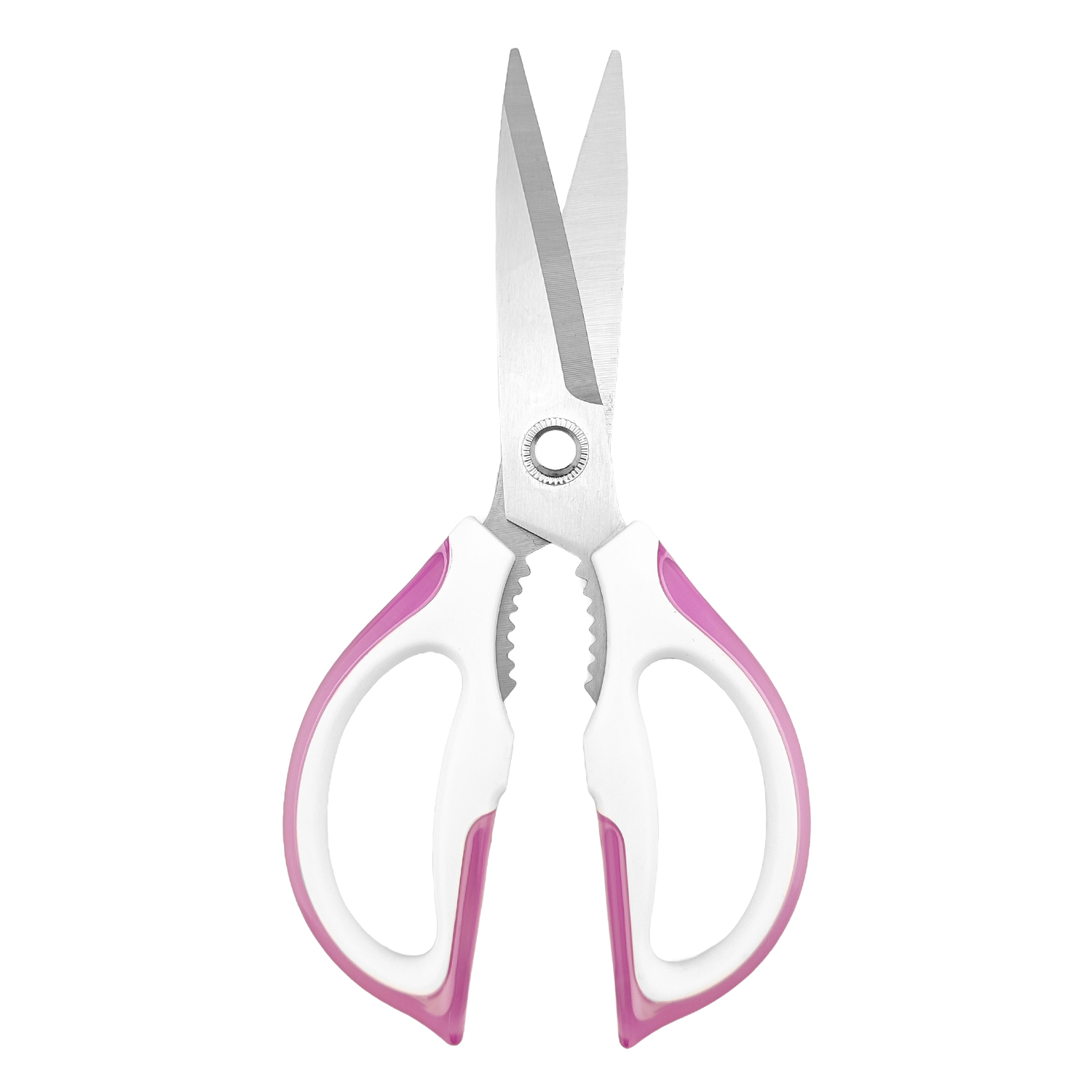
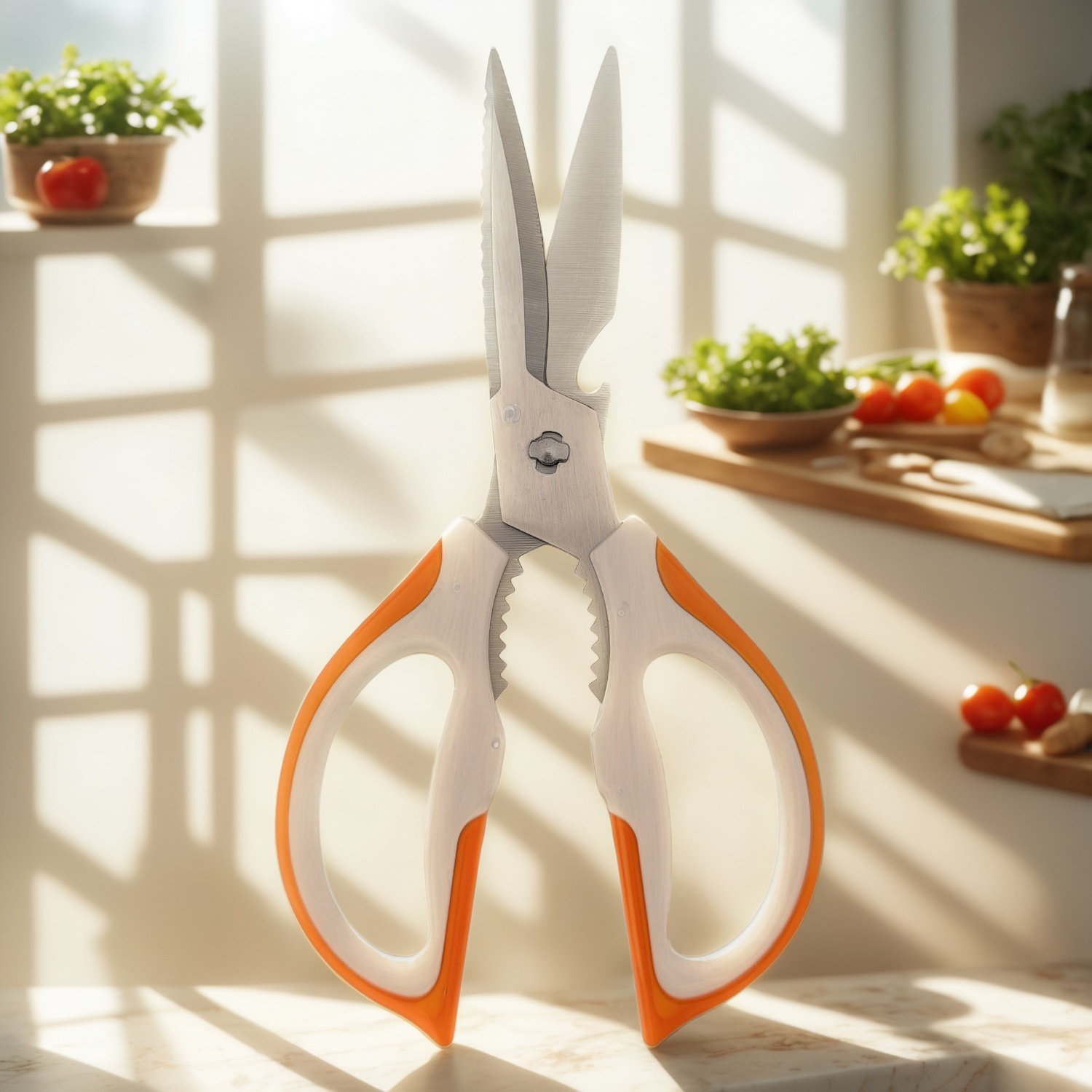
This guide rewrites the sourcing conversation around OEM kitchen scissors in practical terms. It focuses on what B2B buyers should check before placing a wholesale or private-label order, using the explicit product features shown in the original article: stainless steel blades, micro-serrations, ergonomic orange and white soft slip-resistant handles, integrated bottle opener and nutcracker functions, and a detachable design for easier cleaning.
Key Takeaways
- OEM kitchen scissors should be evaluated as food-preparation tools, not only as promotional or low-cost accessories.
- Important checks include blade sharpness, micro-serration consistency, handle comfort, detachable cleaning and integrated tool usability.
- B2B buyers should ask suppliers for material details, packaging options, production tolerances, inspection methods and compliance documents instead of assuming them.
- Samples should be tested with realistic foods such as herbs, poultry skin, packaging, stems and other common kitchen tasks.
- For wholesale programs, consistent quality across batches matters more than an impressive single sample.
Why OEM Kitchen Scissors Need Careful Sourcing
Many consumers use kitchen scissors for quick, repetitive tasks: trimming herbs, cutting cooked meat, portioning poultry, opening food packaging or preparing ingredients directly over a pan or bowl. Because the tool is handled frequently, small design choices become noticeable. If the blades separate poorly, the handles pinch, or food residue stays trapped near the pivot, buyers will notice quickly.
For OEM and wholesale buyers, the goal is not simply to find a kitchen shears supplier with a catalog image. The goal is to confirm whether the product can support your market positioning, packaging promise and after-sales expectations. If your brand sells practical household tools, the scissors must feel reliable. If you target gift sets, the appearance and packaging presentation matter. If you sell to professional or semi-professional users, repeated-use comfort and cleaning access become more important.
Blade Design: What to Confirm Before Ordering
The original product description states that the shears use stainless steel blades and micro-serrations. These are useful details, but they should become the starting point for supplier questions rather than the end of the evaluation. Ask the supplier what stainless steel type is used, how blade hardness is controlled, and whether edge sharpness is inspected during production. If the supplier cannot provide the grade or testing method, record that as a commercial risk to clarify before confirming an OEM order.
Micro-serrations can help grip slippery food surfaces and reduce sliding during cuts. However, their value depends on consistency. When reviewing samples, compare several pairs, not just one. Check whether the serrations are even, whether the tips align, and whether the blades close smoothly from heel to tip. A practical test set can include soft herbs, plastic food packaging, thin cardboard, poultry skin and cooked meat. The point is not to create a laboratory result; it is to learn whether the scissors perform well in realistic kitchen use.
Handle Comfort and Visual Design
The article describes ergonomic handles in an orange and white design with soft, slip-resistant grips. For a consumer-facing product, handle feel is often the difference between a repeat purchase and a complaint. For B2B sourcing, you should check both comfort and consistency.
Ask for samples from actual production tooling when possible. Test them with different hand sizes and cutting motions. Look for pressure points around the thumb opening, finger opening and inner handle curve. Soft grip areas should be secure and evenly finished. If you plan to sell the scissors under a private label, confirm whether handle colors can be matched to your brand requirements and whether color differences are controlled between production batches.
Integrated Functions: Useful, but Only if They Work Well
The original article notes that the scissors integrate a bottle opener and a nutcracker into the handle design. Multi-function tools can be attractive in retail because they offer more perceived value without increasing drawer space. Still, each added function should be tested separately.
For the bottle opener, check whether the leverage feels stable and whether the opener edge is positioned safely away from normal grip areas. For the nutcracker, test common nut sizes and review whether the handle remains comfortable under pressure. Also consider whether these features match your target market. A minimalist kitchenware line may prefer a simpler design, while a value-focused household line may benefit from the combined functions.
Comparison Checklist for Buyer Evaluation
| Feature to Review | Why It Matters | Questions to Ask the Supplier |
|---|---|---|
| Stainless steel blades | Blade material affects corrosion resistance, edge life and user confidence. | What stainless steel grade is used, and how is it verified? |
| Micro-serrated edge | Serrations can improve grip on slippery food surfaces. | How is serration consistency checked across production? |
| Ergonomic soft grip | Comfort affects repeat use and customer satisfaction. | Can handle color, grip texture or packaging be customized? |
| Detachable design | Separation can make cleaning easier and reduce trapped residue. | How many open-close cycles has the connection been evaluated for? |
| Bottle opener and nutcracker | Integrated functions can add retail value. | Are these functions tested during inspection, or only visually checked? |
| Packaging and labeling | Retail presentation and instructions reduce confusion. | What OEM packaging files, barcode placement and warning text options are available? |
Hygiene and Detachable Cleaning
A detachable pair of kitchen scissors can be easier to clean than a fixed-pivot design because the blades can separate. This is especially helpful after cutting poultry, herbs or sticky packaging. However, a detachable structure must balance hygiene with stability. If the joint feels loose, users may worry about safety. If it is too stiff, they may not separate the blades for cleaning at all.
When reviewing samples, separate and reassemble the scissors several times. Check whether the instructions are clear enough for a first-time user. If you are developing OEM packaging, consider adding a simple cleaning diagram or care note. Avoid making dishwasher-safe, antimicrobial or food-compliance claims unless the supplier provides documents that support those statements for the exact product and market.
Supplier Questions for OEM and Wholesale Buyers
- What blade material is used, and can it be documented for the ordered version?
- Which parts of the scissors can be customized: handle color, logo, packaging, insert card or outer carton?
- What inspection steps are used for blade alignment, sharpness, pivot fit and detachable assembly?
- Can the supplier provide pre-production samples before mass production?
- How are color differences, surface scratches and handle defects classified during quality control?
- What compliance documents are available for the target sales market?
- What are the current MOQ, lead time, packing method and after-sales process?
These questions do not assume any specific capacity, certification or price. They help you collect the information needed to compare suppliers on a fair basis.
Practical FAQ
Are OEM kitchen scissors suitable for private-label kitchenware lines?
Yes, they can be suitable if the supplier supports the customization you need and the product passes your sample checks. Confirm logo, packaging and color options before planning a launch.
Do micro-serrated blades need special care?
They should be cleaned after food contact and dried before storage. Buyers should ask the supplier for recommended care instructions for the exact blade design.
Is a detachable design better than a fixed design?
It depends on the market. Detachable scissors can be easier to clean, while some buyers may prefer the simplicity of a fixed pivot. Test both if your category allows it.
What should I test first when samples arrive?
Start with blade alignment, cutting performance, handle comfort, detachable assembly and the bottle opener or nutcracker functions. Test several samples, not only one pair.
Can I claim specific certifications on retail packaging?
Only if the supplier provides valid documentation for the exact product, material, production version and destination market. Do not rely on general catalog claims.
Final Sourcing Advice
OEM kitchen scissors are easy to underestimate because they look simple. In practice, they combine blade engineering, handle ergonomics, cleaning design, packaging communication and supplier quality control. A strong sourcing process should turn each feature into a testable question. If the stainless steel blades cut cleanly, the micro-serrations grip well, the soft handles feel comfortable, the detachable design cleans easily and the integrated opener and nutcracker function properly, the product has a stronger chance of meeting user expectations. For B2B buyers, that practical confirmation is more valuable than broad promises.
