




OEM Kitchen Scissors: Yangjiang's Quality Craftsmanship
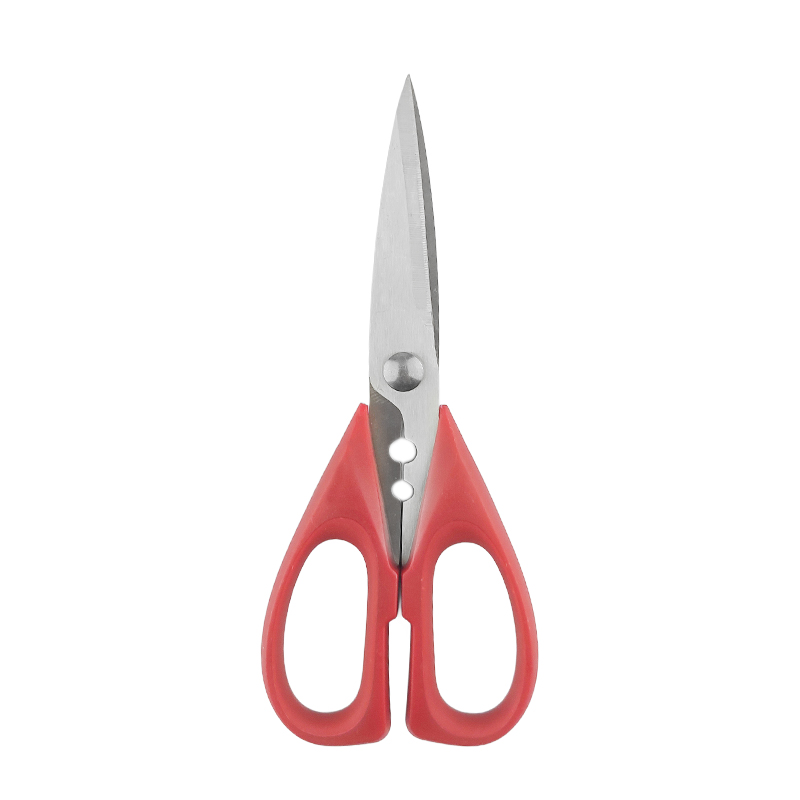
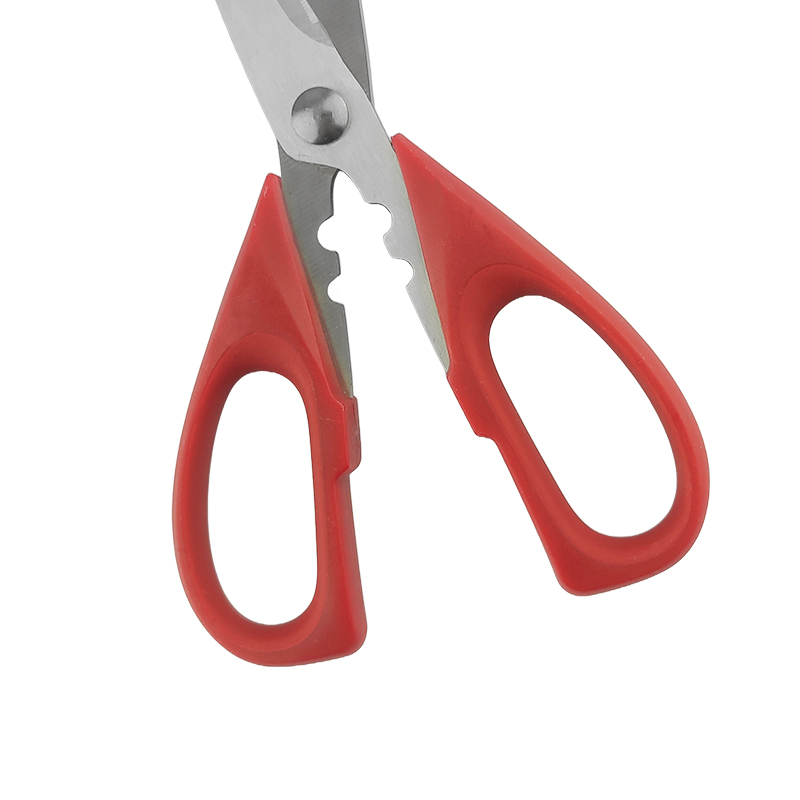
OEM kitchen scissors are a common but important product category for cookware brands, supermarket programs, promotional buyers, and kitchenware distributors. The original product concept is straightforward: stainless steel blades, ergonomic red handles, a multi-purpose cutting design, and circular holes below the blades that can work as a nutcracker while also reducing weight for easier control. For B2B buyers, however, the real sourcing work begins after the product looks suitable. You need to confirm materials, workmanship, packaging, order terms, and quality-control expectations before placing an OEM or wholesale order.
Why Kitchen Scissors Matter in a Product Line
Kitchen scissors are used for daily cutting tasks such as trimming herbs, opening food packaging, cutting twine, and preparing poultry or other ingredients. Because they are frequently handled, buyers should evaluate them differently from decorative kitchen items. A good pair must feel balanced, open and close smoothly, and cut consistently without excessive hand pressure.
For retailers and importers, kitchen scissors can also fill several commercial roles. They can be sold as a single utility item, added to a kitchen tool set, used in seasonal promotions, or customized for private-label programs. The key is to avoid treating all scissors as identical. Small differences in blade finish, handle comfort, packaging, and quality consistency can affect returns and customer satisfaction.
Yangjiang as a Kitchen Scissors Sourcing Base
Yangjiang is widely associated with knives, scissors, and household cutting tools. Buyers often look to Yangjiang suppliers when sourcing OEM kitchen scissors because the local supply chain can include metalworking, polishing, handle assembly, and packaging support. That said, buyers should not assume every supplier offers the same capability or quality level.
When discussing an OEM project, ask whether the supplier is a factory, trading company, or a combined operation. Also confirm which production steps are handled in-house and which are outsourced. This matters for communication, sample adjustment, lead-time control, and problem-solving if defects appear during inspection.
Core Features to Evaluate Before Ordering
The source article notes stainless steel blades, ergonomic red handles, and a multi-purpose design. Those are useful starting points, but B2B buyers should verify details through samples and written specifications. Do not rely only on product photos.
- Blade performance: Check sharpness, edge alignment, tip finishing, and whether the blades cut thin and thicker materials cleanly.
- Handle comfort: Test grip size, surface feel, and whether the handle is comfortable for both right- and left-handed users as described.
- Opening and closing action: The pivot should feel stable, not loose or overly tight.
- Multi-purpose function: If the circular holes are intended to function as a nutcracker, test them with realistic use cases.
- Weight and balance: Reduced weight can help control, but scissors should still feel sturdy.
- Finish quality: Look for burrs, sharp handle edges, uneven polishing, or staining after cleaning.
Comparison Checklist for OEM Buyers
Use the following checklist when comparing samples from different Yangjiang kitchen scissors suppliers. It helps separate attractive samples from products that are suitable for repeat wholesale orders.
| Evaluation Point | What to Check | Questions to Ask the Supplier |
|---|---|---|
| Blade material | Stainless steel is stated, but grade and treatment should be confirmed. | What stainless steel grade is used, and can it be specified in the quotation? |
| Cutting consistency | Test herbs, packaging, and poultry preparation tasks. | How is blade sharpness checked before shipment? |
| Handle design | Red ergonomic handles should be comfortable and secure. | Can handle color, logo, or material be customized? |
| Nutcracker holes | Confirm practical use and durability around the circular holes. | Is this function included in the standard sample and final production? |
| Packaging | Assess retail card, blister, box, or bulk packing options. | What packaging artwork files and approval steps are required? |
| Inspection plan | Define acceptable defects before production. | What quality checks are performed, and can third-party inspection be arranged? |
OEM Customization: What to Confirm Early
OEM kitchen scissors projects often involve branding and packaging rather than a completely new tool design. Even so, buyers should confirm what customization is realistic before quoting a program to their own customers. Common discussion points include handle color, printed or engraved logo placement, packaging style, barcode placement, instruction language, and carton markings.
If you need a new handle mold, special blade profile, or unique retail pack, ask about tooling cost, sample time, revision process, and ownership of design files or molds. Also ask whether the supplier can provide pre-production samples for written approval before mass production begins. This protects both sides from misunderstandings about color, logo size, and product finish.
Quality Control for Wholesale Orders
Quality control should be planned before the purchase order is confirmed. Kitchen scissors are handled directly by end users, so defects such as loose pivots, rough edges, poor cutting performance, or cracked handles can quickly create complaints. Buyers should request clear standards for appearance, function, packaging, and carton condition.
A practical inspection plan may include checking sample size, blade alignment, opening and closing smoothness, cutting tests, handle surface, logo accuracy, packaging assembly, and carton labels. For international orders, buyers should also ask what documentation the supplier can provide and whether the product needs to meet any requirements in the destination market. Do not assume compliance claims unless they are supported by current documents relevant to your order.
Commercial Questions to Ask a Supplier
Before committing to an OEM kitchen scissors order, prepare a concise supplier questionnaire. This keeps the sourcing process professional and reduces later disputes.
- What is included in the quoted price: product only, retail packaging, inner cartons, or export cartons?
- What is the minimum order quantity for standard red handles and for custom colors?
- How long do samples and mass production usually take for this item?
- Can the supplier match an approved sample for all bulk production?
- What payment terms, delivery terms, and inspection timing are available?
- How are defects handled if they are found before shipment?
- Can packaging be adjusted for retail, e-commerce, or promotional distribution?
Key Takeaways
OEM kitchen scissors are simple in appearance but require careful sourcing. Focus on blade performance, handle comfort, pivot stability, packaging accuracy, and repeatable quality. Yangjiang suppliers can be a strong option for kitchen cutting tools, but buyers should verify the supplier type, customization limits, inspection process, and commercial terms. Use samples and written specifications as the basis for every order, not photos alone.
FAQ
What should I check first when sourcing OEM kitchen scissors?
Start with cutting performance and safety of finish. The scissors should cut cleanly, open and close smoothly, and have no burrs or sharp unwanted edges on the handle or blade area.
Can kitchen scissors be customized for private label programs?
Often yes, but the available options depend on the supplier. Ask about logo methods, handle color choices, packaging formats, sample approval, and any tooling requirements.
Are the circular holes below the blades useful?
In the source product, the circular holes are described as functioning as a nutcracker and reducing weight for better control. Buyers should test this function with real samples before ordering.
How can I reduce risk on a wholesale order?
Approve a physical sample, write clear specifications, confirm packaging artwork, define inspection standards, and arrange inspection before shipment when order value or market risk justifies it.
What should I avoid when comparing suppliers?
Avoid choosing only by the lowest price. Compare material details, workmanship, consistency, communication, packaging support, and how the supplier handles sample revisions and quality issues.
