




Kitchen Scissors Factory: How Buyers Can Choose the Right Manufacturer
Choosing a kitchen scissors factory is not only about finding a supplier that can make a sharp cutting tool. For importers, private-label brands, wholesalers, and kitchenware distributors, the real goal is to identify a manufacturing partner that can support consistent product quality, clear communication, suitable packaging, and repeatable production. The original article highlights several useful points: OEM kitchen scissors, ODM services, Yangjiang as a known cutlery production base, and the importance of stainless steel blades and ergonomic handles. This rewritten guide expands those ideas into a practical sourcing checklist for business buyers.
What Buyers Should Clarify Before Contacting a Factory
Before requesting a quotation, prepare a clear buying brief. A factory can respond more accurately when it understands the intended market, target retail channel, and product positioning. Kitchen scissors sold through supermarket programs may require different packaging and cost targets from products intended for professional kitchenware stores or online private-label brands.
- Target user: home cook, foodservice buyer, gift set customer, or general retailer.
- Primary tasks: cutting herbs, trimming meat, opening packaging, or light poultry preparation.
- Preferred handle design: symmetrical, soft-grip, large-loop, or compact.
- Branding needs: logo placement, color direction, packaging format, and instruction language.
- Commercial questions: sample process, lead time, MOQ, payment terms, inspection method, and reorder support.
Do not assume that every supplier offers the same options. Ask the factory to confirm what can be customized, what is already available, and what requires tooling or development work.
OEM vs ODM Kitchen Scissors: Which Model Fits Your Project?
OEM and ODM are both common in kitchenware sourcing, but they serve different buyer needs. OEM usually means the buyer provides the product design, drawings, specifications, or reference sample, and the factory produces according to those requirements. ODM means the factory offers an existing or factory-developed design that the buyer may adapt with branding, packaging, or limited adjustments.
For a brand with a clearly defined product concept, OEM can offer more control over appearance, function, and positioning. For a distributor that wants to launch quickly, ODM may reduce development time because the factory already has a product structure or sample available. In both cases, buyers should request physical samples before committing to bulk production.
| Sourcing Option | Best For | Buyer Should Confirm |
|---|---|---|
| OEM kitchen scissors | Brands with their own design or reference sample | Drawings, materials, handle design, logo method, tooling needs, and tolerances |
| ODM kitchen scissors | Buyers needing a faster launch based on existing factory designs | Available models, customization limits, packaging choices, and exclusivity questions |
| Standard wholesale model | Importers or retailers testing a category | Stock design availability, color options, carton details, and labeling requirements |
Why Many Buyers Look at Yangjiang Scissor Factories
Yangjiang is widely associated with cutlery, scissors, knives, and related kitchen tools. A Yangjiang scissor factory may benefit from a local supply chain that understands blade products, handle production, polishing, assembly, and packaging. This does not mean every supplier is automatically suitable. It does mean buyers can often find factories with relevant category experience in the region.
When evaluating a Yangjiang supplier, ask for evidence that matches your project rather than relying on location alone. Useful questions include: What similar kitchen scissors have you produced? Can you provide samples of available models? Which parts are made in-house and which are outsourced? How do you control blade sharpness, handle fit, and final appearance? What inspection steps are used before shipment?
Product Features to Review in Kitchen Scissors Samples
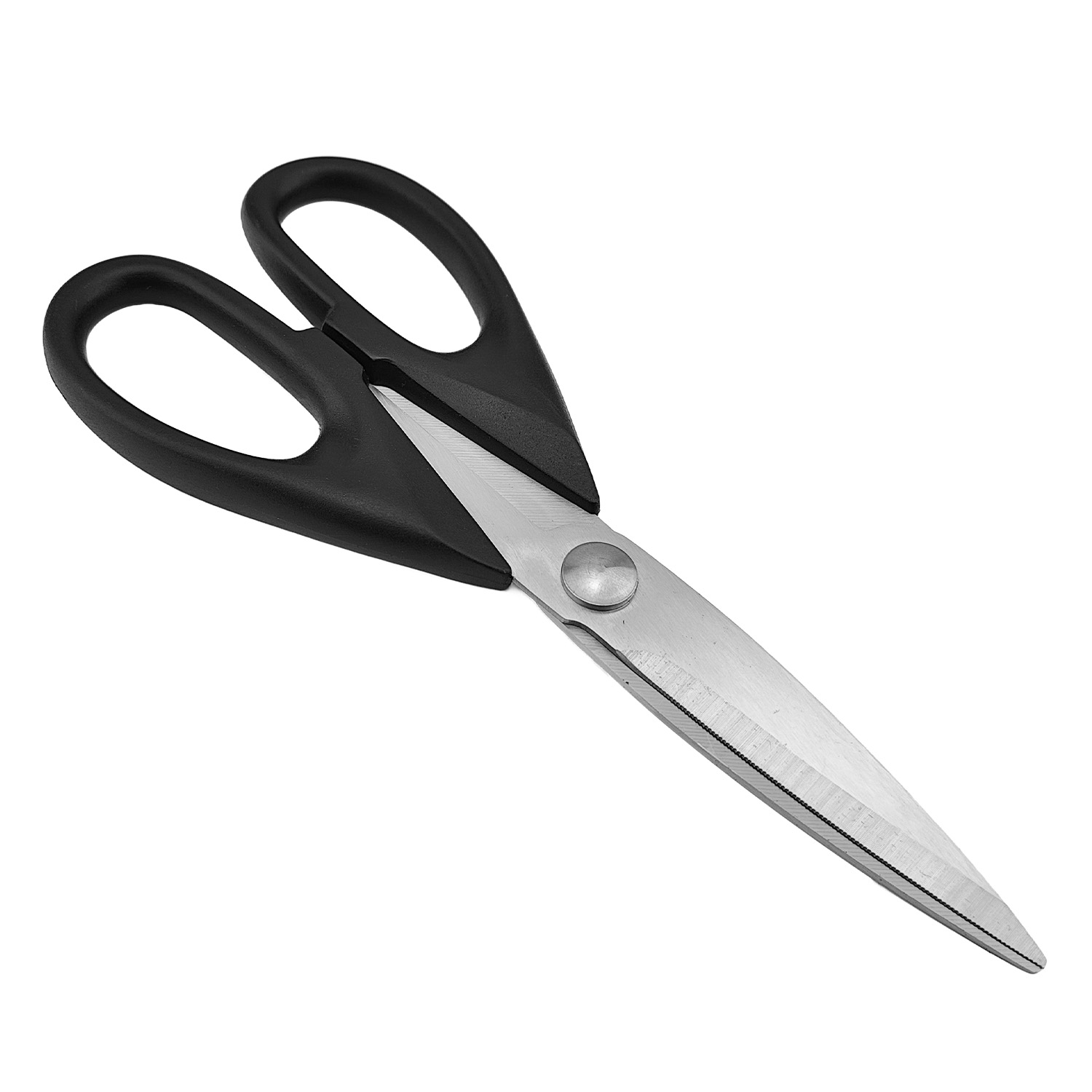
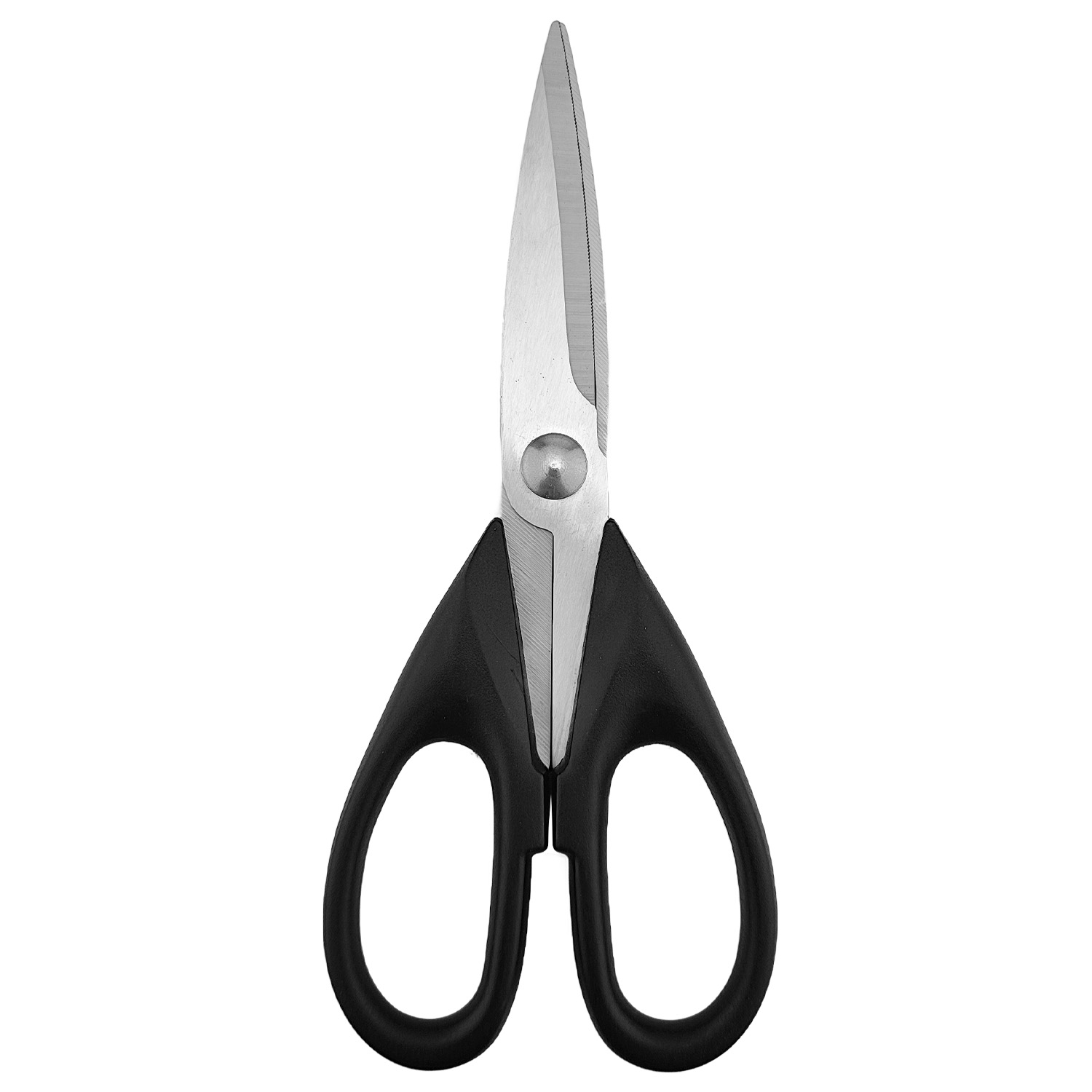
The original article mentions stainless steel blades and ergonomic handles. These are important starting points, but buyers should review them carefully in the sample stage. Do not rely only on product photos. Kitchen scissors must feel stable in the hand, open and close smoothly, and cut common kitchen materials without excessive force.
Inspect the blade alignment, tip finish, pivot tightness, handle edges, and overall balance. If the scissors have a serrated edge, check whether it grips material cleanly without tearing more than expected. If the product is intended for food preparation, ask the supplier what materials are used and request relevant documentation instead of assuming a grade or compliance status.
Quality Control Questions for a Kitchen Scissors Factory
A serious sourcing process should include quality questions before price negotiation is finalized. Buyers should ask how incoming materials are checked, how semi-finished parts are inspected, and how finished scissors are tested before packing. The right questions help prevent misunderstandings and reduce the risk of inconsistent shipments.
- Can the factory provide a pre-production sample for approval?
- How are blade sharpness, cutting performance, and pivot movement checked?
- What visual defects are accepted or rejected during final inspection?
- How is logo printing, laser marking, or packaging color controlled?
- Can third-party inspection be arranged before shipment?
- What information appears on the master carton and inner packaging?
If the supplier gives vague answers, ask for photos, videos, inspection forms, or a sample report format. Clear documentation is especially important for repeat orders.
Packaging, Branding, and Market Fit
Kitchen scissors are often purchased as practical household tools, but packaging still matters. Retail buyers may require hang cards, blister packaging, paper boxes, or barcode labels. E-commerce sellers may prioritize compact packaging and protection during shipping. Wholesale buyers may need multilingual instructions or a neutral design that can fit several markets.
When discussing branding, confirm where the logo can be placed and which method is suitable for the material. Ask whether packaging artwork should be supplied in a specific file format and whether the supplier can provide dielines. Also confirm whether any claims on packaging, such as dishwasher suitability or material statements, are supported by the supplier's documentation. Avoid adding claims that have not been verified.
Key Takeaways
- Choose a kitchen scissors factory based on samples, communication, process control, and category experience, not price alone.
- Use OEM when you have a defined design; consider ODM when you need an existing model with faster development.
- Yangjiang is known for blade and cutlery production, but each supplier still needs individual evaluation.
- Check blade alignment, handle comfort, pivot movement, packaging, and inspection procedures before ordering.
- Ask suppliers to confirm commercial details such as MOQ, lead time, customization limits, and documentation.
Practical FAQ for Kitchen Scissors Sourcing
What should I send to a kitchen scissors factory for an accurate quote?
Send product photos or drawings, target quantity, preferred packaging, logo requirements, destination market, and any performance expectations. If you have a reference sample, tell the supplier which details must match and which can be adjusted.
Is OEM or ODM better for a new kitchenware brand?
ODM may be more practical for a first launch because it can use an existing factory design. OEM is better when your brand needs a unique structure, special handle design, or defined product specification.
How can I judge sample quality?
Test the scissors on realistic kitchen tasks, check whether the blades meet evenly, open and close them repeatedly, examine the handle edges, and compare several samples for consistency. Record any issue with photos before requesting revisions.
What supplier claims should buyers verify?
Verify material statements, compliance claims, packaging claims, and performance claims. Ask for documents or test reports where relevant, and confirm whether they apply to the exact model being quoted.
Should I order only by the lowest price?
No. A very low price may involve trade-offs in materials, finishing, packaging, or inspection. Compare the full offer, including sample quality, communication, customization ability, lead time, and after-sales handling.
A good kitchen scissors factory should help buyers move from concept to repeatable product with fewer surprises. By preparing a clear brief, comparing OEM and ODM options, asking practical quality questions, and testing samples carefully, buyers can make sourcing decisions based on evidence rather than assumptions.
