




OEM Kitchen Scissors: Practical Sourcing Guide for Buyers
OEM kitchen scissors are a common sourcing category for houseware brands, importers, supermarkets, promotional product companies, and online retailers. The product looks simple, but small differences in blade geometry, handle comfort, pivot strength, packaging, and quality inspection can affect customer satisfaction and repeat orders. For buyers comparing multifunctional kitchen scissors from a Yangjiang scissors factory or other kitchenware supplier, the goal is not only to find an attractive item, but to confirm whether it fits the target market, retail price point, and intended use.
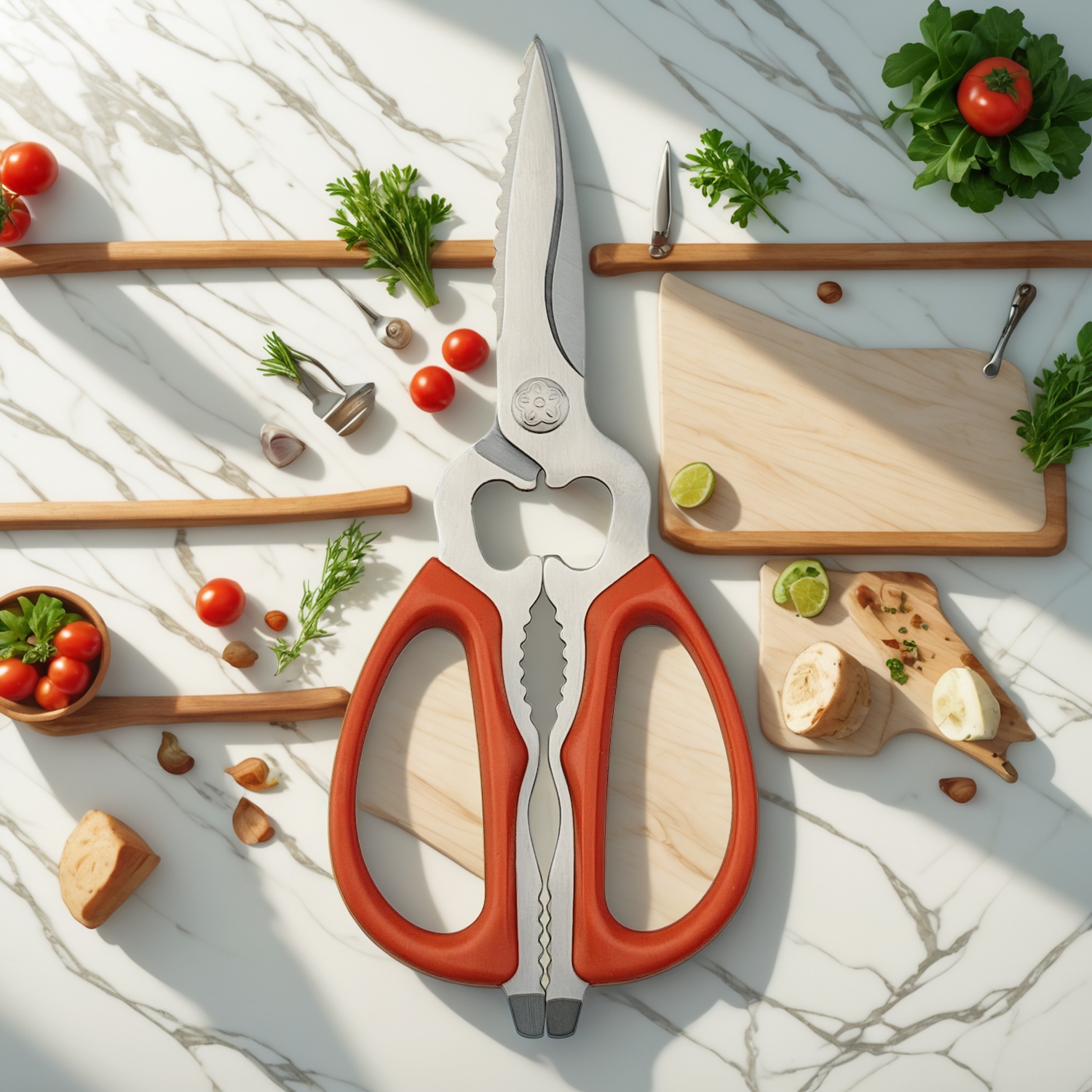
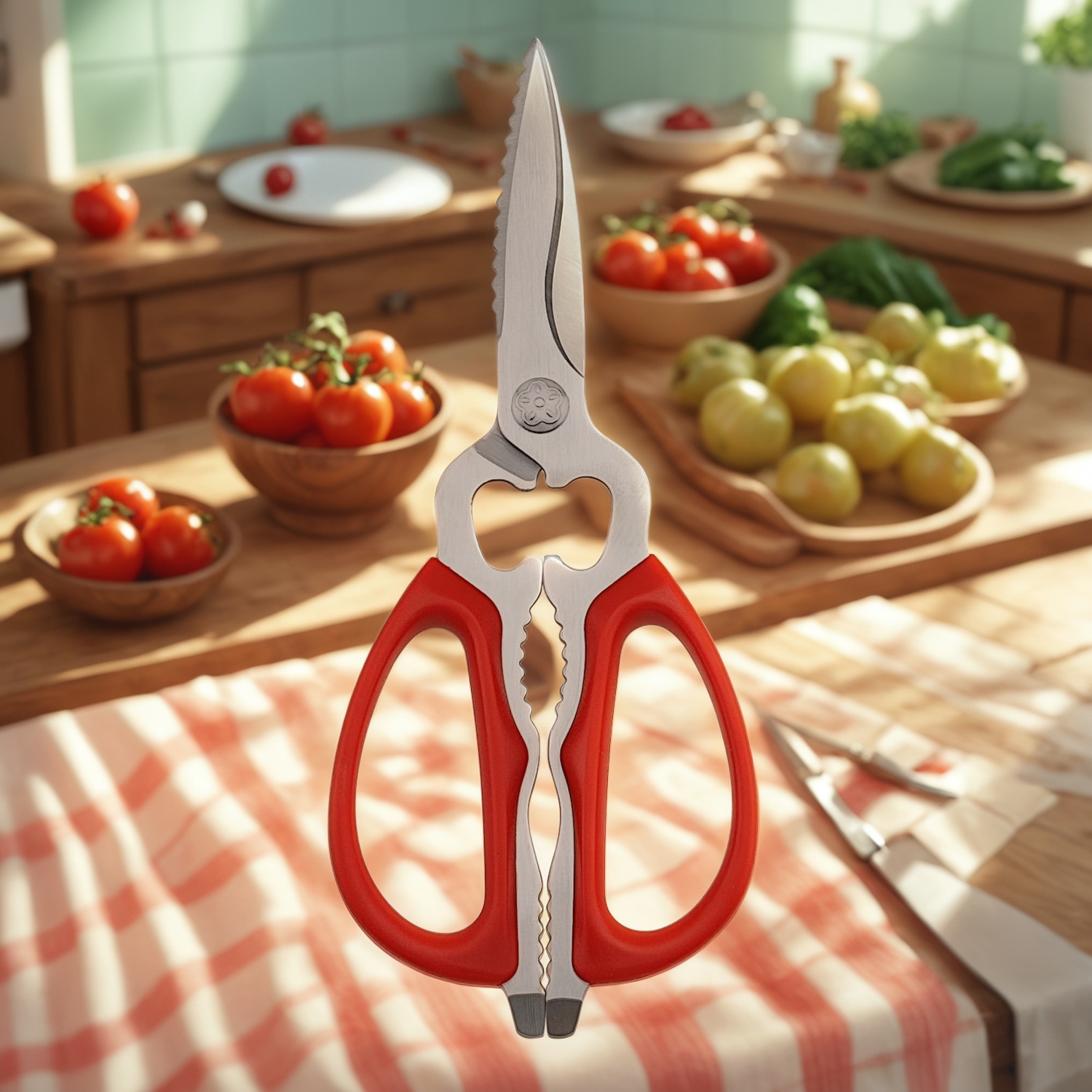
The product shown in the original article is described as a pair of stainless steel kitchen scissors with serrated cutting edges, red ergonomic handles, and added functions such as a nutcracker, bottle opener, and shell cracker around the pivot area. Those features can make the scissors useful for common food preparation tasks, but B2B buyers should still verify specifications, samples, and commercial terms directly with the supplier before placing a bulk or OEM order.
Key Takeaways
- OEM kitchen scissors should be evaluated as both a cutting tool and a branded consumer product.
- Important checks include blade sharpness, pivot stability, handle comfort, cleaning method, packaging, and consistency across samples.
- Multifunctional features can add value, but only if they are comfortable, durable, and easy for users to understand.
- Buyers should ask suppliers for confirmed material details, customization options, packaging choices, inspection standards, lead time, and order requirements.
What Makes Kitchen Scissors Suitable for OEM Projects?
For OEM and private label sourcing, kitchen scissors need to meet more than a basic cutting requirement. They must also support brand positioning. A budget retail program may prioritize simple packaging and dependable daily use, while a gift set or premium kitchenware line may require a stronger visual design, better presentation, and stricter surface finishing requirements.
OEM buyers should define the intended sales channel before comparing quotes. A product for supermarket shelves may need clear blister or card packaging with visible functions. An e-commerce product may need stronger individual packaging to reduce shipping damage, plus photography-ready appearance. A foodservice or professional kitchen buyer may care more about grip, cleaning, and durability than decorative design.
Design and Build Features to Review
The original article highlights stainless steel blades, serrated edges, a red handle, and multifunction details. These are useful starting points for evaluation. Serrated sections can help grip slippery materials, while a comfortable handle can reduce fatigue during repeated prep work. However, buyers should avoid relying only on appearance. A good sample review should include opening and closing smoothness, blade alignment, handle molding quality, edge consistency, and whether the pivot feels firm after repeated use.
If the scissors include a nutcracker, bottle opener, or shell cracker, test each function separately. A multifunctional design can be appealing on a product page, but the added functions should not interfere with the main cutting action. Check whether the handle shape is suitable for different hand sizes, especially if the target market includes a wide consumer base.
Comparison Checklist for Supplier Evaluation
| Evaluation Area | What to Check | Questions to Ask the Supplier |
|---|---|---|
| Blade material | Stated stainless steel type, finish, edge condition, serration quality | What material is used, and can it be confirmed on the quotation or specification sheet? |
| Cutting performance | Herbs, packaging, poultry skin, meat, and general kitchen tasks | Can pre-production samples be tested before bulk production? |
| Handle design | Grip comfort, size, surface texture, color consistency | Are handle colors customizable, and are color tolerances defined? |
| Multifunction parts | Nutcracker, bottle opener, shell cracker, or other integrated uses | Which functions are included in the confirmed model? |
| Packaging | Retail card, blister, box, barcode, instruction insert | Can the supplier support private label packaging artwork and packing requirements? |
| Quality control | Blade alignment, opening smoothness, surface defects, quantity checks | What inspection process is used before shipment? |
Performance Testing Before Bulk Orders
Before confirming an OEM kitchen scissors order, buyers should create a simple internal testing plan. It does not need to be complicated, but it should be consistent. Test several samples, not just one. Cut the same materials with each sample and compare the results. Open and close the scissors repeatedly to check for stiffness, looseness, or uneven movement. Wash and dry the scissors according to the supplier’s care guidance, then inspect the surface and pivot area.
For consumer-facing retail products, consider how the average home cook will use the scissors. Common tasks may include cutting herbs, trimming meat, opening food packaging, cutting parchment, or cracking small shells. If the scissors are marketed as multifunctional kitchen scissors, the extra tools should be explained clearly on the packaging or product listing so users know how to use them safely.
OEM Customization Points to Confirm
OEM sourcing often involves changes to branding, packaging, color, and sometimes structure. Buyers should confirm which customization options are actually available for the selected model. Do not assume that every part can be changed without tooling costs or schedule impact. For example, changing a handle color may be simpler than changing handle shape, blade thickness, or pivot construction.
- Logo placement: Ask whether branding can be applied on the blade, handle, packaging, or insert.
- Handle color: Confirm available colors, minimum requirements, and sample approval process.
- Packaging format: Compare hanging card, blister pack, color box, or bulk pack depending on the sales channel.
- Instructions: Consider whether care instructions or safety reminders should be included.
- Carton packing: Confirm inner pack, master carton quantity, carton dimensions, and labeling needs.
Sourcing from a Yangjiang Scissors Factory
Yangjiang is widely associated with knife and scissor production, so many buyers search for a Yangjiang scissors factory when sourcing kitchen cutting tools. Even so, buyers should evaluate each supplier individually. A factory or trading partner should be able to provide clear product information, consistent communication, sample support, and transparent answers about production and inspection.
When speaking with a supplier, ask practical questions rather than relying only on catalog descriptions. What material is used for the blade and handle? Which parts are customizable? What is the usual sample process? What packaging files are needed? What quality checks are performed before shipment? Are spare samples from mass production available for buyer review? If compliance documentation or market-specific testing is required for your destination, ask what documents can be provided and what must be arranged by the buyer.
Common Mistakes to Avoid
One common mistake is choosing only by the lowest unit price. Kitchen scissors are handled directly by consumers and used near food, so poor finishing, uncomfortable handles, or inconsistent cutting can quickly lead to complaints. Another mistake is approving a sample without checking packaging, carton strength, barcode placement, and labeling details. For retail and e-commerce, packaging is part of the product experience.
Buyers should also be cautious with broad claims. If a listing says the scissors are rust resistant, dishwasher safe, professional grade, or made from a specific steel grade, ask for confirmation and define the claim in writing. If those details are not confirmed, use more general product descriptions and focus on verified features.
FAQ
What are OEM kitchen scissors?
OEM kitchen scissors are scissors produced for a buyer’s brand, packaging, or product line. The supplier may provide an existing model with customized branding, or a more customized version depending on tooling, order volume, and production capability.
Are multifunctional kitchen scissors better than standard scissors?
They can be more useful if the extra functions are practical and do not reduce cutting comfort. Buyers should test the nutcracker, bottle opener, shell cracker, or other features before adding them to product claims.
What should I ask a kitchen scissors supplier before ordering?
Ask about confirmed materials, sample availability, customization options, packaging choices, inspection methods, lead time, order requirements, and export documentation. If your market requires specific compliance testing, discuss it early.
How can buyers check quality before shipment?
Use approved samples as the reference, define visual and functional inspection points, and check blade alignment, cutting performance, handle finish, packaging, and carton labeling. For larger orders, consider a pre-shipment inspection.
Can kitchen scissors be private labeled?
Many OEM programs allow private label packaging or logo application, but the available methods depend on the product model and supplier capability. Confirm artwork requirements, placement, cost, and sample approval before production.
