




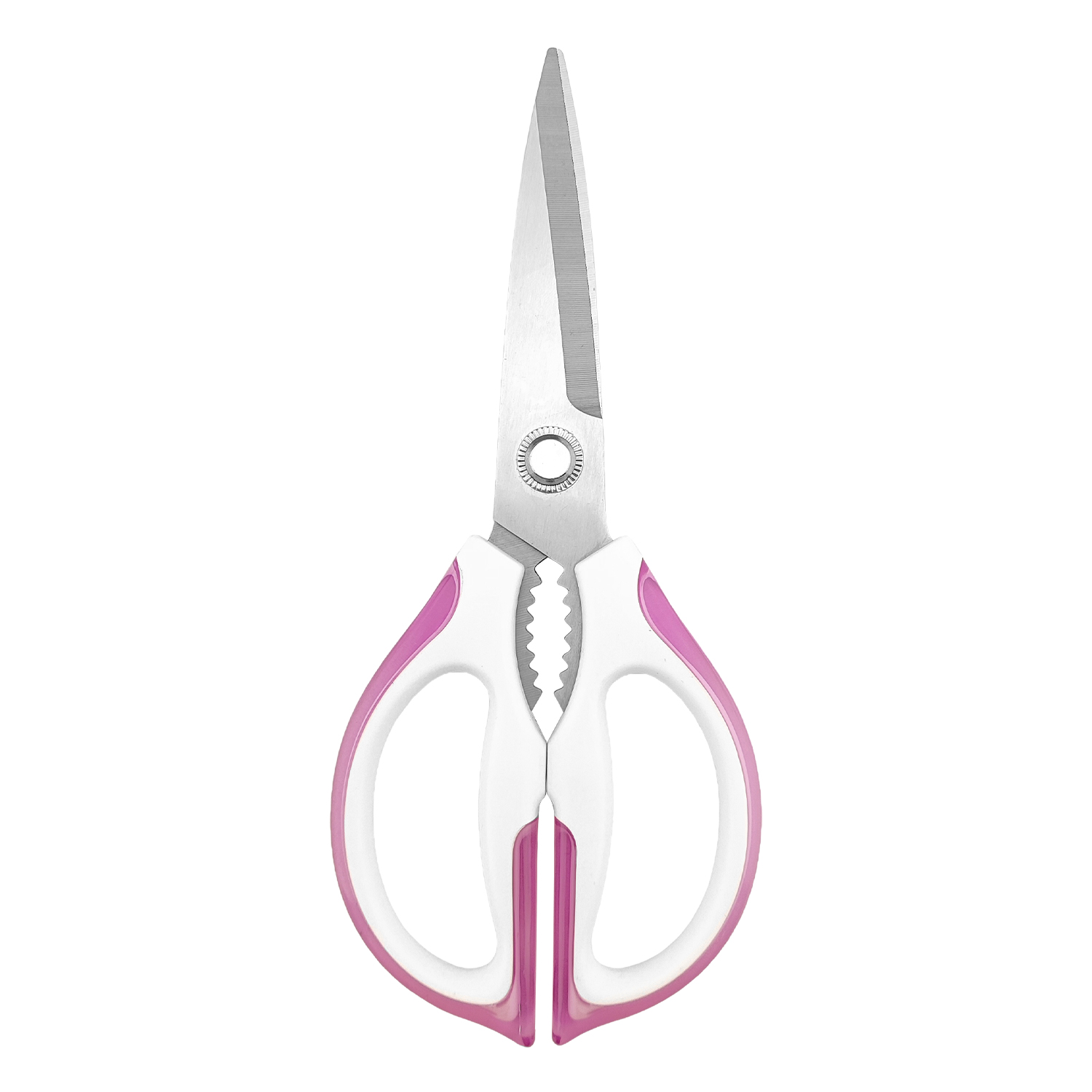
Kitchen Scissors Factory: OEM Sourcing Guide for Buyers
Sourcing kitchen scissors for a retail brand, distributor, promotional program, or wholesale channel is not only about choosing a shape and placing a logo on the handle. Kitchen shears are handled frequently, used on varied ingredients, washed often, and expected to cut reliably over time. For B2B buyers, the right kitchen scissors factory should help you balance cutting performance, user comfort, cleaning convenience, packaging, and commercial requirements.
The original product context focuses on OEM kitchen scissors, stainless steel blades, multifunctional designs, soft-grip handles, micro-serrated cutting edges on some styles, and convenient features such as a nutcracker, bottle opener, or separable blades on selected designs. Those are useful starting points, but a professional sourcing decision should go deeper. Buyers should verify which features apply to the exact model being quoted, request samples, and confirm all order details in writing before production.
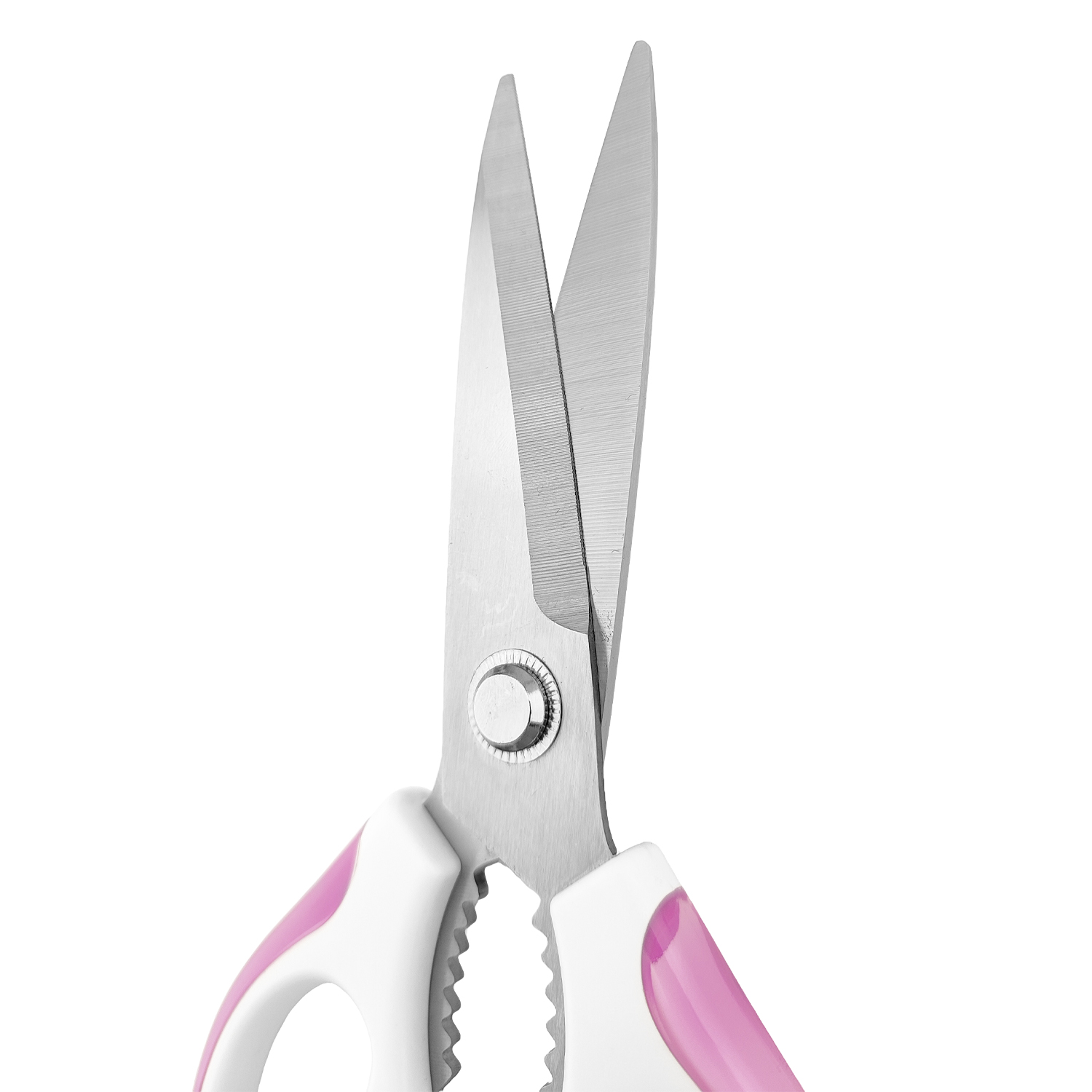
Key Takeaways
- Choose a kitchen scissors factory by reviewing samples, communication quality, packaging support, and quality-control process, not only unit price.
- Confirm blade material, handle material, edge type, separable construction, and added tools for the exact SKU under discussion.
- For OEM projects, ask early about logo methods, packaging artwork files, carton labeling, lead time, sample approval, and order terms.
- Use a clear inspection checklist so cutting performance, handle comfort, cleaning access, and packaging condition are checked consistently.
What B2B Buyers Should Define First
Before contacting a kitchen shears supplier, define the sales channel and user scenario. A supermarket line may need clear retail packaging and a competitive price point. A cookware brand may need stronger differentiation in color, grip design, or multifunctional tools. A promotional buyer may care most about logo visibility and delivery schedule. These priorities affect which design is appropriate.
Prepare a short sourcing brief that includes target market, estimated order quantity, preferred packaging type, logo placement, color requirements, and any performance expectations. If you need separable blades for easier cleaning, a micro-serrated edge for grip during cutting, or an integrated bottle opener or nutcracker, list those features as required or optional. This helps suppliers quote accurately and avoids confusion after sampling.
Core Product Features to Compare
Kitchen scissors can look similar in photos, but details matter. Stainless steel blades are commonly valued for sharpness and resistance to kitchen moisture, but buyers should still ask the supplier to identify the exact material used for the proposed model. Do not assume all scissors in a catalog share the same blade, thickness, edge finish, or handle construction.
Micro-serrated edges can help reduce slipping when cutting certain foods, while smooth edges may be preferred for a cleaner feel on other tasks. Soft-grip, non-slip handles can improve control and reduce hand fatigue, especially for repeated use. Multifunctional additions such as a nutcracker or bottle opener may add retail appeal, but they should be tested for comfort and practicality. Separable designs can support easier washing, but the connection point should feel secure during normal cutting.
Comparison Checklist for OEM Kitchen Scissors
| Evaluation Area | What to Check | Questions to Ask the Supplier |
|---|---|---|
| Blade construction | Sharpness, alignment, edge type, stainless steel claim | What blade material is used for this exact model, and can samples be provided? |
| Handle design | Grip comfort, opening size, left/right hand usability | What handle material and color options are available for OEM orders? |
| Multifunction features | Nutcracker, bottle opener, herb cutting, poultry prep suitability | Which additional tools are included on the quoted SKU? |
| Cleaning | Separable blades, crevices, washing access | Is this model separable, and are any care instructions recommended? |
| Branding | Logo position, color accuracy, packaging artwork | Which logo methods are available, and what files are required? |
| Quality control | Cut test, surface finish, packaging damage, carton marks | What inspection steps are used before shipment? |
OEM Customization and Packaging Questions
OEM kitchen scissors projects often involve more than the product itself. Buyers may need customized handle colors, private-label packaging, instruction cards, barcode labels, or carton marks. Ask the factory which elements can be customized for the model you are considering. Avoid assuming that every color, finish, or packaging format is available at the same cost or lead time.
Artwork approval is especially important. Provide vector logo files when possible and confirm print size, color reference, and placement. For packaging, ask whether the supplier needs dielines, warning text, care instructions, barcode files, or retail-language requirements from your side. If your market has specific import, labeling, or compliance requirements, confirm responsibility with your own compliance adviser and ask the supplier what documents they can provide for review.
How to Assess a Kitchen Scissors Factory
A dependable kitchen scissors factory should communicate clearly, answer technical questions, and help identify suitable models rather than pushing one generic option. During early discussions, pay attention to response quality. Does the supplier distinguish between different blade edges? Can they explain which models are separable? Do they clarify what is standard and what requires customization?
Sample evaluation is essential. Test the scissors on typical kitchen materials such as herbs, packaging, thin meat, or poultry skin if that use is relevant to your market. Check whether the blades meet cleanly from pivot to tip, whether the handle is comfortable, and whether any multifunction tools are easy to access. After washing, inspect for trapped residue or loosening parts. Document feedback with photos and comments so revisions are easy to discuss.
Quality Control Before Shipment
For wholesale kitchen scissors, small inconsistencies can become expensive when multiplied across cartons. Create a practical inspection checklist before mass production begins. It should include product appearance, blade movement, cutting performance, handle finish, logo placement, packaging condition, barcode readability, carton labeling, and quantity per carton. If you use third-party inspection, share the checklist with both the inspector and supplier.
Buyers should also clarify what happens if defects are found. Ask how the supplier defines acceptable quality limits, how replacement or rework is handled, and whether pre-shipment photos or videos can be provided. These questions are normal in B2B sourcing and help both sides avoid misunderstandings.
Commercial Details to Confirm in Writing
Before issuing a purchase order, confirm the model number or product reference, approved sample status, materials stated by the supplier, colors, logo method, packaging specification, carton marks, estimated production time, payment terms, shipping terms, and inspection arrangement. If you have target pricing, expected order volume, or launch timing, share those details early so the supplier can recommend a practical option.
Do not rely only on catalog descriptions. A phrase such as multifunctional kitchen scissors may refer to different tools across different models. Ask for a written specification sheet or quotation that clearly states what is included. This is especially important when comparing quotes from multiple suppliers, because a lower price may reflect a simpler handle, different packaging, fewer functions, or a different finishing process.
Practical FAQ
What should I ask an OEM kitchen scissors supplier first?
Start with the intended market, order quantity, preferred features, and packaging needs. Then ask which existing models match your requirements and what customization options are available.
Are all kitchen scissors made from the same stainless steel?
No. Stainless steel descriptions can vary by model and supplier. Ask the factory to confirm the blade material for the exact SKU you plan to order.
Is a separable kitchen scissors design better?
Separable blades can make cleaning easier, but the connection should feel secure during use. Request samples and test both cutting and reassembly before approving production.
Can I add my brand logo and retail packaging?
Many OEM projects include logo and packaging customization, but available methods, costs, and lead times depend on the supplier and model. Confirm artwork requirements and approval steps in writing.
How can I reduce risk before placing a wholesale order?
Use approved samples, a written specification, clear packaging artwork, pre-shipment inspection criteria, and documented communication for any changes. This creates a shared reference for both buyer and supplier.
