




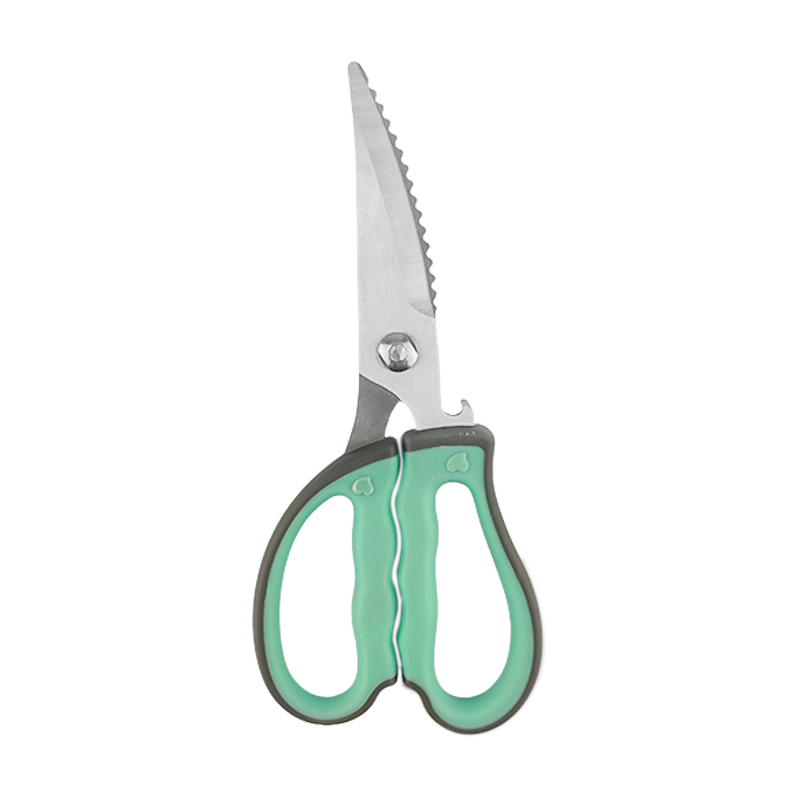
OEM Kitchen Shears: Multi-Functional & Stylish
OEM kitchen shears are small tools, but they can influence how a kitchenware line is perceived by retailers, distributors, and end users. A buyer is not only choosing a pair of scissors; they are selecting blade performance, grip comfort, safety details, packaging options, and the reliability of the supplier behind the product. The original product description highlights stainless steel blades, mint green soft handles, a serrated blade, a smooth blade, and a bottle opener integrated into the handle. Those are useful features, but B2B sourcing requires a closer look before placing an OEM or wholesale order.
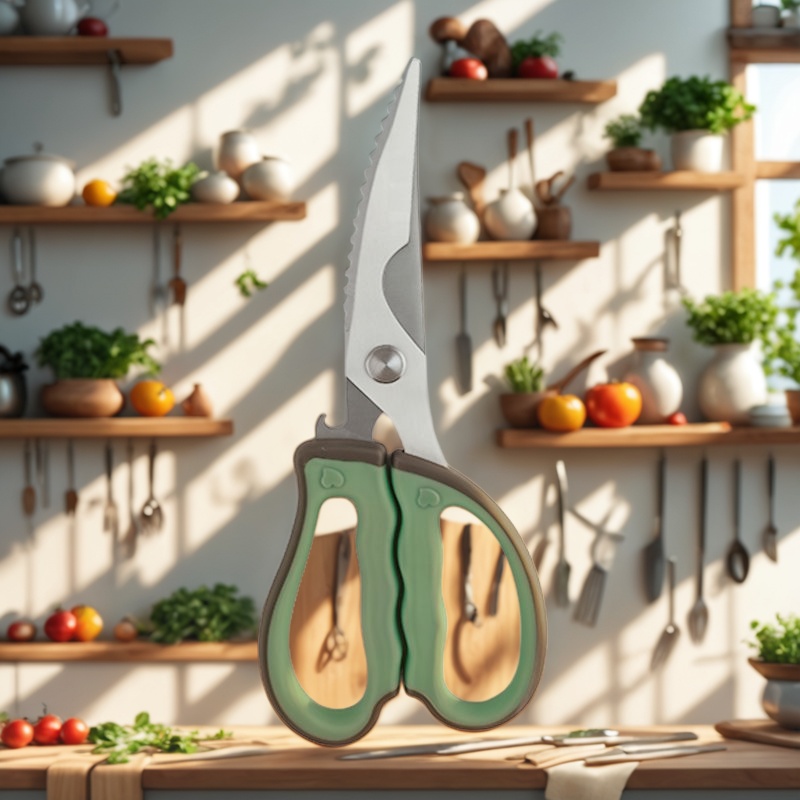
Key Takeaways
- OEM kitchen shears should be evaluated by cutting performance, grip comfort, construction, cleaning convenience, and packaging readiness.
- The source article explicitly mentions stainless steel blades, mint green soft handles, a serrated blade, a smooth blade, and a bottle opener in the handle.
- Buyers should ask suppliers for material details, sample policies, customization options, quality control steps, and applicable test documentation.
- A stylish handle color can help product presentation, but performance and consistency matter more for repeat wholesale orders.
What Makes These OEM Kitchen Shears Relevant?
Kitchen shears are used for quick cutting tasks that a knife and board may not handle as conveniently. They can trim meat, cut herbs, open food packaging, portion cooked foods, and assist with poultry preparation. The original article positions this item as a multi-functional kitchen tool rather than a single-purpose accessory. That is important for buyers building a kitchenware assortment because compact tools with multiple uses often fit gift sets, entry-level cooking ranges, supermarket promotions, and private-label household lines.
The design details mentioned in the source are clear: the shears use stainless steel blades, one serrated blade, one smooth blade, soft mint green handles, and a handle-integrated bottle opener. These points are enough to form a product story, but not enough to finalize procurement. For OEM sourcing, the next step is to confirm the technical and commercial details directly with the supplier.
Blade Design: Serrated and Smooth Cutting Edges
The blade pairing is one of the most useful details in the original product description. A serrated edge can help grip slippery surfaces such as poultry skin, meat, or stems, while a smooth blade can support cleaner cuts on softer foods or packaging. For buyers, this combination is a practical way to position the shears as multi-purpose without overstating performance.
However, the phrase stainless steel is broad. It does not identify a specific grade, hardness, thickness, sharpening angle, or corrosion-resistance level. Before confirming an OEM order, ask the supplier what stainless steel is used, how the blades are sharpened, whether the cutting edge is heat treated, and what routine quality checks are performed. If the product will be marketed in a regulated retail channel, request any relevant food-contact or safety documentation that the supplier can legitimately provide.
Handle Comfort, Control, and Color
The original article emphasizes soft handle kitchen shears with mint green handles. From a consumer perspective, handle comfort affects control, especially during repetitive cutting tasks. From a sourcing perspective, the handle raises several questions: what material is used, whether it is overmolded or assembled separately, how it performs when wet, and whether the color can remain consistent across production batches.
Mint green can work well for modern kitchenware ranges because it feels fresh without being overly bright. Still, color should not be treated as only an aesthetic choice. Private-label buyers should request color matching standards, sample approval procedures, and packaging mockups before mass production. If the shears are part of a wider range, ask whether the supplier can match the handle color to other utensils, knives, cutting boards, or storage accessories.
Multi-Function Details Buyers Should Check
The built-in bottle opener gives the product an added use beyond cutting. This can be helpful for retail packaging because it communicates value quickly. But every added function should be checked for usability and durability. A bottle opener that is poorly positioned, uncomfortable to use, or difficult to clean may create complaints even if the shears cut well.
For OEM kitchen shears, buyers should test real kitchen tasks rather than relying only on appearance. Ask for samples and evaluate how the tool performs when cutting herbs, food packaging, poultry skin, thin meat, and thicker stems. Check whether the handles remain comfortable and whether the shears feel balanced. If the product is intended for professional kitchens, testing should be more demanding than for occasional home use.
Comparison and Sourcing Checklist
| Evaluation Point | Why It Matters | Questions to Ask the Supplier |
|---|---|---|
| Blade material | Affects cutting performance, corrosion resistance, and product positioning. | What stainless steel is used, and can it be documented? |
| Blade edges | Serrated and smooth edges support different cutting tasks. | How are the edges sharpened and inspected? |
| Handle design | Comfort and grip influence user satisfaction. | What handle material is used, and is custom color available? |
| Bottle opener | Adds convenience but must be practical. | Has the opener function been tested for usability? |
| Cleaning | Food tools must be easy to maintain. | Can the shears be separated for cleaning, or are they fixed? |
| Packaging | Retail success depends on clear presentation and protection. | What packaging formats and private-label options are available? |
OEM and Wholesale Customization Considerations
OEM buyers often need more than a standard product. They may require a specific handle color, logo placement, instruction card, barcode label, packaging artwork, or bundle format. Because the source article does not state available customization services, buyers should treat these as questions rather than assumptions. Ask the supplier whether logo printing, laser marking, hang cards, blister packaging, color boxes, or set packaging can be supported.
It is also wise to confirm sample lead time, mass production lead time, minimum order quantity, carton details, and inspection arrangements. Do not rely on general claims such as high quality or durable without seeing samples and written specifications. A practical buying process should include sample approval, packaging approval, pre-shipment inspection, and a clear agreement on defect handling.
How to Assess Quality Before Ordering
- Request product samples from the same specification intended for mass production.
- Test the shears on common kitchen tasks, including meat trimming, herbs, food packaging, and bottle opening.
- Check blade alignment, handle bonding, screw or pivot stability, and edge consistency.
- Wash and dry the sample repeatedly to observe comfort, appearance, and any visible corrosion concerns.
- Confirm packaging strength for export cartons, retail display, and e-commerce handling if needed.
These checks are simple but useful. They help separate attractive samples from products that can perform consistently in wholesale distribution. If the supplier offers inspection reports or testing documents, review whether they apply to the exact product and production batch under discussion.
Use and Care Guidance for End Users
For consumer-facing product pages, care instructions should be clear and realistic. Kitchen shears should be washed after contact with raw meat or poultry, dried promptly, and stored safely away from children. If the supplier confirms dishwasher suitability, that can be stated in retail materials; if not, hand washing is the safer instruction. Users should avoid twisting the blades through materials beyond the intended kitchen use because that can affect alignment.
Retailers and brand owners may also include a simple use guide on the packaging. This helps customers understand the difference between the serrated and smooth edges, the purpose of the bottle opener, and the importance of cleaning after food preparation.
FAQ
What are OEM kitchen shears?
OEM kitchen shears are kitchen scissors produced for a buyer, retailer, or brand according to agreed specifications such as handle color, packaging, logo, and product details.
What explicit features are described for this product?
The source content states that the shears have stainless steel blades, mint green soft handles, one serrated blade, one smooth blade, and a bottle opener built into the handle.
Can these kitchen shears be customized for private label?
The original article does not confirm customization options. Buyers should ask the supplier about logo methods, handle color matching, packaging formats, MOQ, samples, and lead times.
Are these shears suitable for cutting poultry bones?
The original description mentions tough tasks such as cutting through poultry bones, but buyers should verify performance through samples and supplier specifications before using that claim in retail materials.
What should buyers confirm before a wholesale order?
Confirm blade material details, handle material, sample quality, packaging, cleaning guidance, inspection process, commercial terms, and any required documentation for the destination market.
