




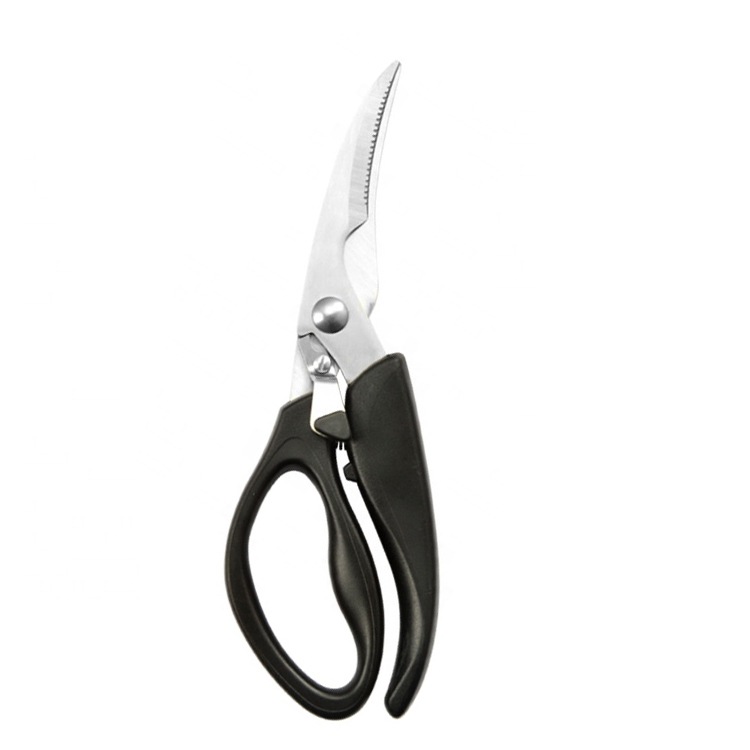
OEM Poultry Kitchen Shears: Precision & Versatility

OEM poultry kitchen shears are a focused category within kitchen cutting tools. For retailers, foodservice distributors, private-label buyers, and promotional houseware brands, the goal is not simply to find a pair of scissors that looks strong. The right product should cut poultry cleanly, feel secure in the hand, be practical to clean, and match the intended sales channel.
The original product description highlights several useful features: stainless steel blades, micro-serrated edges, ergonomic non-slip handles, and multi-function use such as poultry preparation, herb cutting, nutcracking, and bottle opening. Those are meaningful points for buyers to verify during sampling, because small differences in blade geometry, handle shape, pivot strength, and packaging can affect customer satisfaction.
Key Takeaways
- Focus on cutting performance, grip comfort, cleanability, and repeat consistency before placing an OEM order.
- Micro-serrated stainless steel blades can help grip poultry skin and slippery ingredients, but samples should be tested with real kitchen tasks.
- Ask suppliers clear questions about materials, packaging options, inspection methods, lead time, and after-sales handling.
- Do not rely only on appearance; pivot tightness, blade alignment, and handle ergonomics are critical quality indicators.
What Makes Poultry Kitchen Shears Different?
General kitchen scissors may be suitable for herbs, paper packaging, or small trimming jobs. Poultry kitchen shears are expected to handle heavier food-prep tasks, including trimming fat, cutting skin, portioning chicken, and snipping through small bones or joints. This places more stress on the blade edge, pivot area, and handle structure.
Professional poultry scissors also need to perform safely when ingredients are wet or greasy. A non-slip handle can reduce hand fatigue and improve control, especially in busy kitchens where the same tool may be used repeatedly. For B2B buyers, this makes ergonomic testing more than a comfort issue; it is part of product risk control.
Blade Design and Cutting Performance
The source article states that the shears use sharp stainless steel blades with micro-serrated edges. In poultry preparation, micro-serration can be useful because it helps the blade hold slippery skin instead of pushing it away. However, buyers should avoid assuming that all serrated edges perform the same. Edge angle, serration depth, blade thickness, and pivot tension all influence the final cutting feel.
During sample evaluation, test the shears on several realistic tasks: cutting raw chicken skin, trimming fat, cutting herbs, opening food packaging, and snipping through cartilage or small joints where appropriate. Record whether the blades slip, crush, twist, or leave ragged cuts. A good OEM sample should feel controlled rather than simply heavy.
Handle Comfort, Grip, and Safety
Ergonomic handles are mentioned in the original article, and they matter for both household and commercial users. A handle that is too narrow can create pressure points, while an oversized handle may be hard to control for smaller hands. Buyers sourcing for retail should consider the likely end user: home cooks, barbecue users, catering teams, or restaurant prep staff may prefer different handle shapes.
When reviewing professional poultry scissors, ask testers to use the shears with dry hands and slightly wet hands. Check whether the grip remains stable, whether the finger loops feel comfortable, and whether the hand position keeps fingers away from the blade path. If the product includes extra functions such as nutcracking or bottle opening, confirm that those features do not create uncomfortable edges in normal cutting use.
OEM Sourcing Checklist for Buyers
| Evaluation Point | What to Check | Supplier Question |
|---|---|---|
| Blade material | Stainless steel is stated; confirm exact grade and finish in writing. | What steel grade is used, and can it be specified on the quotation? |
| Cutting test | Performance on poultry skin, fat, herbs, packaging, and small joints. | Can pre-production samples be tested against agreed cutting criteria? |
| Pivot strength | Smooth opening, no wobble, no excessive stiffness. | How is pivot tightness inspected during production? |
| Handle comfort | Grip stability, hand fit, pressure points, wet-hand control. | Are handle color, texture, or branding options available? |
| Packaging | Retail card, box, instruction insert, barcode, and warning text needs. | Which packaging formats can be supplied for OEM orders? |
| Quality control | Visual finish, blade alignment, function check, and carton inspection. | What inspection steps are used before shipment? |
Private Label and Packaging Considerations
OEM poultry kitchen shears are often purchased for private-label kitchenware lines, supermarket assortments, online retail listings, or distributor catalogs. Before discussing artwork, buyers should define the sales channel. An e-commerce listing may need strong photography and clear feature language, while a retail shelf product may need compact packaging, visible safety information, and simple care instructions.
Useful packaging details to confirm include logo placement, barcode requirements, language versions, hang-hole position, carton labeling, and whether the product will be supplied with blade protection. If care instructions are included, keep them practical: wash after contact with raw poultry, dry promptly, store safely, and follow any supplier-specific cleaning guidance.
Quality Checks Before Placing an Order
Buyers should compare more than one sample and avoid approving a product after only a quick visual inspection. Open and close the shears repeatedly. Check whether the tips meet evenly, whether the blades rub too much, and whether the handles flex under pressure. Inspect the surface for burrs, sharp unintended edges, coating defects, or gaps that may trap food residue.
For OEM orders, it is also wise to create a simple approval standard. This may include reference samples, acceptable packaging appearance, basic cutting tests, labeling requirements, and carton drop or transit checks where relevant. If the supplier offers additional test reports or compliance documents, review them carefully and confirm that they apply to the exact product being purchased.
Best Uses and Care Guidance
For end users, poultry shears are most useful when they are treated as a dedicated food-prep tool rather than a general household cutter. They can help with trimming chicken, cutting cooked or raw poultry portions, snipping herbs, and opening food packaging. The original article also mentions multi-function uses such as nutcracking and bottle opening, which can be convenient when the design supports them.
- Wash the shears after cutting raw poultry to reduce cross-contamination risk.
- Dry the blades and pivot area promptly after cleaning.
- Store the shears closed and away from children.
- Do not use kitchen shears on materials that could damage the edge unless the supplier confirms suitability.
- Replace or service the tool if the pivot loosens, the blades chip, or cutting becomes unsafe.
FAQ
What should buyers verify first when sourcing OEM poultry kitchen shears?
Start with blade material, cutting performance, handle comfort, pivot stability, packaging options, and quality-control procedures. Ask for written specifications before confirming an order.
Are micro-serrated blades better for poultry?
They can help grip slippery poultry skin and reduce sliding, but performance depends on the full blade design. Buyers should test samples on real poultry-prep tasks.
Can poultry shears be used for herbs and packaging?
Yes, the original product description notes use with herbs and other kitchen tasks. For best results, avoid using the same tool on non-food materials that may dull or contaminate the blades.
What OEM details should be discussed with a supplier?
Discuss logo application, handle color, packaging format, labeling, inspection standards, sample approval, lead time, carton requirements, and how defects are handled after delivery.
How can a buyer avoid overclaiming product features?
Use only confirmed specifications from the supplier. If material grade, certifications, dishwasher suitability, or testing results are not documented, treat them as questions to verify rather than marketing claims.
