




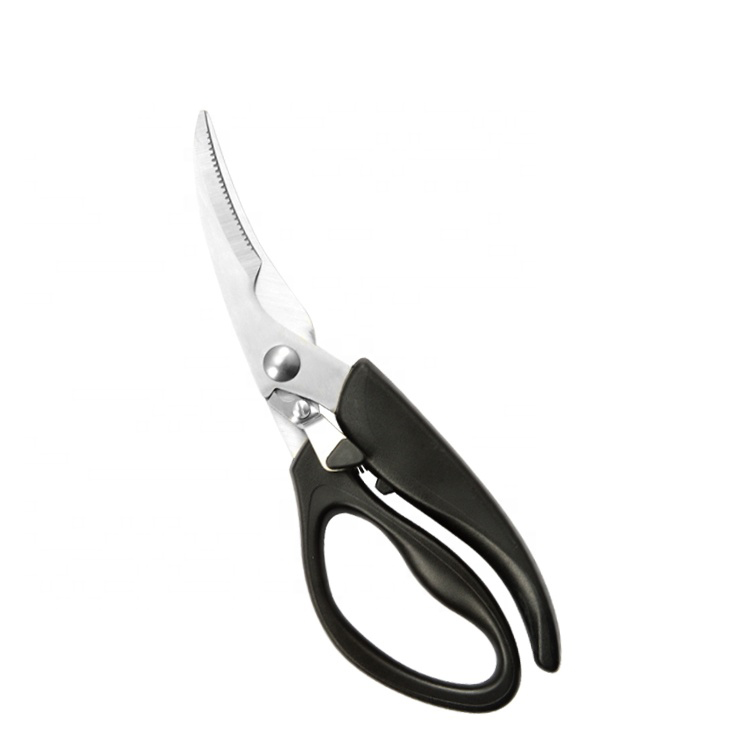
OEM Poultry Kitchen Shears Redefine Cutting Tasks
OEM poultry kitchen shears are a practical category for distributors, retailers, hospitality buyers, and private label brands that need a kitchen tool with clear everyday value. Unlike general-purpose scissors, poultry shears are expected to cut through chicken joints, trim fat, snip herbs, open packaging, and handle repeated washing. For wholesale sourcing, the challenge is not simply finding a sharp pair of scissors. Buyers need to evaluate whether the design, materials, cleaning method, packaging options, and supplier communication fit the intended market.
The original product article introduced a GastroShear Pro kitchen scissors model with serrated stainless steel blades made from high-carbon material, ergonomic non-slip handles, a detachable design, and integrated functions including a nutcracker, bottle opener, and fish scaler. Those features make the product relevant to buyers comparing OEM poultry kitchen shears for private label, retail kitchenware sets, or food-service supply programs. This rewritten guide focuses on how to assess those features responsibly before placing an OEM or wholesale order.

Key Takeaways
- OEM poultry kitchen shears should be evaluated for cutting control, cleaning access, handle comfort, and safe grip in wet kitchen conditions.
- Serrated stainless steel blades made from high-carbon material can support firm cutting performance, but buyers should ask suppliers for exact material details and test reports if required.
- Multi-function additions such as a nutcracker, bottle opener, and fish scaler may improve perceived value, but they should match the target customer’s real use cases.
- For private label sourcing, confirm customization options, packaging, inspection standards, replacement policy, and order requirements before committing.
What Makes Poultry Shears Different from Regular Kitchen Scissors?
Poultry shears are designed for controlled cutting through slippery, uneven, and sometimes tough food items. A buyer evaluating professional poultry scissors should look beyond blade sharpness and consider leverage, hand position, and cleaning. When cutting chicken wings, trimming skin, or separating joints, users need a tool that feels stable and does not twist in the hand.
The serrated blade design described in the original article is useful because serrations can help grip the food surface while cutting. This is especially relevant for poultry, where smooth blades may slide on skin. Stainless steel construction is also important for kitchen use because the tool is exposed to water, food acids, detergents, and repeated handling. However, buyers should avoid assuming all stainless steel grades perform the same. If grade, hardness, or coating information is not provided, ask the supplier directly.
Blade, Handle, and Cleaning Features to Review
For OEM sourcing, the blade is the first inspection point. The original description mentions serrated stainless steel blades made from high-carbon material, with rust resistance and edge retention. These are useful claims for positioning, but wholesale buyers should request the exact blade specification, hardness range if available, and any internal inspection method used by the supplier.
Handle design is equally important. Ergonomic, non-slip handles can reduce strain and improve safety when hands are wet or greasy. Before approving a sample, test the shears with different hand sizes and cutting angles. A grip that feels comfortable for one user may feel too wide, too narrow, or too rigid for another.
The detachable design is a meaningful feature because poultry shears can collect residue around the pivot. A detachable pair is easier to rinse and dry thoroughly. Buyers should check whether the tool separates smoothly, reconnects securely, and remains stable after repeated assembly.
Comparison Checklist for OEM Buyers
| Evaluation Point | Why It Matters | Questions to Ask the Supplier |
|---|---|---|
| Blade material | Affects corrosion resistance, cutting feel, and durability. | What stainless steel and high-carbon material details can be provided? |
| Serrated edge | Helps grip poultry skin and other slippery foods. | Is the serration pattern fixed, or can it be adjusted for OEM orders? |
| Handle grip | Improves control during wet or greasy prep work. | What handle material, color, and texture options are available? |
| Detachable structure | Makes cleaning around the pivot easier. | How is the joint inspected for stability after repeated use? |
| Extra functions | May add value but can increase complexity. | Are the nutcracker, bottle opener, and fish scaler standard or optional? |
| Packaging | Impacts retail presentation and logistics. | Can packaging artwork, barcode placement, and instructions be customized? |
When Multi-Function Design Helps
The original product description highlights an integrated nutcracker, bottle opener, and fish scaler. These features can make a kitchen shear more versatile, especially for retail customers who prefer compact tools. In food-service environments, however, simplicity can be more important than extra functions. Buyers should match the product configuration to the channel.
For example, a supermarket kitchenware aisle may benefit from visible multi-function callouts on packaging. A restaurant supply buyer may care more about quick cleaning, grip security, and replacement consistency. An online private label brand may want clear usage photography and instructions that explain each function without exaggerating performance.
OEM and Wholesale Sourcing Guidance
Because this topic concerns OEM poultry kitchen shears, sourcing discipline matters. Do not rely only on catalog photos. Request physical samples and compare them under realistic conditions: cutting raw poultry, trimming herbs, opening packaging, washing, drying, and reconnecting the detachable joint. If the shears will be sold in regulated retail markets, ask what documentation the supplier can provide, but do not assume certifications or test results unless they are supplied in writing.
Useful questions for a kitchen shears supplier include:
- What parts of the product can be customized for OEM or private label orders?
- What is the minimum order quantity, lead time, and sample policy?
- Can the supplier provide blade material details and inspection criteria?
- How are sharpness, handle attachment, pivot strength, and detachable assembly checked?
- What packaging formats are available for retail, e-commerce, or wholesale cartons?
- How are defects, replacements, and shipment issues handled?
Use-and-Care Points Buyers Can Include for End Users
Even well-designed poultry shears need correct care. Retailers and private label brands can reduce complaints by including simple care guidance on packaging or in an insert. Users should wash the shears after contact with poultry, separate the detachable parts if the design allows, dry thoroughly before storage, and avoid leaving food residue around the pivot. If the product includes a fish scaler, nutcracker, or bottle opener, instructions should show where each function is located and how to use it safely.
Clear instructions also help set realistic expectations. Poultry shears are for food preparation, not for cutting metal, bones beyond the intended use, or hard non-food materials unless the supplier specifically confirms that application. Good user education protects both the buyer’s brand and the customer experience.
Practical FAQ
Are OEM poultry kitchen shears only for chicken?
No. They are commonly used for chicken prep, but they can also be useful for herbs, packaging, and other kitchen cutting tasks. Confirm intended applications with the supplier before marketing broad claims.
Is a detachable design important?
Yes, it can make cleaning easier because food residue often gathers near the pivot. Buyers should test whether the detachable mechanism is secure after repeated use.
Should every model include a nutcracker, bottle opener, and fish scaler?
Not always. These features can add value for retail consumers, but some professional buyers may prefer a simpler tool focused on cutting and cleaning.
What should private label buyers confirm first?
Start with blade material details, handle options, packaging customization, MOQ, lead time, inspection process, and after-sales handling.
Can buyers claim rust resistance or superior edge retention?
Only if those claims are supported by supplier information and suitable evidence for the target market. If documentation is not available, use more cautious wording.
Final Sourcing Perspective
OEM poultry kitchen shears can be a strong product for kitchenware lines when the design is practical, easy to clean, and suited to the end user. The described model offers several buyer-friendly features: serrated stainless steel blades made from high-carbon material, ergonomic non-slip handles, detachable cleaning, and integrated secondary tools. The next step for any serious wholesale or private label buyer is to verify the details through samples, written specifications, packaging review, and supplier questions before placing an order.
