




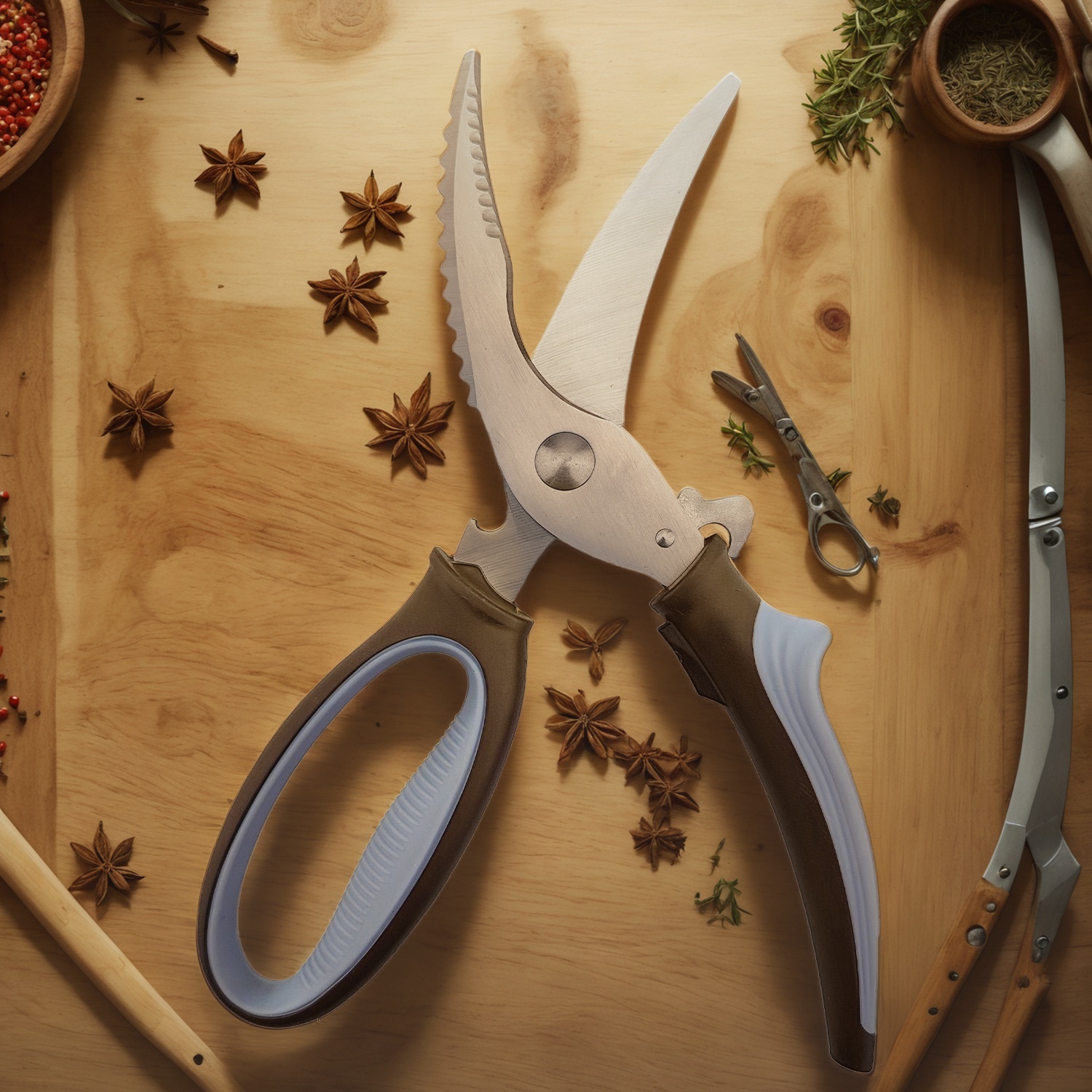
OEM Poultry Scissors: Practical Sourcing Guide for Buyers
OEM poultry scissors are a focused kitchen tool for cutting poultry joints, skin, cartilage, and smaller bones with more control than a general knife. For retailers, distributors, foodservice buyers, and private label brands, the goal is not only to find a sharp product. The better question is whether a kitchen scissors manufacturer can deliver consistent construction, safe handling, practical packaging, and repeatable quality over time.

The original product description highlights several useful ideas: poultry scissors are designed for tough preparation tasks, some models use serrated edges for grip, ergonomic handles can reduce hand fatigue, and multi-functional designs may include a nutcracker, bottle opener, or bone notch. Those are relevant starting points. A sourcing decision, however, should go further into materials confirmation, sample testing, after-sales expectations, and how the product fits the end customer’s kitchen habits.
Key Takeaways
- OEM poultry scissors should be assessed for cutting control, handle comfort, cleaning convenience, and repeatable factory quality.
- Do not rely only on product photos; request samples and test them on realistic poultry preparation tasks.
- Ask suppliers to confirm blade material, edge type, handle material, packaging options, and quality inspection procedures in writing.
- Multi-functional features can add value, but only if they do not reduce strength, hygiene, or ease of use.
- For wholesale or private label orders, clarify customization, lead time, MOQ, spare parts, labeling, and documentation before purchase.
Why Poultry Scissors Are Different from General Kitchen Scissors
General kitchen scissors are often used for herbs, food packaging, twine, or light trimming. Poultry scissors need more leverage and stability because they may be used around joints, skin, cartilage, and bones. A good pair should help the user keep the bird steady while applying cutting force in a controlled direction.
This is why buyers should look closely at blade geometry and handle shape. A serrated section can help grip slippery food, while a bone notch can help position poultry before cutting. Comfortable handles are also important because poor grip design can cause slipping or hand fatigue, especially in restaurants, butcher counters, meal-prep kitchens, or busy home kitchens.
Supplier Evaluation for OEM and Wholesale Orders
When the search intent includes OEM, factory, wholesale, or kitchen scissors manufacturer, the selection process should be business-focused. A low unit price is not enough if the supplier cannot maintain consistent sharpness, assembly, finish, and packaging from one shipment to the next.
Before placing an order, buyers should ask direct questions such as:
- What blade material is used, and can it be confirmed on the quotation or specification sheet?
- Is the edge smooth, serrated, or a combination, and which option is recommended for poultry?
- Can the factory provide pre-production samples for approval before mass production?
- What quality checks are performed for sharpness, handle attachment, surface finish, and opening-closing action?
- What OEM options are available for logo placement, packaging, instructions, and barcode labeling?
- What are the MOQ, production lead time, payment terms, and replacement policy for defective goods?
These questions do not assume the supplier’s capacity or certifications. They create a clear checklist that helps buyers compare factories using evidence rather than general claims.
Feature Checklist for Poultry Shears
The best OEM poultry scissors for one channel may not be the best for another. A restaurant supply buyer may prioritize durability and cleaning speed. A retail brand may value packaging, comfort, and easy explanation at the shelf. The table below can help structure the comparison.
| Feature to Check | Why It Matters | Buyer Question |
|---|---|---|
| Blade edge | A serrated edge can improve grip on slippery poultry. | Is the edge serrated, smooth, or mixed? |
| Bone notch | Helps position bones or joints during cutting. | Is there a dedicated notch for poultry tasks? |
| Handle ergonomics | Comfort and control reduce strain during repeated use. | Can samples be tested by different hand sizes? |
| Multi-function parts | Nutcracker or bottle opener functions may add value. | Do extra features affect cleaning or strength? |
| Cleaning design | Food residue can collect around joints and handles. | How should the scissors be cleaned and dried? |
| Packaging | Important for retail display, instructions, and brand trust. | What private label packaging options are available? |
Quality Checks Before Confirming Production
Samples should be tested in conditions close to real use. For poultry scissors, this means cutting raw poultry skin, trimming fat, separating joints, and checking whether the blades twist, slip, or require excessive pressure. Buyers should also open and close the scissors repeatedly to feel whether the movement remains smooth.
Inspect the blade alignment, tip finish, handle edges, rivet or joint area, and surface cleanliness. If the product includes a nutcracker, bottle opener, or other secondary function, test those functions separately. Extra features should not create sharp corners, uncomfortable pressure points, or hard-to-clean gaps.
For OEM orders, keep an approved sample as the production reference. The purchase agreement should identify the approved finish, logo position, packaging artwork, and any acceptable tolerance agreed with the supplier. If the supplier offers inspection reports, ask what is actually checked and how defects are classified.
Use and Care Guidance for End Customers
Even a well-made pair of poultry scissors needs correct use. The product information supplied to customers should be practical and not overcomplicated. Clear instructions reduce complaints and help users get better results.
- Use poultry scissors for poultry preparation, food trimming, and suitable kitchen tasks rather than hard non-food materials.
- Cut near poultry joints when possible instead of forcing the blades through the thickest bone section.
- Wash promptly after contact with raw poultry and dry thoroughly before storage.
- Store the scissors where the blade edge is protected and children cannot access them.
- Check the joint area regularly for trapped residue or looseness.
If dishwasher safety, detachable blade design, or a specific cleaning method is important for your market, ask the supplier to confirm it. Do not print care claims on packaging unless they match the supplier’s written product guidance.
Common Sourcing Mistakes to Avoid
One common mistake is choosing poultry scissors based only on weight. A heavier tool may feel strong, but balance, blade alignment, and handle comfort matter just as much. Another mistake is adding too many secondary functions. A bottle opener or nutcracker can be useful, but the core function remains safe and effective poultry cutting.
Buyers should also avoid vague terms such as “premium” or “professional grade” unless they are supported by specific details. Ask for clear product information instead: blade material, handle material, finish, dimensions, packaging method, and inspection process. If a claim is important for your sales channel, make sure it can be documented before you use it in listings, catalogs, or packaging.
FAQ
What makes OEM poultry scissors suitable for private label sourcing?
They are suitable when the supplier can provide consistent samples, confirmed specifications, brand packaging options, and quality control that matches the buyer’s target market. The exact OEM scope should be confirmed directly with the factory.
Are serrated blades always better for poultry?
Serrated sections can help grip slippery skin and meat, but the full design matters. Blade alignment, leverage, handle comfort, and cleaning access should be tested together before making a decision.
Should buyers choose multi-functional poultry shears?
Multi-functional shears can be convenient when features such as a nutcracker, bottle opener, or bone notch are well integrated. Buyers should test whether those features add real value without making the tool harder to clean or hold.
What should be checked before a wholesale order?
Check samples, specifications, packaging artwork, logo placement, MOQ, lead time, defect handling, and inspection criteria. Keep an approved sample as the reference for production comparison.
Can poultry scissors replace a knife?
They can handle many poultry preparation tasks with better control, especially around joints and skin. They do not replace every knife task, so users should choose the tool that gives the safest control for each cut.
Final Buying Guidance
OEM poultry scissors can be a strong product for kitchenware ranges, restaurant supply catalogs, and private label programs when buyers evaluate them with a practical sourcing process. Focus first on cutting performance, comfort, cleanability, and supplier communication. Then review customization, packaging, and commercial terms. A reliable factory for kitchen scissors should be able to answer specific questions clearly, provide representative samples, and support consistent production without relying on unsupported claims.
